

La fibula del Bruto
Nella fibula che il Bruto porta sulla spalla c’è il ritratto di un uomo. Non è qualcosa di idealizzato ma un ritratto autentico che raffigura una persona che ben conoscevo.
Vi racconto questa faccenda dal principio.
Donato Giannotti mi chiese di scolpire il busto di Bruto per regalarlo al cardinale antimediceo Nicolò Ridolfi presso il quale era entrato in servizio. Bruto era il figliolo adottivo di Cesare, suo uccisore assieme a Cassio.

La celebrazione del Bruto corrispondeva all’elogio dell’assassinio del tiranno Alessandro de’ Medici, ucciso da suo cugino Lorenzo, detto Lorenzaccio nel 1537.
Mi misi al lavoro per scolpire il busto impostandolo sull’iconografia dell’imperatore Caracalla e, dato che ero preso in mille faccende in quel momento, affidai l’opera portata a buon punto nelle mani del mio collaboratore Tiberio Calcagni, affinché la portasse a termine.

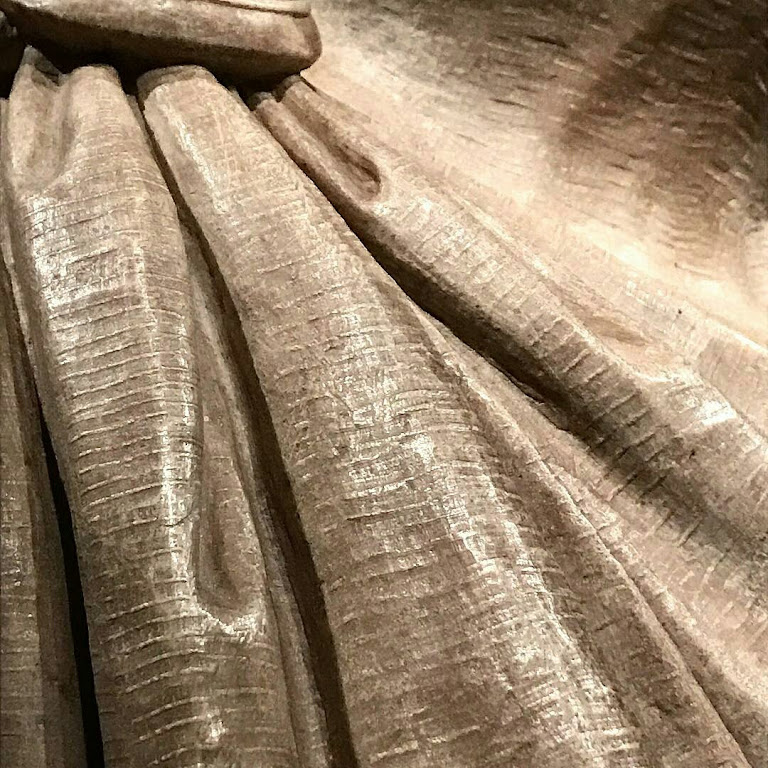
Quali parti lavorò il Calcagni? Sicuramente non mise mano al volto né potrebbero essere suoi la fibula e le pieghe immediatamente sotto che terminano con un risvolto del panneggio.
Sembrano di sua mano invece le lavorazioni del panneggio più ampie. Era bravino il Calcagni ma non aveva la mia dimestichezza nell’uso delle gradine.
Come potete vedere la fibula sulla spalla del Bruto ha scolpito sopra un ritratto molto dettagliato che riporta un viso tutt’altro che idealizzato. E’ infatti il volto del Giannotti che m’aveva commissionato l’opera. In questo modo il Ridolfi, ricevente del dono avrebbe sempre avuto presente chi l’aveva voluto omaggiare con una scultura così importante e ricca di significato.
Per il momento il vostro Michelangelo Buonarroti vi saluta dandovi appuntamento ai prossimi post e sui social.

The Brutus fibula
In the fibula that the Brutus carries on his shoulder there is a portrait of a man. It is not something idealized but an authentic portrait depicting a person I knew well.
I’ll tell you this from the beginning.
Donato Giannotti asked me to sculpt the bust of Brutus for him as a gift to the anti-Medici cardinal Nicolò Ridolfi with whom he had entered the service. Brutus was the adopted son of Caesar, his killer along with Cassius.
The celebration of the Brutus corresponded to the praise of the assassination of the tyrant Alessandro de ‘Medici, killed by his cousin Lorenzo, known as Lorenzaccio in 1537.
I set to work sculpting the Bust setting it on the iconography of the Emperor Caracalla and since I was involved in a thousand chores at that moment, I entrusted the completed work in the hands of my trusted Tiberio Calcagni, so that he could complete it.
Which parts did Calcagni work? Surely she did not put her hand to his face nor could the fibula and the folds immediately below that end with a turn-up of the drapery belong to him.
On the other hand, the larger drapery works seem to be by his hand. Calcagni was good but he did not have my familiarity with the use of steps.
As you can see, the fibula on the Brutus’ shoulder he has carved a very detailed portrait on it that shows a face that is anything but idealized. In fact, it is the face of Giannotti who commissioned the work from me. In this way, the recipient of the gift would always have in mind those who wanted to pay homage to it with such an important and meaningful sculpture.
For the moment, your Michelangelo Buonarroti greets you by giving you an appointment at the next posts and on social networks.

Sostienici – Support Us
Se questo blog ti piace e ti appassiona, puoi aiutarci a farlo crescere sempre più sostenendoci in modo concreto condividendo i post, seguendo le pagine social e con un contributo che ci aiuta ad andare avanti con il nostro lavoro di divulgazione. . ENGLISH: If you like and are passionate about this blog, you can help us make it grow more and more by supporting us in a concrete way by sharing posts, following social pages and with a contribution that helps us to move forward with our dissemination work.
5,00 €
-
La fine dell’originalità: perché oggi tutta l’arte sembra già vista
🇮🇹La sensazione è sempre la stessa: guardiamo un quadro, una scultura o un’installazione e pensiamo “L’ho già visto da qualche parte”. Ma è davvero la fine dell’originalità? … 🇬🇧The feeling is always the same: we look at a painting, a sculpture, or an installation and think, “I’ve seen this before.” But is this really the…
-
8 aprile 1492: la morte di Lorenzo il Magnifico, l’uomo che fece grande il Rinascimento
🇮🇹8 aprile 1492: si spegne Lorenzo il Magnifico, il cuore pulsante del Rinascimento. Alle quattro del mattino Firenze perde il suo signore, mecenate e poeta… 🇬🇧April 8, 1492: Lorenzo the Magnificent, the beating heart of the Renaissance, passes away. At four in the morning, Florence loses its lord, patron, and poet…
-
Sotto un cielo di glicine: la magia di Villa Bardini
🇮🇹Per pochi giorni all’anno, il pergolato di Villa Bardini si trasforma in un tunnel lilla lungo 70 metri, dove profumo e bellezza si intrecciano sopra una delle viste più romantiche di Firenze… 🇬🇧For a few days a year, the pergola of Villa Bardini transforms into a 70-meter-long lilac tunnel, where scent and beauty intertwine above…
Condividi:


Questo sono io





sostienici

Sostienici – Support Us
Se questo blog ti piace e ti appassiona, puoi aiutarci a farlo crescere sempre più sostenendoci in modo concreto condividendo i post, seguendo le pagine social e con un contributo che ci aiuta ad andare avanti con il nostro lavoro di divulgazione. . ENGLISH: If you like and are passionate about this blog, you can help us make it grow more and more by supporting us in a concrete way by sharing posts, following social pages and with a contribution that helps us to move forward with our dissemination work.
€10,00


