
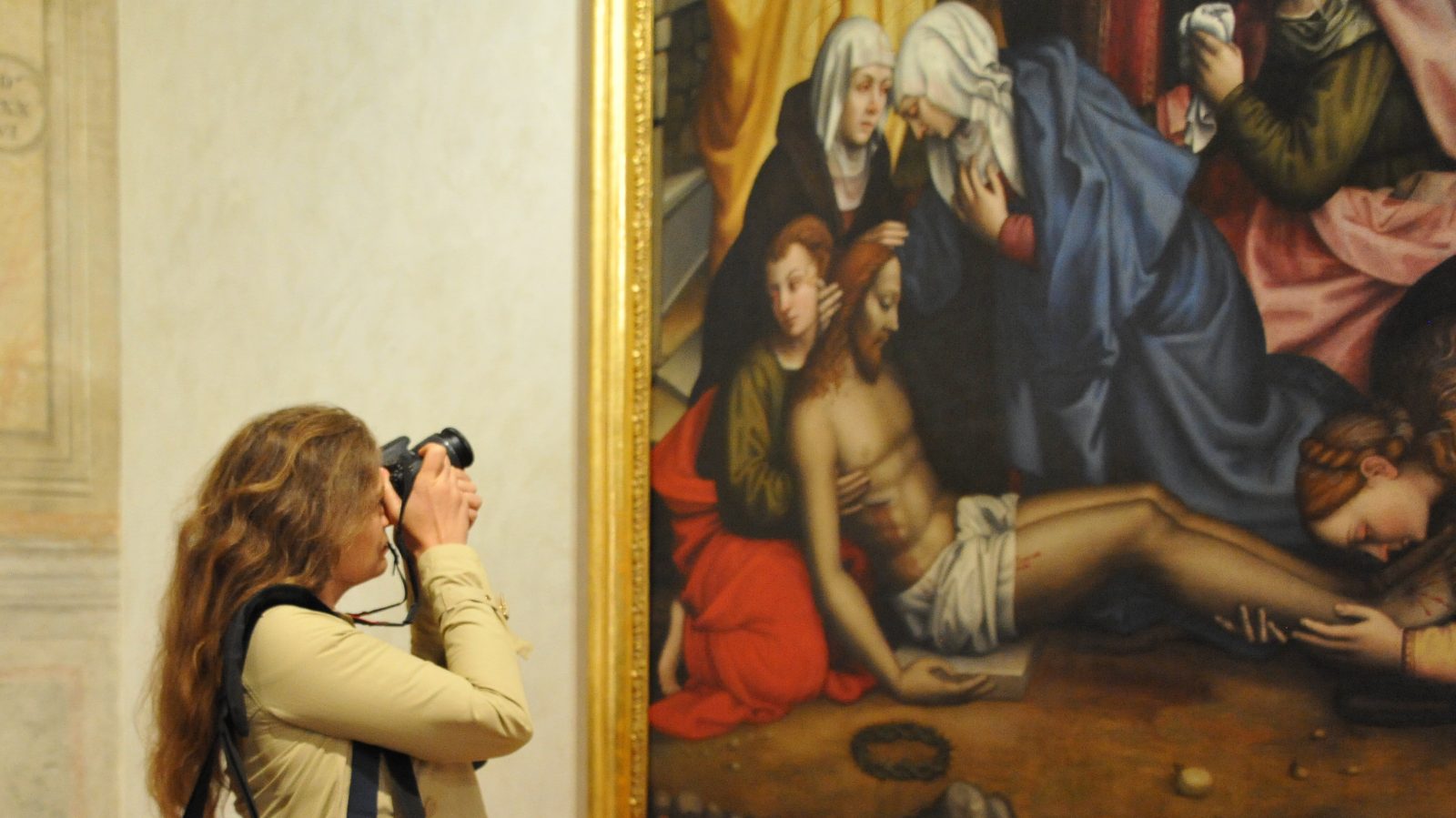
L’incendio nella Cappella Sistina e quelle insegne papali
Per cause accidentali, all’interno della Cappella Sistina un bel giorno scoppiò un grande incendio.
Era il 1525 e mentre Clemente VII, il secondo papa Medici, stava celebrando messa, il baldacchino posizionato sopra l’altare prese fuoco. Purtroppo gli incendi nelle chiese non erano rarissimi dato che fra candele e lumi a olio di fiamme libere ce n’erano parecchie in giro.
La parete dell’altare ancora non era decorata con il Giudizio Universale che avrei avviato solo dopo la morte di Clemente VII ma vi si potevano ammirare due mie lunette, i due affreschi che iniziavano il ciclo pittorico di Mosè e di Cristo più la pala d’altare: tutte e tre opere del Perugino.

Quell’incendio viene raccontato da Biagio da Cesena del suo Diarium.
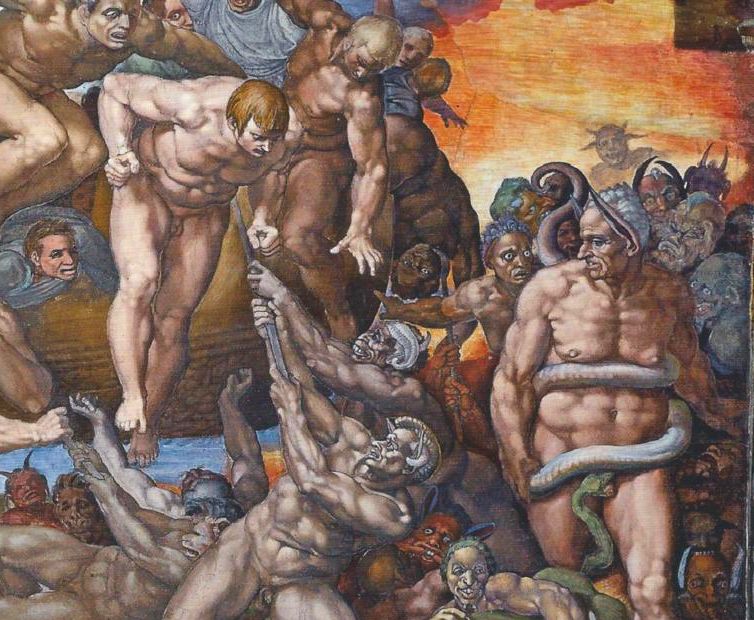
Vi ricorda niente questo nome? Nel caso ve lo rammento io. Era il cerimoniere del papa che immortalai a futura memoria nel Giudizio Universale, nei panni di Minosse, con il serpente che gli morde il pisello. Ve ne ho parlato nel dettaglio QUA.
Chissà se durante quell’incendio, spento prima che potesse far danni enormi, abbia in qualche modo annerito o comunque deteriorato la pala d’altare del Perugino. Non è dato sapere o, perlomeno, fino al momento non sono state trovate testimonianze storiche scritte che riportassero alcunché in merito.
Una volta rimossa la struttura del baldacchino oramai non più utilizzabile, papa Clemente VII volle si montassero i ponteggi per far posizionare immediatamente sotto Giona, il suo stemma, quello della famiglia dei Medici.
Volle farlo posizionare proprio lì, in modo che ogni persona che entrasse a assistere alle funzioni liturgiche lo vedesse bene. Lo stemma copriva sia la tabella col nome del profeta che la mensola immediatamente sotto Giona.

Il successore papa Paolo III, mi chiese di rimuovere quello stemma mediceo per sostituirlo con il suo, quello dei Farnese. Mi rifiutai categoricamente: alla fine dei conti il Giudizio che dipinsi sotto papa Paolo III Farnese m’era stato commissionato da Clemente VII.
Per il momento il vostro Michelangelo Buonarroti vi saluta dandovi appuntamento ai prossimi post e sui social.
The fire in the Sistine Chapel and those papal insignia
Due to accidental causes, a great fire broke out inside the Sistine Chapel one day.
It was 1525 and while Clement VII, the second Medici Pope, was celebrating mass, the canopy positioned above the altar caught fire. Unfortunately, the fires in the churches were not very rare since there were many around among candles and oil lamps of open flames.
The wall of the altar was not yet decorated with the Last Judgment which I would have started only after the death of Clement VII but two of my lunettes could be admired there, the two frescoes that began the pictorial cycle of Moses and Christ plus the altarpiece. altar: all three works by Perugino.
That fire is told by Biagio da Cesena in his Diarium.
Does this name remind you of anything? In case I’ll remind you. He was the Pope’s master of ceremonies who I immortalized for future memory in the Last Judgment, in the role of Minos, with the snake biting his pea. I told you about it in detail HERE.
Who knows if during that fire, which was extinguished before it could cause enormous damage, it somehow blackened or otherwise deteriorated Perugino’s altarpiece. It is not known or at least up to the moment no written historical evidence has been found that reported anything about it.
Once the canopy structure, no longer usable, had been removed, Pope Clement VII wanted the scaffolding to be mounted so that his coat of arms, that of the Medici family, were placed immediately under Jonah.
He wanted to have it placed right there, so that every person who came to attend the liturgical functions would see him well. The coat of arms covered both the table with the name of the prophet and the shelf immediately below Jonah.
The successor Pope Paul III asked me to remove that Medici coat of arms to replace it with his, that of the Farnese. I categorically refused: in the end, the Judgment I painted under Pope Paul III Farnese had been commissioned from me by Clement VII.
For the moment, your Michelangelo Buonarroti greets you by giving you an appointment at the next posts and on social networks.

Sostienici – Support Us
Se questo blog ti piace e ti appassiona, puoi aiutarci a farlo crescere sempre più sostenendoci in modo concreto condividendo i post, seguendo le pagine social e con un contributo che ci aiuta ad andare avanti con il nostro lavoro di divulgazione. . ENGLISH: If you like and are passionate about this blog, you can help us make it grow more and more by supporting us in a concrete way by sharing posts, following social pages and with a contribution that helps us to move forward with our dissemination work.
5,00 €
-
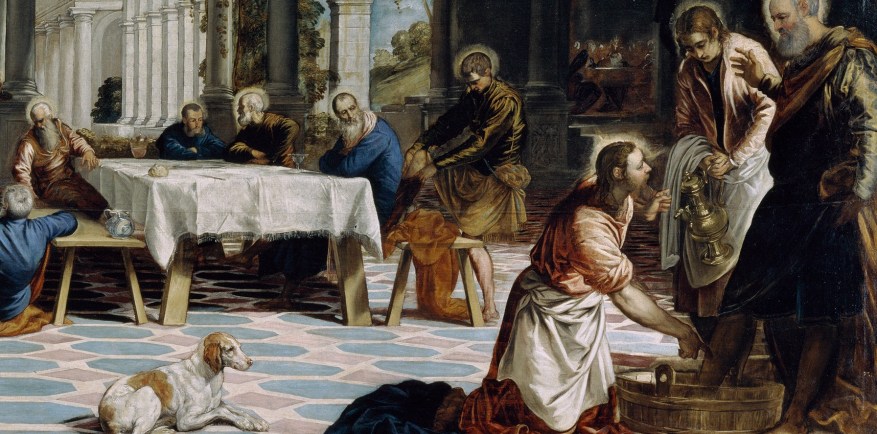
La Lavanda dei Piedi di Tintoretto: Il Capolavoro Veneziano al Prado
🇮🇹Tra i capolavori più affascinanti del Rinascimento veneziano, “La Lavanda dei Piedi” di Jacopo Tintoretto rappresenta un perfetto equilibrio tra spiritualità, innovazione compositiva e straordinaria forza narrativa… 🇬🇧Among the most fascinating masterpieces of the Venetian Renaissance, Jacopo Tintoretto’s “The Washing of the Feet” represents a perfect balance between spirituality, compositional innovation, and extraordinary narrative force…
-
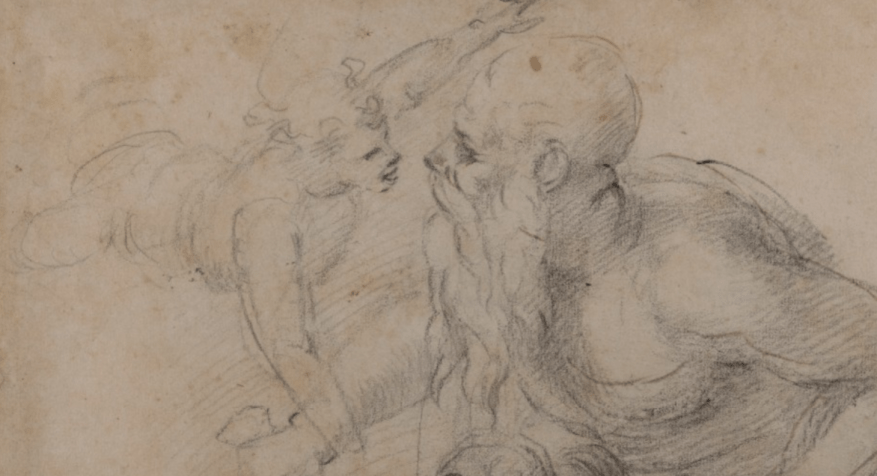
Il Sacrificio di Isacco e quel momento tra la vita e la morte
🇮🇹Oggi voglio raccontarvi alcuni dettagli sul mio disegno del Sacrificio di Isacco, conservato oggi a Casa Buonarroti. Su quel foglio volli tracciare il momento preciso in cui la paura fa spazio al miracolo… 🇬🇧Today I want to tell you some details about my drawing of the Sacrifice of Isaac, now preserved at Casa Buonarroti. On…
-
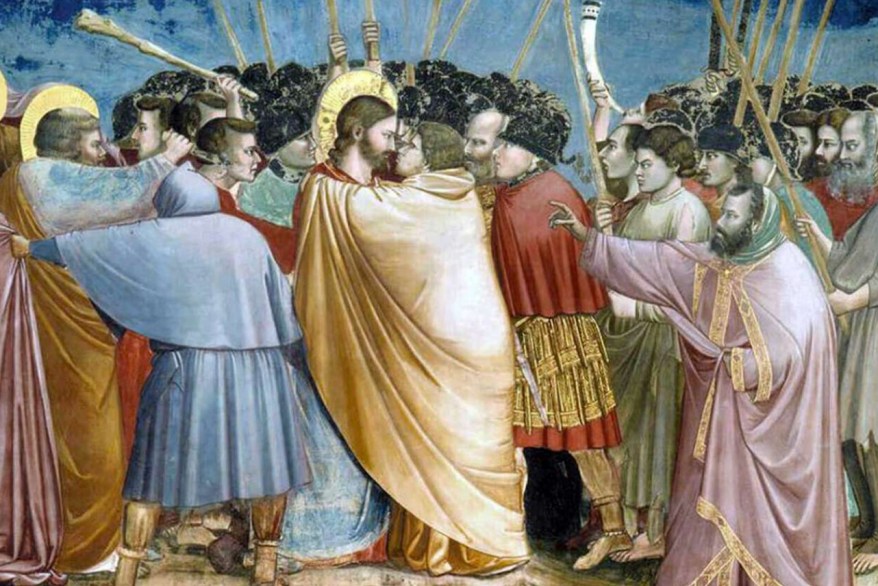
Mercoledì Santo: il giorno del tradimento di Giuda affrescato da Giotto
🇮🇹Il Mercoledì Santo è il giorno del silenzio, della riflessione e del tradimento. È il momento in cui Giuda sceglie di vendere Gesù per trenta denari, segnando uno dei passaggi più dolorosi della Settimana Santa…. 🇬🇧Holy Wednesday is a day of silence, reflection, and betrayal. ✝It is the moment when Judas chooses to sell Jesus…
Condividi:


Questo sono io





sostienici

Sostienici – Support Us
Se questo blog ti piace e ti appassiona, puoi aiutarci a farlo crescere sempre più sostenendoci in modo concreto condividendo i post, seguendo le pagine social e con un contributo che ci aiuta ad andare avanti con il nostro lavoro di divulgazione. . ENGLISH: If you like and are passionate about this blog, you can help us make it grow more and more by supporting us in a concrete way by sharing posts, following social pages and with a contribution that helps us to move forward with our dissemination work.
€10,00


