
La Sala delle Mappe Geografiche di Palazzo Vecchio
La Sala delle Mappe Geografiche è la più importante del mondo occidentale che ripropone le mappe del mondo conosciuto nella seconda metà del Cinquecento. La sala, così come la vedete oggi, era stata ideata da Giorgio Vasari per Cosimo I de’ Medici e realizzata fra il 1562 e il 1563.
Le caratteristiche della Sala
La Sala, nota anche come Sala del Guardaroba o degli Armadi, si trova alla fine del percorso museale di Palazzo Vecchio. Realizzata sul progetto architettonico del mio caro amico Giorgio Vasari, ha le quattro pareti coperte di armadi, realizzati da Dionigi Nigetti, che Cosimo I de’ Medici usava per conservare beni assai preziosi.
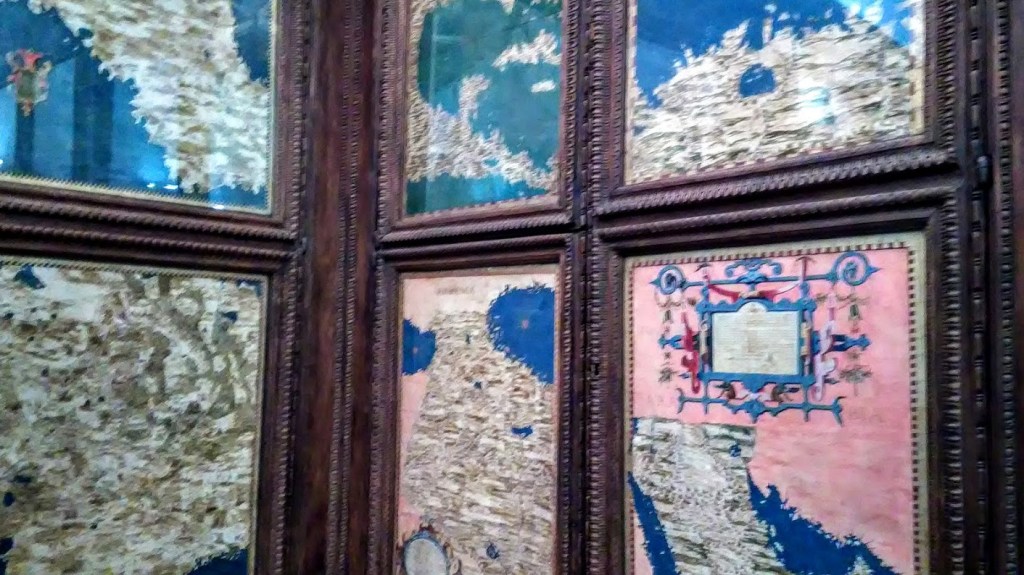
Successivamente le ante furono decorate con 53 mappe dipinte a olio sia dal frate cartografo Ignazio Danti che dal Buonsignori.
Vi ricorda niente il cognome Danti? Ebbene sì, Ignazio Danti era il fratello del più celebre scultore Vincenzo che molto si lasciò influenzare dalle opere mie.
Sia Danti che Buonsignori seguivano l’antiquato sistema tolemaico per il moto degli astri ma invece per le mappe scelsero l’innovativo sistema di Mercatore, ovvero quello che continuate a usare ancora oggi voi.

Il Mappa Mundi
Al centro della sala c’è il grande mappamondo, realizzato nel 1581 da Danti assieme a Buonsignori. Pensate che per molti anni quella fu la raffigurazione del globo più grande che esistesse.
La sfera oggi è molto rovinata a causa di incaute esposizioni avvenute nel passato. La base originale è andata perduta ed è un vero peccato perché era dotata di un sistema che consentiva al globo di girare su se stesso agevolmente come scrisse lo stesso Danti “mossa in qualsiasi direzione dal tocco di un solo dito”.

Curiosità
Sapete, dietro le ante decorate con le mappe non sempre si nascondono armadietti ma anche passaggi segreti. Proprio dietro la carta che rappresenta l’Armenia c’è in realtà una porta che conduce nel camerino della seconda moglie di Francesco I, Bianca Cappello. I passaggi segreti permettevano ai Medici di spostarsi da un’ambiente all’altro senza farsi notare e potevano essere adoperati sia in caso di imminente pericolo che per ragioni ben diverse.
Il libro
Se volete conoscere ancora di più la Sala delle Mappe Geografiche e le sue caratteristiche, vi consiglio questo piccolo ma interessante volume QUA.

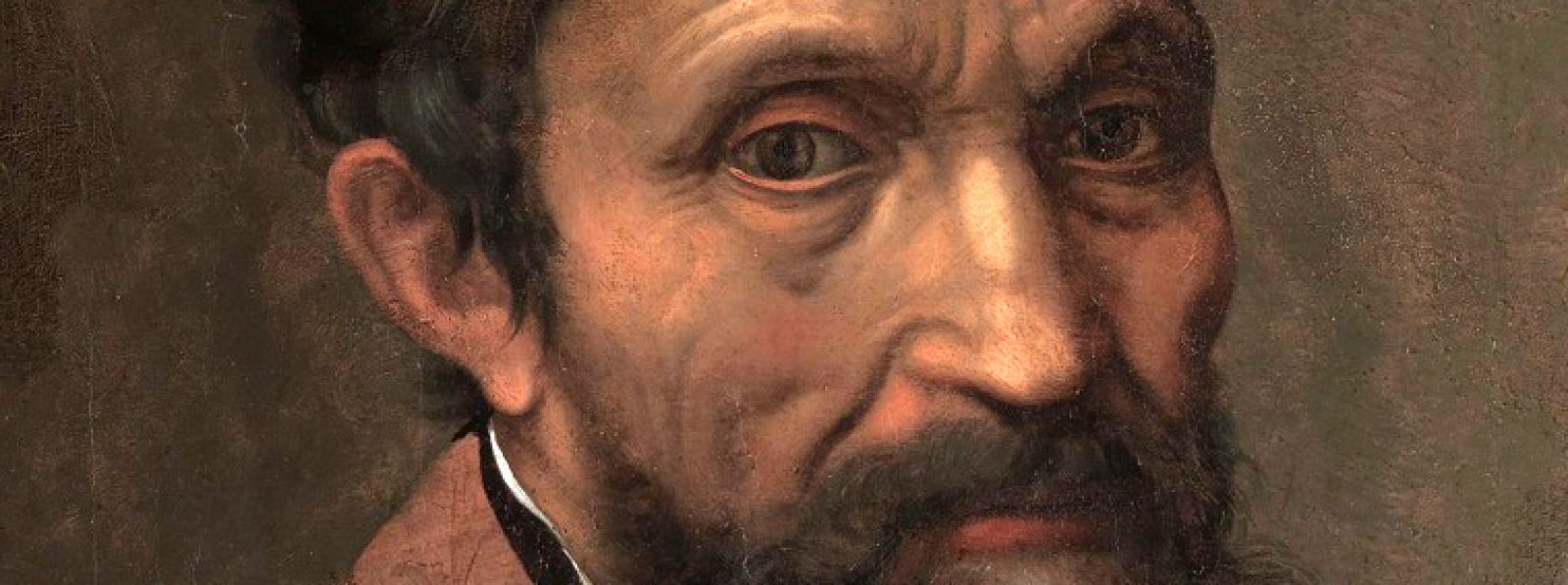
Per il momento il vostro Michelangelo Buonarroti vi saluta dandovi appuntamento ai prossimi post e sui social.
The Hall of Geographic Maps of Palazzo Vecchio
The Room of Geographical Maps is the most important in the Western world which re-proposes the maps of the known world in the second half of the sixteenth century. The room as you see it today was designed by Giorgio Vasari for Cosimo I de ‘Medici and built between 1562 and 1563.
The characteristics of the room
The Hall, also known as the Hall of the Wardrobe or of the Cabinets, is located at the end of the museum itinerary of Palazzo Vecchio. Built on the architectural project of my dear friend Giorgio Vasari, it has four walls covered with wardrobes, made by Dionigi Nigetti, which Cosimo I de ‘Medici used to store very precious goods.
Subsequently the doors were decorated with 53 maps painted in oil both by the cartographer friar Ignazio Danti and by Buonsignori. Does the surname Danti remind us of anything? Well yes, Ignazio Danti was the brother of the most famous sculptor Vincenzo who allowed himself to be greatly influenced by my works.
Both Danti and Buonsignori followed the old-fashioned Ptolemaic system for the motion of the stars but instead for the maps they chose the innovative Mercator system, which is the one you continue to use today.
The Mappa Mundi
In the center of the room is the large globe, made in 1581 by Danti together with Buonsignori. Think that for many years that was the representation of the largest globe that existed.
The sphere today is very much ruined due to careless exposures in the past. The original base has been lost and it is a real shame because it was equipped with a system that allowed the globe to turn on itself easily as Danti himself wrote “moved in any direction by the touch of a single finger”.
Curiosity
You know, behind the doors decorated with maps there are not always lockers but also secret passages. The card that represents Armenia is actually a door that leads into the dressing room of Francesco I’s second wife, Bianca Cappello. The secret passages allowed the Medici to move from one environment to another without being noticed and could be used both in case of imminent danger and for very different reasons.
For the moment, your Michelangelo Buonarroti greets you by giving you an appointment at the next posts and on social networks.

Sostienici – Support Us
Se questo blog ti piace e ti appassiona, puoi aiutarci a farlo crescere sempre più sostenendoci in modo concreto condividendo i post, seguendo le pagine social e con un contributo che ci aiuta ad andare avanti con il nostro lavoro di divulgazione. . ENGLISH: If you like and are passionate about this blog, you can help us make it grow more and more by supporting us in a concrete way by sharing posts, following social pages and with a contribution that helps us to move forward with our dissemination work.
5,00 €
-
La Lavanda dei Piedi di Tintoretto: Il Capolavoro Veneziano al Prado
🇮🇹Tra i capolavori più affascinanti del Rinascimento veneziano, “La Lavanda dei Piedi” di Jacopo Tintoretto rappresenta un perfetto equilibrio tra spiritualità, innovazione compositiva e straordinaria forza narrativa… 🇬🇧Among the most fascinating masterpieces of the Venetian Renaissance, Jacopo Tintoretto’s “The Washing of the Feet” represents a perfect balance between spirituality, compositional innovation, and extraordinary narrative force…
-
Il Sacrificio di Isacco e quel momento tra la vita e la morte
🇮🇹Oggi voglio raccontarvi alcuni dettagli sul mio disegno del Sacrificio di Isacco, conservato oggi a Casa Buonarroti. Su quel foglio volli tracciare il momento preciso in cui la paura fa spazio al miracolo… 🇬🇧Today I want to tell you some details about my drawing of the Sacrifice of Isaac, now preserved at Casa Buonarroti. On…
-
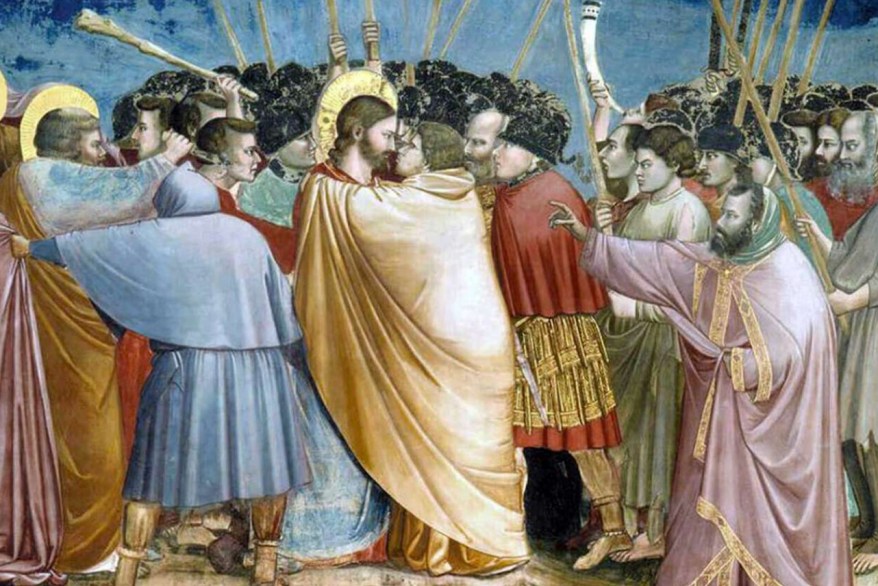
Mercoledì Santo: il giorno del tradimento di Giuda affrescato da Giotto
🇮🇹Il Mercoledì Santo è il giorno del silenzio, della riflessione e del tradimento. È il momento in cui Giuda sceglie di vendere Gesù per trenta denari, segnando uno dei passaggi più dolorosi della Settimana Santa…. 🇬🇧Holy Wednesday is a day of silence, reflection, and betrayal. ✝It is the moment when Judas chooses to sell Jesus…
Condividi:


Questo sono io





sostienici

Sostienici – Support Us
Se questo blog ti piace e ti appassiona, puoi aiutarci a farlo crescere sempre più sostenendoci in modo concreto condividendo i post, seguendo le pagine social e con un contributo che ci aiuta ad andare avanti con il nostro lavoro di divulgazione. . ENGLISH: If you like and are passionate about this blog, you can help us make it grow more and more by supporting us in a concrete way by sharing posts, following social pages and with a contribution that helps us to move forward with our dissemination work.
€10,00


1 commento »