

San Girolamo inginocchiato
Disegnai il San Girolamo Inginocchiato con un inchiostro bruno seppia e uno grigio scuro.
Il Santo se ne sta lì, dinnanzi alla sua grotta, inginocchiato e completamente nudo. Ha con sé un mantello sostenuto dalla spalla destra che lentamente gli scivola sul fianco destro per finire sotto le ginocchia.
Le gambe non vi ricordano forse quelle del Torso del Belvedere messe però in posizione rovesciata? Più di un esperto ha avanzato l’ipotesi che mi fossi realizzato un modello di cera o di gesso di questa celeberrima appartenente ai Musei Vaticani per studiarne a distanza ravvicinata tutte le possibili varianti.
Non sono poche infatti le mie opere che hanno in comune con il Torso del Belvedere l’atteggiamento. In effetti quell’opera lì è uno dei capisaldi della storia dell’arte: risultò difficile farne a meno sia per me che per altri artisti a me contemporanei.
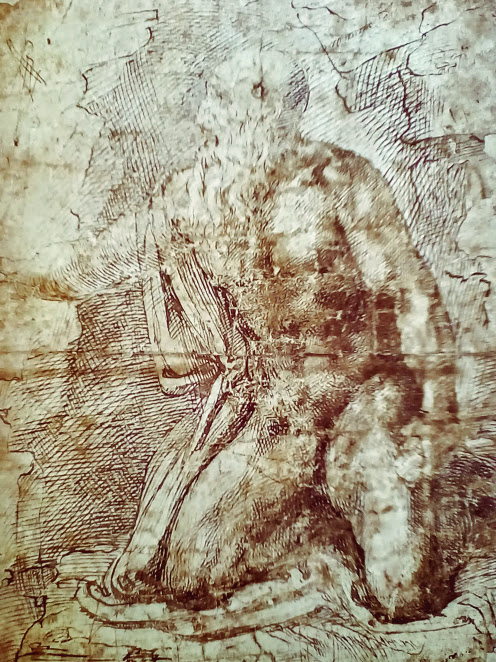
Questo foglio appartenente alle collezioni del Louvre è parecchio consumato e danneggiato ai margini. Una brutta piegatura trasversale lo ha reso ancora più fragile tanto che nell’Ottocento si decise di controfondarlo.
Il recto del foglio aggiunto reca una dicitura firmata L.C., presumibilmente scritta da Lionel Cust “Je crois que un dessin original de Michel-nge aura servi comme base de ceci. Le peu d’ecriture est biende la main de Michel-Ange époque florentine 1500-1510”.
Le scritte presenti sul foglio originale sono due e riportano la medesima dicitura: ieronimo sacto.
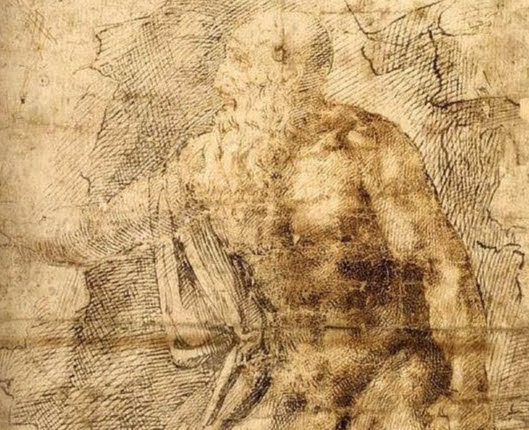
Il San Girolamo inginocchiato fu attribuito a me in via definitiva da quel grande uomo di Charles de Tolnay. A quanto pare lo avrei realizzato poco prima del marzo 1505, cioè è precedente alla mia dipartita da Firenze alla volta di Roma. Nelle mie opere di quel periodo c’era parecchia monumentalità e anche la grafia notata nelle due scritte presenti può essere ricondotta proprio a quel periodo là.
Il sempre vostro Michelangelo Buonarroti con i suoi tormenti e i suoi disegni scampati ai roghi.
The San Girolamo kneeling down
This kneeling Saint Jerome I drew with a brown sepia ink and a dark gray ink at the Louvre in Paris. St. Jerome stands there in front of his cave, kneeling and completely naked. He actually has a cloak supported by his right shoulder but slips on his side to finish under his knees. Don’t your legs remind you of those of the Torso del Belvedere, though placed in an upside down position? More than one expert has advanced the hypothesis that I had created a wax or plaster model of this famous work currently preserved in the Vatican Museums to study all possible variants at close range.
In fact, my works are not few in common with the Belvedere Torso. Yes, indeed that work there is one of the cornerstones of art history: it was difficult to do without it both for me and for other contemporary artists.
This sheet is quite worn and damaged on the edges. An ugly cross fold made it even more fragile, so much so that in the nineteenth century it was decided to bundle it. The recto of the added sheet bears an inscription signed LC, presumably written by Lionel Cust “Je crois que dessin de Michel-nge aura serve comme base de ceci. Le peu d’ecriture est biende the main de Michel-Ange époque florentine 1500 -1510 “. The writings on the original sheet are two and bear the same words: hieronimo sacto. The kneeling San Girolamo was attributed to me definitively by that great man of Charles de Tolnay.
Apparently I would have realized it shortly before March 1505, or before my departure for Rome. In my works of that period there was a lot of monumentality and also the spelling noted in the two present writings can be traced back to that very period there. The always yours Michelangelo Buonarroti with his torments and his drawings escaped the fires.

Sostienici – Support Us
Se questo blog ti piace e ti appassiona, puoi aiutarci a farlo crescere sempre più sostenendoci in modo concreto condividendo i post, seguendo le pagine social e con un contributo che ci aiuta ad andare avanti con il nostro lavoro di divulgazione. . ENGLISH: If you like and are passionate about this blog, you can help us make it grow more and more by supporting us in a concrete way by sharing posts, following social pages and with a contribution that helps us to move forward with our dissemination work.
5,00 €
-
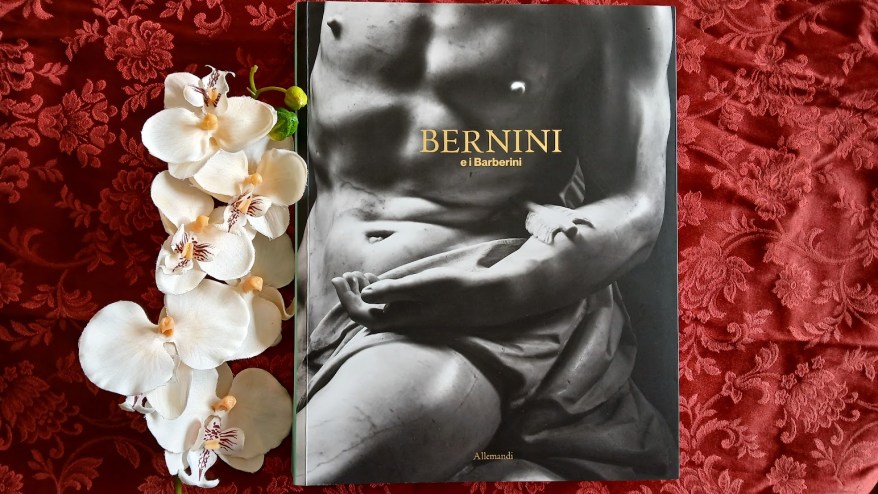
Dentro il catalogo di Bernini e i Barberini: arte, potere e immagini mozzafiato
Arte, storia e immagini sorprendenti: il catalogo “Bernini e i Barberini” racconta il legame tra Bernini e Urbano VIII in modo unico.
-
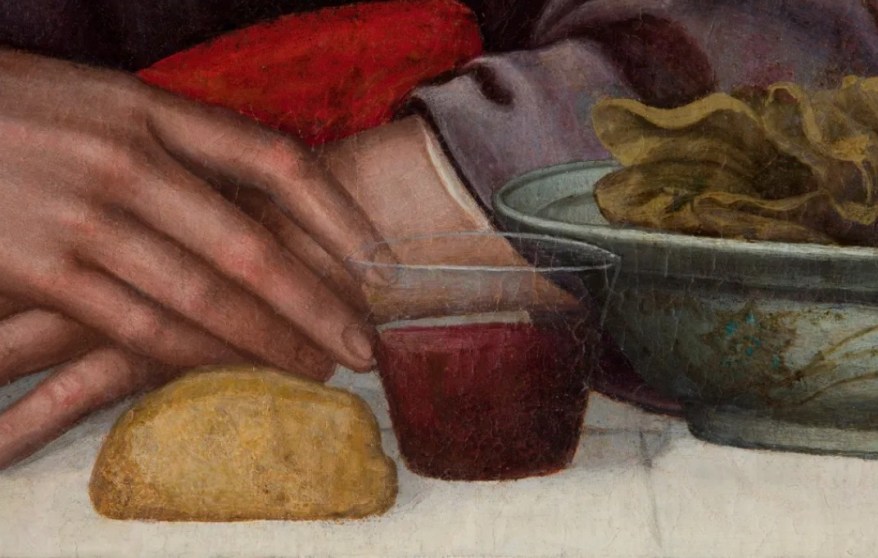
Pasqua: l’Ultima Cena della monaca pittrice Plautilla Nelli
🇮🇹Nel tempo della Pasqua, tra riflessione e rinascita, emerge la figura straordinaria di Plautilla Nelli: un’artista che, sfidando i limiti imposti alle donne, ha lasciato un segno profondo nella storia del Rinascimento. Vi propongo il suo capolavoro: l’Ultima Cena di Santa Maria Novella, a Firenze 🇬🇧During the Easter season, between reflection and rebirth, the extraordinary…
-
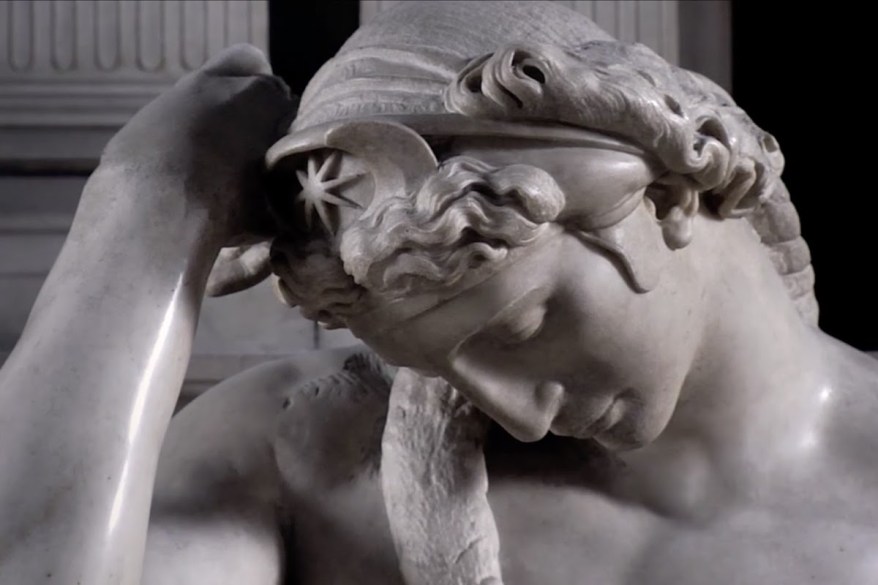
Il Giorno e la Notte: eterni nel loro alternarsi
🇮🇹Il marmo respira? No, ma è capace di trattenere il fiato fissando nell’eternità momenti che altrimenti si perderebbero per sempre… 🇬🇧Does marble breathe? No, but it is capable of holding its breath, capturing in eternity moments that would otherwise be lost forever…
Condividi:


Questo sono io





sostienici

Sostienici – Support Us
Se questo blog ti piace e ti appassiona, puoi aiutarci a farlo crescere sempre più sostenendoci in modo concreto condividendo i post, seguendo le pagine social e con un contributo che ci aiuta ad andare avanti con il nostro lavoro di divulgazione. . ENGLISH: If you like and are passionate about this blog, you can help us make it grow more and more by supporting us in a concrete way by sharing posts, following social pages and with a contribution that helps us to move forward with our dissemination work.
€10,00


