
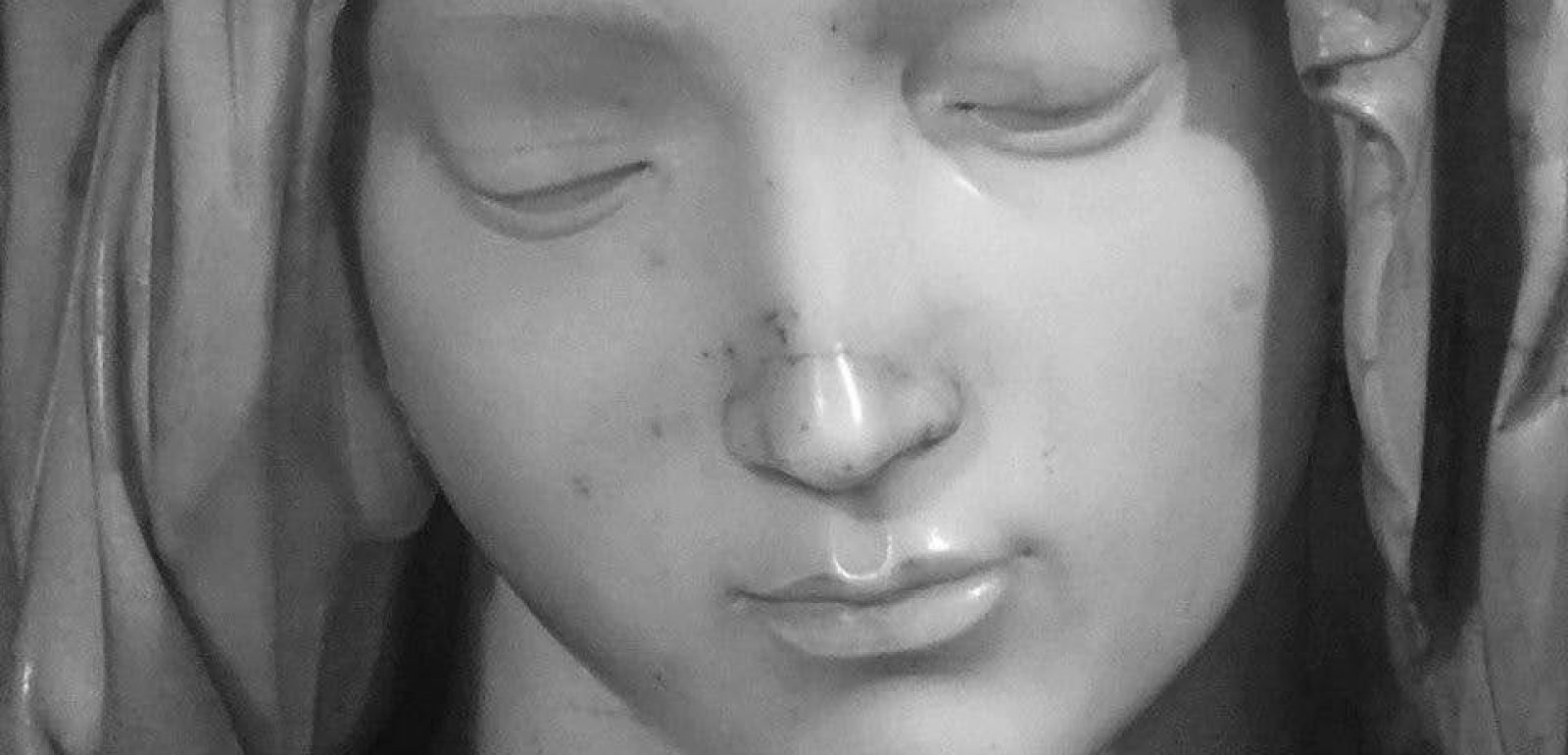
La Pietà di Tincolini: a Pontedera l’arte torna a fare domande scomode
Al Teatro Era, nel contesto del festival letterario Ponte di Parole, è andato in scena ieri qualcosa che va oltre lo spettacolo. Un attraversamento emotivo che invita a fermarsi, quasi un atto di resistenza interiore che non mette sul piatto risposte ma solo domande.
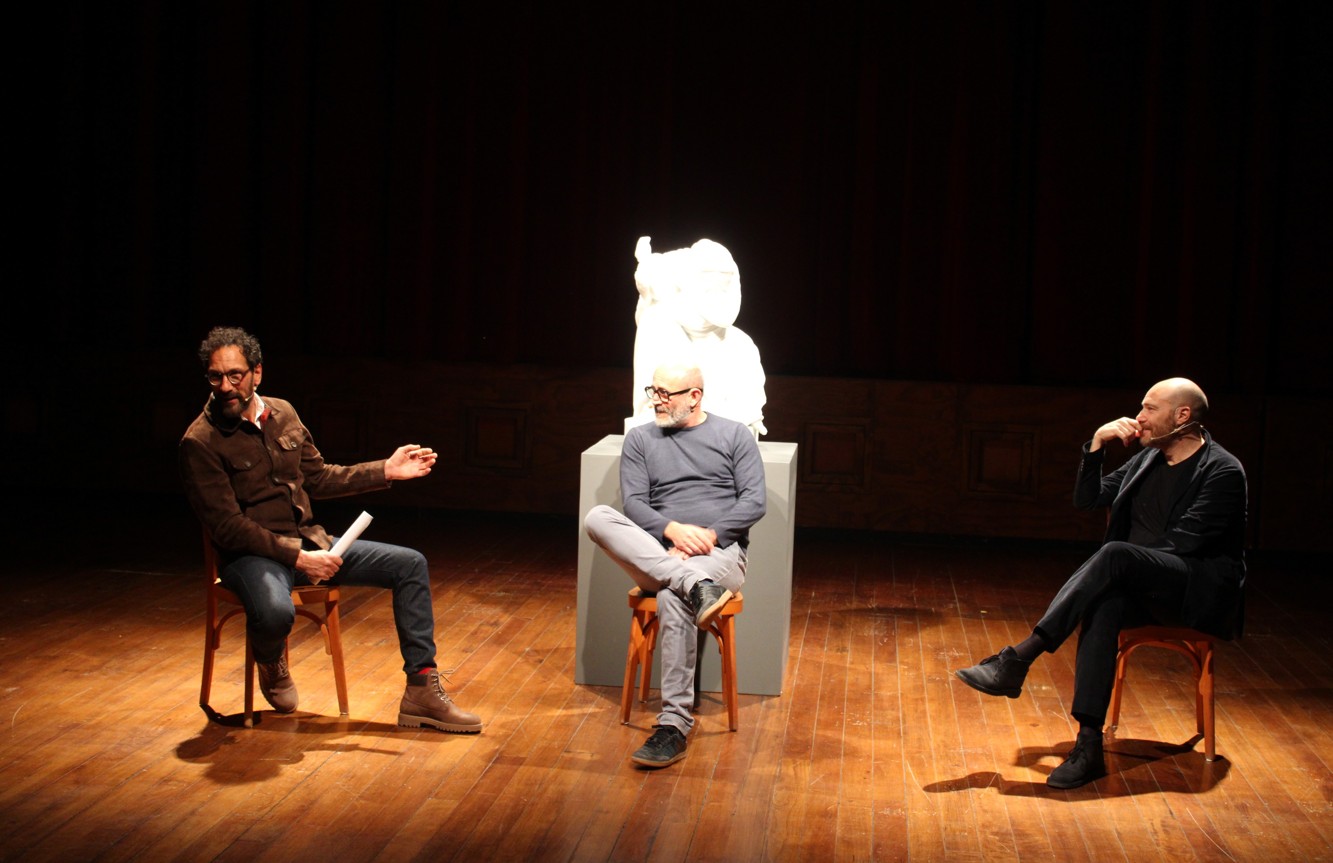
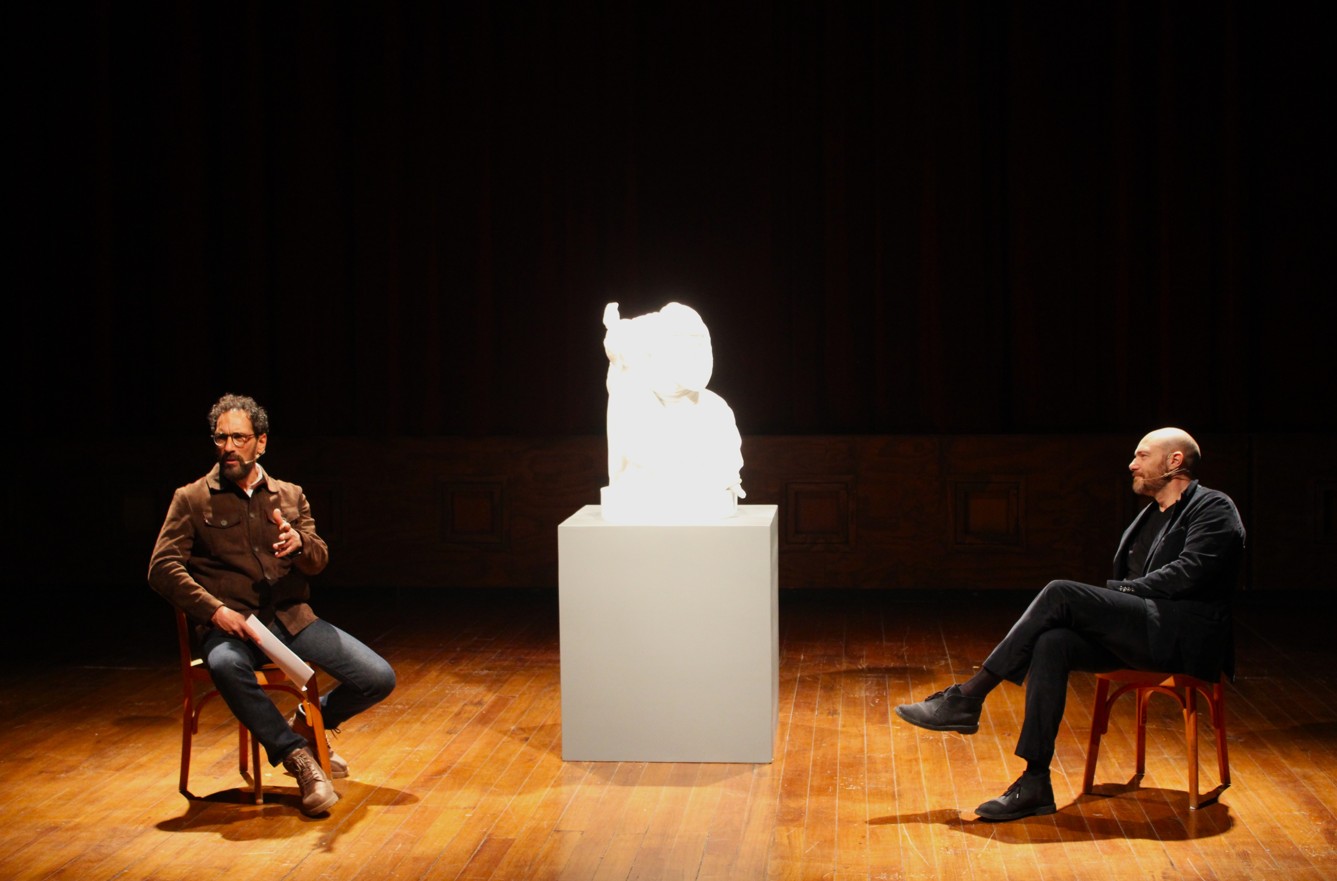
Protagonisti: lo scultore Filippo Tincolini, insieme a Federico Quaranta e Andrea Pezzi. Tre linguaggi diversi – materia, parola, presenza scenica – per una sola domanda: siamo ancora capaci di provare pietà?
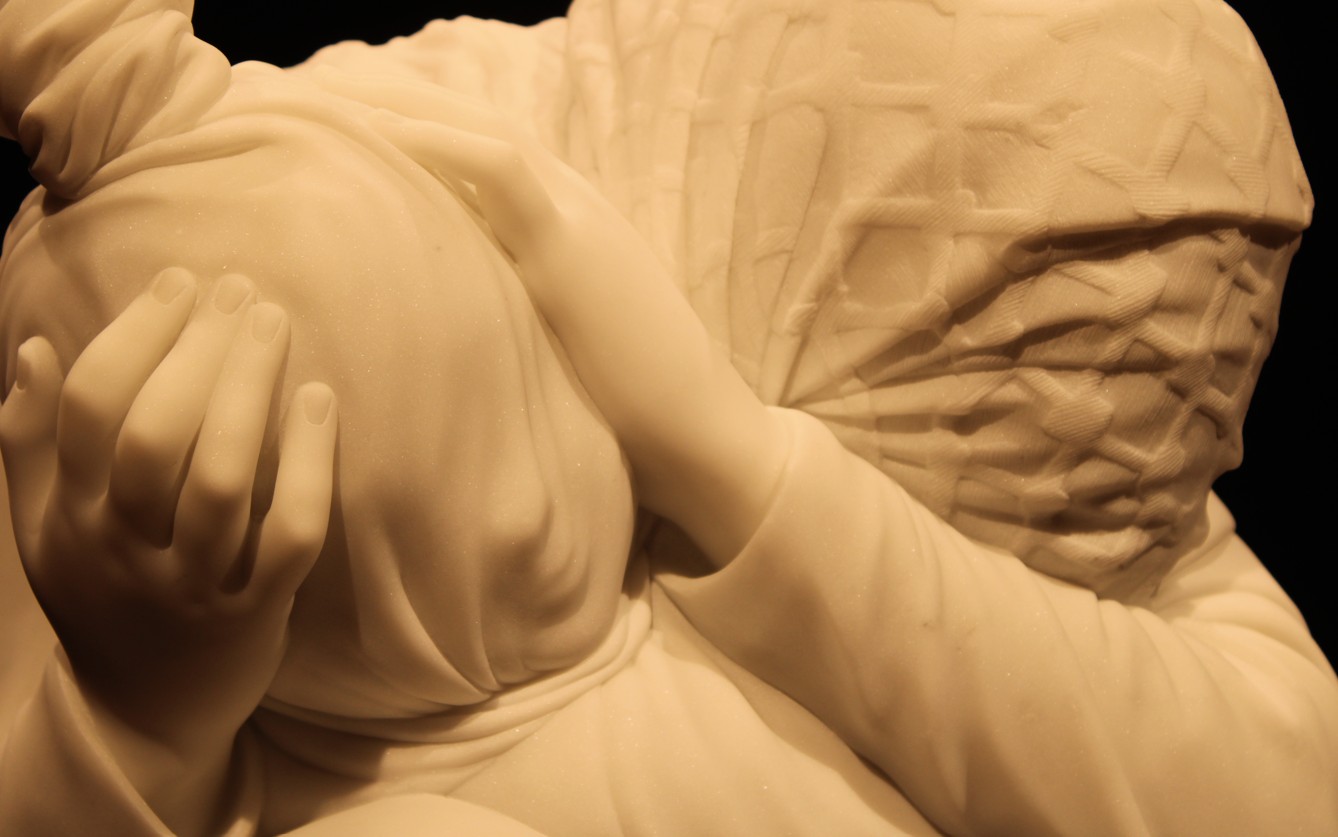
Una scultura che obbliga a guardare
Al centro della scena, giù dal palco, la “Pietà” scolpita da Tincolini. Marmo, silenzio ma soprattutto l’assenza di chi troppo presto ha dovuto fare i conti con monna morte.
Nessun volto. Quella donna che piange il bimbo morto stringendolo tra le braccia è tutte le mamme del mondo che devono affrontare quel dolore: quello più straziante che possa esistere.
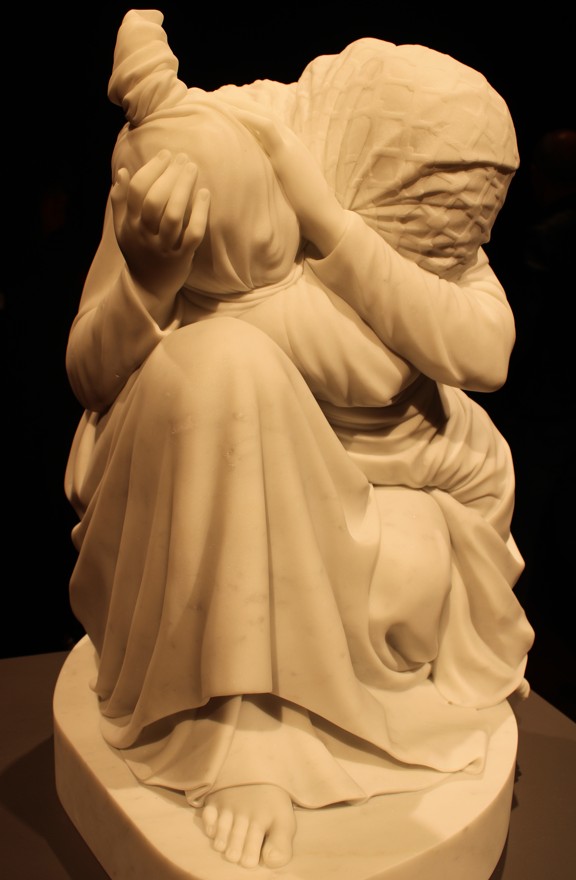
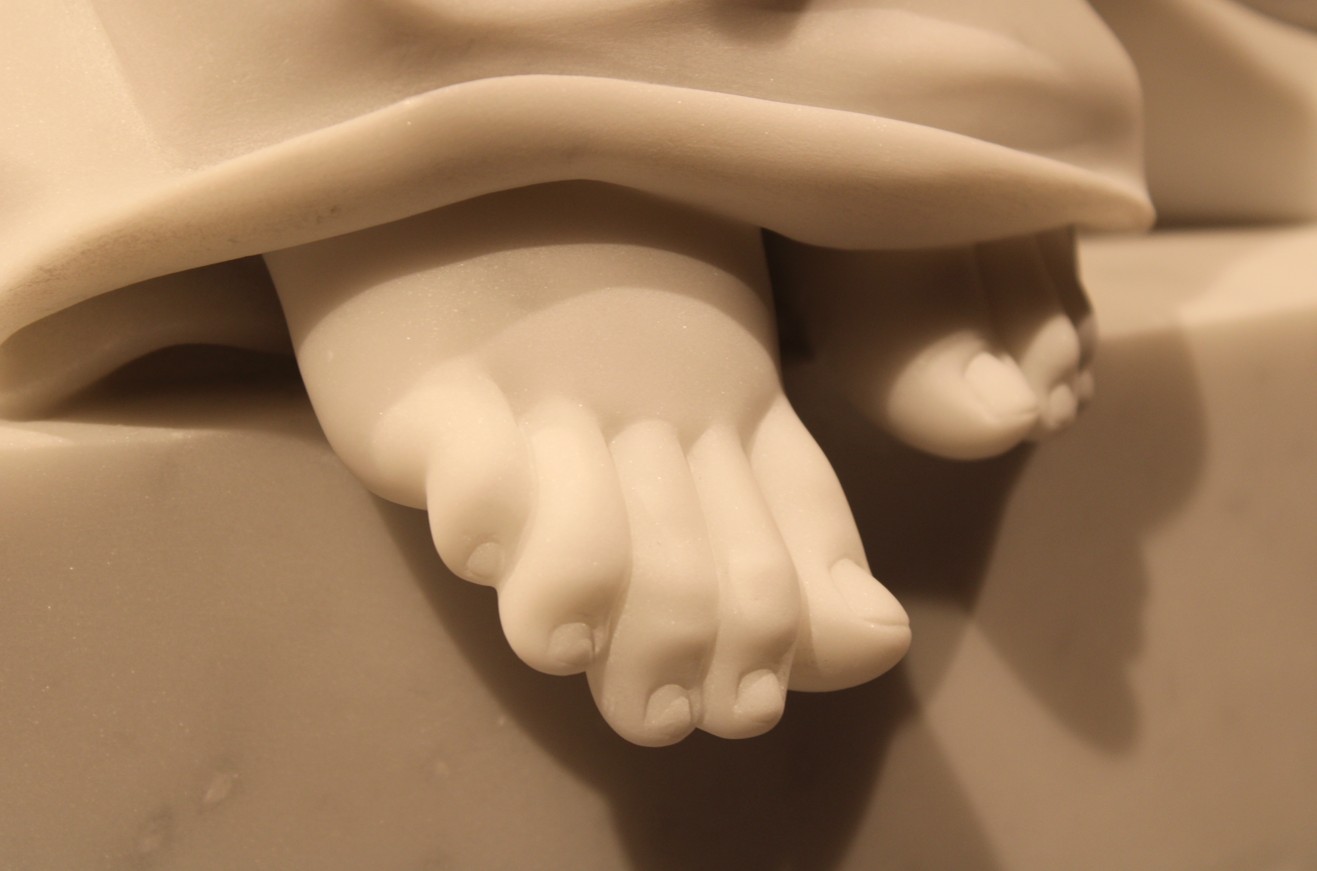
Solo corpi: uno che sostiene, uno che cede. Mani e piedi sono gli unici appigli visivi e quel volto intuibile sotto un sudario serrato alla meno peggio.
La scelta di eliminare i volti toglie l’identità, sì, ma amplifica il riconoscimento. In quell’anonimato ci stiamo dentro tutti e nessuno ha il privilegio di sentirsi escluso.
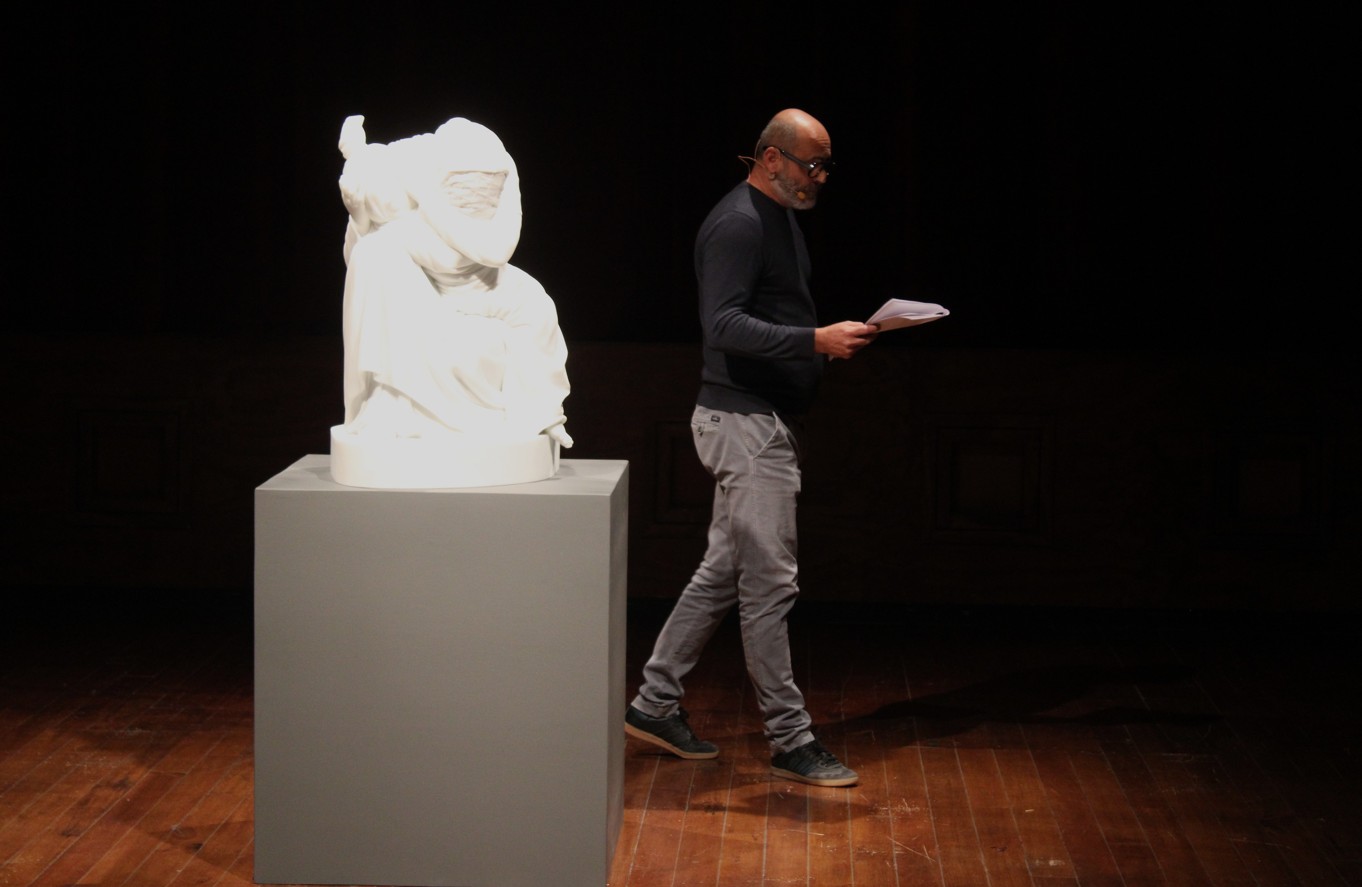
Lo spettacolo: parole che scavano
Lo spettacolo scritto da Federico Quaranta e portato sul palco insieme ad Andrea Pezzi non accompagna lo spettatore indietro nel tempo, tra l’Odissea e l’Iliade, in un viaggio che affonda entrambe le mani nella pietà provata quando ci si riconosce nell’altro.
Ma le parole non spiegano: aprono ferite.
A introdurre il dialogo a due ci pensa Tincolini, mentre gira lentamente attorno alla sua scultura, costringendo il pubblico a non distogliere lo sguardo:
“Viviamo nel momento più straordinario della storia umana. Lo dico senza ironia, con tutto il peso che questa frase merita.
Abbiamo creato macchine che pensano. Abbiamo connesso ogni angolo del pianeta. Abbiamo in tasca più potere di calcolo di quello che serviva per mandare l’uomo sulla Luna.
E contemporaneamente, nello stesso identico momento, ci sono bambini che muoiono sotto le bombe. Ogni giorno. Non in un film, non in un libro di storia: adesso.
Sono qui per fare una domanda: perché lo accettiamo?
Pensate: come vediamo le guerre oggi? Le vediamo in un reel di 30 secondi.”
Silenzio in sala. Non un silenzio vuoto, ma tanto denso da offuscare la vista.
Il cuore del progetto: anestesia o coscienza?
“Pietà” nasce da un’inquietudine condivisa: l’idea che l’eccesso di immagini, informazioni e stimoli abbia progressivamente anestetizzato la nostra capacità di sentire.
Non siamo indifferenti per natura. Lo diventiamo per saturazione.
Lo spettacolo lo dice chiaramente: siamo immersi in un flusso continuo che trasforma anche il dolore reale in contenuto consumabile. E così, senza accorgercene, smettiamo di reagire.
La pietà, quella autentica, profonda, troppo spesso sembra scomparire nel nulla e dura giusto il tempo di pochi secondo, prima di passare ad altro. L’approfondimento però non è un lusso ma è tutto ciò che serve per provare capire, sentire, pensare.
Un’esperienza che resta addosso
Quello andato in scena a Pontedera è un esperimento culturale potente: arte visiva, parola e performance si intrecciano per creare uno spazio di riflessione che non consola e non offre risposte.
Lascia però sospese domande che non si spengono con le luci che illuminano il proscenio.
Siamo ancora capaci di riconoscerci nel dolore dell’altro? O quando abbiamo smesso di farlo?
Per il momento il sempre vostro Michelangelo Buonarroti vi saluta dandovi appuntamento ai prossimi post e sui social.
Tincolini’s Pietà: in Pontedera, art returns to ask uncomfortable questions
At the Teatro Era, as part of the Ponte di Parole literary festival, something beyond the spectacle was staged yesterday. An emotional journey that invites us to pause, almost an act of inner resistance that offers no answers, only questions.
The protagonists: the sculptor Filippo Tincolini, along with Federico Quaranta and Andrea Pezzi. Three different languages—material, words, stage presence—for a single question: are we still capable of feeling pity?
A sculpture that forces us to look.
At center stage, downstage, is the “Pietà” sculpted by Tincolini. Marble, silence, but above all, the absence of those who too soon had to deal with monna morte.
No faces. That woman mourning her dead child, holding him in her arms, represents all the mothers in the world who must face that pain: the most excruciating pain there is.
Only bodies: one who supports, one who gives in. Hands and feet are the only visual points, and that face is discernible beneath a roughly tightened shroud.
The choice to eliminate faces removes identity, yes, but it amplifies recognition. We all fit into that anonymity, and no one has the privilege of feeling excluded.
The show: words that dig
The show, written by Federico Quaranta and brought to the stage with Andrea Pezzi, does not take the spectator back in time, between the Odyssey and the Iliad, on a journey that plunges both hands into the pity felt when we recognize ourselves in another.
But words do not explain: they open wounds.
Tincolini introduces the two-person dialogue as he slowly circles his sculpture, compelling the audience not to look away:
“We live in the most extraordinary moment in human history. I say this without irony, with all the weight this phrase deserves.
We have created machines that think. We have connected every corner of the planet. We have more computing power in our pockets than was needed to send a man to the moon.
And simultaneously, at the exact same moment, children are dying under bombs. Every day. Not in a movie, not in a history book: right now.
I am here to ask a question: why do we accept this?
Think about it: how do we see wars today? We see them on a 30-second reel.”
Silence in the room. Not an empty silence, but one so dense it blurs the vision.
The heart of the project: anesthesia or consciousness?
“Pietà” stems from a shared concern: the idea that an excess of images, information, and stimuli has progressively anesthetized our ability to feel.
We are not indifferent by nature. We become so through saturation.
The show makes it clear: we are immersed in a continuous flow that transforms even real pain into consumable content. And so, without realizing it, we stop reacting.
Pity, the genuine, profound kind, too often seems to disappear into thin air and lasts only a few seconds before moving on to something else. Deeper insight, however, is not a luxury; it is all we need to try to understand, feel, and think.
An experience that lingers
What took place in Pontedera is a powerful cultural experiment: visual art, spoken word, and performance intertwine to create a space for reflection that neither consoles nor offers answers.
However, it leaves open questions that are not extinguished by the lights illuminating the stage.
Are we still capable of recognizing ourselves in the pain of others? Or when did we stop doing so?
For now, yours truly, Michelangelo Buonarroti bids you farewell and invites you to join him in future posts and on social media.

Sostienici – Support Us
Se questo blog ti piace e ti appassiona, puoi aiutarci a farlo crescere sempre più sostenendoci in modo concreto condividendo i post, seguendo le pagine social e con un contributo che ci aiuta ad andare avanti con il nostro lavoro di divulgazione. . ENGLISH: If you like and are passionate about this blog, you can help us make it grow more and more by supporting us in a concrete way by sharing posts, following social pages and with a contribution that helps us to move forward with our dissemination work.
10,00 €
Articoli
Condividi:


Questo sono io





sostienici

Sostienici – Support Us
Se questo blog ti piace e ti appassiona, puoi aiutarci a farlo crescere sempre più sostenendoci in modo concreto condividendo i post, seguendo le pagine social e con un contributo che ci aiuta ad andare avanti con il nostro lavoro di divulgazione. . ENGLISH: If you like and are passionate about this blog, you can help us make it grow more and more by supporting us in a concrete way by sharing posts, following social pages and with a contribution that helps us to move forward with our dissemination work.
€10,00


