
Il Sacrificio di Isacco e quel momento tra la vita e la morte
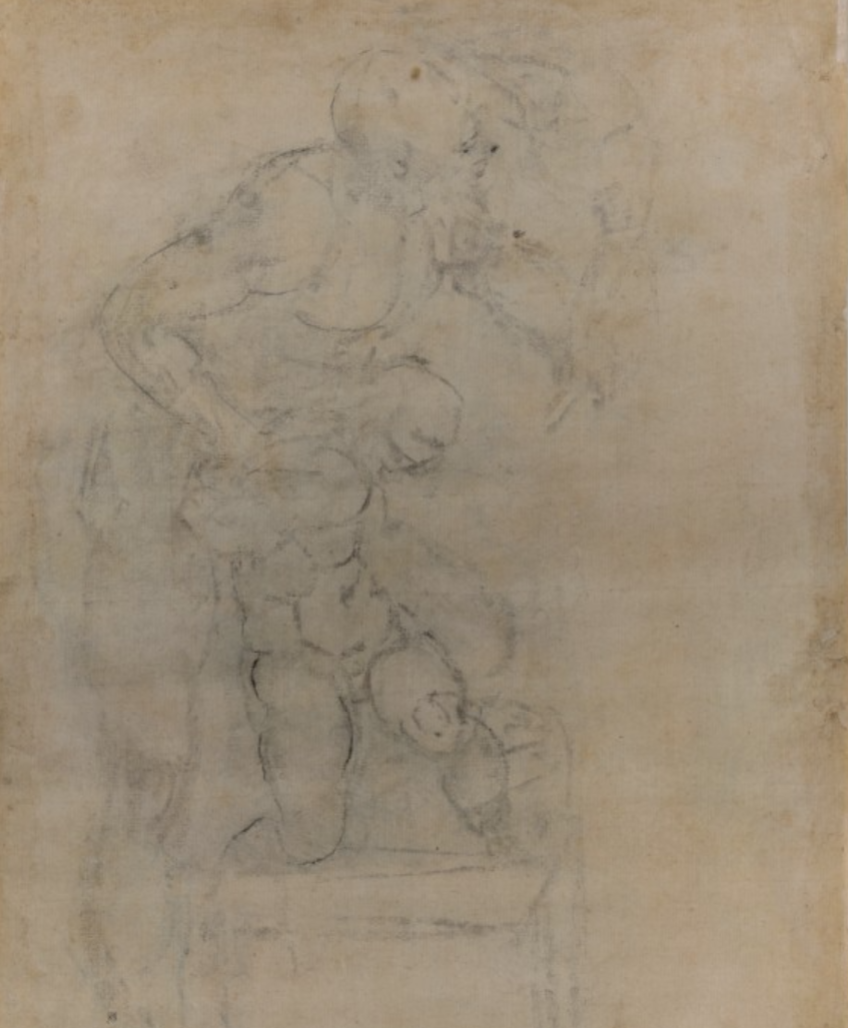
Oggi voglio raccontarvi alcuni dettagli sul mio disegno del Sacrificio di Isacco, conservato oggi a Casa Buonarroti.
Su quel foglio volli tracciare il momento preciso in cui la paura fa spazio al miracolo, quando il gesto di Abramo viene fermato fisicamente dall’angelo. Misi mano al disegno tra il 1524 e il 1526.
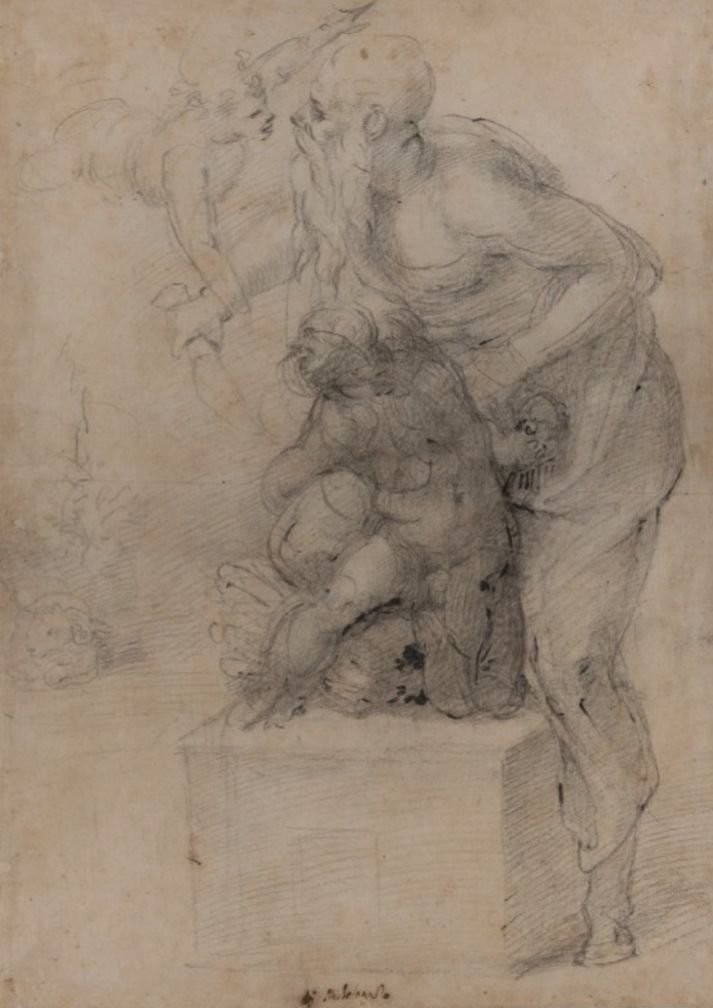
In questo studio, Abramo si erge dietro l’altare, la barba lunga che incornicia uno sguardo che tradisce il peso di un comando divino. Trattiene Isacco con la mano sinistra e la gamba destra, pronto a immolarlo. Ma il figlio, che ho voluto rappresentare non come fragile o rassegnato, si dibatte con un busto eroico, in un movimento di disperata difesa.
Le sue linee contorte occupano lo spazio, rilevando profondità e drammaticità. Lì contrasto tra la forza del padre e la resistenza del figlio diventa palpabile: scolpii quella tensione solo con il segno della matita.
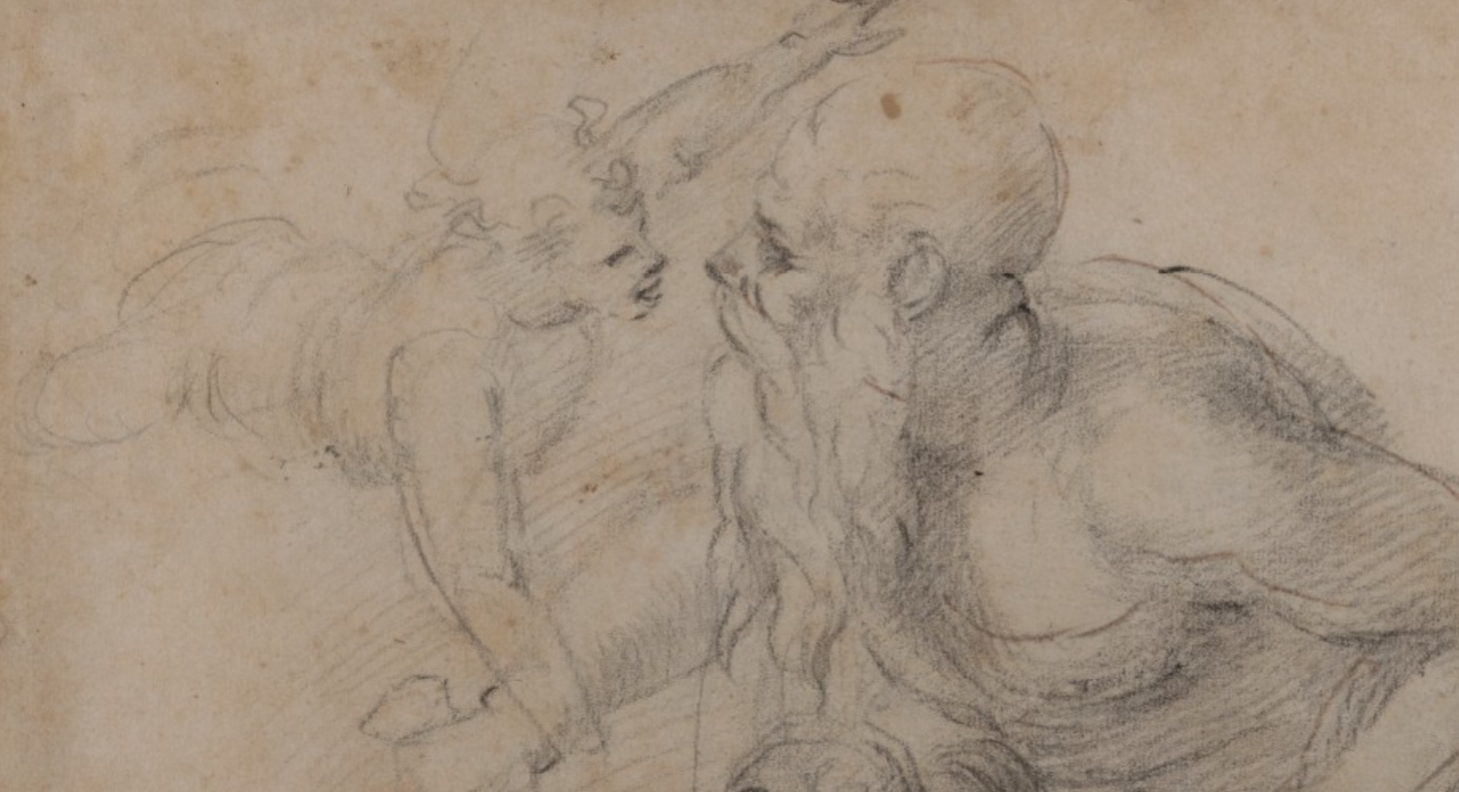
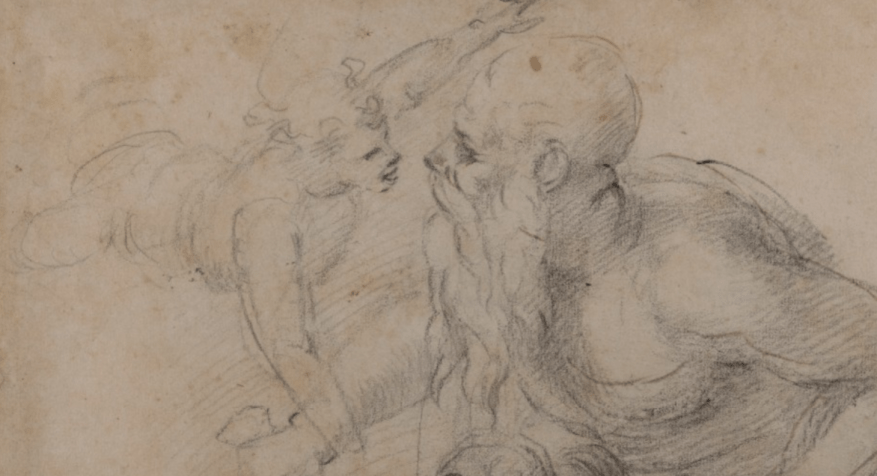
Un angelo, sospeso dall’alto, interviene: afferra il polso di Abramo e indica il cielo, è la volontà di Dio. A sinistra, il capro espiatorio attende, silenzioso testimone del miracolo imminente.
Ho voluto rendere ogni muscolo, ogni torsione, ogni gesto con plasticità e vigore, perché l’evento biblico potesse parlare con la stessa potenza di una scultura.
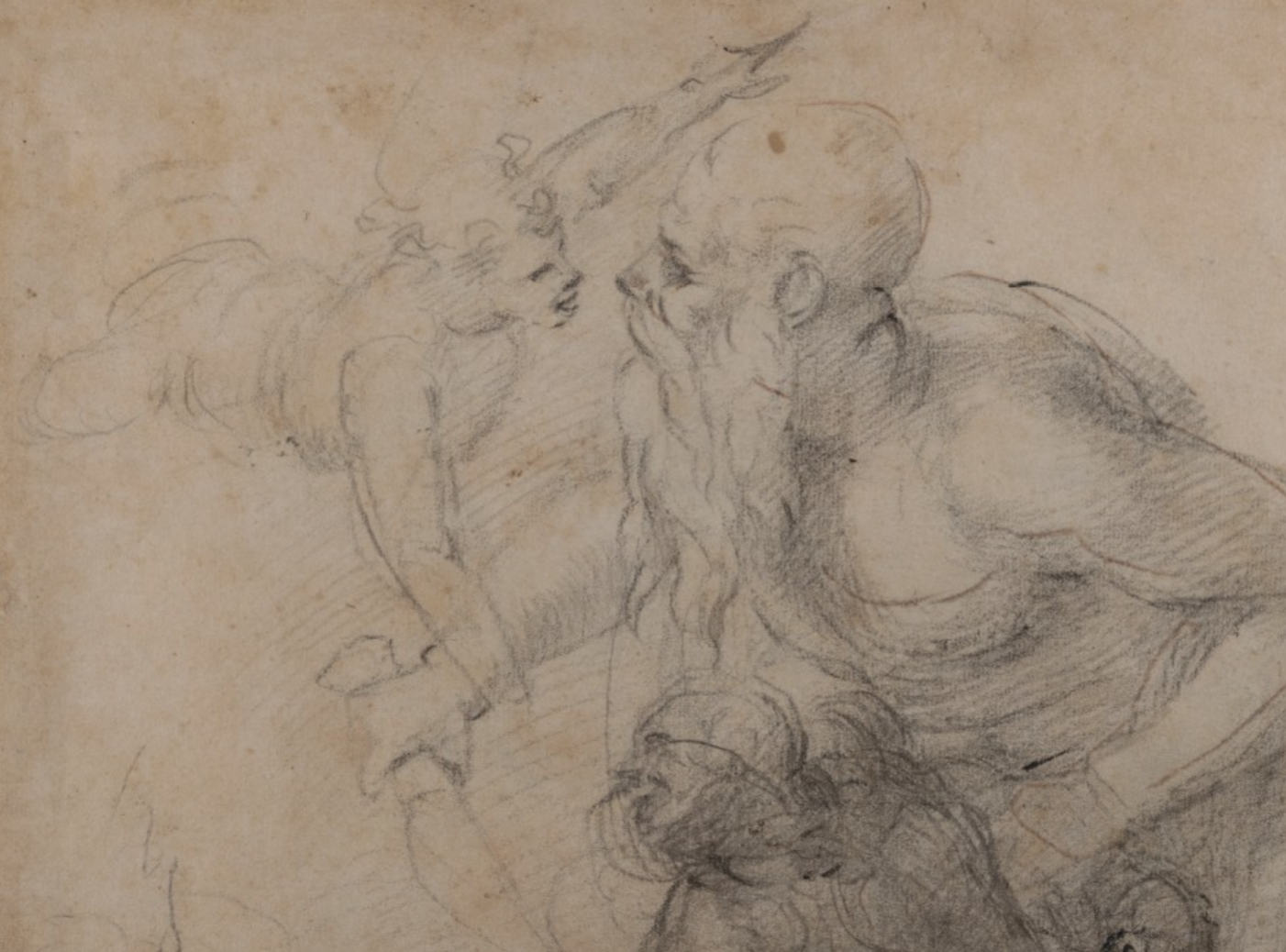
Dal punto di vista tecnico, ho iniziato a tracciare contorni a matita rossa, come guide veloci, poi ho definito con matita nera, morbida e frenetica, le luci e le ombre. Ogni tratto è deciso: niente esitazioni, niente eccessi. Ho ripassato più volte il corpo di Isacco, creando un’aureola di materia che rafforza il senso di movimento. Le ampie campiture d’ombra, i chiaroscuri inclinati rispetto al foglio, tutto concorre a dare immediatezza e drammaticità alla scena.
Non sappiamo con certezza a quale opera fosse destinato questo studio. Alcuni studiosi lo collegano a un progetto per le tombe dei papi Medici, Leone X e Clemente VII, ideate e presto abbandonate da papa Clemente VII.
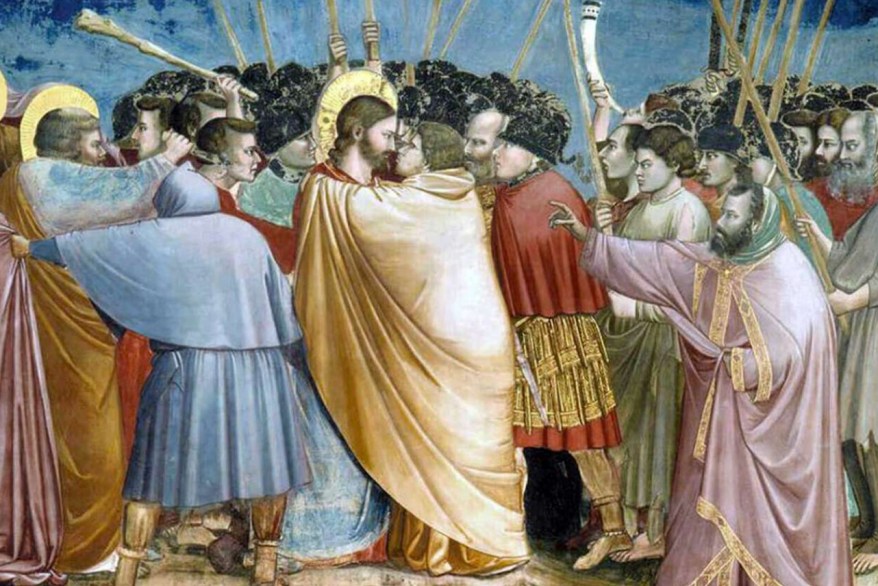
Altri ci vedono un omaggio alla tradizione fiorentina, in particolare alla formella di Brunelleschi del 1401 o ai gruppi di Donatello e Nanni di Bartolo, simboli di un’arte che ha influenzato la mia giovinezza.
Durante un restauro del 2016, sul verso del foglio è emersa una seconda versione dello studio, simile ma con variazioni minime nella composizione, testimonianza del mio continuo processo di ricerca e perfezionamento.
Ogni volta che mi ritrovo tra le mani questo foglio, vedo non solo Abramo e Isacco, ma la tensione eterna tra obbedienza e salvezza, tra uomo e divino.
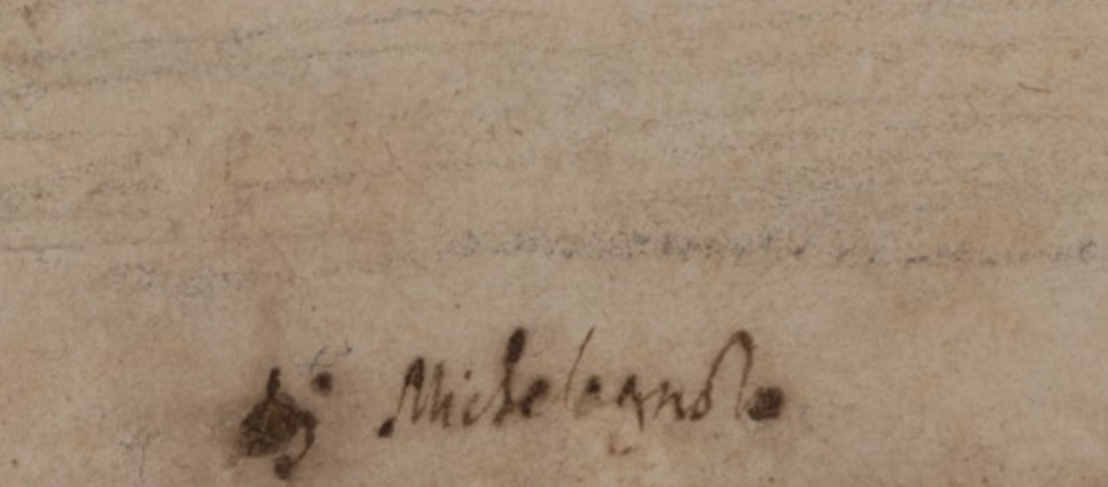
Ah, in basso si vede scritto il mio nome: non è una mia firma ma una scritta lasciata dal mio nipote Michelangelo Buonarroti il Giovane.
Per il momento il sempre vostro Michelangelo Buonarroti vi saluta dandovi appuntamento ai prossimi post e sui social.
The Sacrifice of Isaac and that moment between life and death
Today I want to share some details about my drawing of the Sacrifice of Isaac, now housed in the Casa Buonarroti.
On that sheet of paper, I wanted to capture the precise moment when fear gives way to miracle, when Abraham’s gesture is physically stopped by the angel. I began the drawing between 1524 and 1526.
In this study, Abraham stands behind the altar, his long beard framing a gaze that betrays the weight of a divine command. He holds Isaac with his left hand and right leg, ready to sacrifice him. But his son, whom I wanted to portray not as fragile or resigned, struggles with a heroic torso, in a desperate defensive movement. His twisted lines occupy the space, revealing depth and drama. There, the contrast between the father’s strength and the son’s resistance becomes palpable: I sculpted that tension with only the pencil strokes.
An angel, suspended from above, intervenes: he grasps Abraham’s wrist and points to the sky, it is God’s will. On the left, the scapegoat waits, a silent witness to the impending miracle. I wanted to render every muscle, every twist, every gesture with plasticity and vigor, so that the biblical event could speak with the same power as a sculpture.
From a technical standpoint, I began by tracing outlines in red pencil, like quick guides, then I defined the lights and shadows with a soft, frenetic black pencil. Each stroke is decisive: no hesitation, no excess. I traced Isaac’s body several times, creating a halo of matter that reinforces the sense of movement. The broad areas of shadow, the chiaroscuro angled to the paper, all contribute to giving the scene immediacy and drama.
We are not sure for which work this study was intended. Some scholars connect it to a project for the tombs of the Medici popes, Leo X and Clement VII, conceived and soon abandoned by Pope Clement VII.
Others see it as a tribute to Florentine tradition, particularly Brunelleschi’s 1401 panel or the groups by Donatello and Nanni di Bartolo, symbols of an art that influenced my youth.
During a 2016 restoration, a second version of the study emerged on the back of the sheet, similar but with minimal variations in composition, a testament to my ongoing research and refinement.
Every time I hold this sheet in my hands, I see not only Abraham and Isaac, but the eternal tension between obedience and salvation, between man and the divine.
Ah, and at the bottom you can see my name: it’s not my signature, but an inscription left by my nephew Michelangelo Buonarroti the Younger.
For now, yours truly, Michelangelo Buonarroti bids you farewell and says hello to future posts and social media.

Sostienici – Support Us
Se questo blog ti piace e ti appassiona, puoi aiutarci a farlo crescere sempre più sostenendoci in modo concreto condividendo i post, seguendo le pagine social e con un contributo che ci aiuta ad andare avanti con il nostro lavoro di divulgazione. . ENGLISH: If you like and are passionate about this blog, you can help us make it grow more and more by supporting us in a concrete way by sharing posts, following social pages and with a contribution that helps us to move forward with our dissemination work.
10,00 €
Condividi:


Questo sono io





sostienici

Sostienici – Support Us
Se questo blog ti piace e ti appassiona, puoi aiutarci a farlo crescere sempre più sostenendoci in modo concreto condividendo i post, seguendo le pagine social e con un contributo che ci aiuta ad andare avanti con il nostro lavoro di divulgazione. . ENGLISH: If you like and are passionate about this blog, you can help us make it grow more and more by supporting us in a concrete way by sharing posts, following social pages and with a contribution that helps us to move forward with our dissemination work.
€10,00


