
Galleria Borghese riapre le mostre dossier: due esposizioni per riscoprire Penni e Provenzale
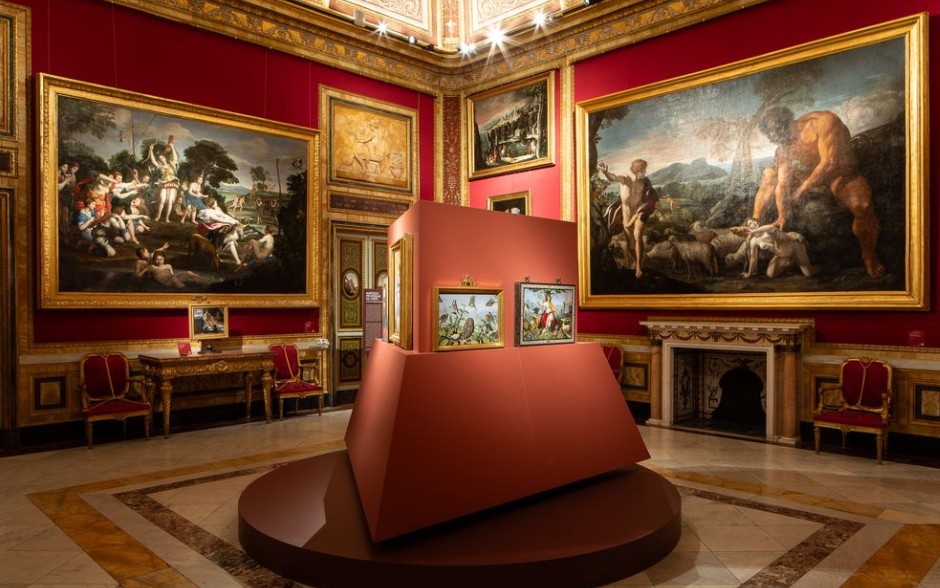
Dal 17 marzo al 10 maggio 2026, la Galleria Borghese torna protagonista della scena culturale romana con due mostre dossier che mettono al centro la ricerca scientifica del museo e il valore storico delle sue collezioni. Si tratta di un doppio appuntamento che unisce studio, riscoperta e valorizzazione, offrendo al pubblico una lettura approfondita di due momenti chiave della storia artistica tra Rinascimento e Barocco.
Le esposizioni “Ritorno alla Galleria Borghese. Giovan Francesco Penni e la bottega di Raffaello” e “Marcello Provenzale da Cento. Un genio del mosaico barocco nella Roma dei Borghese” rappresentano un nuovo capitolo nella programmazione del museo, orientato a indagare nuclei specifici della collezione attraverso progetti mirati e ad alto valore scientifico.
Il ritorno di un capolavoro: Penni e la bottega di Raffaello
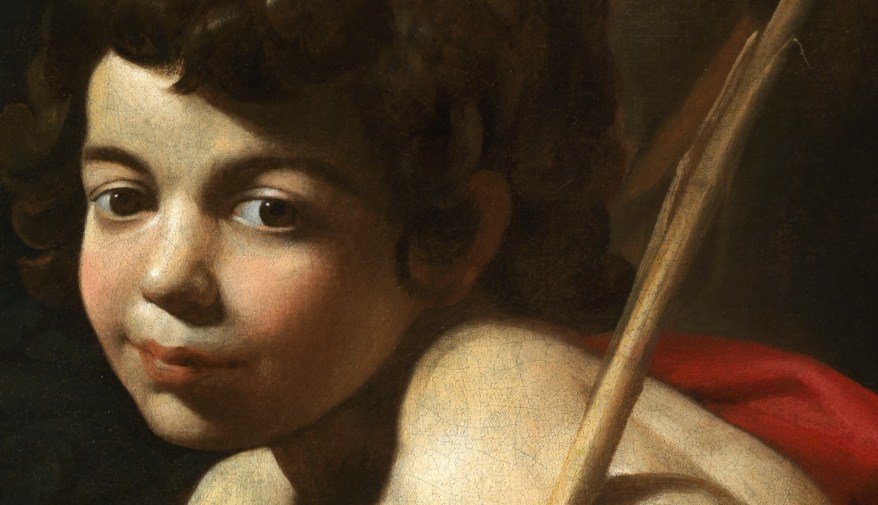
La prima mostra celebra un importante recupero: l’“Allegoria della Buona Speranza”, attribuita a Giovan Francesco Penni, rientrata nella collezione nel 2025 dopo un’acquisizione all’asta. L’opera, già documentata negli inventari seicenteschi come appartenente alla raccolta Borghese, torna così nella sua sede originaria dopo oltre due secoli.
L’esposizione ricostruisce il contesto storico e artistico dell’opera, mettendola in dialogo con la “Carità”, suo pendant originario oggi in collezione privata. Questa ricomposizione consente di rileggere un passaggio cruciale nella dispersione delle opere della famiglia Borghese tra la fine del Settecento e l’epoca napoleonica.
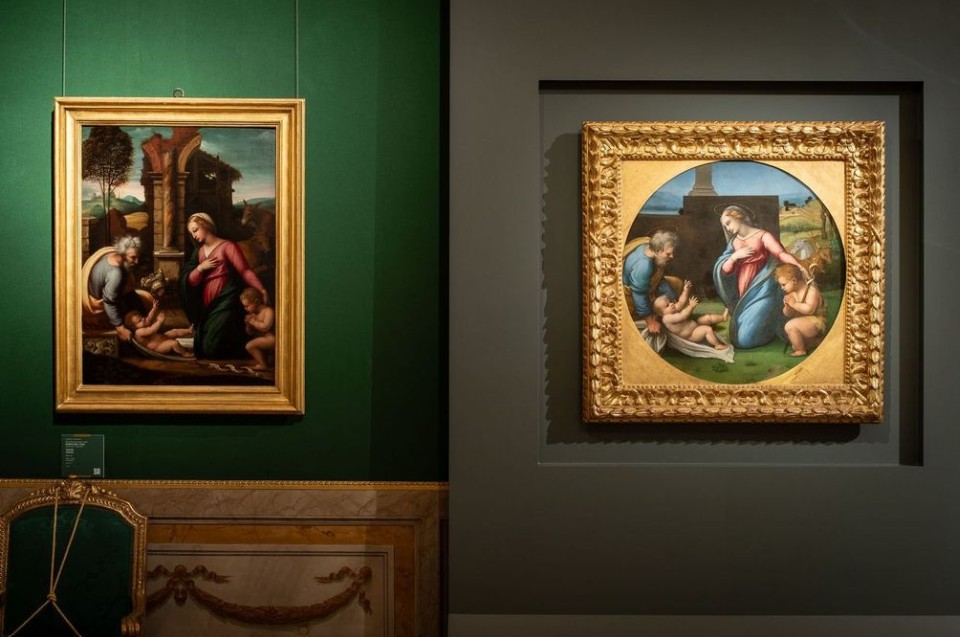
Al centro del percorso emerge la figura di Giovan Francesco Penni, tra i più fedeli collaboratori di Raffaello. La mostra approfondisce il suo ruolo all’interno della bottega, evidenziando il contributo nella diffusione del linguaggio raffaellesco nella Roma del primo Cinquecento. Il confronto con l’“Adorazione del Bambino con San Giuseppe e San Giovannino” permette inoltre di chiarire questioni attributive ancora aperte, offrendo nuovi strumenti di lettura agli studiosi.
Provenzale e la rinascita del mosaico barocco
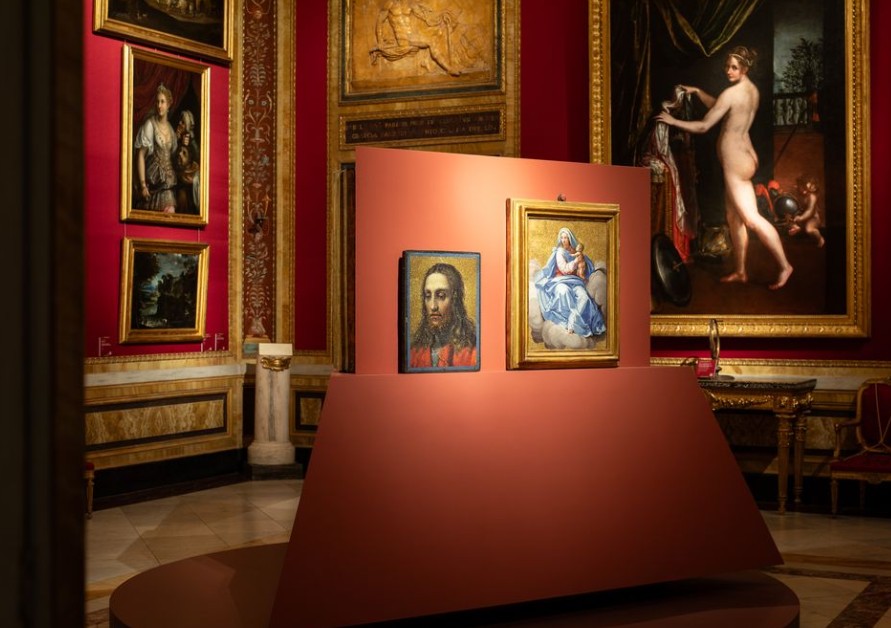
La seconda mostra è dedicata a Marcello Provenzale da Cento, protagonista della rinascita dell’arte musiva nella Roma del primo Seicento. Nel 450° anniversario della sua nascita, il museo rende omaggio a un artista che seppe trasformare il mosaico in un linguaggio moderno, capace di competere con la pittura.
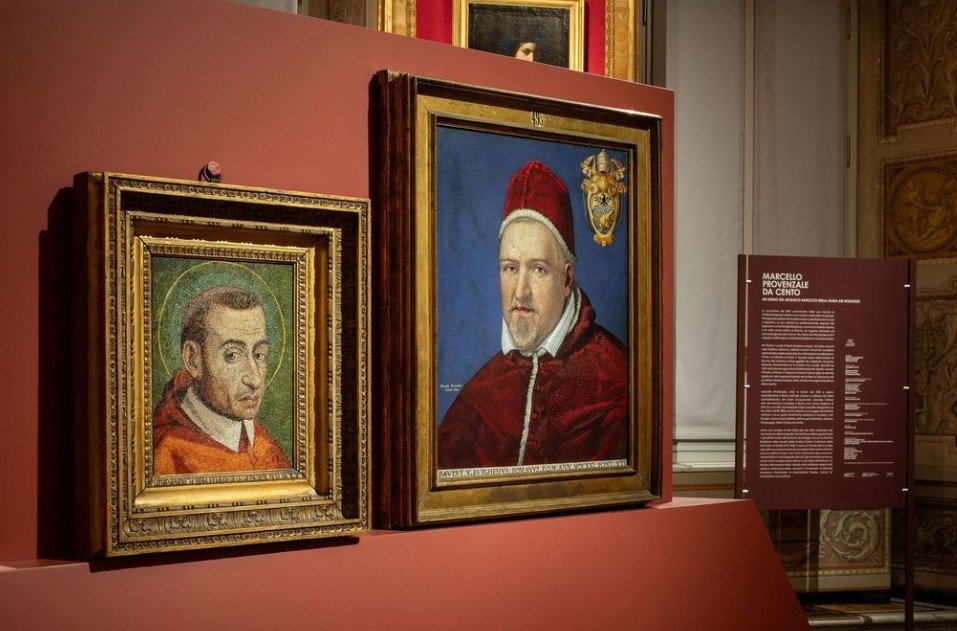
Formatosi come pittore, Provenzale si specializzò a Roma lavorando nei cantieri della Basilica di San Pietro, dove contribuì alla decorazione della Cappella Clementina e della cupola. La sua carriera fu strettamente legata alla committenza di Papa Paolo V e della famiglia Borghese, che gli affidarono incarichi di grande prestigio.
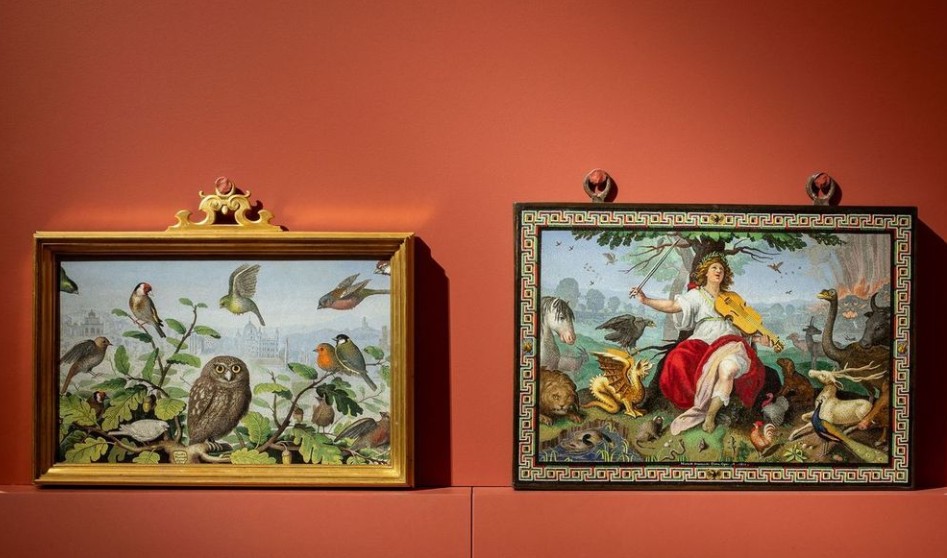
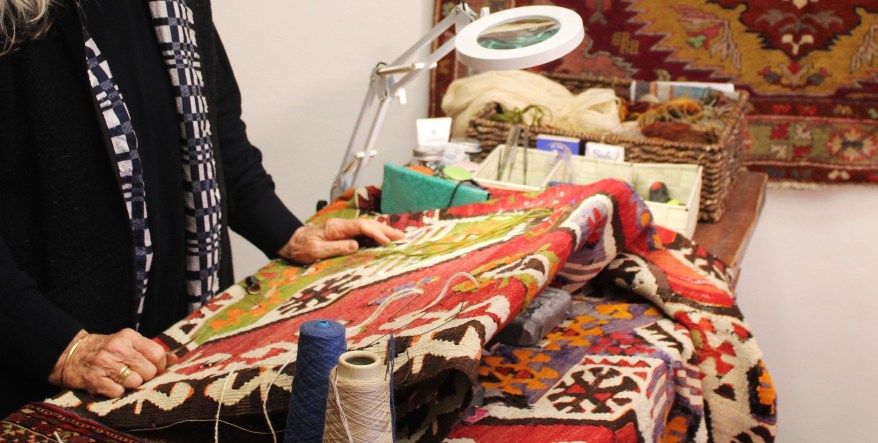
La mostra evidenzia l’innovazione tecnica introdotta dall’artista, in particolare l’uso del cosiddetto “mosaico filato”, che permetteva di ottenere straordinarie sfumature cromatiche. Grazie a questa tecnica, Provenzale realizzò opere di eccezionale qualità come il “Ritratto di Paolo V”, l’“Orfeo” e la “Madonna col Bambino”, oggi tra i capolavori conservati alla Galleria Borghese.
Arte, potere e spiritualità nella Roma dei Borghese
Entrambe le mostre mettono in luce il ruolo centrale della committenza Borghese nella definizione del panorama artistico romano tra Cinquecento e Seicento. Se da un lato la bottega di Raffaello rappresenta un modello di produzione collettiva e diffusione stilistica, dall’altro l’opera di Provenzale testimonia la capacità di rinnovare una tecnica antica in funzione delle esigenze della Controriforma.
Il mosaico, in particolare, assume un valore simbolico profondo: materiale eterno e incorruttibile, diventa strumento di celebrazione dinastica e veicolo di messaggi religiosi e politici.
Un nuovo modello espositivo per il museo
Con queste due mostre dossier, la Galleria Borghese inaugura una modalità espositiva che privilegia l’approfondimento rispetto alla quantità, concentrandosi su singole opere o nuclei ristretti per raccontare storie complesse e stratificate.
Per il momento il sempre vostro Michelangelo Buonarroti vi saluta dandovi appuntamento ai prossimi post e sui social.
Borghese Gallery reopens its dossier exhibitions: two shows to rediscover Penni and Provenzale
From March 17 to May 10, 2026, the Borghese Gallery returns to the forefront of Rome’s cultural scene with two dossier exhibitions that highlight the museum’s scientific research and the historical value of its collections. This dual event combines study, rediscovery, and appreciation, offering the public an in-depth exploration of two key moments in the history of art between the Renaissance and Baroque periods.
The exhibitions “Return to the Borghese Gallery. Giovan Francesco Penni and Raphael’s Workshop” and “Marcello Provenzale da Cento. A Genius of Baroque Mosaic in Borghese Rome” represent a new chapter in the museum’s program, aimed at exploring specific cores of the collection through targeted, high-quality projects.
The Return of a Masterpiece: Penni and Raphael’s Workshop
The first exhibition celebrates a major recovery: the “Allegory of Good Hope,” attributed to Giovan Francesco Penni, returned to the collection in 2025 after being acquired at auction. The work, already documented in 17th-century inventories as belonging to the Borghese collection, returns to its original home after more than two centuries.
The exhibition reconstructs the work’s historical and artistic context, placing it in dialogue with “Charity,” its original companion piece now in a private collection. This reassembly allows us to revisit a crucial moment in the dispersion of the Borghese family’s works between the late 18th century and the Napoleonic era.
At the center of the exhibition is the figure of Giovan Francesco Penni, one of Raphael’s most faithful collaborators. The exhibition explores his role within the workshop, highlighting his contribution to the spread of Raphaelesque art in early 16th-century Rome. The comparison with the “Adoration of the Child with Saint Joseph and the Infant Saint John” also clarifies open attribution questions, offering scholars new tools for interpretation.
Provenzale and the Rebirth of Baroque Mosaic
The second exhibition is dedicated to Marcello Provenzale da Cento, a key figure in the rebirth of mosaic art in early 17th-century Rome. On the 450th anniversary of his birth, the museum pays tribute to an artist who transformed mosaic into a modern language, capable of competing with painting.
Trained as a painter, Provenzale specialized in Rome, working on the construction sites of St. Peter’s Basilica, where he contributed to the decoration of the Clementine Chapel and the dome. His career was closely linked to the patronage of Pope Paul V and the Borghese family, who entrusted him with highly prestigious commissions.
The exhibition highlights the technical innovations introduced by the artist, particularly the use of the so-called “spun mosaic,” which allowed for extraordinary chromatic nuances. Thanks to this technique, Provenzale created works of exceptional quality such as the “Portrait of Paul V,” the “Orpheus,” and the “Madonna and Child,” now among the masterpieces preserved at the Galleria Borghese.
Art, Power, and Spirituality in Borghese Rome
Both exhibitions highlight the central role of Borghese patrons in shaping the Roman artistic landscape between the 16th and 17th centuries. While Raphael’s workshop represented a model of collective production and stylistic diffusion, Provenzale’s work demonstrates the ability to renew an ancient technique to meet the needs of the Counter-Reformation.
Mosaic, in particular, takes on a profound symbolic value: an eternal and incorruptible material, it becomes an instrument of dynastic celebration and a vehicle for religious and political messages.
A new exhibition model for the museum
With these two dossier exhibitions, the Galleria Borghese inaugurates an exhibition format that prioritizes depth over quantity, focusing on individual works or small groups to tell complex and layered stories.
For now, yours truly, Michelangelo Buonarroti bids farewell and looks forward to seeing you in future posts and on social media.

Sostienici – Support Us
Se questo blog ti piace e ti appassiona, puoi aiutarci a farlo crescere sempre più sostenendoci in modo concreto condividendo i post, seguendo le pagine social e con un contributo che ci aiuta ad andare avanti con il nostro lavoro di divulgazione. . ENGLISH: If you like and are passionate about this blog, you can help us make it grow more and more by supporting us in a concrete way by sharing posts, following social pages and with a contribution that helps us to move forward with our dissemination work.
10,00 €
Articoli
Condividi:


Questo sono io





sostienici

Sostienici – Support Us
Se questo blog ti piace e ti appassiona, puoi aiutarci a farlo crescere sempre più sostenendoci in modo concreto condividendo i post, seguendo le pagine social e con un contributo che ci aiuta ad andare avanti con il nostro lavoro di divulgazione. . ENGLISH: If you like and are passionate about this blog, you can help us make it grow more and more by supporting us in a concrete way by sharing posts, following social pages and with a contribution that helps us to move forward with our dissemination work.
€10,00


