
Il dipinto più tenero del Prado: Gesù e Giovannino nel capolavoro di Murillo
Tra i dipinti più amati della pittura barocca spagnola, Bambini della conchiglia – noto in spagnolo come Los niños de la concha – è una delle opere più tenere realizzate da Bartolomé Esteban Murillo intorno al 1670. L’opera appartiene al Museo del Prado di Madrid e affascina per la sua atmosfera intima, luminosa e profondamente umana.
In questo dipinto Murillo racconta un momento di straordinaria dolcezza tra due figure centrali della tradizione cristiana: il piccolo Gesù Cristo e il cugino Giovanni Battista bambino. La scena è poetica e riesce a trasmettere purezza e innocenza.

Un’immagine di straordinaria tenerezza tra Gesù e Giovannino
Al centro della composizione, Gesù bambino è raffigurato in piedi con la testa leggermente inclinata in un gesto di affettuosa attenzione. Con la mano destra offre dell’acqua a Giovannino utilizzando una conchiglia, trasformata in una sorta di coppa naturale.
Il piccolo Giovanni si china per bere, sostenendo a sua volta la conchiglia con la mano destra mentre con l’altra tiene la croce del futuro martirio di Cristo. Sulla croce compare la scritta “Ecce Agnus Dei”, ovvero “Ecco l’Agnello di Dio”.
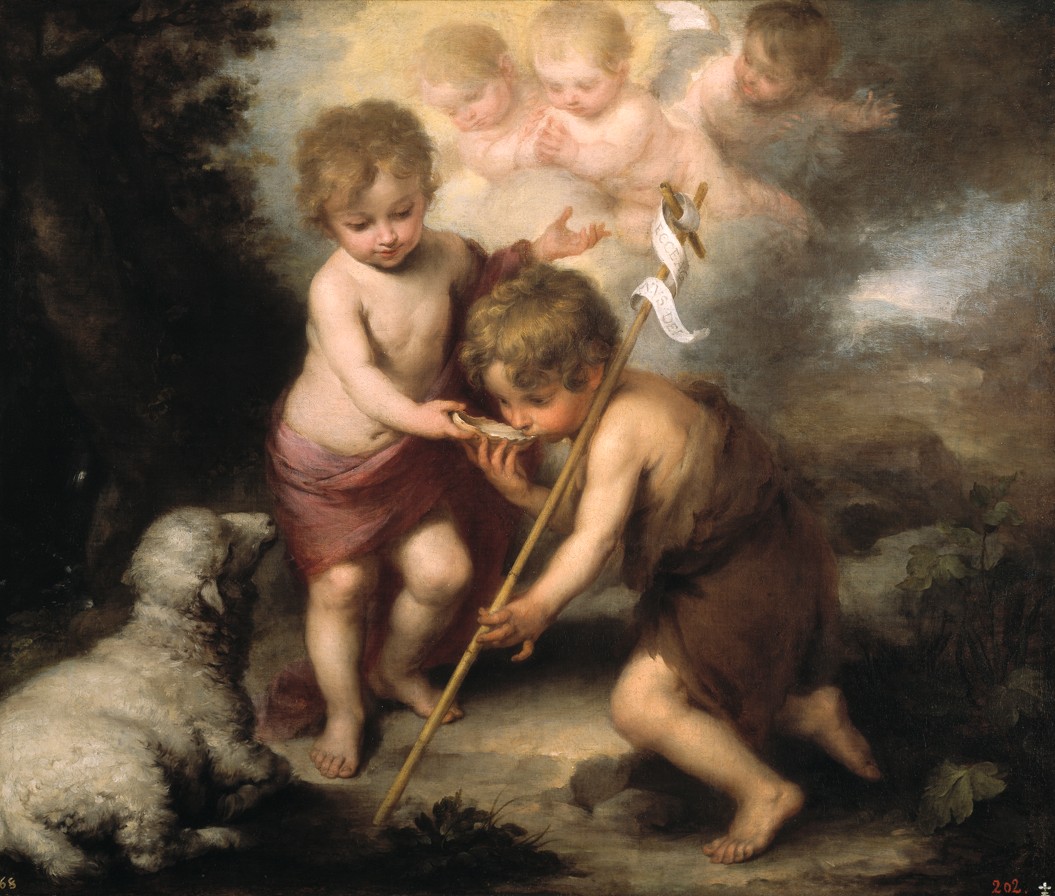
Giovannino indossa la tipica veste di pelli di cammello, elemento iconografico legato alla figura del Battista. Gesù invece è avvolto in un morbido drappo rosso, colore che nella pittura sacra richiama il sacrificio e la passione futura.
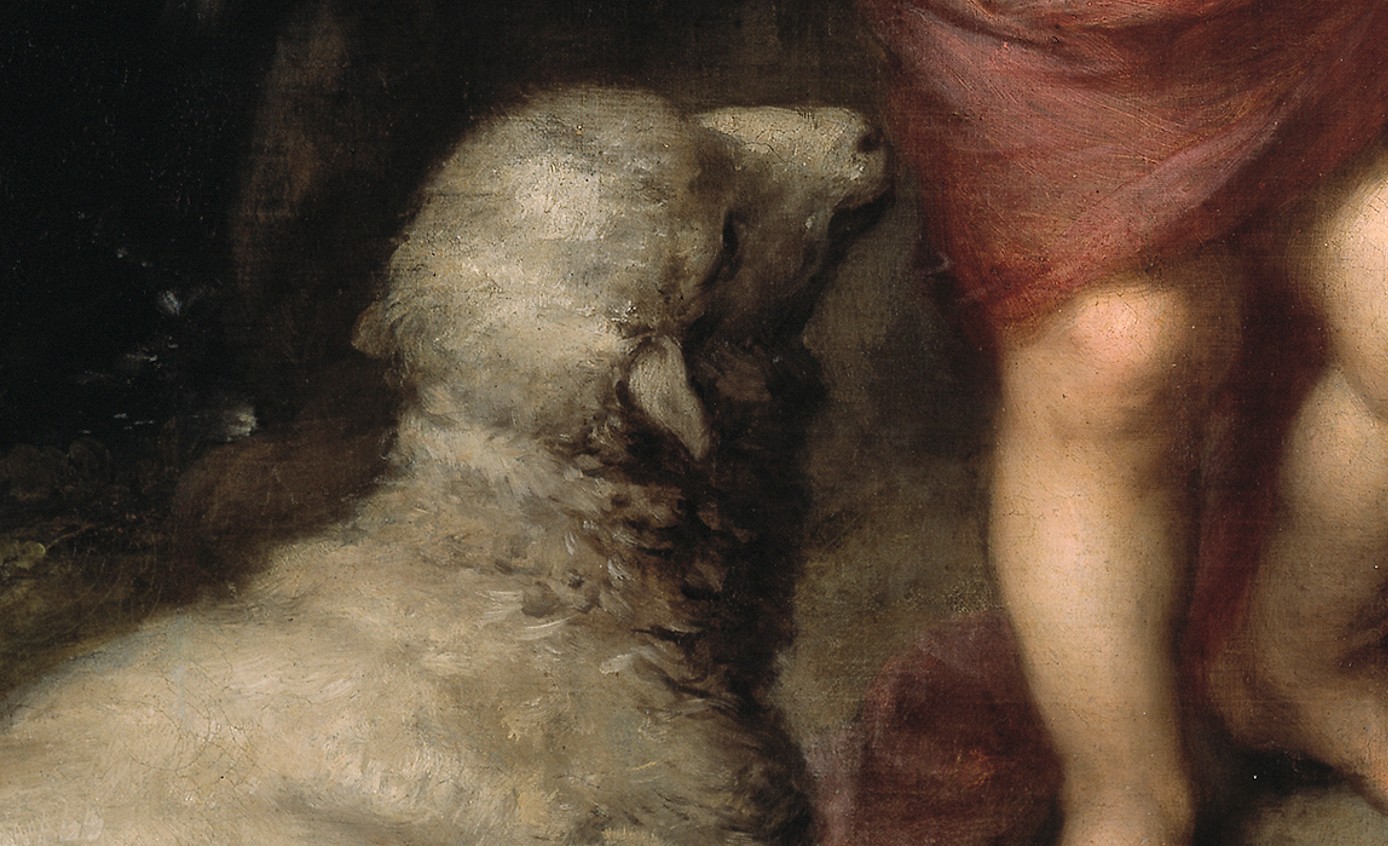
Sullo sfondo, tre piccoli angeli osservano la scena dall’alto, mentre un agnellino seduto sul lato sinistro guarda i due bambini. Anche questo dettaglio ha un forte valore simbolico: l’agnello è infatti uno degli attributi più ricorrenti associati a Cristo.
Un’insolita scena battesimale reinterpretata con poesia
Il dipinto propone una rappresentazione sorprendente e poco comune del rito battesimale. Tradizionalmente è Giovanni Battista a battezzare Gesù adulto nelle acque del Giordano, ma Murillo immagina una scena infantile e simbolica in cui i ruoli sembrano quasi capovolgersi.

Qui è Gesù a porgere l’acqua a Giovannino, come se anticipasse spiritualmente il battesimo futuro. La conchiglia, oggetto spesso associato ai riti battesimali nell’arte cristiana, diventa il centro simbolico dell’immagine.
La luce morbida e i contorni sfumati tipici di Murillo
Uno degli elementi più affascinanti dell’opera è lo stile pittorico. Murillo utilizza una luce calda e diffusa che accarezza i volti dei bambini e rende l’intera scena quasi eterea.
La pittura sembra dissolversi nella luce, lasciando emergere soprattutto le espressioni dei protagonisti.
Questa tecnica fu uno dei motivi della straordinaria popolarità dell’artista nella Spagna del XVII secolo. Le sue opere, grazie alla loro dolcezza e immediatezza emotiva, furono riprodotte per secoli in incisioni e stampe diffuse in tutta Europa.

Perché “I Bambini della Conchiglia” è uno dei quadri più amati del Prado
Ancora oggi il dipinto è tra quelli che colpiscono maggiormente i visitatori del Museo del Prado: è un’immagine capace di comunicare universalmente tenerezza e serenità.
La scena sembra sospesa nel tempo: due bambini che condividono un gesto semplice, quasi quotidiano, trasformato però in simbolo spirituale.
È proprio questa combinazione di umanità e sacralità che rende Los niños de la concha uno dei dipinti più iconici della pittura barocca spagnola e una delle immagini più dolci mai dedicate all’infanzia di Gesù.
Per il momento il sempre vostro Michelangelo Buonarroti vi saluta dandovi appuntamento ai prossimi post e sui social.

The Prado’s Most Tender Painting: Jesus and the Infant John the Baptist in Murillo’s Masterpiece
Among the most beloved paintings of Spanish Baroque art, Children of the Shell—known in Spanish as Los niños de la concha—is one of the most tender works by Bartolomé Esteban Murillo, created around 1670. The work belongs to the Prado Museum in Madrid and captivates with its intimate, luminous, and profoundly human atmosphere.
In this painting, Murillo depicts a moment of extraordinary tenderness between two central figures of Christian tradition: the infant Jesus Christ and his cousin, the infant John the Baptist. The scene is poetic and manages to convey purity and innocence.
An image of extraordinary tenderness between Jesus and the infant John the Baptist
At the center of the composition, the infant Jesus is depicted standing with his head slightly inclined in a gesture of affectionate attention. With his right hand, he offers water to the infant John using a shell, transformed into a sort of natural cup.
Little John bends over to drink, holding the conch shell in his right hand while holding the cross of Christ’s future martyrdom in the other. The inscription “Ecce Agnus Dei,” or “Behold the Lamb of God,” appears on the cross.
Young John wears the typical camel-skin robe, an iconographic element associated with the figure of John the Baptist. Jesus, on the other hand, is wrapped in a soft red cloth, a color that in religious painting evokes sacrifice and future passion.
In the background, three small angels observe the scene from above, while a lamb sitting on the left looks at the two children. This detail also has strong symbolic value: the lamb is, in fact, one of the most recurring attributes associated with Christ.
An unusual baptismal scene reinterpreted with poetry
The painting offers a surprising and uncommon representation of the baptismal rite. Traditionally, John the Baptist baptizes the adult Jesus in the waters of the Jordan, but Murillo imagines a childlike and symbolic scene in which the roles almost seem to reverse.
Here, Jesus offers water to John the Baptist, as if spiritually anticipating his future baptism. The shell, an object often associated with baptismal rites in Christian art, becomes the symbolic center of the image.
The soft light and blurred contours typical of Murillo
One of the most fascinating elements of the work is the pictorial style. Murillo uses a warm, diffused light that caresses the children’s faces and makes the entire scene almost ethereal.
The painting seems to dissolve in the light, allowing the expressions of the protagonists to emerge in particular.
This technique was one of the reasons for the artist’s extraordinary popularity in 17th-century Spain. His works, thanks to their sweetness and emotional immediacy, were reproduced for centuries in engravings and prints that spread throughout Europe.
Why “The Children of the Shell” is one of the Prado’s most beloved paintings
Even today, the painting remains one of the most striking for visitors to the Prado Museum: it is an image capable of universally communicating tenderness and serenity.
The scene seems suspended in time: two children sharing a simple, almost everyday gesture, yet transformed into a spiritual symbol.
It is precisely this combination of humanity and sacredness that makes “The Children of the Shell” one of the most iconic paintings of Spanish Baroque art and one of the sweetest images ever dedicated to the childhood of Jesus.
For now, yours truly, Michelangelo Buonarroti bids you farewell and invites you to join him in future posts and on social media.

Sostienici – Support Us
Se questo blog ti piace e ti appassiona, puoi aiutarci a farlo crescere sempre più sostenendoci in modo concreto condividendo i post, seguendo le pagine social e con un contributo che ci aiuta ad andare avanti con il nostro lavoro di divulgazione. . ENGLISH: If you like and are passionate about this blog, you can help us make it grow more and more by supporting us in a concrete way by sharing posts, following social pages and with a contribution that helps us to move forward with our dissemination work.
10,00 €
Condividi:


Questo sono io





sostienici

Sostienici – Support Us
Se questo blog ti piace e ti appassiona, puoi aiutarci a farlo crescere sempre più sostenendoci in modo concreto condividendo i post, seguendo le pagine social e con un contributo che ci aiuta ad andare avanti con il nostro lavoro di divulgazione. . ENGLISH: If you like and are passionate about this blog, you can help us make it grow more and more by supporting us in a concrete way by sharing posts, following social pages and with a contribution that helps us to move forward with our dissemination work.
€10,00


