
I volti di Caravaggio e quelle inconfondibili espressioni
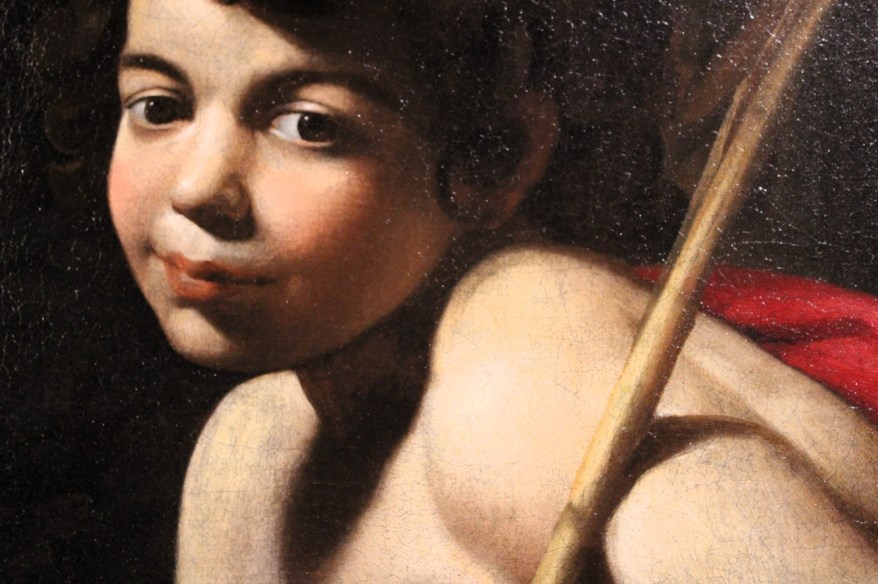
I volti dipinti da Caravaggio sono tra le immagini più potenti e memorabili della storia dell’arte. Sono veri e propri drammi interiori impressi sulla tela. Attraverso opere celebri come la Vocazione di San Matteo, la Giuditta che decapita Oloferne, la Morte della Vergine e la Deposizione di Cristo, il pittore lombardo ha rivoluzionato il modo di rappresentare il volto umano, rendendolo il centro emotivo e narrativo della scena.
In ogni espressione si legge un frammento di verità, una tensione autentica che ancora oggi colpisce e coinvolge lo spettatore.
La Vocazione di San Matteo: lo stupore che cambia un destino
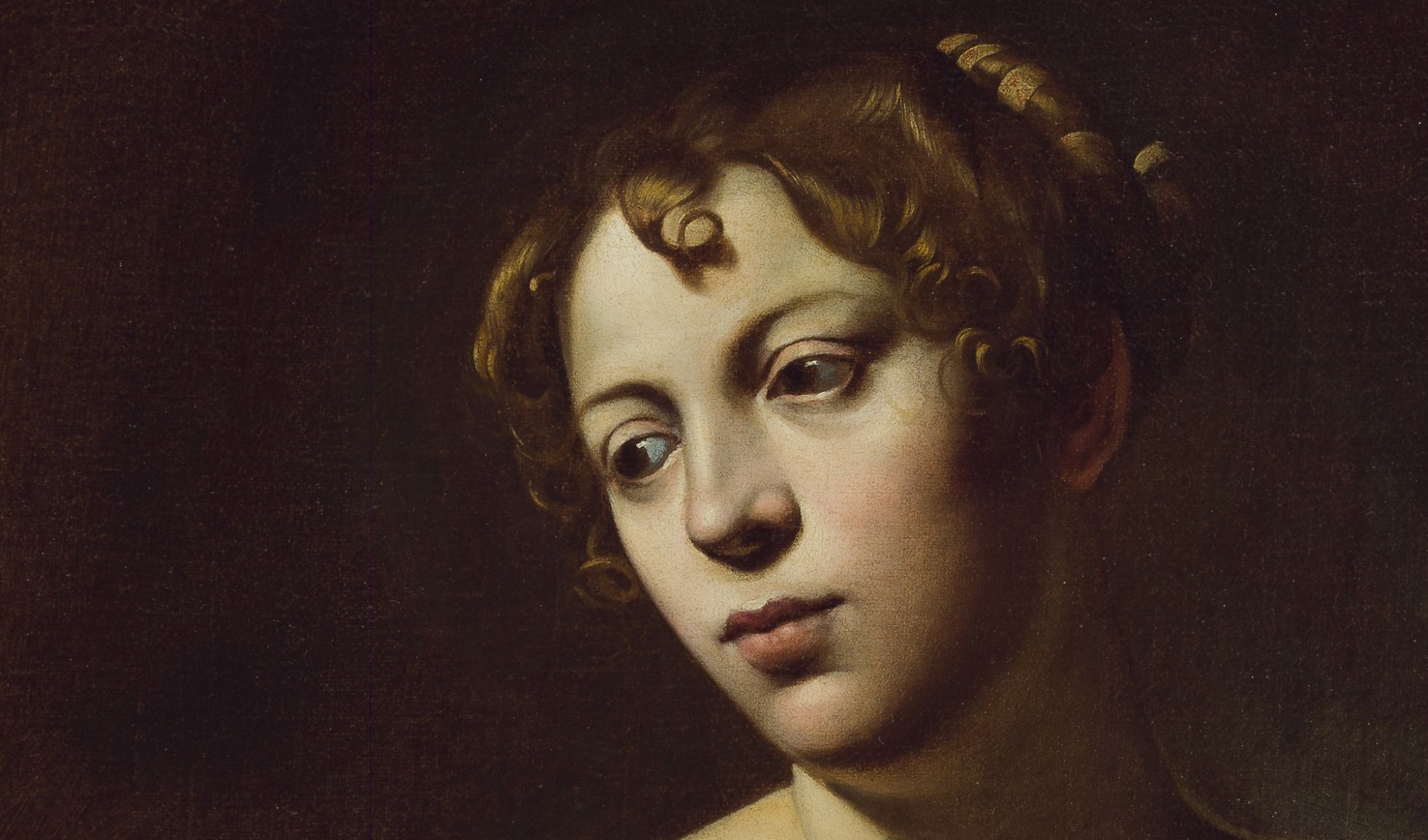
Nella Vocazione di San Matteo, il volto del futuro apostolo è colto nell’istante esatto della rivelazione. Matteo, seduto al tavolo dei gabellieri, sembra incredulo: il suo sguardo è interrogativo, quasi smarrito, mentre indica sé stesso come a chiedere conferma.
La luce taglia diagonalmente la scena e si posa sul suo viso, evidenziando le rughe, la barba incolta, l’espressione sospesa tra dubbio e consapevolezza. Non c’è idealizzazione, ma un uomo reale sorpreso in un momento decisivo della sua vita. È proprio questa naturalezza a rendere il volto così moderno e vicino alla sensibilità contemporanea.
Giuditta che decapita Oloferne: il contrasto delle emozioni
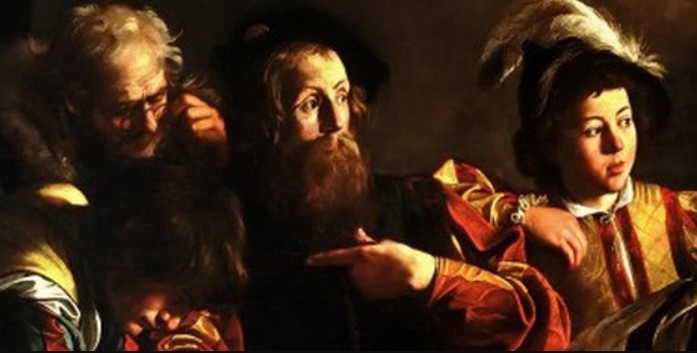
In Giuditta che decapita Oloferne il dramma esplode nei volti dei protagonisti. L’espressione di Giuditta è un misto di determinazione e repulsione: le sopracciglia sono leggermente corrugate, la bocca tesa, lo sguardo concentrato ma distante, come se l’atto violento fosse necessario ma interiormente rifiutato.
Accanto a lei, il volto di Oloferne è deformato dall’urlo e dal dolore. Gli occhi spalancati e la bocca aperta catturano l’istante estremo della vita che si spegne. Caravaggio non attenua la brutalità dell’evento, ma la rende ancora più potente attraverso il realismo delle espressioni. Il volto diventa il luogo in cui si manifesta la tensione tra vita e morte.

La Morte della Vergine: l’umanità del sacro
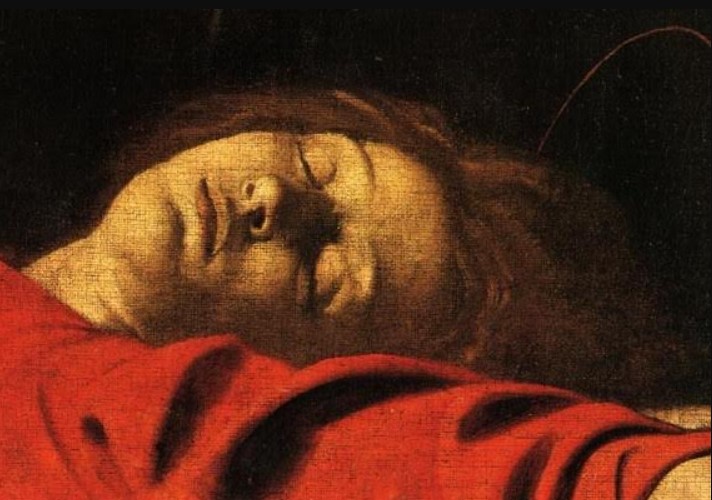
Con la Morte della Vergine, Caravaggio compie uno dei gesti più audaci della sua carriera. Il volto della Madonna non è etereo né idealizzato, ma segnato dalla morte reale. Il viso pallido, gli occhi chiusi, la bocca rilassata mostrano un corpo privo di vita, immerso in un silenzio profondamente umano.
Anche i volti degli apostoli attorno al letto esprimono un dolore trattenuto, autentico. Le rughe, le ombre che scavano i lineamenti e le posture curve raccontano uno struggimento terreno. Il sacro non è distante o glorioso, ma profondamente umano, e proprio per questo più toccante.
La Deposizione di Cristo: il dolore trattenuto nei volti
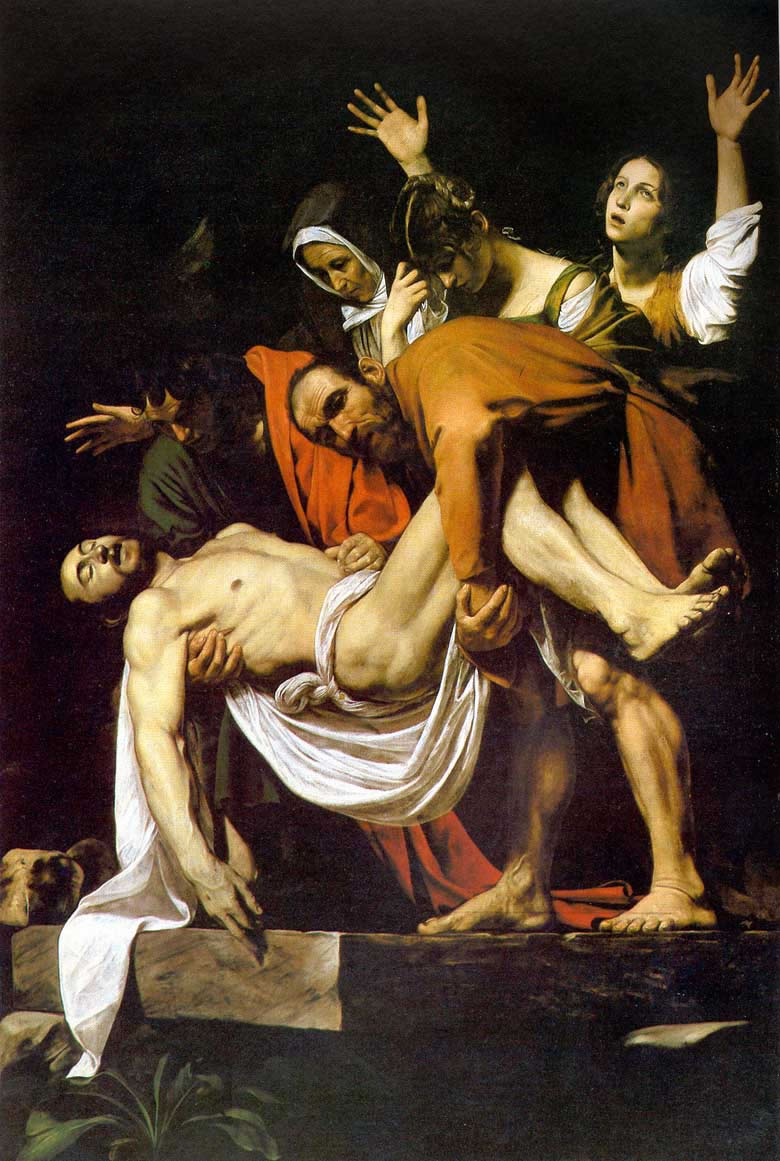
Nella Deposizione di Cristo, oggi conservata ai Musei Vaticani, il volto di Cristo morto è abbandonato, pesante, segnato dalla sofferenza appena trascorsa. Non c’è idealizzazione classica, ma un corpo reale che grava sulle braccia di chi lo sostiene.
Ancora più eloquenti sono i volti di chi lo circonda. La Madonna appare invecchiata, provata dal dolore, mentre Maria Maddalena trattiene le lacrime in un’espressione di composta disperazione. San Giovanni mostra una concentrazione silenziosa, quasi meditativa. Ogni volto racconta una diversa sfumatura del lutto, trasformando la scena in un intenso teatro dell’animo umano.
Il volto come centro della rivoluzione caravaggesca
Attraverso questi dipinti, Caravaggio dimostra che il volto può essere il fulcro della narrazione pittorica. Non è un semplice elemento anatomico, ma il luogo dove si manifesta l’interiorità. La luce scolpisce zigomi, fronti e sguardi, isolando l’emozione e rendendola protagonista.
La scelta di modelli presi dalla strada, lontani dai canoni idealizzati del Rinascimento, conferisce ai suoi personaggi una concretezza sorprendente. Nei loro volti si leggono stanchezza, paura, fede, esitazione, coraggio. È questa autenticità a rendere l’opera caravaggesca rivoluzionaria.

Caravaggio ha trasformato il volto in uno specchio dell’anima, consegnando alla storia dell’arte immagini che non smettono di interrogare.
Per il momento il sempre vostro Michelangelo Buonarroti vi saluta dandovi appuntamento ai prossimi post e sui social.
Caravaggio’s Faces and Those Unmistakable Expressions
The faces painted by Caravaggio are among the most powerful and memorable images in the history of art. They are true interior dramas captured on canvas. Through famous works such as the Calling of Saint Matthew, Judith Slaying Holofernes, the Death of the Virgin, and the Deposition of Christ, the Lombard painter revolutionized the way the human face is depicted, making it the emotional and narrative center of the scene.
In every expression, a fragment of truth can be read, an authentic tension that still strikes and engages the viewer today.
The Calling of Saint Matthew: the wonder that changes a destiny
In the Calling of Saint Matthew, preserved in Rome, the face of the future apostle is captured at the exact moment of revelation. Matthew, seated at the tax collectors’ table, appears incredulous: his gaze is questioning, almost bewildered, as he points to himself as if asking for confirmation.
The light cuts diagonally across the scene and falls on his face, highlighting his wrinkles, his unkempt beard, and his expression suspended between doubt and awareness. There is no idealization, but a real man caught in a decisive moment of his life. It is precisely this naturalness that makes the face so modern and close to contemporary sensibilities.
Judith Beheading Holofernes: Contrasting Emotions
In Judith Beheading Holofernes, the drama explodes in the protagonists’ faces. Judith’s expression is a mixture of determination and repulsion: her brows are slightly furrowed, her mouth tense, her gaze focused yet distant, as if the violent act were necessary yet internally rejected.
Next to her, Holofernes’ face is distorted by screams and pain. His wide eyes and open mouth capture the final moment of life’s end. Caravaggio does not attenuate the brutality of the event, but rather makes it even more powerful through the realism of their expressions. The face becomes the site of the tension between life and death.
The Death of the Virgin: The Humanity of the Sacred
With the Death of the Virgin, Caravaggio makes one of the boldest gestures of his career. The Madonna’s face is neither ethereal nor idealized, but marked by real death. Her pale face, closed eyes, and relaxed mouth reveal a lifeless body, immersed in a profoundly human silence.
The faces of the apostles around the bed also express a restrained, authentic pain. The wrinkles, the shadows that dig into their features, and their hunched postures speak of earthly longing. The sacred is not distant or glorious, but profoundly human, and for this very reason, all the more touching.
The Deposition of Christ: Restrained Pain in Faces
In the Deposition of Christ, now housed in the Vatican Museums, the face of the dead Christ is abandoned, heavy, marked by the suffering he has just endured. There is no classical idealization, but a real body weighing on the arms of those who support it.
Even more eloquent are the faces of those around him. The Madonna appears aged, worn by grief, while Mary Magdalene holds back tears in an expression of composed despair. Saint John displays a silent, almost meditative concentration. Each face reveals a different nuance of mourning, transforming the scene into an intense theater of the human soul.
The Face as the Center of Caravaggio’s Revolution
Through these paintings, Caravaggio demonstrates that the face can be the fulcrum of pictorial narrative. It is not a simple anatomical element, but the place where interiority is manifested. Light sculpts cheekbones, foreheads, and gazes, isolating emotion and making it the protagonist.
The choice of street models, far from the idealized canons of the Renaissance, gives his characters a surprising concreteness. Their faces convey weariness, fear, faith, hesitation, and courage. It is this authenticity that makes Caravaggio’s work revolutionary.
Caravaggio transformed the face into a mirror of the soul, leaving behind images that never cease to question the history of art.
For now, yours truly, Michelangelo Buonarroti bids you farewell and invites you to see him in future posts and on social media.

Sostienici – Support Us
Se questo blog ti piace e ti appassiona, puoi aiutarci a farlo crescere sempre più sostenendoci in modo concreto condividendo i post, seguendo le pagine social e con un contributo che ci aiuta ad andare avanti con il nostro lavoro di divulgazione. . ENGLISH: If you like and are passionate about this blog, you can help us make it grow more and more by supporting us in a concrete way by sharing posts, following social pages and with a contribution that helps us to move forward with our dissemination work.
10,00 €
Articoli
Condividi:


Questo sono io





sostienici

Sostienici – Support Us
Se questo blog ti piace e ti appassiona, puoi aiutarci a farlo crescere sempre più sostenendoci in modo concreto condividendo i post, seguendo le pagine social e con un contributo che ci aiuta ad andare avanti con il nostro lavoro di divulgazione. . ENGLISH: If you like and are passionate about this blog, you can help us make it grow more and more by supporting us in a concrete way by sharing posts, following social pages and with a contribution that helps us to move forward with our dissemination work.
€10,00


