

Carnevale di Venezia: il significato delle maschere tra arte, storia e fascino senza tempo
Il Carnevale di Venezia è un grande teatro all’aperto dove la città si trasforma in un’opera d’arte vivente, fatta di costumi sontuosi, palazzi riflessi sull’acqua e soprattutto di maschere. Proprio queste ultime rappresentano l’anima più autentica del Carnevale: simboli di libertà, mistero e creatività che attraversano secoli di storia veneziana.
Tra le calli e le piazze, ogni volto coperto racconta una tradizione antica, capace ancora oggi di incantare visitatori da tutto il mondo.
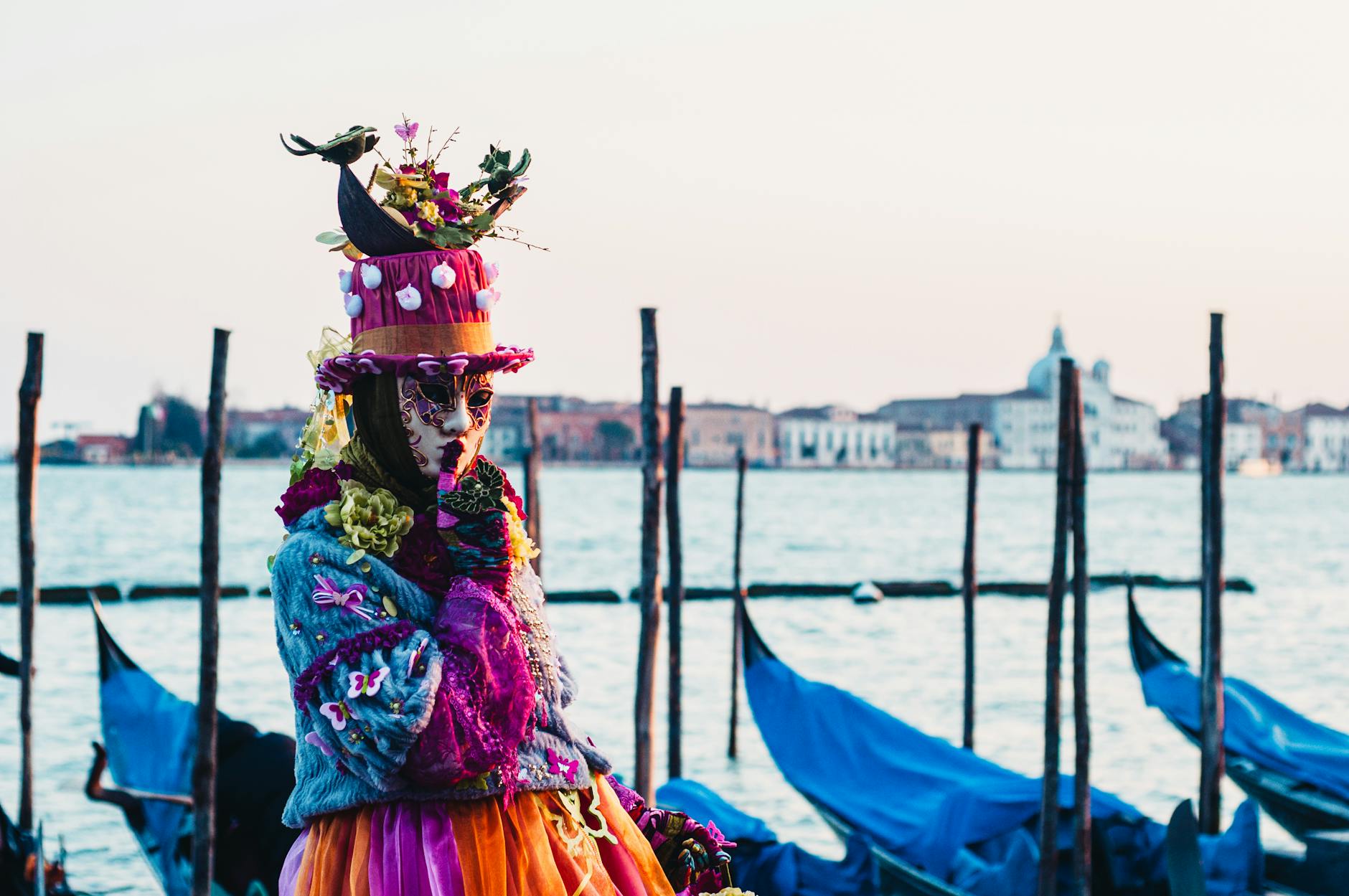
Origini delle maschere veneziane: il Medioevo e la libertà dell’anonimato
Le maschere fanno parte della cultura veneziana fin dal XIII secolo. In una città cosmopolita e ricca come la Serenissima, l’anonimato diventò presto un elemento fondamentale della vita sociale. Indossare una maschera significava annullare le differenze tra classi sociali e permettere a nobili, mercanti e popolani di mescolarsi liberamente.
Nel Settecento, epoca di massimo splendore della Repubblica di Venezia, il Carnevale divenne uno degli eventi più lunghi e spettacolari d’Europa. Le celebrazioni potevano durare mesi e le maschere non erano limitate ai giorni di festa: facevano parte della vita quotidiana, dei salotti aristocratici e persino degli incontri politici.
In quel periodo Venezia divenne un immenso palcoscenico, dove l’identità poteva essere reinventata dietro un volto di cartapesta.
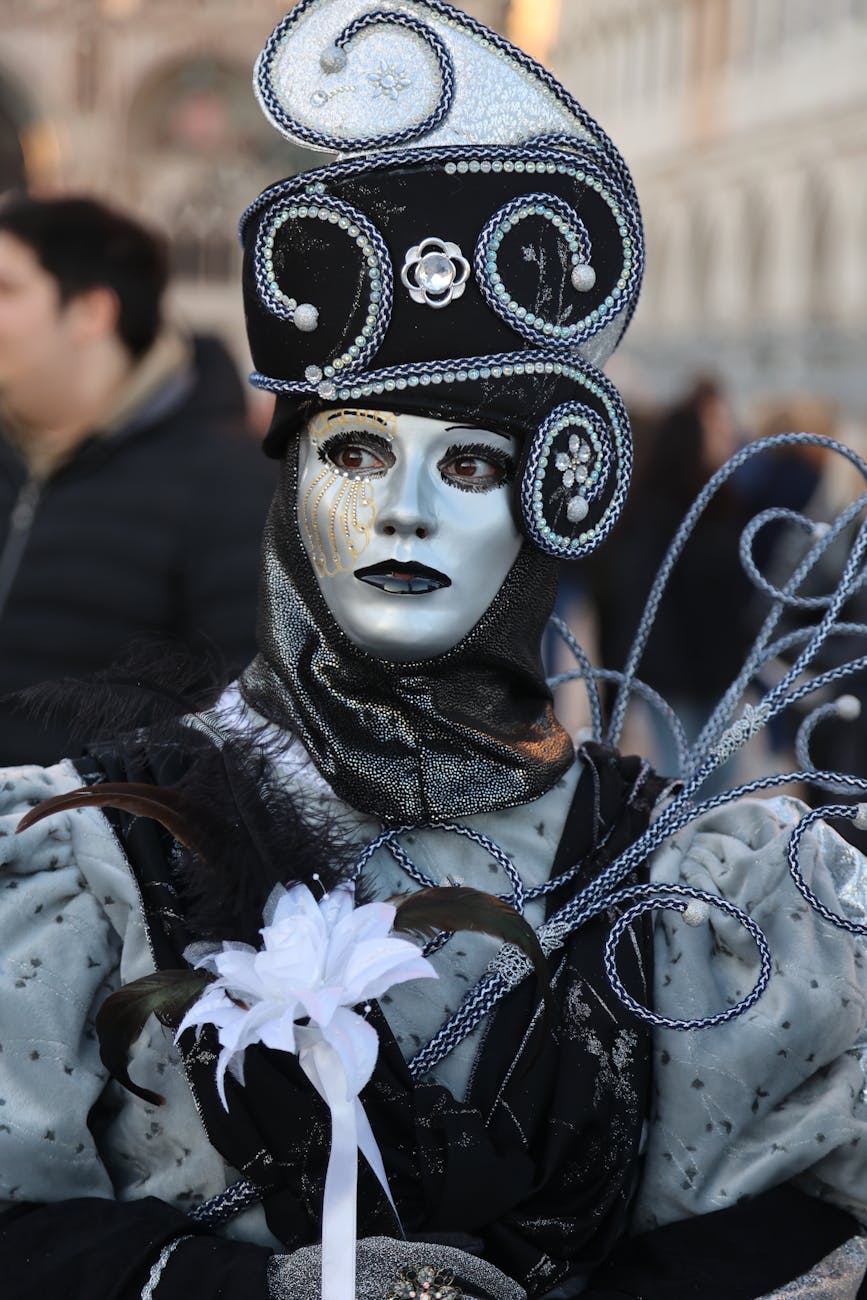
Le maschere simbolo del Carnevale di Venezia
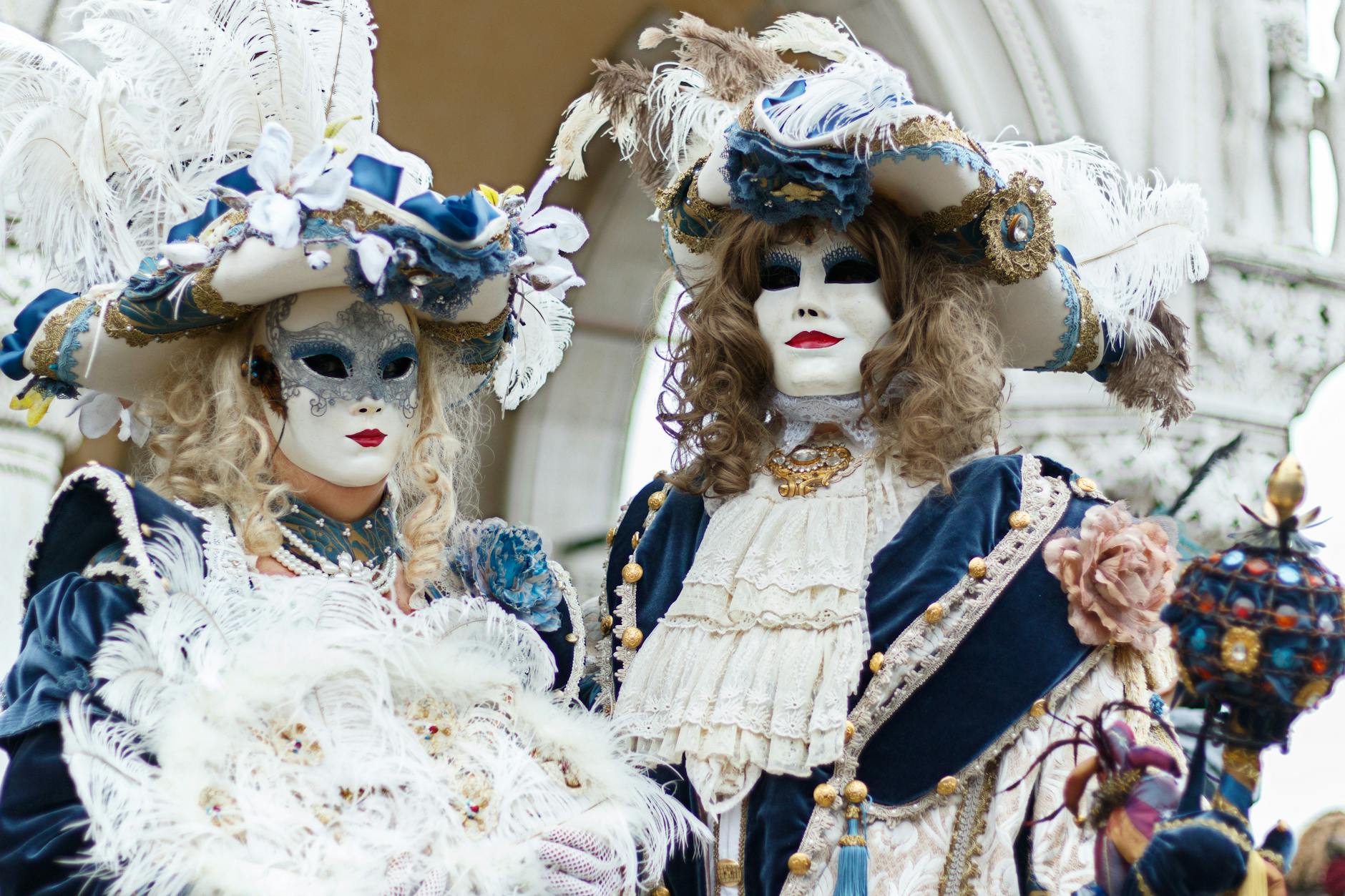
Tra le maschere più celebri spicca la Bauta, considerata il simbolo per eccellenza del Carnevale veneziano. Il suo volto bianco e spigoloso, abbinato al mantello nero e al tricorno, garantiva un anonimato totale. La particolare forma permetteva di parlare, mangiare e bere senza scoprirsi, rendendola perfetta non solo per le feste ma anche per votazioni politiche o incontri segreti.
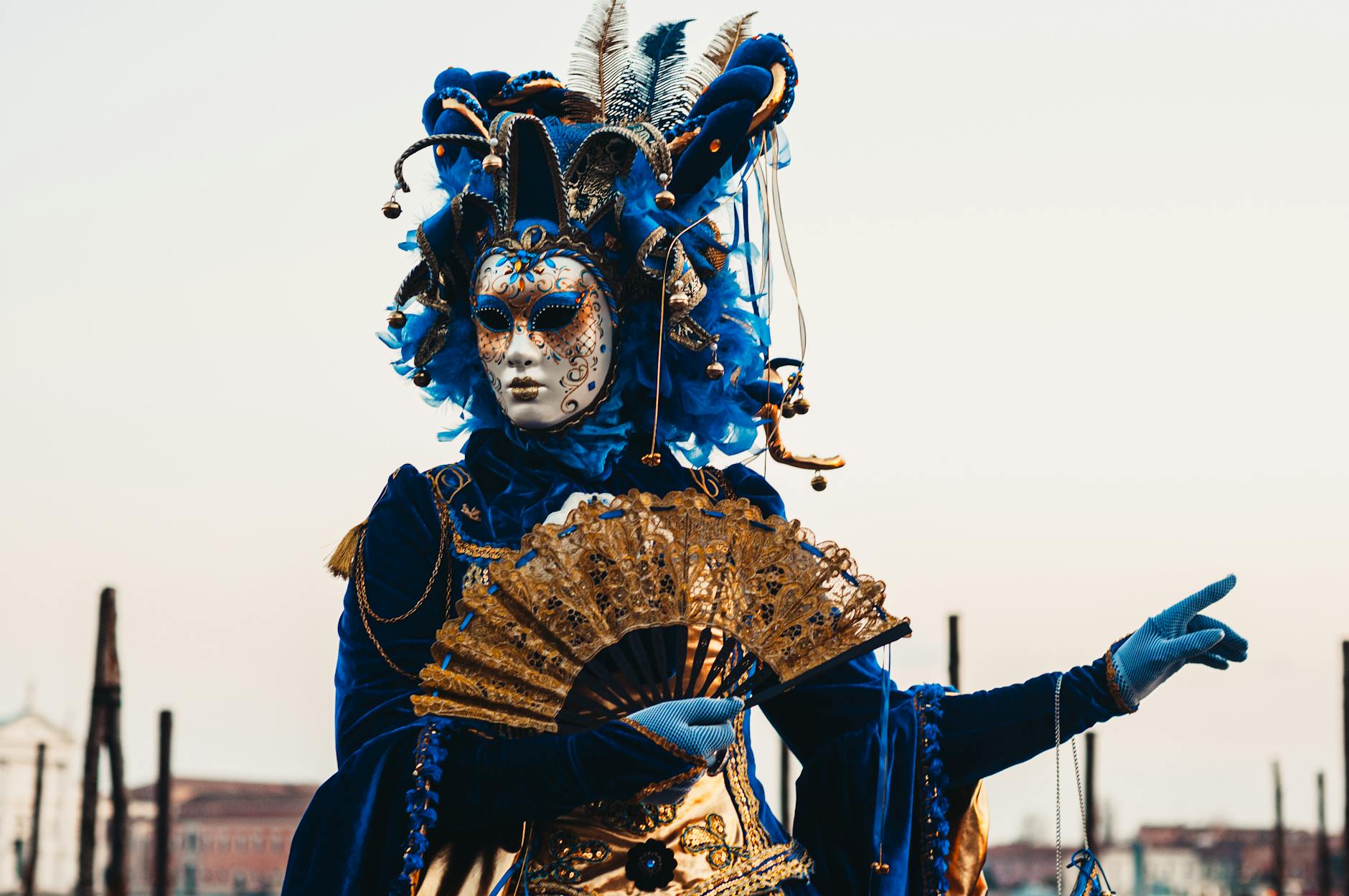
Accanto alla Bauta, la Colombina rappresenta il lato più elegante e seducente della tradizione veneziana. Questa maschera copre solo metà del volto ed è spesso decorata con foglia d’oro, piume e cristalli. Ispirata alla vivace servetta della Commedia dell’Arte, è oggi una delle più diffuse e amate, simbolo di grazia e teatralità.
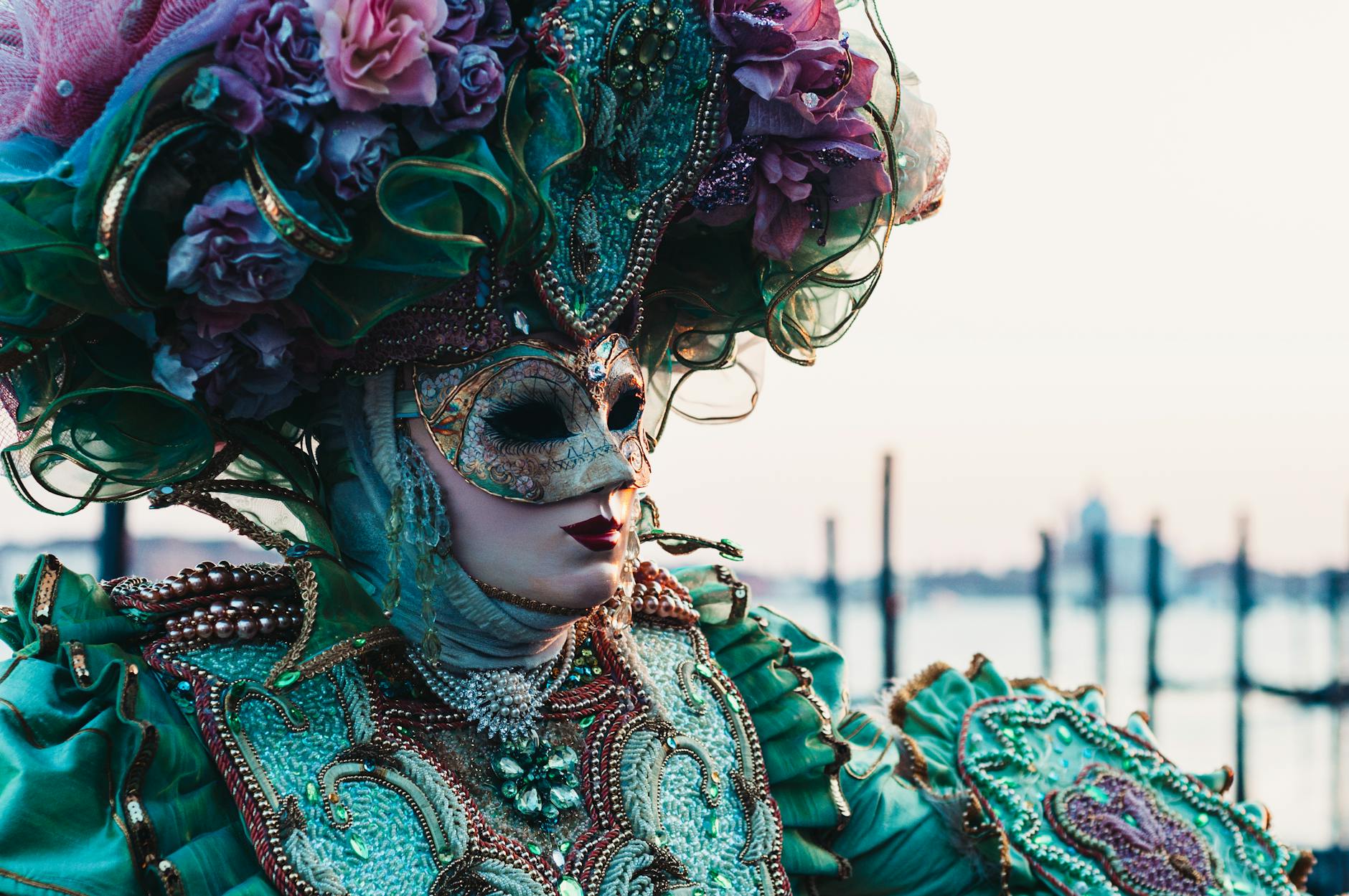
Molto diversa per atmosfera è la maschera del Medico della Peste, facilmente riconoscibile per il lungo becco. La sua origine non è teatrale ma storica: nel Seicento veniva indossata dai medici durante le epidemie. All’interno del becco si inserivano erbe aromatiche e spezie, ritenute utili a filtrare l’aria contaminata. Oggi questa figura è diventata una delle immagini più suggestive e inquietanti del Carnevale.
Accanto a queste, sopravvivono le maschere della Commedia dell’Arte, che hanno reso celebre Venezia in tutta Europa. Arlecchino, con il suo costume a losanghe colorate, incarna l’astuzia e l’energia del servitore furbo. Pantalone rappresenta invece il vecchio mercante veneziano, simbolo di ricchezza e potere economico, mentre il Dottore è la caricatura dell’intellettuale pedante e loquace.
Questi personaggi teatrali hanno contribuito a diffondere l’immaginario veneziano ben oltre i confini della laguna.
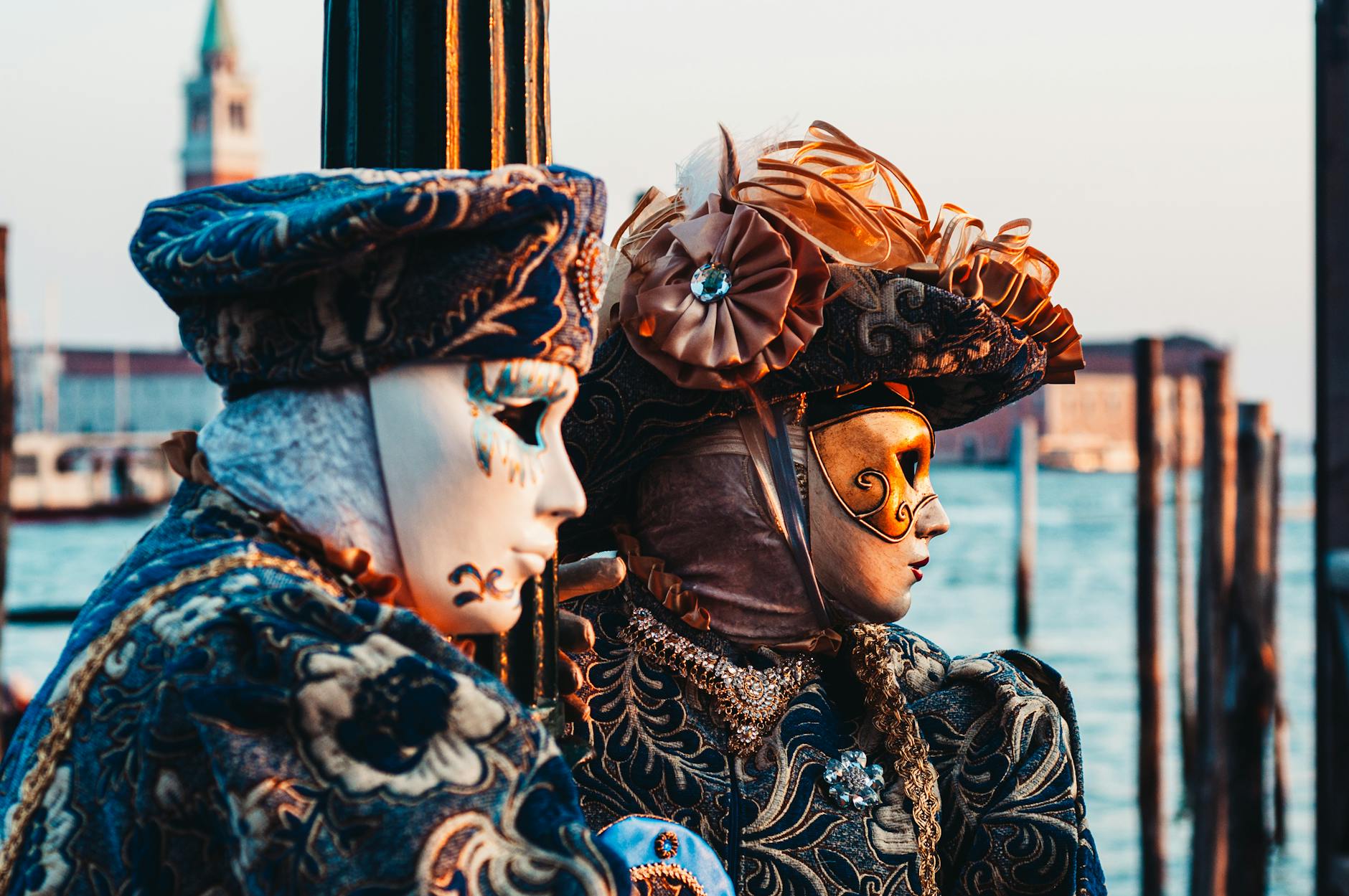
L’arte dei maschereri: come nascono le maschere veneziane
Dietro ogni maschera autentica si nasconde il lavoro dei maschereri, gli artigiani specializzati nella loro realizzazione. Questa tradizione risale al Medioevo, quando la corporazione dei maschereri era già riconosciuta ufficialmente.
La lavorazione segue ancora oggi tecniche antiche. La cartapesta viene modellata su stampi, lasciata asciugare e poi rifinita con cura. Solo in seguito inizia la fase decorativa, dove entrano in gioco pitture, foglia d’oro, tessuti e dettagli preziosi. Ogni maschera diventa così un pezzo unico, a metà tra oggetto teatrale e opera d’arte.
Passeggiando per Venezia, è ancora possibile visitare botteghe storiche dove gli artigiani lavorano davanti ai visitatori, mantenendo viva una tradizione secolare.
Il Carnevale di Venezia oggi: una tradizione rinata nel Novecento
Dopo la caduta della Repubblica nel 1797, il Carnevale entrò in un lungo periodo di declino. Solo nel 1979 la tradizione venne rilanciata ufficialmente, con l’obiettivo di recuperare l’identità storica e culturale della città.
Da allora il Carnevale di Venezia è tornato a essere uno degli eventi più famosi al mondo. Ogni anno attira centinaia di migliaia di visitatori, trasformando la città in una scenografia vivente fatta di sfilate, spettacoli e balli in costume.
In questo scenario, le maschere continuano a essere il cuore simbolico della festa, un ponte tra la storia della Serenissima e la contemporaneità.
Perché le maschere veneziane continuano a incantare il mondo
In un’epoca dominata dall’immagine e dall’identità digitale, le maschere veneziane conservano un fascino speciale. Coprire il volto non significa nascondersi, ma liberarsi dai ruoli sociali e dare spazio alla fantasia.
È questo equilibrio tra mistero, arte e tradizione a rendere il Carnevale di Venezia un evento unico. Per qualche giorno, la città diventa una galleria vivente, dove ogni maschera è un’opera d’arte in movimento e ogni persona può trasformarsi nel personaggio di una storia senza tempo.
Per il momento il sempre vostro Michelangelo Buonarroti vi saluta dandovi appuntamento ai prossimi post e sui social.
Venice Carnival: The Meaning of Masks: Art, History, and Timeless Charm
The Venice Carnival is a vast open-air theater where the city transforms into a living work of art, made up of sumptuous costumes, palaces reflected in the water, and above all, masks. These masks represent the most authentic soul of Carnival: symbols of freedom, mystery, and creativity that span centuries of Venetian history.
Amid the streets and squares, every covered face tells of an ancient tradition, still capable of enchanting visitors from around the world.
Origin of Venetian Masks: The Middle Ages and the Freedom of Anonymity
Masks have been part of Venetian culture since the 13th century. In a cosmopolitan and wealthy city like the Serenissima, anonymity soon became a fundamental element of social life. Wearing a mask meant erasing the differences between social classes and allowing nobles, merchants, and commoners to mingle freely.
In the 18th century, the height of the Venetian Republic’s splendor, Carnival became one of the longest and most spectacular events in Europe. Celebrations could last for months, and masks were not limited to holidays: they were part of everyday life, aristocratic salons, and even political meetings.
During that period, Venice became an immense stage, where identity could be reinvented behind a papier-mâché face.
The Symbolic Masks of the Venice Carnival
Among the most famous masks, the Bauta stands out, considered the quintessential symbol of the Venetian Carnival. Its white, angular face, paired with a black cape and tricorne, guaranteed complete anonymity. Its unique shape allowed one to speak, eat, and drink without revealing oneself, making it perfect not only for parties but also for political votes or secret meetings.
Next to the Bauta, the Colombina represents the most elegant and seductive side of Venetian tradition. This mask covers only half the face and is often decorated with gold leaf, feathers, and crystals. Inspired by the lively servant girl of the Commedia dell’Arte, it is today one of the most widespread and beloved, a symbol of grace and theatricality.
The Plague Doctor mask, easily recognizable by its long beak, has a very different atmosphere. Its origins are not theatrical but historical: in the 17th century, it was worn by doctors during epidemics. Aromatic herbs and spices were placed inside the beak, believed to filter contaminated air. Today, this figure has become one of the most evocative and disturbing images of Carnival.
Alongside these, the Commedia dell’Arte masks, which made Venice famous throughout Europe, survive. Harlequin, with his colorful diamond-patterned costume, embodies the cunning and energy of the crafty servant. Pantalone represents the old Venetian merchant, a symbol of wealth and economic power, while the Doctor is a caricature of the pedantic and talkative intellectual.
These theatrical characters helped spread the Venetian imagination far beyond the borders of the lagoon.
The Art of Mask Makers: How Venetian Masks Are Made
Behind every authentic mask lies the work of mask makers, the artisans specialized in their creation. This tradition dates back to the Middle Ages, when the mask makers’ guild was already officially recognized.
The process still follows ancient techniques. The papier-mâché is molded, left to dry, and then carefully finished. Only then begins the decorative phase, where paint, gold leaf, fabrics, and precious details come into play. Each mask thus becomes a unique piece, halfway between a theatrical object and a work of art.
Walking through Venice, it is still possible to visit historic workshops where artisans work in front of visitors, keeping a centuries-old tradition alive.
The Venice Carnival Today: A Tradition Reborn in the Twentieth Century
After the fall of the Republic in 1797, the Carnival entered a long period of decline. Only in 1979 was the tradition officially revived, with the aim of recovering the city’s historical and cultural identity.
Since then, the Venice Carnival has once again become one of the most famous events in the world. Every year, it attracts hundreds of thousands of visitors, transforming the city into a living stage of parades, shows, and costumed balls.
In this setting, masks continue to be the symbolic heart of the festival, a bridge between the history of the Serenissima and the contemporary world.
Why Venetian masks continue to enchant the world
In an age dominated by images and digital identity, Venetian masks retain a special allure. Covering one’s face does not mean hiding, but liberating oneself from social roles and giving free rein to imagination.
It is this balance between mystery, art, and tradition that makes the Venice Carnival such a unique event. For a few days, the city becomes a living gallery, where each mask is a moving work of art and each person can transform into a character in a timeless story.
For now, yours truly, Michelangelo Buonarroti bids farewell and invites you to join him in future posts and on social media.

Sostienici – Support Us
Se questo blog ti piace e ti appassiona, puoi aiutarci a farlo crescere sempre più sostenendoci in modo concreto condividendo i post, seguendo le pagine social e con un contributo che ci aiuta ad andare avanti con il nostro lavoro di divulgazione. . ENGLISH: If you like and are passionate about this blog, you can help us make it grow more and more by supporting us in a concrete way by sharing posts, following social pages and with a contribution that helps us to move forward with our dissemination work.
10,00 €
Condividi:


Questo sono io





sostienici

Sostienici – Support Us
Se questo blog ti piace e ti appassiona, puoi aiutarci a farlo crescere sempre più sostenendoci in modo concreto condividendo i post, seguendo le pagine social e con un contributo che ci aiuta ad andare avanti con il nostro lavoro di divulgazione. . ENGLISH: If you like and are passionate about this blog, you can help us make it grow more and more by supporting us in a concrete way by sharing posts, following social pages and with a contribution that helps us to move forward with our dissemination work.
€10,00


Da vedere è un vero spettacolo, è l’unico carnevale che merita, almeno a livello fotografico 👍👍👏👏👏😉😉😊😊
"Mi piace"Piace a 1 persona
amo anche il Carnevale di Viareggio
"Mi piace"Piace a 1 persona