
Tyche e Pluto: la Fortuna che tiene in braccio la Ricchezza
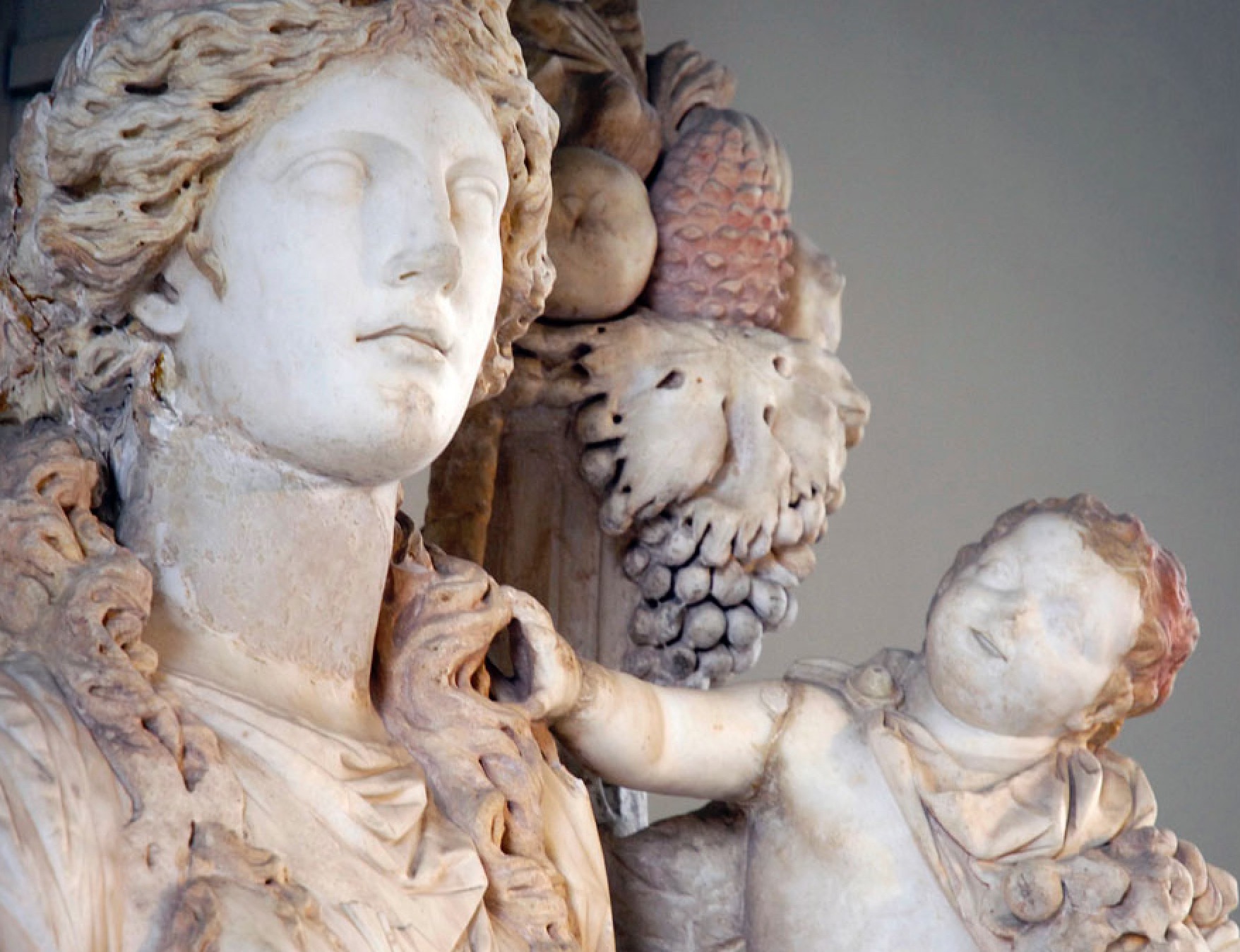
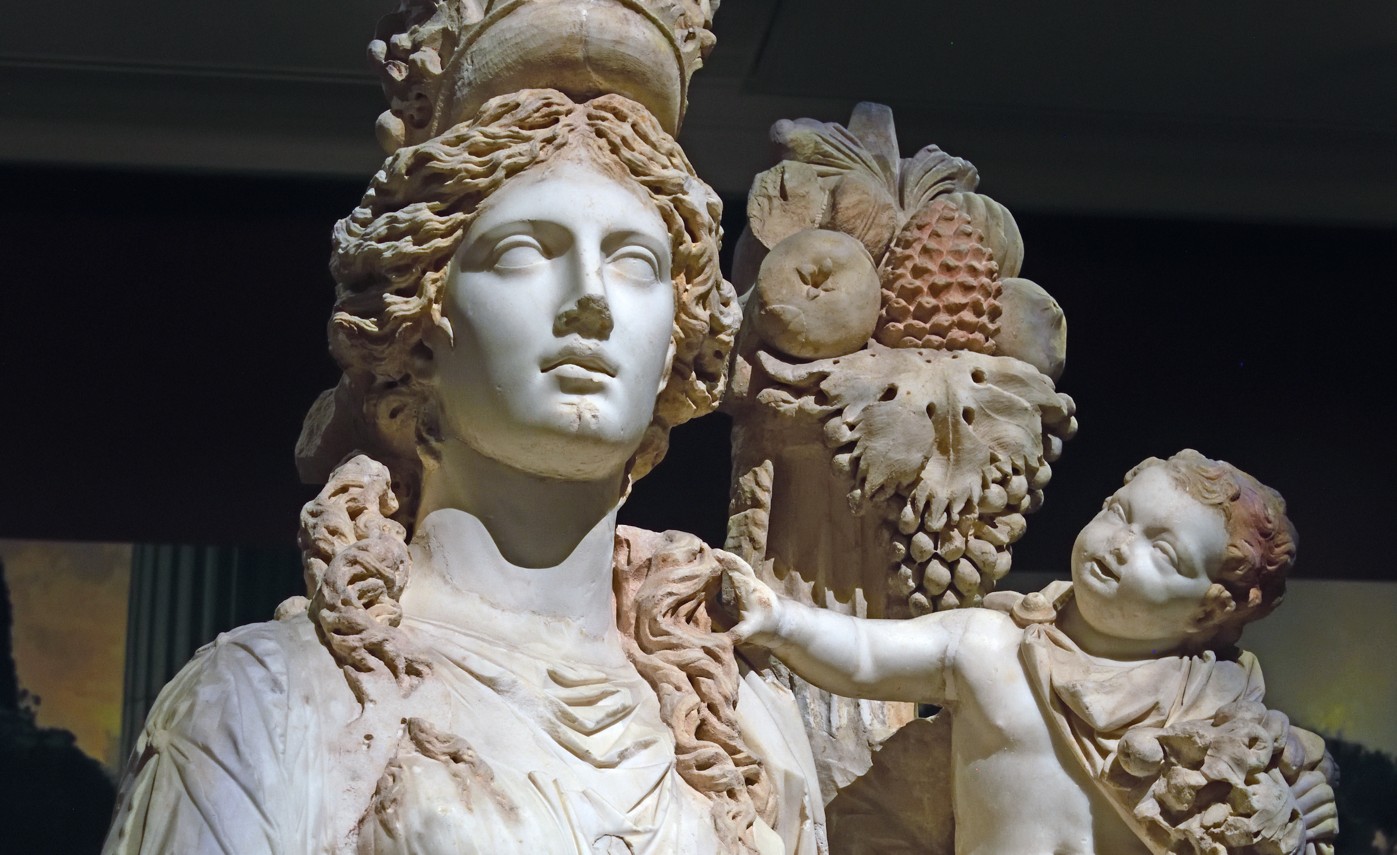
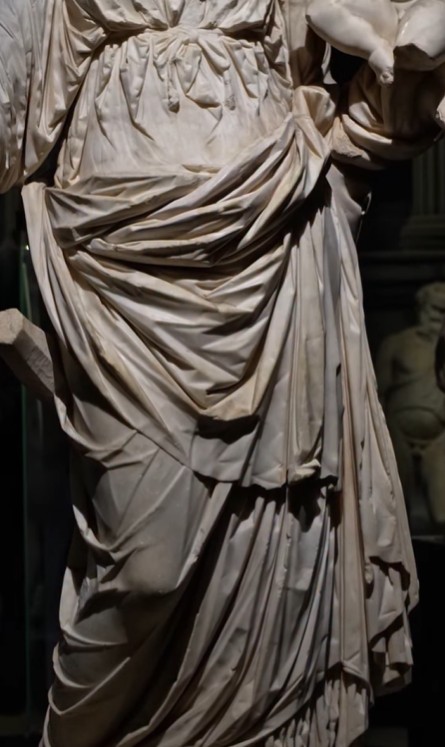
Tra le testimonianze più suggestive dell’arte romana di età imperiale spicca una raffinata scultura in marmo raffigurante Tyche, la Fortuna, con il piccolo Pluto tra le braccia. L’opera proviene da Prusias ad Hypium, nell’odierna Düzce, nella Turchia nord-occidentale, ed è databile al II secolo d.C.. Oggi è conservata presso il Museo Archeologico di Istanbul, dove continua a raccontare una storia fatta di fede, potere e destino urbano.
Questa scultura è un’immagine carica di significati simbolici, pensata per celebrare la prosperità e la protezione divina di una città romana.
Tyche, la dea che decide il destino delle città
La Fortuna come garante di stabilità e prosperità
Tyche, conosciuta nel mondo romano come Fortuna, era la personificazione del destino favorevole e della buona sorte. Non rappresentava un caso imprevedibile, ma una forza divina capace di assicurare equilibrio, sicurezza e floridezza a una comunità urbana. Il suo culto era profondamente legato all’identità civica e alla stabilità politica.
Nell’arte antica Tyche è riconoscibile per la corona turrita, che allude alle mura cittadine e al suo ruolo di protettrice della polis, e per la cornucopia, simbolo universale di abbondanza. In questa scultura, però, la dea assume un significato ancora più profondo grazie alla presenza di Pluto bambino.
Pluto bambino, il volto fragile della ricchezza
Un antico dio greco tra agricoltura e abbondanza
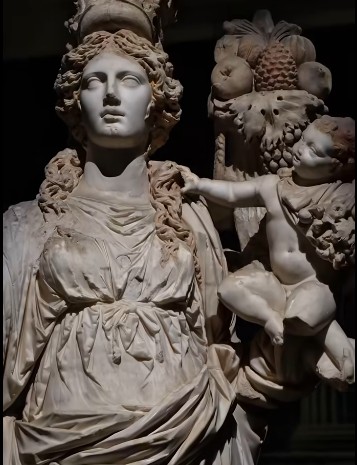
Pluto, in greco Πλοῦτος, era l’antico dio della ricchezza, figlio di Iasio e della dea Demetra, divinità delle messi. Secondo la tradizione, nacque a Creta e fu inizialmente venerato come protettore dell’abbondanza agreste e dei frutti della terra. Il suo nome stesso significa “ricchezza”, e la sua natura divina era legata alla prosperità distribuita senza distinzione.
Pluto veniva spesso descritto come un dio cieco, poiché la ricchezza non segue criteri di giustizia. Celebre è la commedia Pluto di Aristofane, che ne ironizza il potere. Nelle arti figurative, tuttavia, Pluto appare quasi sempre come un bambino, affidato alle braccia di divinità benefiche come la Pace o la Fortuna.
Tyche con Pluto: un’immagine di prosperità condivisa
Il messaggio simbolico della scultura romana
La raffigurazione di Tyche che sorregge Pluto bambino trasmette un messaggio chiaro e potente: la ricchezza di una città può crescere solo sotto la protezione della Fortuna. La prosperità non è autonoma, ma fragile, bisognosa di guida e tutela divina.
Nel II secolo d.C., questo tipo di iconografia aveva una forte valenza politica e propagandistica. Celebrava la stabilità dell’ordine romano, rassicurava i cittadini sulla benevolenza degli dèi e rafforzava l’idea di una città favorita dal destino. Non a caso, già in età romana il culto dell’antico Pluto era quasi scomparso, oscurato dalla figura di Plutone, dio degli Inferi e delle ricchezze sotterranee.
Questa statua rappresenta quindi una rarissima sopravvivenza dell’iconografia originaria del dio della ricchezza.
Prusias ad Hypium, una città dell’Asia Minore romana
Contesto storico e identità civica
Prusias ad Hypium era una città dell’antica Bitinia, successivamente inclusa nella provincia tardo-romana di Honorias. Situata in una regione strategica dell’Asia Minore, visse una fase di sviluppo e stabilità sotto il dominio romano.
La presenza di una statua così elaborata indica un forte senso di identità civica e l’adesione ai modelli culturali greco-romani.
Un capolavoro di scultura romana al Museo Archeologico di Istanbul
Arte, religione e propaganda in un’unica immagine
Oggi esposta al Museo Archeologico di Istanbul, la statua di Tyche con Pluto bambino rappresenta una perfetta sintesi tra arte greca, ideologia romana e religione civica.
Una Fortuna che protegge e una Ricchezza che cresce tra le sue braccia: l’immagine ideale di ogni città antica, e forse anche il desiderio più profondo di ogni società.
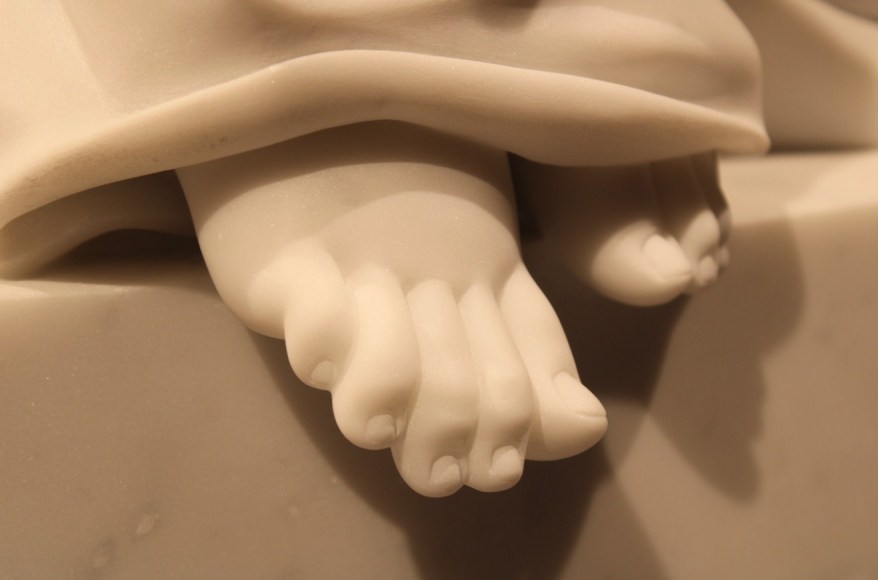
Sull’opera sono ancora ben visibili le tracce di colore che un tempo rendevano l’opera policroma.
Per il momento i l sempre vostro Michelangelo Buonarroti vi saluta dandovi appuntamento ai prossimi post e sui social.
Tyche and Pluto: Fortune Holding Wealth in Her Arms
Among the most evocative examples of Roman art from the Imperial Age is a refined marble statue depicting Tyche, Fortune, holding the infant Pluto in her arms. The work comes from Prusias ad Hypium, in present-day Düzce, northwestern Turkey, and dates to the 2nd century AD. Today, it is housed at the Istanbul Archaeological Museum, where it continues to tell a story of faith, power, and urban destiny.
This sculpture is an image charged with symbolic meaning, designed to celebrate the prosperity and divine protection of a Roman city.
Tyche, the goddess who decides the fate of cities
Fortune as a guarantor of stability and prosperity
Tyche, known in the Roman world as Fortuna, was the personification of favorable fate and good fortune. She did not represent an unpredictable event, but a divine force capable of ensuring balance, security, and prosperity for an urban community. Her cult was deeply linked to civic identity and political stability.
In ancient art, Tyche is recognizable by her turreted crown, which alludes to the city walls and her role as protector of the polis, and by the cornucopia, a universal symbol of abundance. In this statue, however, the goddess takes on an even deeper meaning thanks to the presence of the child Pluto.
Pluto as a Child, the Fragile Face of Wealth
An Ancient Greek God Between Agriculture and Abundance
Pluto, in Greek Πλοῦτος, was the ancient god of wealth, son of Iasius and the goddess Demeter, goddess of the harvest. According to tradition, he was born in Crete and was initially venerated as the protector of agricultural abundance and the fruits of the earth. His name itself means “wealth,” and his divine nature was linked to prosperity distributed without distinction.
Pluto was often described as a blind god, since wealth does not follow the criteria of justice. Aristophanes’ famous comedy, “Pluto,” mocks his power. In the figurative arts, however, Pluto almost always appears as a child, entrusted to the arms of benevolent deities such as Peace or Fortune.
Tyche with Pluto: an image of shared prosperity
The symbolic message of Roman sculpture
The depiction of Tyche holding the child Pluto conveys a clear and powerful message: a city’s wealth can only grow under the protection of Fortune. Prosperity is not autonomous, but fragile, in need of divine guidance and protection.
In the 2nd century AD, this type of iconography had a strong political and propagandistic value. It celebrated the stability of the Roman order, reassured citizens of the benevolence of the gods, and reinforced the idea of a city favored by destiny. It is no coincidence that by Roman times, the cult of ancient Plutus had almost disappeared, overshadowed by the figure of Pluto, god of the underworld and of subterranean riches.
This statue therefore represents a rare survival of the original iconography of the god of wealth.
Prusias ad Hypium, a city in Roman Asia Minor
Historical context and civic identity
Prusias ad Hypium was a city in ancient Bithynia, later included in the late Roman province of Honorias. Located in a strategic region of Asia Minor, it experienced a period of development and stability under Roman rule.
The presence of such an elaborate statue indicates a strong sense of civic identity and adherence to Greco-Roman cultural models.
A masterpiece of Roman sculpture at the Istanbul Archaeological Museum
Art, religion, and propaganda in a single image
Now on display at the Istanbul Archaeological Museum, the statue of Tyche with the infant Pluto represents a perfect synthesis of Greek art, Roman ideology, and civic religion.
A protecting Fortune and a growing Wealth in her arms: the ideal image of every ancient city, and perhaps also the deepest desire of every society.
The traces of paint that once made it polychrome are still clearly visible on the work.
For now, yours truly, Michelangelo Buonarroti bids you farewell and invites you to join him in future posts and on social media.

Sostienici – Support Us
Se questo blog ti piace e ti appassiona, puoi aiutarci a farlo crescere sempre più sostenendoci in modo concreto condividendo i post, seguendo le pagine social e con un contributo che ci aiuta ad andare avanti con il nostro lavoro di divulgazione. . ENGLISH: If you like and are passionate about this blog, you can help us make it grow more and more by supporting us in a concrete way by sharing posts, following social pages and with a contribution that helps us to move forward with our dissemination work.
10,00 €
Articoli
Condividi:


Questo sono io





sostienici

Sostienici – Support Us
Se questo blog ti piace e ti appassiona, puoi aiutarci a farlo crescere sempre più sostenendoci in modo concreto condividendo i post, seguendo le pagine social e con un contributo che ci aiuta ad andare avanti con il nostro lavoro di divulgazione. . ENGLISH: If you like and are passionate about this blog, you can help us make it grow more and more by supporting us in a concrete way by sharing posts, following social pages and with a contribution that helps us to move forward with our dissemination work.
€10,00


