

La Sibilla Eritrea: ecco perché la collocai sotto il Sacrificio di Noè
Quando lavoravo alla volta della Cappella Sistina, ero consapevole del fatto che ogni figura dovesse raccontare la sua storia, anche quando l’occhio dell’osservatore non era ancora pronto ad ascoltare. Nulla nacque per caso.
Per tale ragione volli mettere la Sibilla Eritrea immediatamente sotto la scena del Sacrificio di Noè.

Desideravo che chi alzasse lo sguardo verso il cielo, fosse condotto per mano dentro il racconto biblico che si intreccia con quello profano e ricordasse l’antico legame tra Noè e la Sibilla Eritrea.
Secondo la tradizione, infatti, la Sibilla Eritrea era la nuora di Noè. Una donna che aveva conosciuto il mondo prima e dopo il diluvio, e che aveva predetto il giorno del Giudizio Universale. In lei si incontrano la memoria della distruzione e l’annuncio della fine dei tempi.
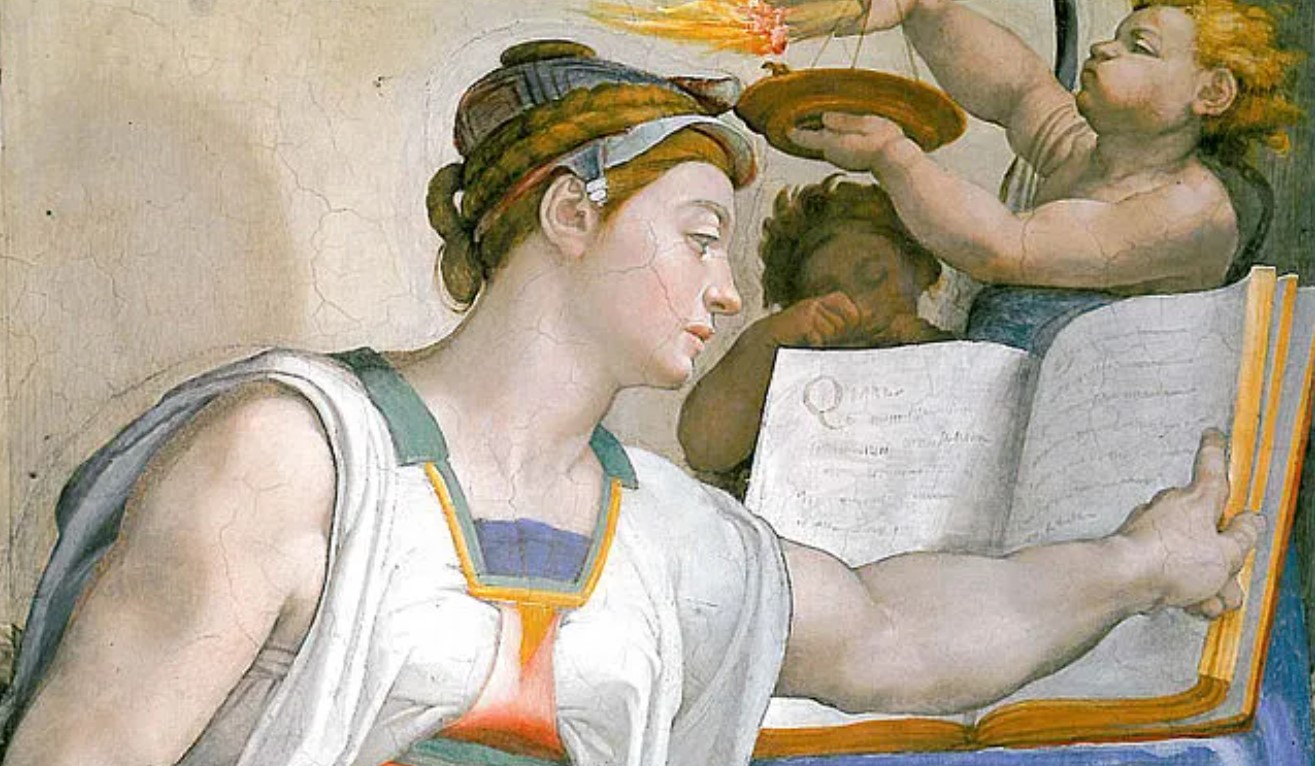
La sua presenza nella Sistina è un ponte. Unisce il Vecchio e il Nuovo Testamento, ma anche l’antichità classica con il cristianesimo. Le sibille, pur nate fuori dalla legge mosaica, avevano visto ciò che sarebbe venuto. Erano la voce delle civiltà antiche che, senza saperlo, parlavano già di Cristo.
Scelsi di raffigurare la Sibilla Eritrea in atteggiamento pacato, seduta mentre sfoglia il grande libro delle veggenze. Il suo corpo è saldo, composto, ma non rigido. Accavalla le gambe ruotandole di lato, mentre la parte superiore resta aperta, come se fosse pronta ad accogliere la rivelazione. Con la mano sinistra volta lentamente le pagine del futuro, consapevole del peso di ciò che sta leggendo.
Alle sue spalle collocai due geni. Uno, stanco, si stropiccia gli occhi nel tentativo di restare sveglio. L’altro, più giovane e vigoroso, gonfia le gote e soffia sulla torcia e sul braciere per farle luce. La profezia non nasce nel silenzio comodo ma nella veglia, nella fatica, nella luce che va continuamente alimentata.
Di fronte a lei, volli il contrasto. Il profeta Ezechiele è tutto movimento, quasi incapace di restare seduto. Tiene con una mano il rotolo delle profezie e con l’altra, sollevata, sembra voler annunciare parole terribili e grandi. Volta il capo come se stesse per parlare, come se il fuoco della visione non gli concedesse tregua. Dietro di lui, due putti reggono i libri, partecipi di quel tumulto spirituale.

La Sibilla Eritrea, invece, fa l’opposto. Tiene il libro lontano da sé, cerca di voltare una pagina, ma si ferma. Pensa. Medita con gravità ciò che dovrà scrivere. Un putto, alle sue spalle, soffia su un tizzone ardente per accendere la lucerna. È un gesto semplice, ma necessario: senza luce, la verità resta muta.
La sua bellezza non è decorazione. Sta nell’aria del volto, nell’acconciatura del capo, nel panneggio delle vesti che avvolgono il corpo con misura e forza. Le braccia nude mostrano energia, solidità, umanità. Volevo che apparisse degna del peso del tempo che attraversa.
Sotto il Sacrificio di Noè, la Sibilla Eritrea ricorda allo spettatore che la storia dell’uomo è fatta di cadute e promesse, di distruzione e speranza. È memoria del diluvio e annuncio del giudizio finale. È la voce del mondo antico che, prima ancora dei profeti, aveva già intravisto il destino ultimo dell’umanità.
La Sibilla Eritrea non guarda il cielo: lo ha già visto.
Per il momento il sempre vostro Michelangelo Buonarroti vi saluta dandovi appuntamento ai prossimi post e sui social.
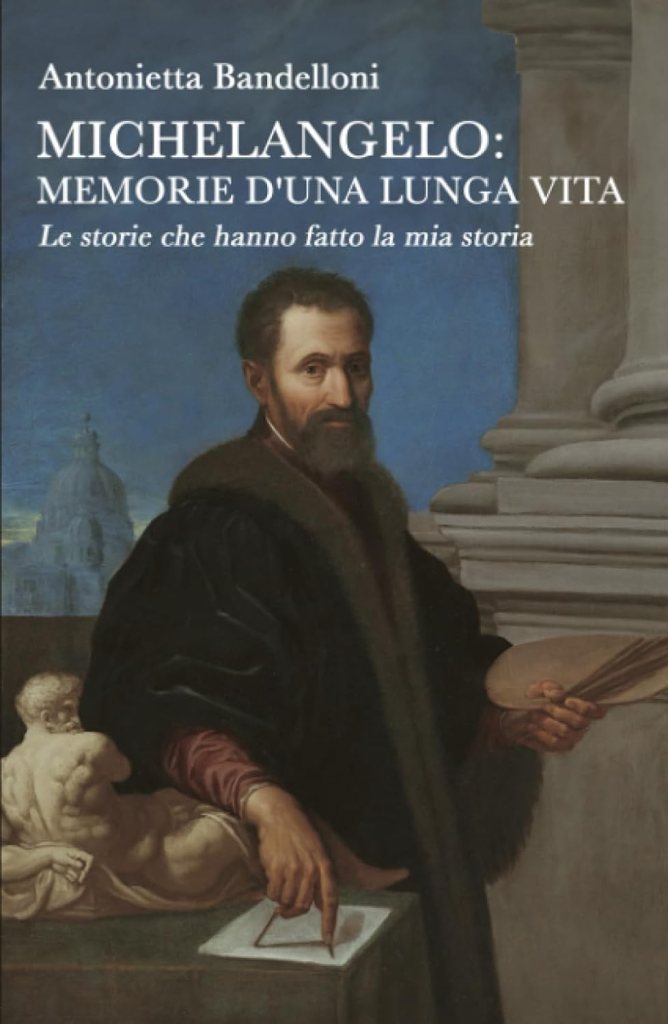
The Erythraean Sibyl: This is why I placed her beneath Noah’s Sacrifice
When I worked on the ceiling of the Sistine Chapel, I knew that each figure had to tell its own story, even when the observer’s eye wasn’t yet ready to listen. Nothing happened by chance.
For this reason, I wanted to place the Erythraean Sibyl immediately beneath the scene of Noah’s Sacrifice.
I wanted anyone who looked up to the sky to be led by the hand into the biblical story, intertwined with the secular, and to remember the ancient bond between Noah and the Erythraean Sibyl.
According to tradition, the Erythraean Sibyl was Noah’s daughter-in-law. A woman who had known the world before and after the Flood, and who had predicted the Day of Judgment. In her, the memory of destruction and the announcement of the end times meet.
Her presence in the Sistine Chapel is a bridge. It unites the Old and New Testaments, but also classical antiquity with Christianity. The sibyls, though born outside the Mosaic Law, had seen what was to come. They were the voice of ancient civilizations that, unknowingly, already spoke of Christ.
I chose to depict the Erythraean Sibyl in a calm pose, seated while leafing through the great book of prophecies. Her body is firm, composed, but not stiff. She crosses her legs, rotating them to the side, while the upper half remains open, as if ready to welcome the revelation. With her left hand, she slowly turns the pages of the future, aware of the weight of what she is reading.
Behind her, I placed two genies. One, tired, rubs his eyes in an attempt to stay awake. The other, younger and more vigorous, puffs out his cheeks and blows on the torch and the brazier to illuminate it. Prophecy is not born in comfortable silence but in wakefulness, in toil, in the light that must be continually rekindled.
In front of her, I wanted contrast. The prophet Ezekiel is all movement, almost incapable of remaining seated. He holds the scroll of prophecies in one hand, and with the other, raised, he seems to be proclaiming terrible and great words. He turns his head as if about to speak, as if the fire of the vision grants him no respite. Behind him, two cherubs hold books, participating in that spiritual turmoil.
The Erythraean Sibyl, on the other hand, does the opposite. She holds the book away from her, tries to turn a page, but stops. She thinks. She ponders gravely what she must write. A cherub, behind her, blows on a burning ember to light the lamp. It is a simple gesture, but necessary: without light, truth remains silent.
Her beauty is not decoration. It lies in the expression of her face, in the hairstyle of her head, in the drapery of her robes that envelop her body with measure and strength. Her bare arms reveal energy, solidity, humanity. I wanted it to appear worthy of the weight of time it passes through.
Beneath Noah’s Sacrifice, the Erythraean Sibyl reminds the viewer that human history is made of falls and promises, of destruction and hope. It is a reminder of the flood and a harbinger of the final judgment. It is the voice of the ancient world that, even before the prophets, had already glimpsed humanity’s ultimate destiny.
The Erythraean Sibyl doesn’t look at the sky: she has already seen it.
For now, yours truly, Michelangelo Buonarroti bids you farewell, saying he’ll see you in future posts and on social media.

Sostienici – Support Us
Se questo blog ti piace e ti appassiona, puoi aiutarci a farlo crescere sempre più sostenendoci in modo concreto condividendo i post, seguendo le pagine social e con un contributo che ci aiuta ad andare avanti con il nostro lavoro di divulgazione. . ENGLISH: If you like and are passionate about this blog, you can help us make it grow more and more by supporting us in a concrete way by sharing posts, following social pages and with a contribution that helps us to move forward with our dissemination work.
10,00 €
Articoli
Condividi:


Questo sono io





sostienici

Sostienici – Support Us
Se questo blog ti piace e ti appassiona, puoi aiutarci a farlo crescere sempre più sostenendoci in modo concreto condividendo i post, seguendo le pagine social e con un contributo che ci aiuta ad andare avanti con il nostro lavoro di divulgazione. . ENGLISH: If you like and are passionate about this blog, you can help us make it grow more and more by supporting us in a concrete way by sharing posts, following social pages and with a contribution that helps us to move forward with our dissemination work.
€10,00


Molto interessante grazie
"Mi piace"Piace a 1 persona
prego 🙂
"Mi piace""Mi piace"