

San Pietro penitente di Matthias Stomer
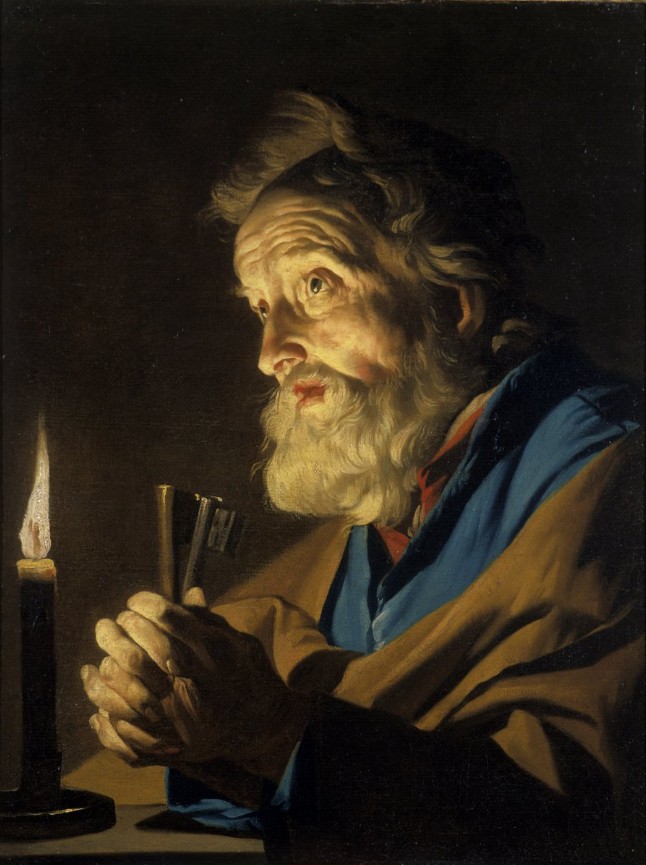
Il San Pietro penitente di Matthias Stomer, conservato nello Schlossmuseum del complesso Schloss Friedenstein a Linz, è un’opera straordinaria della pittura barocca del Seicento. Un esempio di caravaggismo nord-europeo che mette assieme la forza delle luci e delle ombre con un forte pathos religioso e un realismo psicologico intenso..
Matthias Stomer e il caravaggismo nord-europeo
La vita di un pittore itinerante del Seicento
Matthias Stomer, nato nei Paesi Bassi intorno al 1600, trascorse gran parte della sua vita artistica in Italia. Lavorò a Roma, Napoli e Sicilia, sviluppando uno stile personale che unisce l’eredità caravaggesca alla tradizione pittorica nordica, più austera e meditativa.

Le caratteristiche del suo stile
Stomer, sia nell’epoca in cui visse che al giorno d’oggi, divenne celebre e apprezzato per l’uso drammatico del chiaroscuro, i volti intensamente modellati dalla luce e quei colori terrosi e caldi che era solito adoperare.
Il suo è un naturalismo sobrio ma potente ed espressivo.
Il San Pietro penitente
La scena
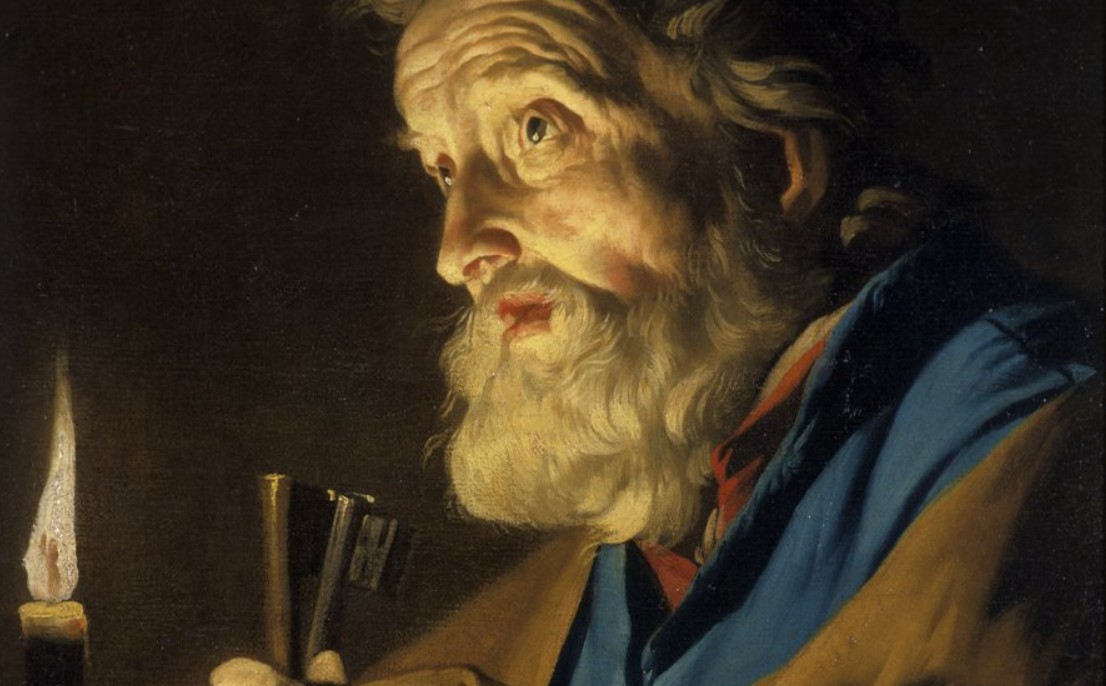
Nel dipinto, San Pietro è stato rappresentato da Stomer a mezza figura, immerso in una profonda penitenza dopo il rinnegamento di Cristo. Il suo volto segnato, lo sguardo rivolto verso l’alto e le mani strette attorno alle chiavi della madre chiesa evocano un’intensa tensione spirituale. L’artista elimina ogni contesto narrativo, concentrando l’attenzione sulla psicologia del personaggio.
Il ruolo del chiaroscuro
Il chiaroscuro è protagonista assoluto. Osservate con attenzione come la luce sia stata usata per esaltare l’emotività del soggetto mentre l’ombra amplifica il senso di colpa e l’introspezione che sta facendo San Pietro.
L’utilizzo che fa della luce Stomer definisce sì le forme ma costruisce anche il significato teologico dell’opera: con una sentita ricerca del perdono.
L’iconografico di San Pietro penitente
Il tema della penitenza nel Seicento
Nel contesto della pittura barocca, la figura di San Pietro assume una forte carica simbolica: rappresenta l’uomo che cade, sbaglia, soffre e cerca la redenzione. Questo tema era centrale nella spiritualità del Seicento, epoca di profonde riflessioni religiose.
L’interpretazione di Stomer
Stomer dipinge un Pietro profondamente umano: non idealizzato, non eroico, ma fragile. La sua sofferenza è realistica, emotivamente tangibile. Attraverso questa scelta, l’artista crea un ponte diretto tra il personaggio biblico e lo spettatore moderno.
Un capolavoro della maturità
Il San Pietro penitente è uno dei vertici della produzione matura di Stomer. Raccoglie tutti i tratti distintivi del suo linguaggio: intensità psicologica, luce drammatica e un naturalismo che scava nell’emotività del soggetto.
Per il momento il sempre vostro Michelangelo Buonarroti vi saluta dandovi appuntamento ai prossimi post e sui social.
Saint Peter Penitent by Matthias Stomer
Matthias Stomer’s Saint Peter Penitent, housed in the Schlossmuseum at Schloss Friedenstein in Linz, is an extraordinary work of 17th-century Baroque painting. An example of Northern European Caravaggism, it combines the power of light and shadow with strong religious pathos and intense psychological realism.
Matthias Stomer and Northern European Caravaggism
The Life of a 17th-Century Itinerant Painter
Matthias Stomer, born in the Netherlands around 1600, spent much of his artistic life in Italy. He worked in Rome, Naples, and Sicily, developing a personal style that combines the Caravaggesque legacy with the more austere and meditative Northern European pictorial tradition.
Characteristics of His Style
Stomer, both in his time and today, became famous and appreciated for his dramatic use of chiaroscuro, his faces intensely modeled by light, and the earthy, warm colors he often employed.
His naturalism is sober yet powerful and expressive.
The Penitent Saint Peter
The Scene
In the painting, Stomer has depicted Saint Peter in half-length, immersed in deep penitence after denying Christ. His lined face, his gaze turned upward, and his hands clasped around the keys of the Mother Church evoke intense spiritual tension. The artist eliminates all narrative context, focusing attention on the sitter’s psychology.
The Role of Chiaroscuro
Chiaroscuro is the absolute protagonist. Observe carefully how light has been used to enhance the subject’s emotionality, while shadow amplifies Saint Peter’s sense of guilt and introspection.
Stomer’s use of light defines the forms but also constructs the theological meaning of the work: with a heartfelt search for forgiveness.
The Iconography of Saint Peter the Penitent
The Theme of Penance in the 17th Century
In the context of Baroque painting, the figure of Saint Peter takes on a powerful symbolic charge: he represents the man who falls, makes mistakes, suffers, and seeks redemption. This theme was central to 17th-century spirituality, a period of profound religious reflection.
Stomer’s Interpretation
Stomer paints a profoundly human Peter: not idealized, not heroic, but fragile. His suffering is realistic, emotionally tangible. Through this choice, the artist creates a direct bridge between the biblical character and the modern viewer.
A Mature Masterpiece
Saint Peter the Penitent is one of the pinnacles of Stomer’s mature work. It embodies all the distinctive features of his artistic style: psychological intensity, dramatic lighting, and a naturalism that delves into the subject’s emotions.
For now, yours truly, Michelangelo Buonarroti, bids farewell and invites you to join him in future posts and on social media.

Sostienici – Support Us
Se questo blog ti piace e ti appassiona, puoi aiutarci a farlo crescere sempre più sostenendoci in modo concreto condividendo i post, seguendo le pagine social e con un contributo che ci aiuta ad andare avanti con il nostro lavoro di divulgazione. . ENGLISH: If you like and are passionate about this blog, you can help us make it grow more and more by supporting us in a concrete way by sharing posts, following social pages and with a contribution that helps us to move forward with our dissemination work.
10,00 €
Condividi:


Questo sono io





sostienici

Sostienici – Support Us
Se questo blog ti piace e ti appassiona, puoi aiutarci a farlo crescere sempre più sostenendoci in modo concreto condividendo i post, seguendo le pagine social e con un contributo che ci aiuta ad andare avanti con il nostro lavoro di divulgazione. . ENGLISH: If you like and are passionate about this blog, you can help us make it grow more and more by supporting us in a concrete way by sharing posts, following social pages and with a contribution that helps us to move forward with our dissemination work.
€10,00


