

La monumentale opera in bronzo di Giulio II e quella prima disastrosa fusione
Le ciambelle non mi son sempre venute col buco. Sebbene spesso venga ricordato per le mie grandiose opere, non sempre tutto quello che ho fatto è riuscito alla perfezione ma ho tentato di imparare dai miei errori, pur grossolani che fossero.
Era il luglio del 1507 quando feci la prima fusione dell’opera in bronzo che m’aveva commissionato papa Giulio II per la Bologna appena sottratta ai Bentivoglio. Il pontefice voleva una grande scultura che lo ritraesse come un papa guerriero più che come uomo di chiesa.
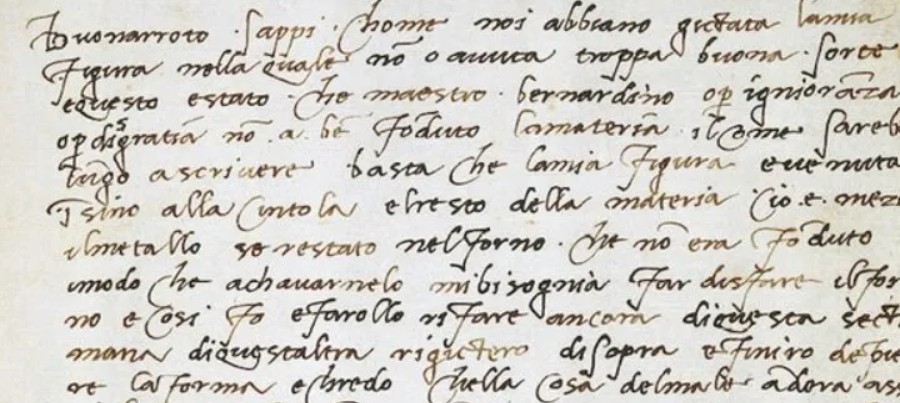
Quella fusione però non andò per niente bene: il metallo non si era completamente fuso, forse per mancanza di calore, è gran parte della materia era rimasta nel forno creato proprio per poter realizzare il grande ritratto del papa.
Per realizzare quell’impresa titanica non avevo fatto tutto da solo. Giusto per la fusione avevo fatto affidamento a Bernardino che s’intendeva di bronzo. Scoraggiato e amareggiato per l’accaduto, avrei dovuto riprovare a fare la fusione ricostruendo da capo un nuovo forno. Una fatica enorme e spese notevoli a cui dover far fronte: entrambe cose che poco m’andavano a genio.
Certo Bernardino non aveva fatto una gran bela figura in quell’occasione causando un danno a me, al papa e pure a sé stesso.
Per completare la nuova fusione mi sarebbero serviti perlomeno quindici o venti giorni nella speranza il lavoro potesse venire bene. Nemmeno la seconda fusione però riuscì ma preferii accontentarmi di quella e dedicargli un lavoro enorme di nettatura.
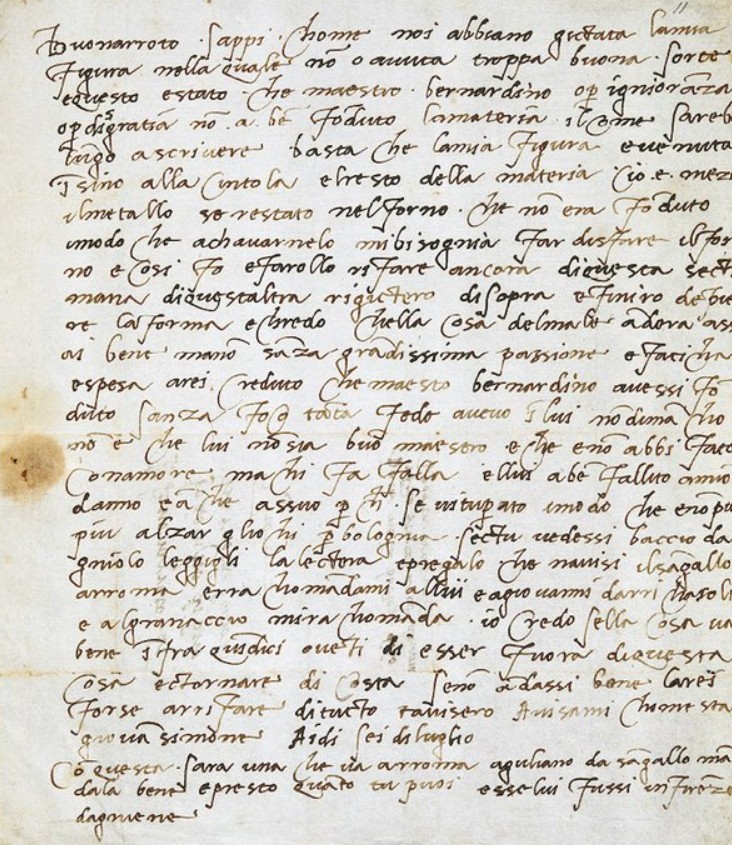
Nella lettera che da Bologna scrissi al mi fratello Buonarroto descrissi quella mal riuscita impresa nel dettaglio. A seguire vi riporto l’originale, custodita al British Museum. Buona lettura.
Bologna, 6 luglio 1507
Buonarroto, sappi chome noi abbiàno gictata la mia figura, nella quale non ò avuta troppa buona sorte; e questo è stato che maestro Bernardino, o per ignoranza o per disgratia, non à ben fonduto la materia. Il come sarebe lungo a scrivere basta che la mia figura è venuta insino alla cintola; el resto della materia, cioè mezo il metallo, s’è restato nel forno, che non era fonduto; i’ modo che a chavarnelo mi bisognia far disfare il forno, e così fo, e farollo rifare ancora di questa sectimana; di quest’altra rigicterò di sopra, e finirò d’empiere la forma, e chredo che lla cosa, del male, anderà assai bene, ma non sanza grandissima passione e faticha e spesa.
Arei creduto che maest[r]o Bernardino avessi fonduto sanza foco, tanta fede avevo in lui; nondimancho non è che lui non sia buon maestro e che e’ non abbi fato con amore; ma chi fa, falla, e llui à ben fallito a mio danno e anche a ssuo, perché s’è vituperato i’ modo, che e’ non può più alzar gli ochi per Bologna.
Se ctu vedessi Baccio d’Agniolo, leggigli la lectera e pregalo che n’avisi il Sangallo a rRoma e rrachomandami a llui, e a Giovanni da rRichasoli e al Granaccio mi rachomanda.
Io credo, se lla cosa va bene, infra quindici o venti dì esser fuora di questa cosa e ctornare di costà; se non andassi bene, l’arei forse a rrifare. Di tutto t’aviserò. Avisami chome sta Giovan Simone. Ai dì sei di luglio.
Con questa sarà una che va a rRoma a G[i]uliano da Sangallo. Mandala bene e presto quanto tu puoi e sse lui fossi in Firenze, dagniene. A Buonarroto di Lodovicho di Buonarrota Simoni in Fiorenza. Data nella boctega di Lorenzo Strozi, Arte di Lana, im Porta Rossa.
Per il momento il sempre vostro Michelangelo Buonarroti vi saluta dandovi appuntamento ai prossimi post e sui social.
Julius II’s monumental bronze work and that disastrous first casting
I haven’t always had a hole in my donuts. Although I’m often remembered for my grandiose works, not everything I’ve done has always turned out perfectly, but I’ve tried to learn from my mistakes, however gross.
It was July 1507 when I cast the first bronze work commissioned by Pope Julius II for Bologna, which had just been taken from the Bentivoglio. The pontiff wanted a large sculpture that portrayed him as a warrior pope rather than a man of the church.
That casting, however, didn’t go well at all: the metal hadn’t completely melted, perhaps due to a lack of heat, and much of the material remained in the furnace created specifically to create the pope’s large portrait.
To accomplish that titanic undertaking, I hadn’t done everything alone. For the casting, I had relied on Bernardino, who knew a thing or two about bronze. Discouraged and embittered by what had happened, I should have tried the casting again, rebuilding a new furnace from scratch. It would have been a huge undertaking and considerable expense, both of which I did not like.
Certainly, Bernardino had not made a particularly good impression on that occasion, causing harm to me, to the Pope, and even to himself.
To complete the new casting, I would have needed at least fifteen or twenty days, hoping the work would turn out well. The second casting, however, was also unsuccessful, but I preferred to settle for that and then devote a huge amount of cleaning to it.
In the letter I wrote to my brother Buonarroto from Bologna, I described that failed undertaking in detail. Below is the original, held at the British Museum. Enjoy the reading.
Bologna, July 6, 1507
Buonarroto, know how we have cast my figure, in which I have not had much good fortune; And this is because Maestro Bernardino, either through ignorance or misfortune, did not cast the material well. It would take too long to explain how; it’s enough that my figure reached my waist; the rest of the material, that is, half the metal, remained in the furnace, which had not melted. So, to remove it, I would have to have the furnace torn down, and so I am doing, and will have it redone again this week. This week I will throw it back and finish filling the mold, and I believe that the thing, unfortunately, will go very well, but not without great passion, effort, and expense.
I would have believed Maestro Bernardino to have cast without fire, so much faith I had in him; nevertheless, it’s not that he isn’t a good master and that he didn’t do it with love; But whoever does it, fails, and he has failed to my detriment and to his own, because he has so shamed himself that he can no longer lift his eyes towards Bologna.
If you see Baccio d’Agniolo, read the letter to him and ask him to inform Sangallo of me in Rome and send me back to him, and to Giovanni da Richasoli and Granaccio.
I believe, if things go well, in fifteen or twenty days I will be out of this business and back there; if they don’t go well, I might have to do it again. I will inform you of everything. Let me know how Giovan Simone is. On the sixth of July.
With this, there will be someone going to Rome to Giuliano da Sangallo. Send it well and as quickly as you can, and if he is in Florence, accept it. A Buonarroti by Lodovich Simoni in Florence. Given in the workshop of Lorenzo Strozi, Arte di Lana, at Porta Rossa.
For now, yours truly, Michelangelo Buonarroti bids you farewell and invites you to join him in future posts and on social media.

Sostienici – Support Us
Se questo blog ti piace e ti appassiona, puoi aiutarci a farlo crescere sempre più sostenendoci in modo concreto condividendo i post, seguendo le pagine social e con un contributo che ci aiuta ad andare avanti con il nostro lavoro di divulgazione. . ENGLISH: If you like and are passionate about this blog, you can help us make it grow more and more by supporting us in a concrete way by sharing posts, following social pages and with a contribution that helps us to move forward with our dissemination work.
10,00 €
Condividi:


Questo sono io





sostienici

Sostienici – Support Us
Se questo blog ti piace e ti appassiona, puoi aiutarci a farlo crescere sempre più sostenendoci in modo concreto condividendo i post, seguendo le pagine social e con un contributo che ci aiuta ad andare avanti con il nostro lavoro di divulgazione. . ENGLISH: If you like and are passionate about this blog, you can help us make it grow more and more by supporting us in a concrete way by sharing posts, following social pages and with a contribution that helps us to move forward with our dissemination work.
€10,00


