

Il Tempio di San Biagio a Montepulciano: viaggio nel Rinascimento toscano
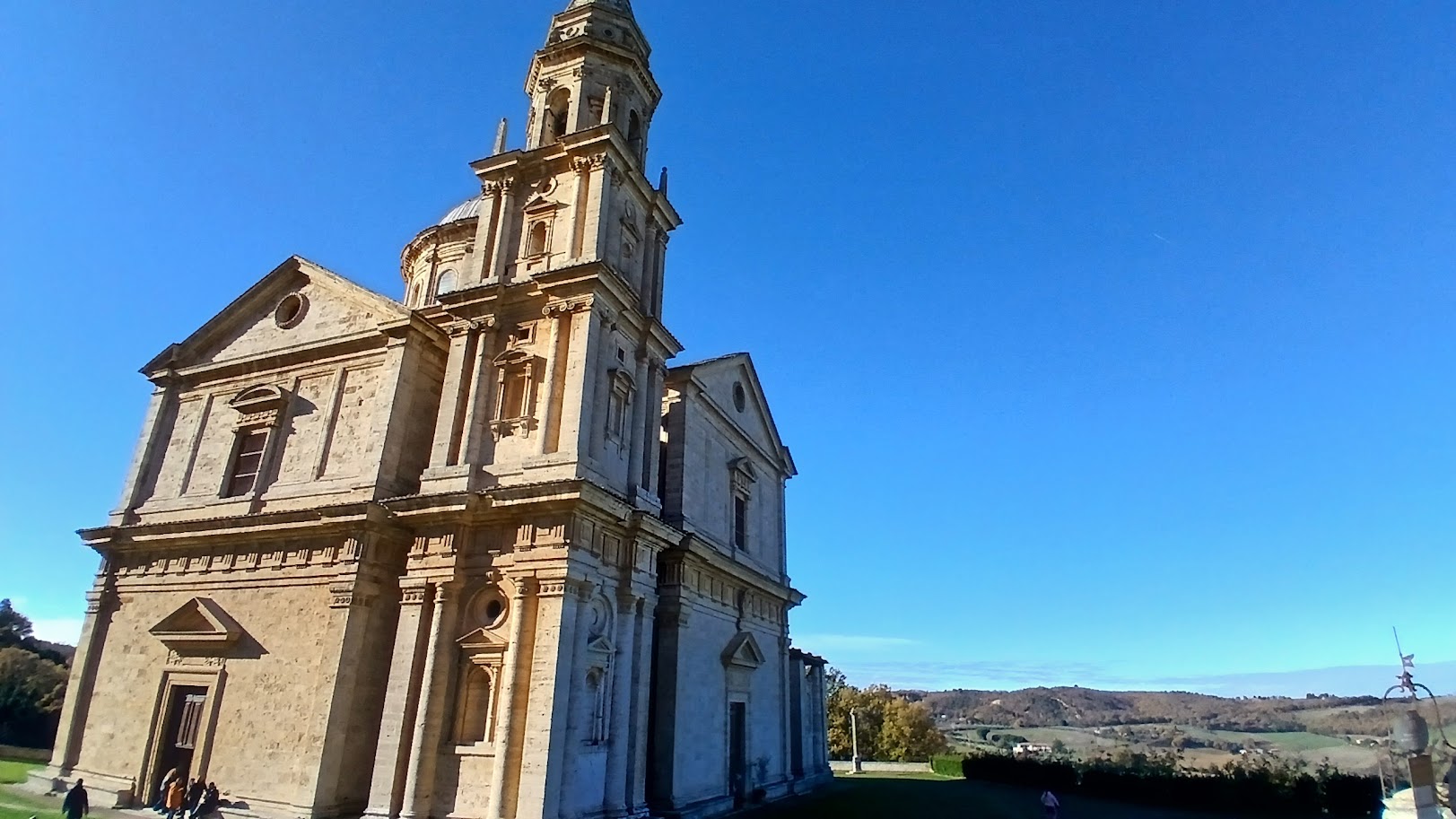
Chi arriva ai piedi di Montepulciano, tra le curve affrontate tra i tanti vigneti e il profilo elegante del borgo, non può fare a meno di notare una costruzione che domina il paesaggio con la sua sorprendente architettura: il Tempio di San Biagio.
E’ un capolavoro dell’architettura rinascimentale dove storia, fede e arte dialogano tra di loro creando una sensazione di sacralità fuori dal tempo.
Il santuario che nasce da un’immagine miracolosa
Il Tempio di San Biagio sorge dove un tempo si trovava una piccola pieve medievale. Lì era custodito un affresco trecentesco della Madonna col Bambino che, secondo la tradizione, sarebbe stato protagonista di eventi miracolosi.
La crescente devozione nei confronti di questa immagine convinse la comunità poliziana, all’inizio del Cinquecento, a ricostruire completamente il santuario, affidandolo a uno dei più grandi architetti dell’epoca: Antonio da Sangallo il Vecchio.
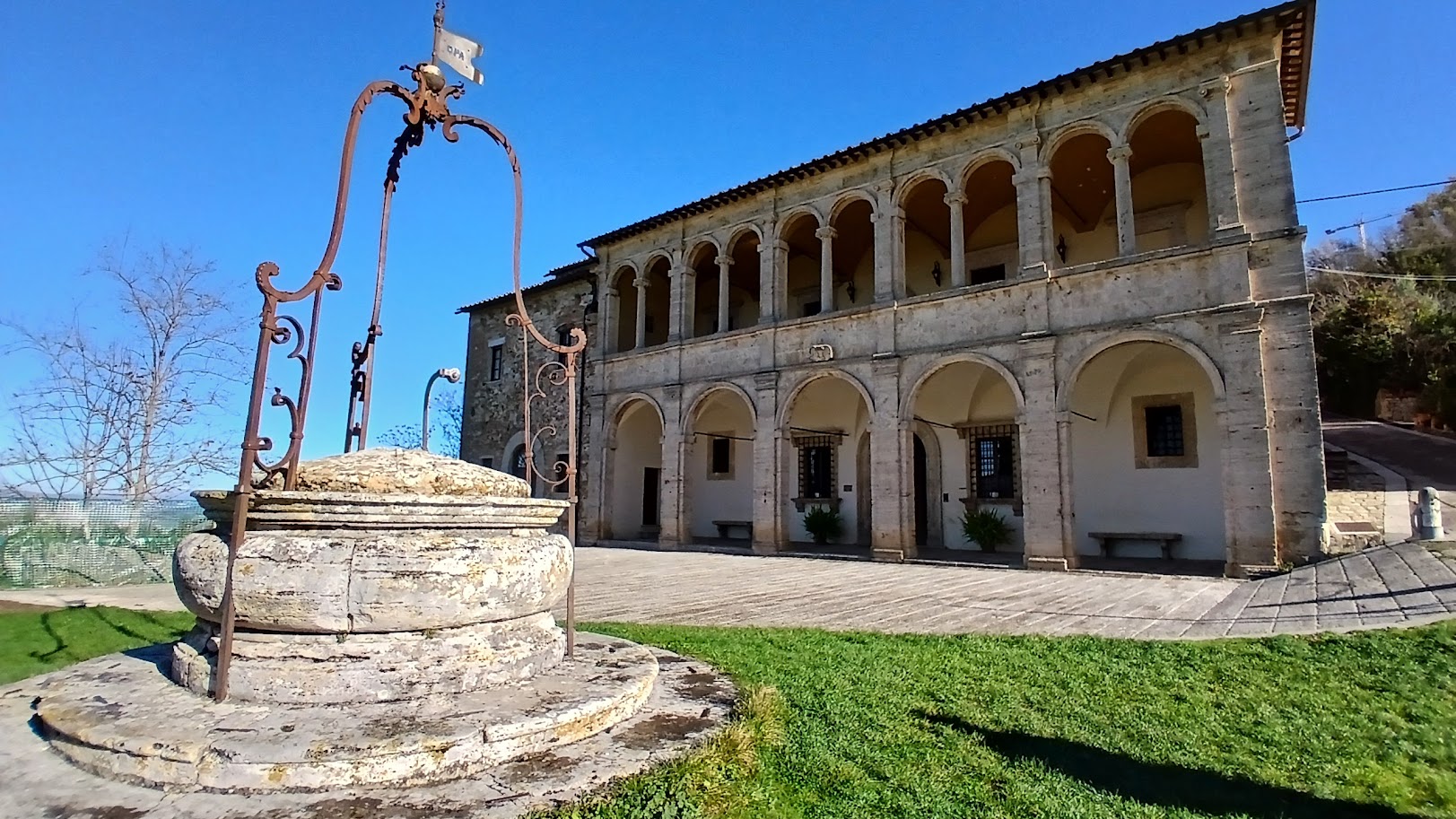
Così, nel 1518, iniziò un cantiere ambizioso destinato a trasformare radicalmente l’identità del luogo e a proiettare Montepulciano nel cuore della cultura rinascimentale.
Dopo la morte dell’architetto Sangallo avvenuta nel dicembre 1534, i lavori vennero portati avanti e la struttura architettonica alla metà del Cinquecento era pressoché conclusa.
Architettura del Tempio di San Biagio: armonia, luce e proporzione
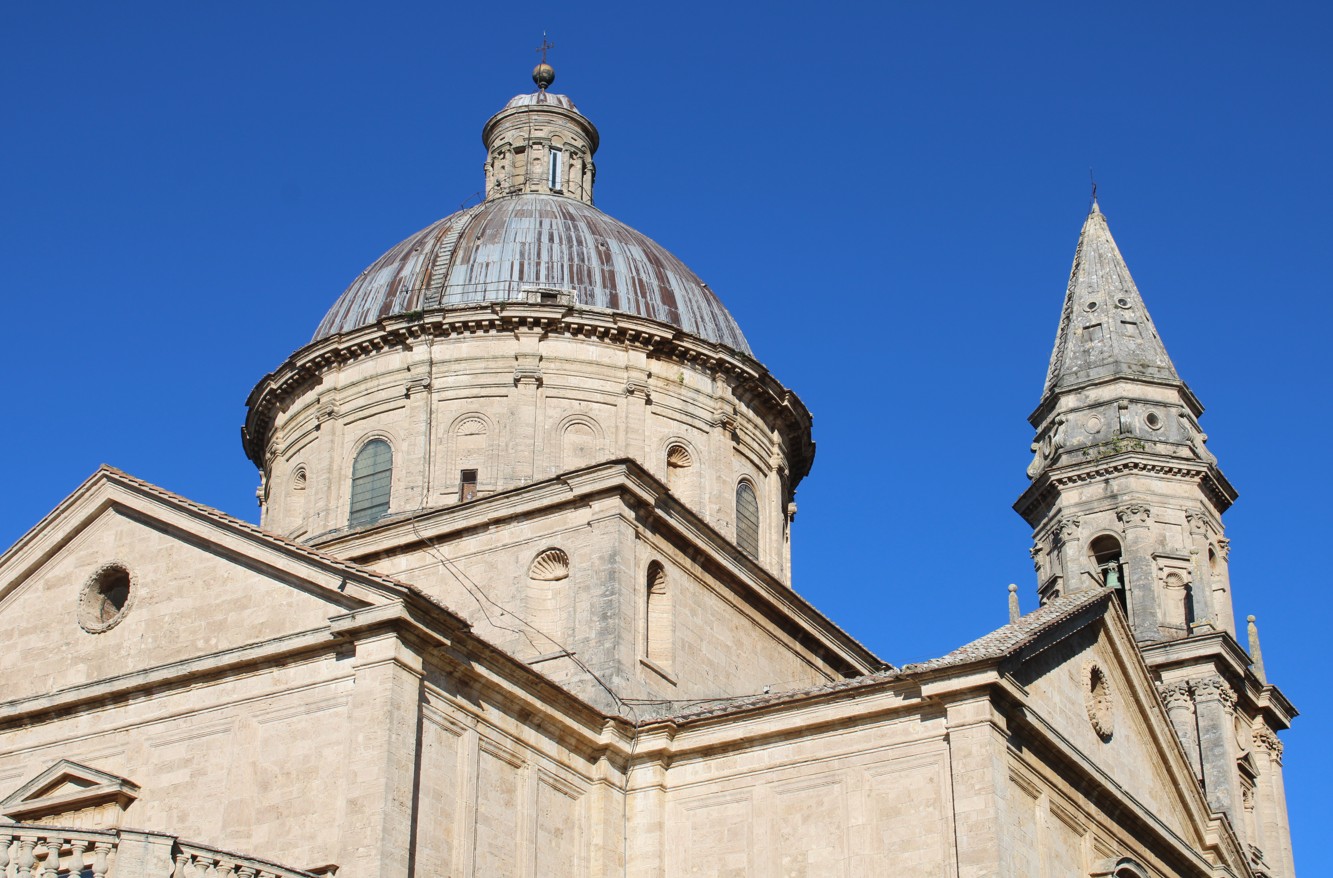
Il Tempio di San Biagio ha la classica forma centrale a croce greca. Ogni braccio ha la stessa lunghezza, confluendo nella cupola che si alza elegante sopra l’intero complesso.
Il tempio è interamente rivestito in travertino. La facciata, sobria e regolare, ripropone il linguaggio classico tanto amato dagli architetti dell’epoca: colonne, paraste, cornici e volumi nitidi. Vi faccio notare un dettaglio: c’è un solo campanile mentre in origine il Sangallo ne aveva progettati due simmetrici.
Il secondo non fu mai completato facendo mancare al complesso il senso di equilibrio pensato dall’architetto.
Opere custodite nel Tempio di San Biagio
Varcando le soglie del tempio si percepisce immediatamente un senso di sacro.
L’affresco miracoloso della Madonna col Bambino
Fulcro spirituale del tempio, l’affresco trecentesco raffigura la Madonna col Bambino e San Francesco. È l’opera che ha dato origine a tutto, ed è tuttora circondata da una profonda venerazione. La sua collocazione, al centro dell’altare maggiore, ne enfatizza la sacralità.
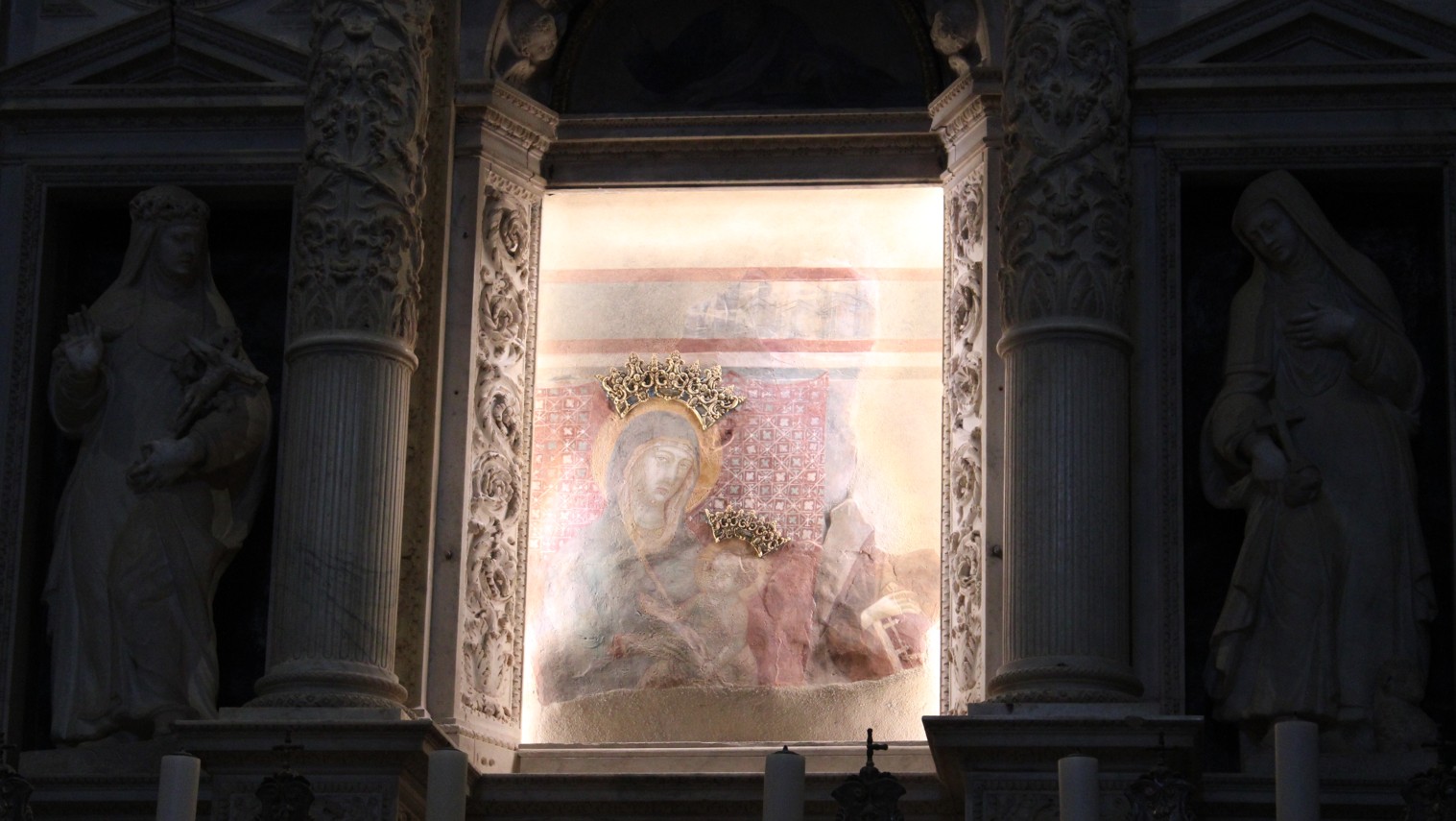
Nel 1578 il pittore fiorentino Niccolò Betti che aveva avuto modo di formarsi nel cantiere vasariano dello Studiolo di Francesco I a Palazzo Vecchio, intervenne sull’opera miracolosa e “rassetta intorno alla figura della detta Madonna”, ridipinge il San Francesco e realizza la lunetta a olio con Dio Padre benedicente.
Il dossale marmoreo del XVI secolo
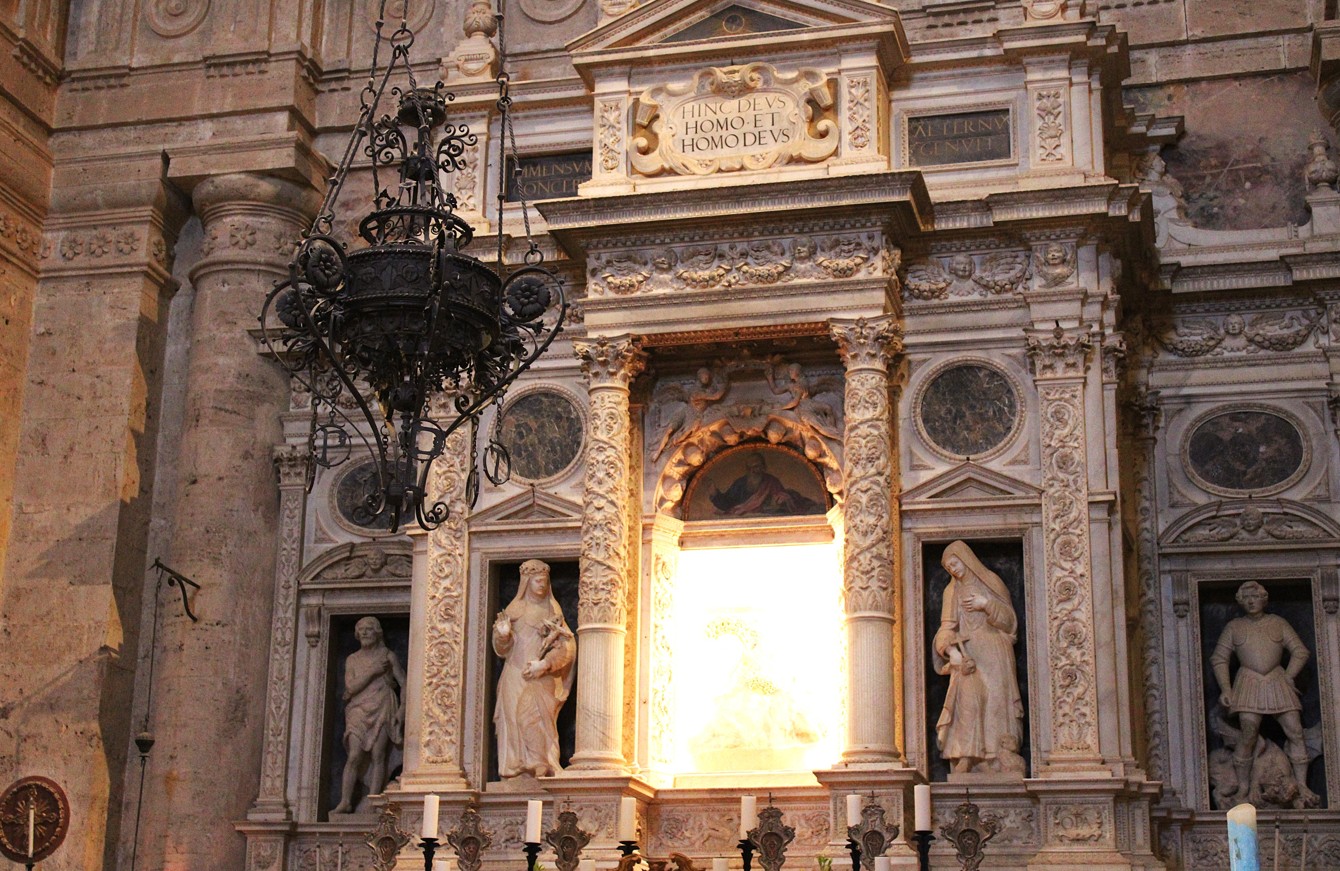
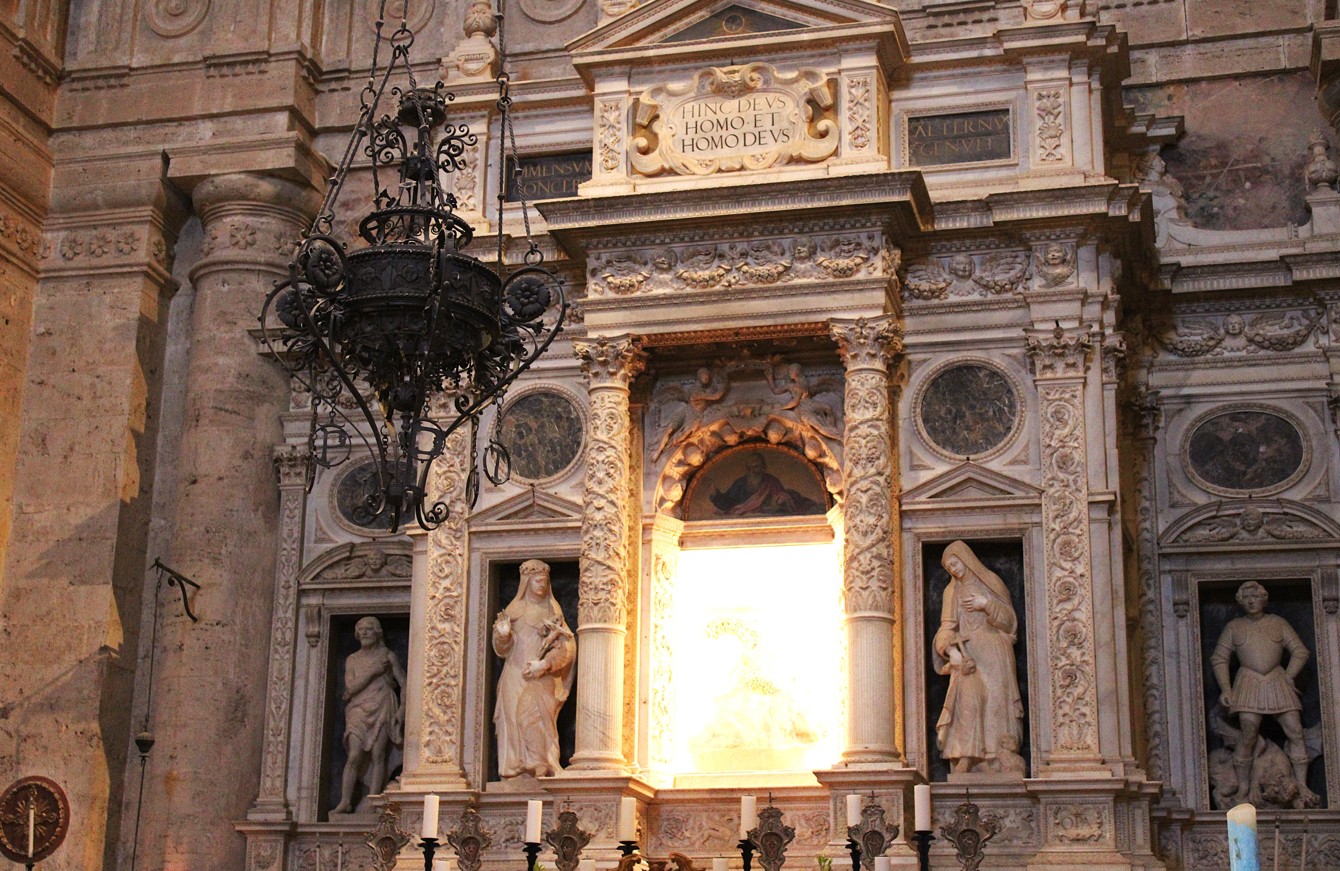
Realizzato nel 1584 dai fratelli Albertini, il grande dossale marmoreo che incornicia l’affresco è un trionfo di forme classiche, architetture scolpite e linee eleganti. Si tratta du una delle opere più monumentali presenti nel tempio.
Le statue seicentesche dei Santi
Nelle quattro nicchie del dossale spiccano le statue marmoree di San Giovanni Battista, Santa Caterina da Siena, Sant’Agnese e San Giorgio, realizzate da Ottaviano Lazzeri. Le figure, dinamiche e ben modellate, aggiungono un tono solenne e teatrale all’insieme.
Cantorie e organo storico
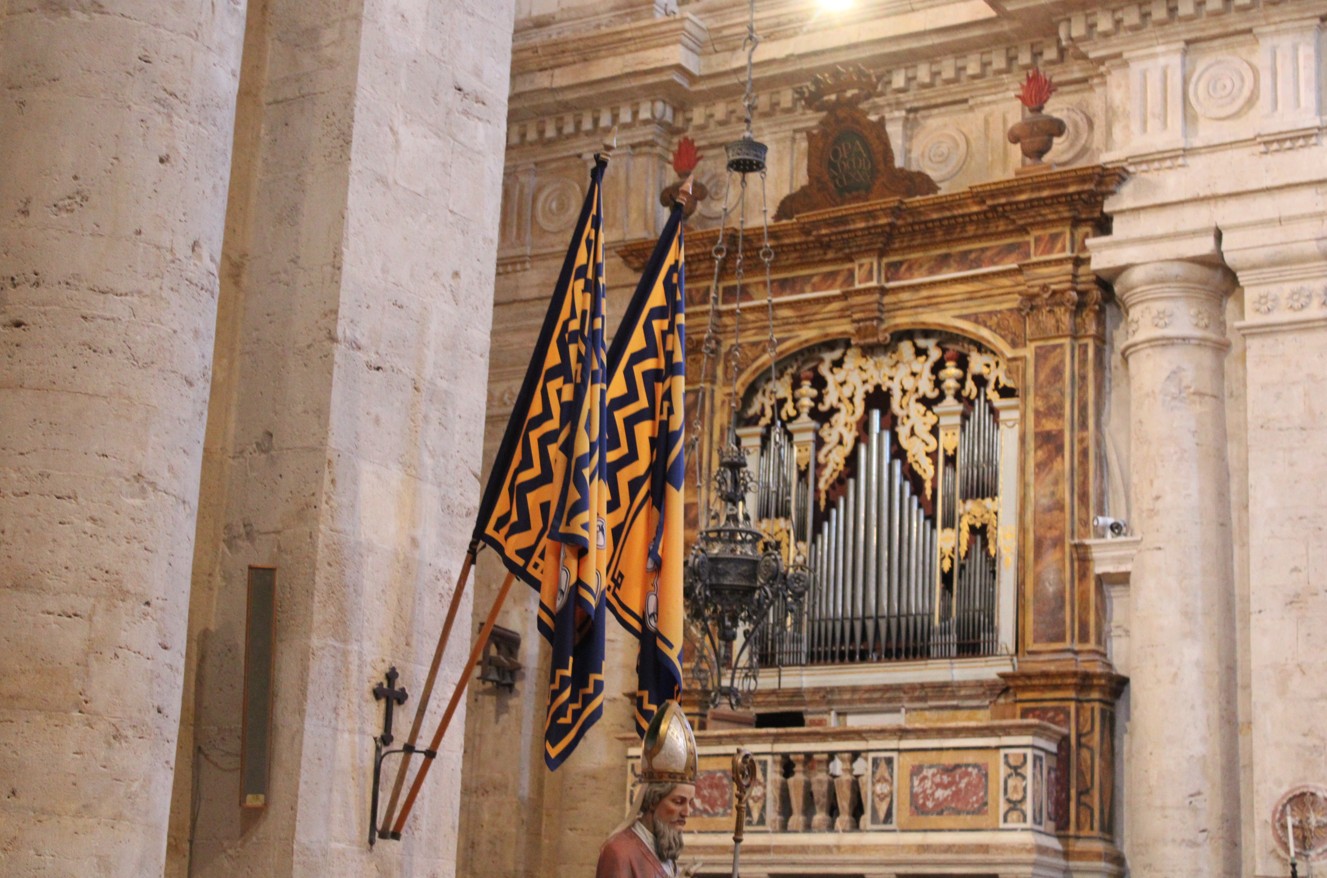
Ai lati dell’altare si trovano le cantorie seicentesche, una delle quali conserva un organo che unisce parti di epoche diverse. La sua presenza sottolinea la vocazione liturgica e musicale del luogo.
Opere minori e arredi storici
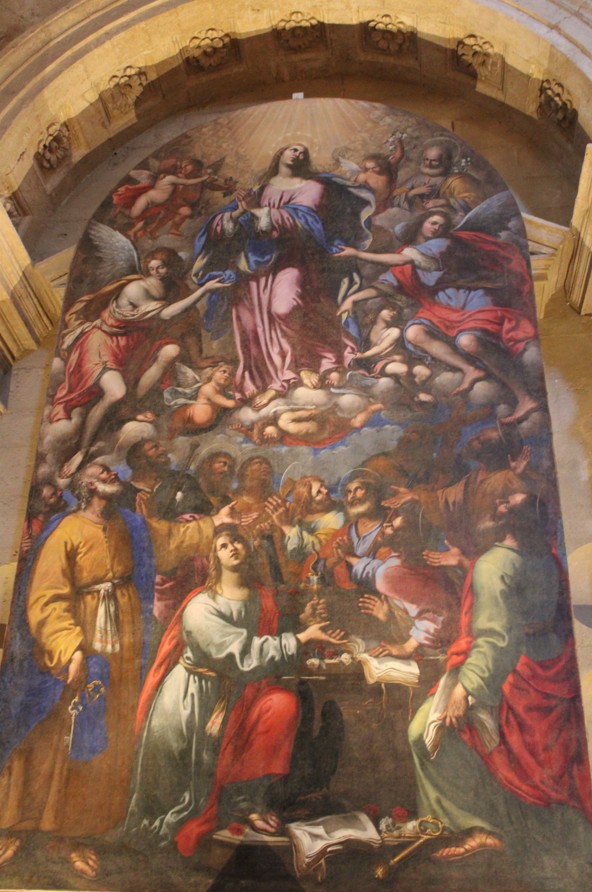
Tra affreschi, sculture lignee e dipinti provenienti da epoche diverse, il tempio conserva un patrimonio diffuso che testimonia la continuità della devozione locale. Vale la pena citare il grande dipinto di Domenico Manetti con l’Assunzione della Vergine, realizzato a metà del Seicento.
Il Tempio di San Biagio a Montepulciano racchiude concetti fondamentali del Rinascimento: equilibrio, bellezza e profondità simbolica
Per il momento il sempre vostro Michelangelo Buonarroti vi saluta dandovi appuntamento ai prossimi post e sui social.
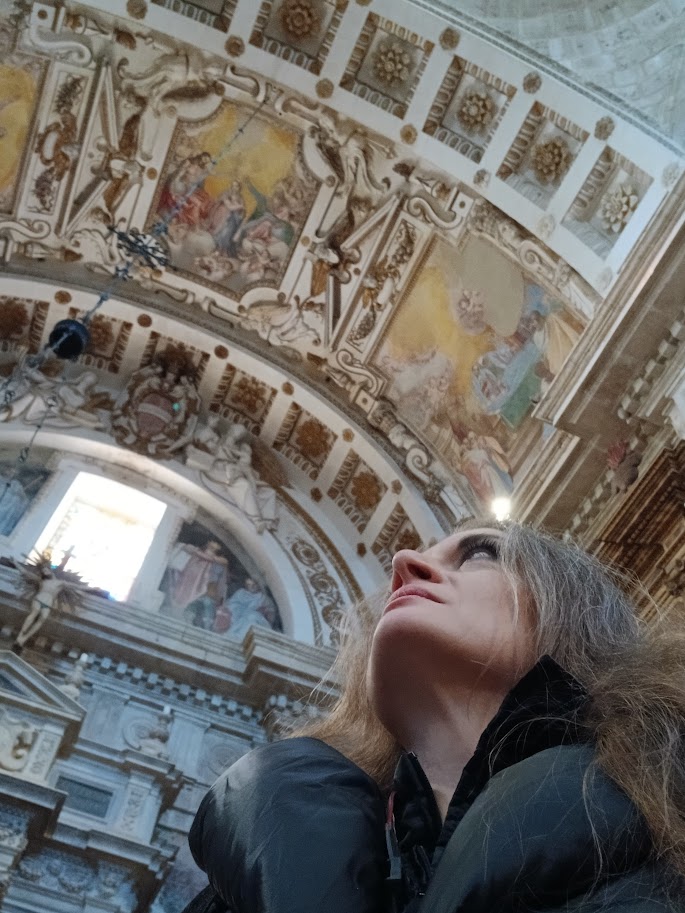

The Temple of San Biagio in Montepulciano: a journey into the heart of the Tuscan Renaissance
Anyone arriving at the foot of Montepulciano, amidst the winding roads winding through the vineyards and the elegant skyline of the village, cannot help but notice a building that dominates the landscape with its striking architecture: the Temple of San Biagio. It is a masterpiece of Renaissance architecture where history, faith, and art intertwine, creating a sense of timeless sacredness.
The sanctuary born from a miraculous image
The Temple of San Biagio stands where a small medieval parish church once stood. It housed a 14th-century fresco of the Madonna and Child, which, according to tradition, was the subject of miraculous events.
Growing devotion to this image convinced the Montepulciano community, at the beginning of the 16th century, to completely rebuild the sanctuary, entrusting it to one of the greatest architects of the time: Antonio da Sangallo the Elder.
Thus, in 1518, an ambitious construction project began, destined to radically transform the site’s identity and propel Montepulciano into the heart of Renaissance culture. After the architect Sangallo’s death in December 1534, the work continued, and by the mid-16th century the architectural structure was almost complete.
Architecture of the Temple of San Biagio: Harmony, Light, and Proportion
The Temple of San Biagio has the classic central Greek cross shape. Each arm is the same length, flowing into the dome that elegantly rises above the entire complex.
The temple is entirely clad in travertine. The sober and regular façade reflects the classical language so beloved by architects of the time: columns, pilasters, cornices, and clean-cut volumes. I would like to point out one detail: there is only one bell tower, whereas Sangallo had originally designed two symmetrical ones.
The second was never completed, thus losing the sense of balance the architect had intended.
Works housed in the Temple of San Biagio
Crossing the threshold of the temple, one immediately senses a sense of the sacred.
The miraculous fresco of the Madonna and Child
The spiritual centerpiece of the temple, the 14th-century fresco depicts the Madonna and Child with Saint Francis. It is the work that began it all, and is still surrounded by profound veneration. Its placement, at the center of the high altar, emphasizes its sacredness.
In 1578, the Florentine painter Niccolò Betti, who had trained at Vasari’s workshop in the Studiolo of Francesco I in Palazzo Vecchio, intervened on the miraculous work and “tidied up the figure of the said Madonna,” repainted Saint Francis, and created the oil lunette with God the Father blessing.
The 16th-Century Marble Reredos
Created in 1584 by the Albertini brothers, the large marble reredos framing the fresco is a triumph of classical forms, sculpted architecture, and elegant lines. It is one of the most monumental works in the church.
The 17th-Century Statues of the Saints
The four niches of the reredos feature marble statues of Saint John the Baptist, Saint Catherine of Siena, Saint Agnes, and Saint George, sculpted by Ottaviano Lazzeri. The dynamic and beautifully modeled figures add a solemn and theatrical tone to the ensemble.
Choirs and Historic Organ
On either side of the altar are the 17th-century choirs, one of which houses an organ combining parts from different periods. Its presence emphasizes the liturgical and musical vocation of the place.
Minor Works and Historic Furnishings
Among frescoes, wooden sculptures, and paintings from various eras, the temple preserves a rich heritage that testifies to the continuity of local devotion. Worthy of mention is Domenico Manetti’s large painting of the Assumption of the Virgin, created in the mid-17th century.
The Temple of San Biagio in Montepulciano embodies fundamental Renaissance concepts: balance, beauty, and symbolic depth.
For now, yours truly, Michelangelo Buonarroti bids you farewell and invites you to see him in future posts and on social media.

Sostienici – Support Us
Se questo blog ti piace e ti appassiona, puoi aiutarci a farlo crescere sempre più sostenendoci in modo concreto condividendo i post, seguendo le pagine social e con un contributo che ci aiuta ad andare avanti con il nostro lavoro di divulgazione. . ENGLISH: If you like and are passionate about this blog, you can help us make it grow more and more by supporting us in a concrete way by sharing posts, following social pages and with a contribution that helps us to move forward with our dissemination work.
10,00 €

Condividi:


Questo sono io





sostienici

Sostienici – Support Us
Se questo blog ti piace e ti appassiona, puoi aiutarci a farlo crescere sempre più sostenendoci in modo concreto condividendo i post, seguendo le pagine social e con un contributo che ci aiuta ad andare avanti con il nostro lavoro di divulgazione. . ENGLISH: If you like and are passionate about this blog, you can help us make it grow more and more by supporting us in a concrete way by sharing posts, following social pages and with a contribution that helps us to move forward with our dissemination work.
€10,00


