

Il Presepe Napoletano nella chiesa di Sant’Ignazio da Loyola, a Roma
Nel cuore di Roma, nella Chiesa di Sant’Ignazio di Loyola, è custodito ed esposto in modo permanente un meraviglioso Presepe Napoletano.
In una cappella della navata sinistra, vicino all’ingresso, il presepe si svela ai fedeli quasi fosse una scena teatrale dinanzi ai loro occhi.
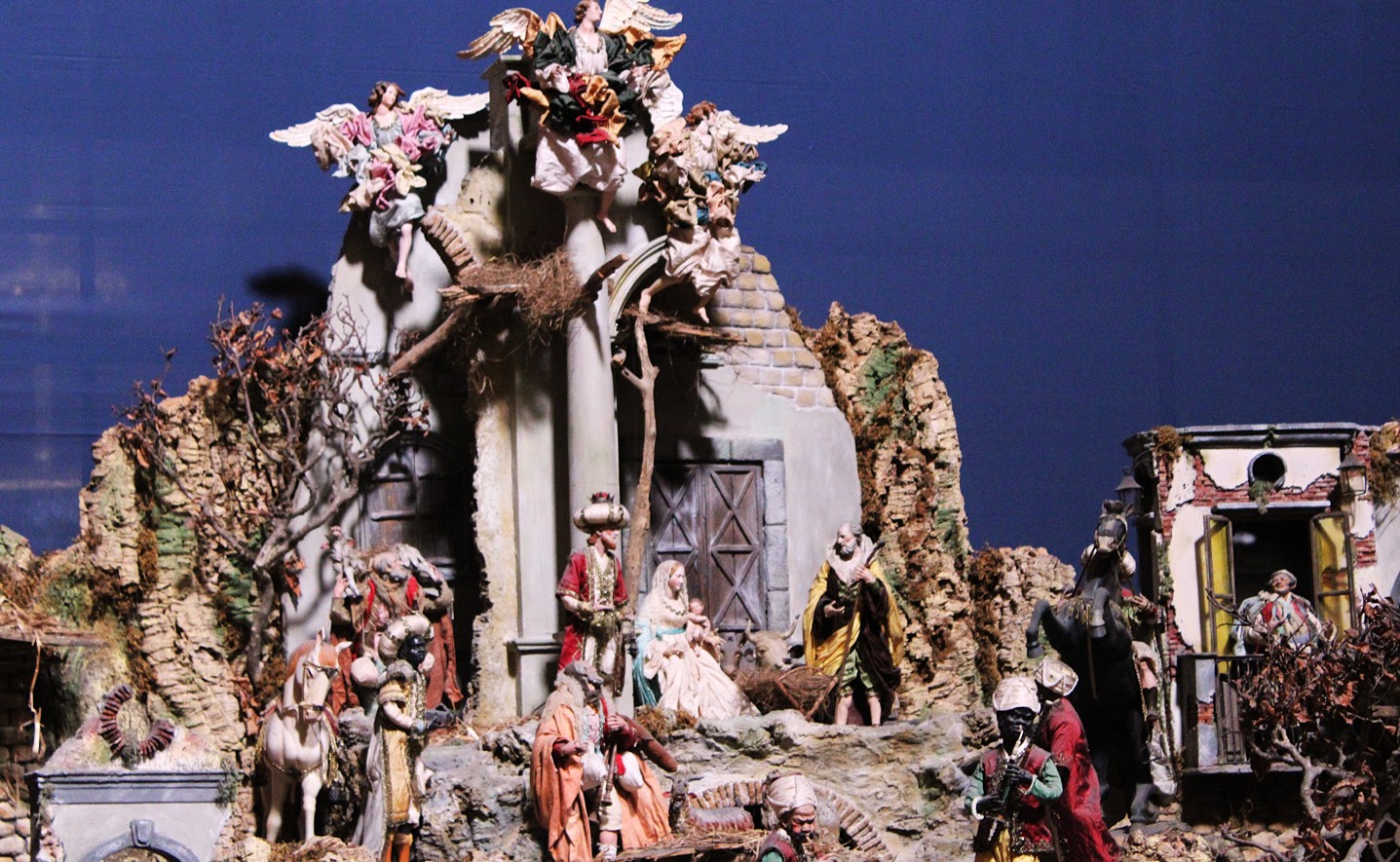

Tra rovine antiche e colonne spezzate, la Natività domina la scena.
Al di sotto, tra la polvere delle pietre e la luce tremula dell’ambiente, si muove una folla di personaggi indaffarati nella loro vita quotidiana, tra gli affanni e i mestieri di un tempo che fu.
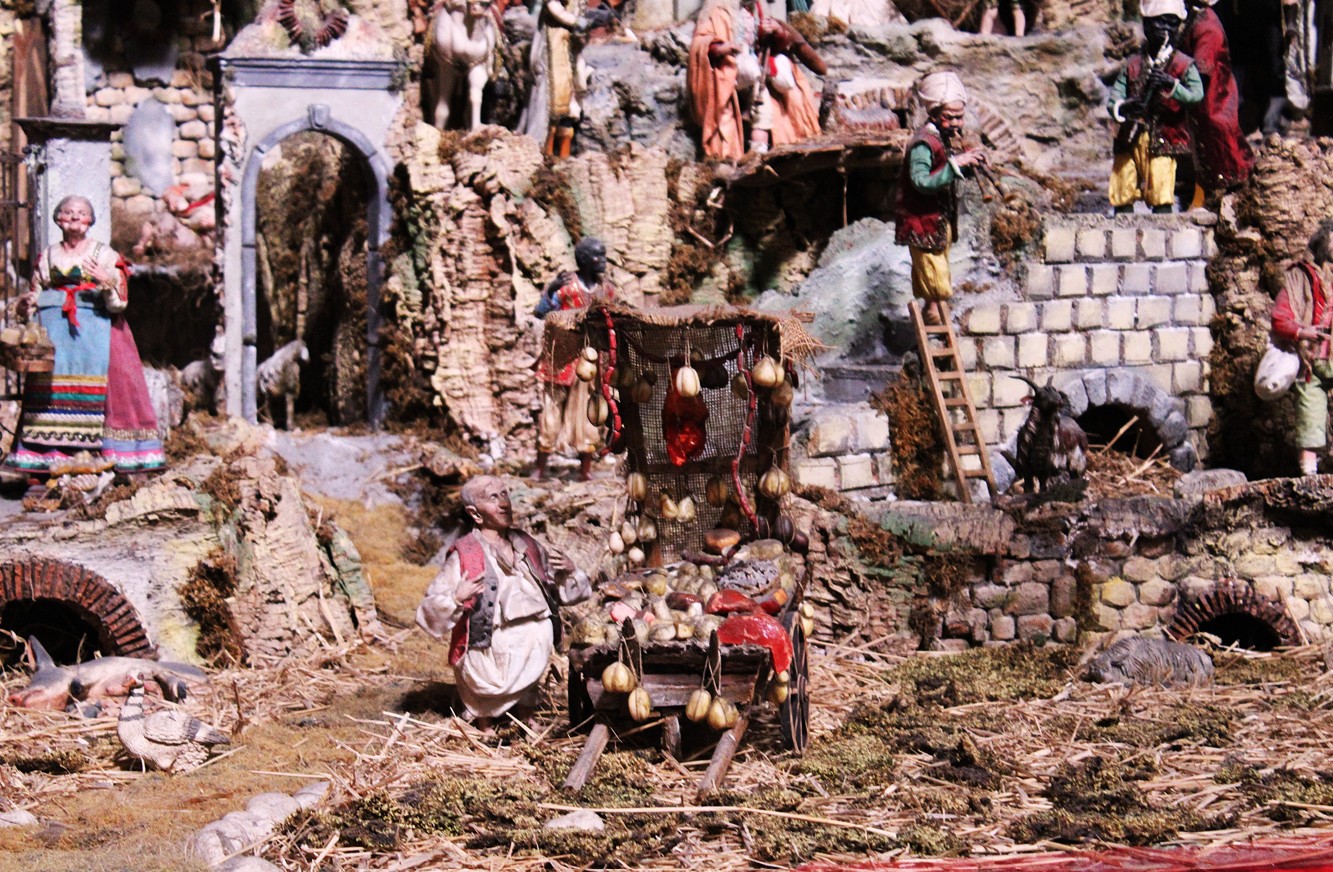
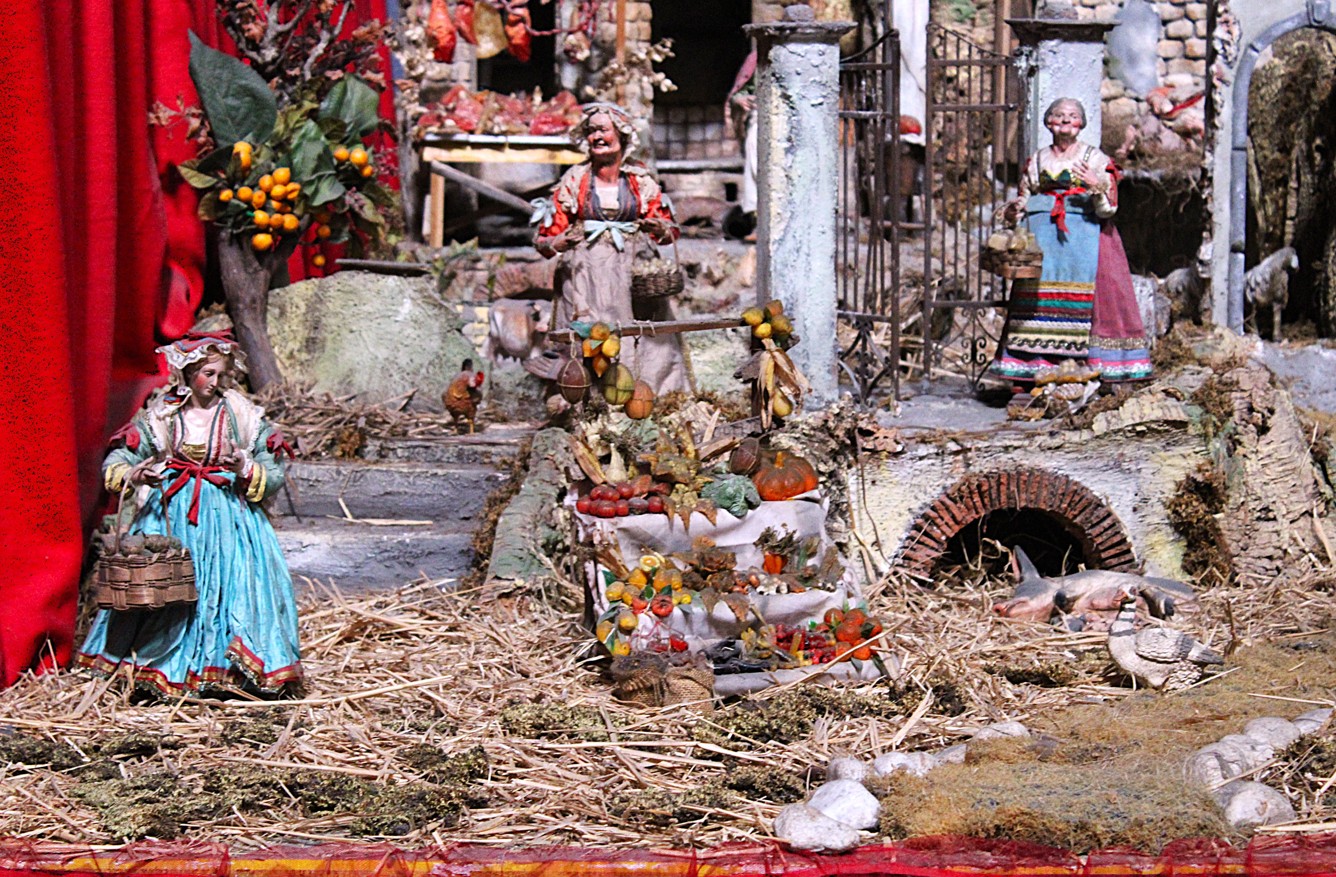
C’è il venditore di salumi e formaggi, la fruttivendola con il suo banco colorato, l’oste dallo sguardo truce: ogni figura ha il suo significato preciso e racconta la Napoli del Settecento. Il presepe non è solo un’immagine sacra ma il ritratto di una comunità.
Dietro le quinte: la mano di Ferrigno e l’anima artigiana del presepe
Il presepe di Sant’Ignazio di Loyola porta la prestigiosa firma della Bottega Ferrigno, storica realtà artigiana dell antichissima Via San Gregorio Armeno. Fondata nel 1836, la bottega è da generazioni custode di un’arte presepiale che coniuga tradizione, dedizione e infinita cura per i dettagli.

Varcare la soglia della bottega oggi, al civico 8/10 di Via San Gregorio Armeno, significa fare un tuffo nella storia: tra scaffali di statuine, scenografie minuziose, stoffe pregiatissime e l’odore di terracotta, colla e colori.
Le figure non nascono da stampi industriali, ma dalla modellazione a mano: teste in terracotta, corpi in ferro avvolti di canapa, arti in legno, occhi in vetro dipinti a mano, abiti confezionati in tessuti di seta di San Leucio per dare vita a personaggi che sembrano respirare.
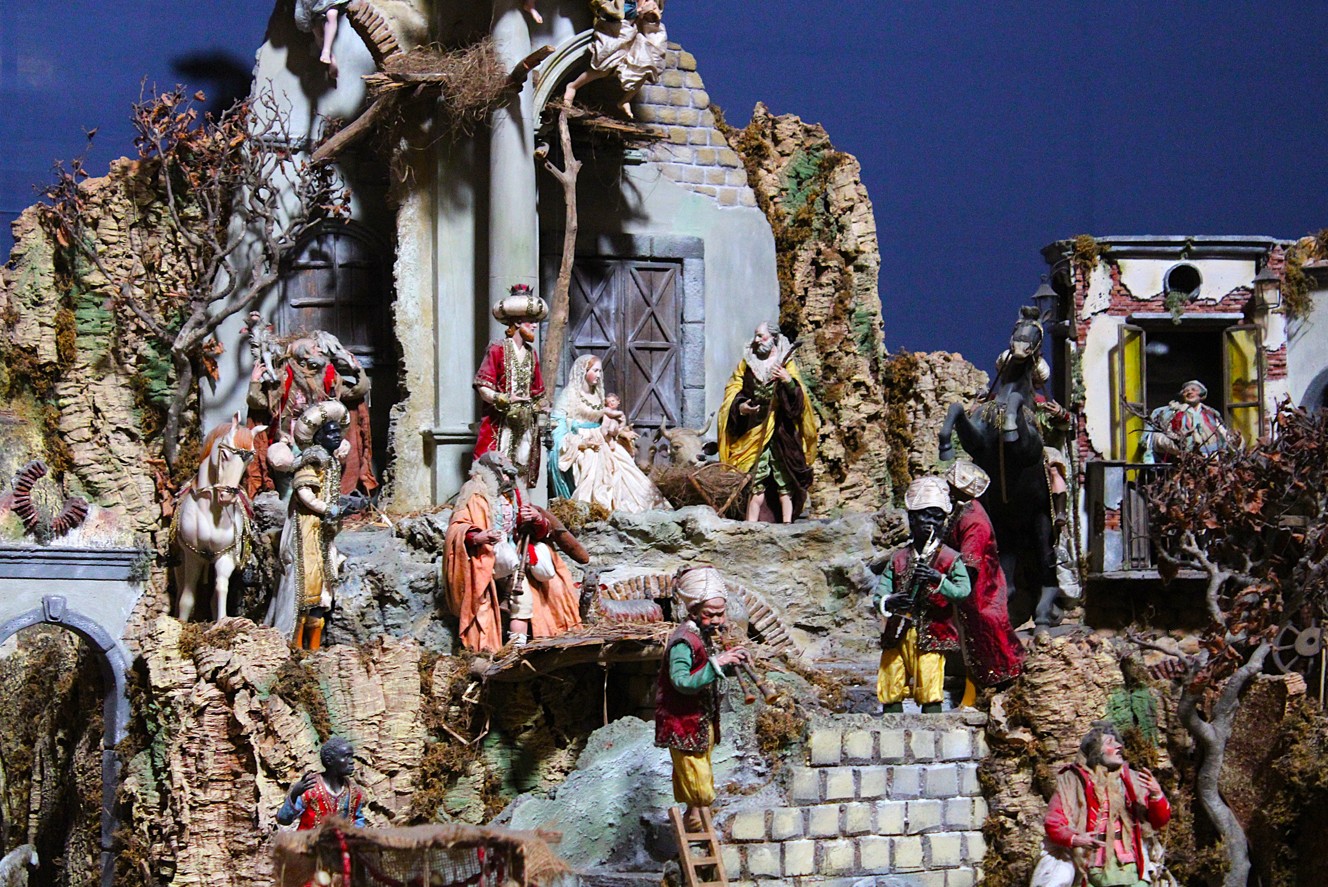
La scenografia classica del presepe settecentesco con tanto di colline, rovine, templi antichi e colonne spezzate rappresenta la fine del mondo pagano e l’avvento del Cristianesimo, il passaggio dalle rovine di una civiltà antica alla nuova speranza incarnata dal Bambino.
E non si tratta solo di creare statuine decorative: ogni pezzo ha un preciso significato e racconta una storia.
The Neapolitan Nativity Scene in the Church of Sant’Ignazio da Loyola, Rome
In the heart of Rome, in the Church of Sant’Ignazio da Loyola, a marvelous Neapolitan Nativity Scene is kept and permanently displayed.
In a chapel in the left nave, near the entrance, the Nativity Scene unfolds before the faithful as if it were a theatrical scene unfolding before their eyes. Among ancient ruins and broken columns, the Nativity dominates the scene. Below, amid the dust of the stones and the flickering light of the room, a crowd of characters move about, busy with their daily lives, amid the worries and trades of times gone by.
There’s the cured meats and cheese vendor, the greengrocer with her colorful stall, the innkeeper with a grim look: each figure has its own precise meaning and tells the story of eighteenth-century Naples. The Nativity Scene is not just a sacred image but the portrait of a community.
Behind the Scenes: Ferrigno’s Hand and the Artisan Soul of the Nativity Scene
The nativity scene of Sant’Ignazio di Loyola bears the prestigious signature of Bottega Ferrigno, a historic artisan workshop on the ancient Via San Gregorio Armeno. Founded in 1836, the workshop has for generations been the custodian of a nativity scene art that combines tradition, dedication, and infinite attention to detail.
Crossing the threshold of the workshop today, at number 8/10 Via San Gregorio Armeno, is like stepping into history: among shelves of figurines, meticulously crafted sets, exquisite fabrics, and the scent of terracotta, glue, and paint. The figures are not created from industrial molds, but by hand: terracotta heads, iron bodies wrapped in hemp, wooden limbs, hand-painted glass eyes, and clothes made from San Leucio silk fabrics bring to life characters that seem to breathe.
The classic 18th-century nativity scene, complete with hills, ruins, ancient temples, and broken columns, represents the end of the pagan world and the advent of Christianity, the transition from the ruins of an ancient civilization to the new hope embodied by the Child.
And it’s not just about creating decorative figurines: each piece has a precise meaning and tells a story.

Sostienici – Support Us
Se questo blog ti piace e ti appassiona, puoi aiutarci a farlo crescere sempre più sostenendoci in modo concreto condividendo i post, seguendo le pagine social e con un contributo che ci aiuta ad andare avanti con il nostro lavoro di divulgazione. . ENGLISH: If you like and are passionate about this blog, you can help us make it grow more and more by supporting us in a concrete way by sharing posts, following social pages and with a contribution that helps us to move forward with our dissemination work.
10,00 €
Condividi:


Questo sono io





sostienici

Sostienici – Support Us
Se questo blog ti piace e ti appassiona, puoi aiutarci a farlo crescere sempre più sostenendoci in modo concreto condividendo i post, seguendo le pagine social e con un contributo che ci aiuta ad andare avanti con il nostro lavoro di divulgazione. . ENGLISH: If you like and are passionate about this blog, you can help us make it grow more and more by supporting us in a concrete way by sharing posts, following social pages and with a contribution that helps us to move forward with our dissemination work.
€10,00


