
L’opera del giorno: il Compianto sul Cristo Morto di Ligier Richier
L’opera del giorno di cui voglio parlarvi oggi è il gruppo del Compianto sul Cristo Morto realizzato dallo scultore francese Ligier Richier, nato il 15 settembre del 1500.
Sconosciuto ai più, Richier lavorò a lungo alla corte del duca di Lorena e durante la sua proficua carriera ebbe modo di realizzare numerose sculture soprattutto nella regione della Lorraine.

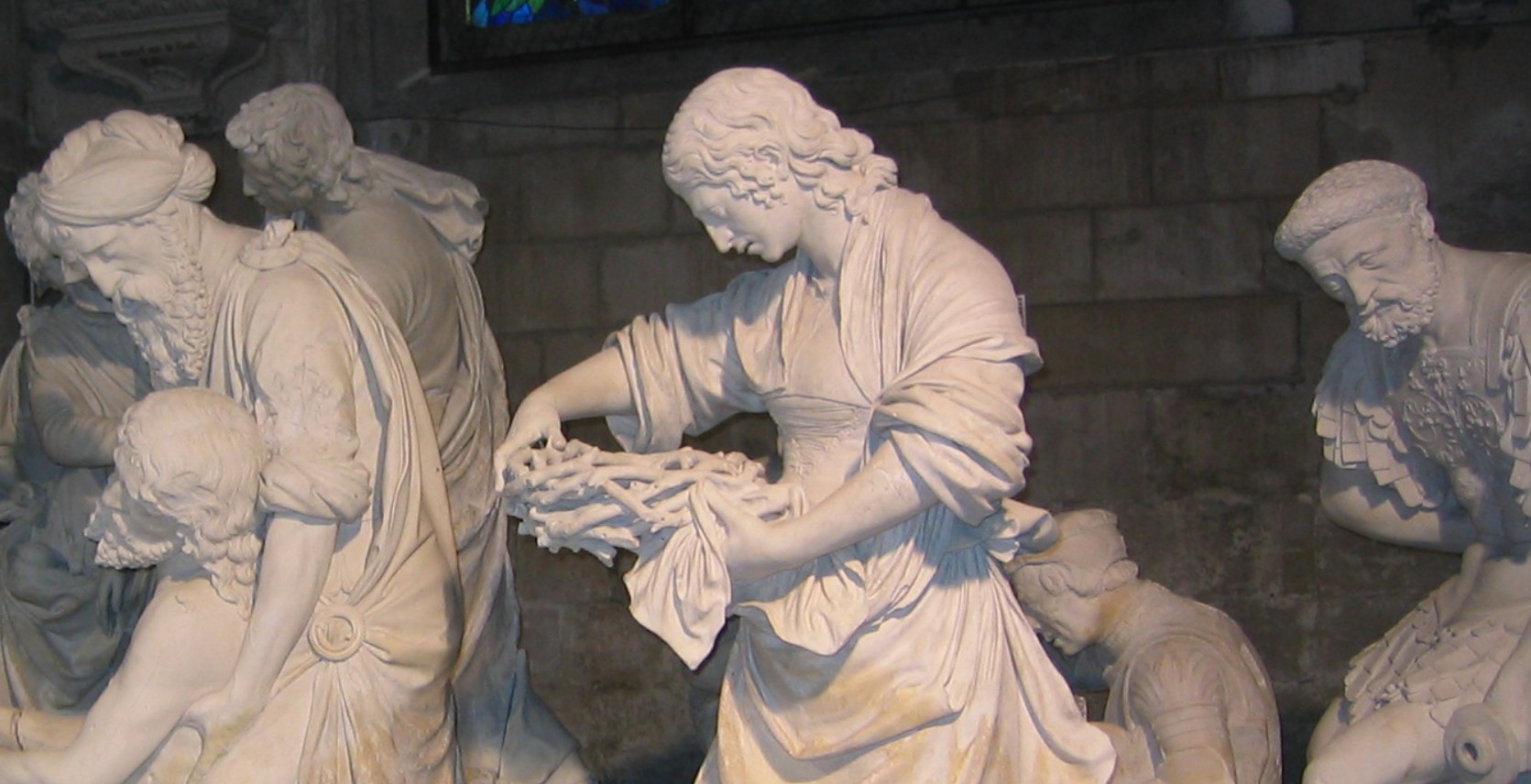
Ligier Richier realizzò il gruppo delle tredici figure che compongono il Compianto sul Cristo Morto in pietra calcarea per la chiesa chiesa di Saint Etienne a Saint-Mihiel. Proprio il tema del Compianto fu un tema molto frequente nelle regioni francesi della Borgogna e della Lorraine.
Richier dedicò corpo e anima alla realizzazione del mirabile complesso tra il 1555 e il 1564, ponendo particolare attenzione sull’espressione dei diversi personaggi che si muovono sulla scena dopo aver a lungo studiato il linguaggio manierista che si stava sviluppando in Italia in quel moneto storico.

Osservando le sculture, si nota la precisione dei dettagli con i quali l’artista le scolpì una dopo l’altra. La raffinatezza e l’accuratezza dei panneggi che si posano naturalmente sui panneggi mettendone in evidenza le forme senza mai celarle sono un vero e proprio pezzo di bravura.
Oltre al Cristo morto che taglia figurativamente la scena in due con il corpo posizionato in orizzontale, sono riconoscibili alcune delle figure che sia i racconti evangelici che la tradizione religiosa misero nell’ultimo momento della Passione.
Sono infatti identificabili le tre marie ovvero la Madonna, Maria di Cleofa e Maria Salomé, la Maddalena, l’apostolo Giovanni, Giuseppe di Arimatea e Nicodemo.
Per ammirare da vicino questo capolavoro, non vi rimane che andare fino in Francia, presso Saint Etienne a Saint-Mihiel.
Per il moment oil sempre vostro Michelangelo Buonarroti vi saluta dandovi appuntamento ai prossimi post e sui social.
Work of the Day: The Lamentation over the Dead Christ by Ligier Richier
The work of the day I want to talk about today is the Lamentation over the Dead Christ group created by the French sculptor Ligier Richier, born on September 15, 1500.
Unknown to most, Richier worked for a long time at the court of the Duke of Lorraine and during his prolific career created numerous sculptures, especially in the Lorraine region.
Ligier Richier created the group of thirteen figures that comprise the Lamentation over the Dead Christ in limestone for the church of Saint Etienne in Saint-Mihiel. The theme of the Lamentation was a very common theme in the French regions of Burgundy and Lorraine.
Richier devoted himself body and soul to the creation of this magnificent complex between 1555 and 1564, paying particular attention to the expressions of the various characters moving on the stage after extensively studying the Mannerist language that was developing in Italy at that time.
Looking at the sculptures, one notices the precision of the details with which the artist sculpted them one after the other. The refinement and precision of the draperies, which naturally rest on the draperies, highlighting the forms without ever concealing them, are a true masterpiece.
In addition to the dead Christ, who figuratively bisects the scene with his body positioned horizontally, several of the figures that both the Gospel accounts and religious tradition place at the final moment of the Passion are recognizable.
The three Marys are, in fact, identifiable: the Madonna, Mary of Clopas and Mary Salome, the Magdalene, the apostle John, Joseph of Arimathea, and Nicodemus.
To admire this masterpiece up close, all you have to do is travel to France, to Saint-Étienne in Saint-Mihiel.
For the moment, always yours, Michelangelo Buonarroti bids farewell and invites you to see him in his next posts and on social media.

Sostienici – Support Us
Se questo blog ti piace e ti appassiona, puoi aiutarci a farlo crescere sempre più sostenendoci in modo concreto condividendo i post, seguendo le pagine social e con un contributo che ci aiuta ad andare avanti con il nostro lavoro di divulgazione. . ENGLISH: If you like and are passionate about this blog, you can help us make it grow more and more by supporting us in a concrete way by sharing posts, following social pages and with a contribution that helps us to move forward with our dissemination work.
10,00 €


Condividi:


Questo sono io





sostienici

Sostienici – Support Us
Se questo blog ti piace e ti appassiona, puoi aiutarci a farlo crescere sempre più sostenendoci in modo concreto condividendo i post, seguendo le pagine social e con un contributo che ci aiuta ad andare avanti con il nostro lavoro di divulgazione. . ENGLISH: If you like and are passionate about this blog, you can help us make it grow more and more by supporting us in a concrete way by sharing posts, following social pages and with a contribution that helps us to move forward with our dissemination work.
€10,00


