
8 settembre: la Natività della Vergine nella storia dell’arte
Oggi 8 settembre si ricorda il giorno in cui venne al mondo la Vergine Maria. La festività venne introdotta da papa Sergio I, nato nel 650 e morto nel 701 d.C..
Sono numerosi gli artisti che nel corso dei secoli hanno avuto modo di confrontarsi con questo tema e, per l’occasione, voglio proporvi alcune delle opere più iconiche che raffigurano questo momento così importante.
La Natività di Maria di Giotto
La Natività di Maria di Giotto fa parte del ciclo della Cappella degli Scrovegni a Padova. Sant’Anna, in età avanzata e con i capelli bianchi, siede nel letto mentre la levatrice le porge sua figlia Maria appena nata.

L’ancella vestita di rosso sembra porgere ad Anna qualcosa da mangiare per riprendersi dalle fatiche del parto.
In basso Giotto raffigura altri due episodi. Proprio al di sotto del letto infatti si cedono due aiutanti che hanno appena fatto il bagno a Maria e l’hanno fasciata tanto che uno dei due ha ancora le fasce arrotolate in grembo. Nel frattempo qualcuno è venuto a far visita alla nuova nata, bussando alla porta porgendo dei panni puliti.
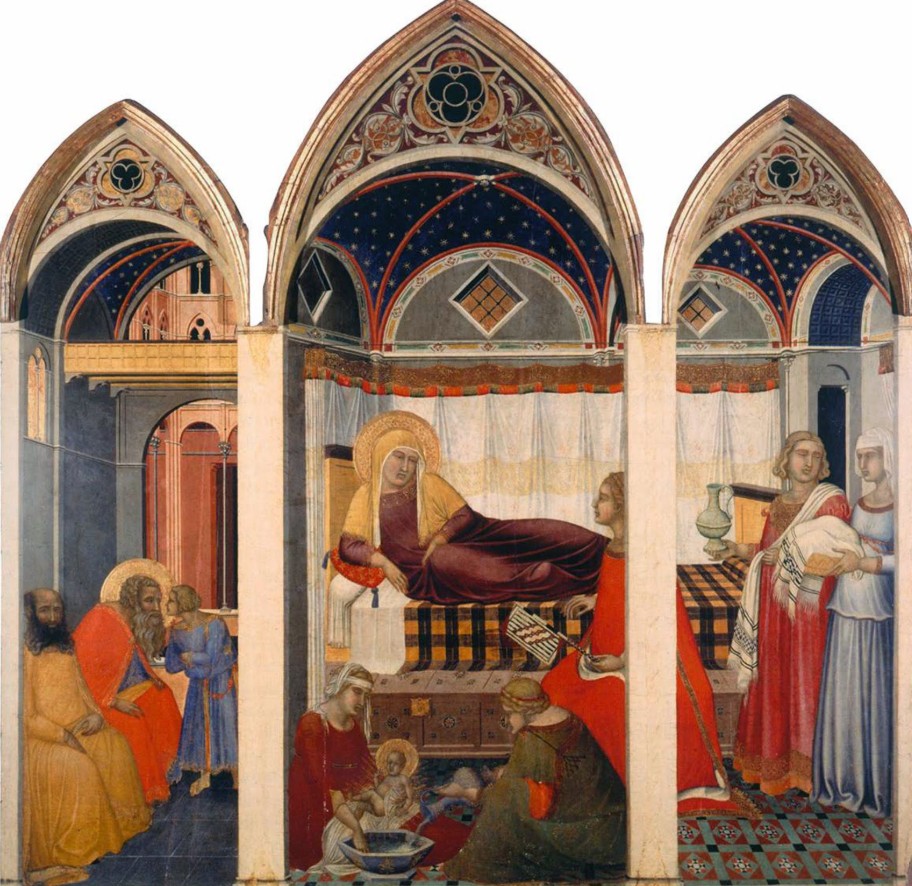
La Natività della Vergine di Pietro Lorenzetti
Pietro Lorenzetti dipinse tra il 1335 e il 1342 la Natività della Vergine a tempera su tavola, custodita nel Museo dell’Opera del Duomo di Siena.
Si tratta dell’ultima opera documentata dell’artista e un tempo faceva parte del ciclo della storia di Maria, pensato per decorare l’altare di San Savino del Duomo di Siena.
La pala venne commissionata nel 1335 ma ultimata diversi anni dopo, nel 1342, come testimonia la firma datata presente sull’opera.
La Natività della Vergine del Ghirlandaio
Il Ghirlandaio affrescò questo tema fra il 1486 e il 1490 nella Cappella Tornabuoni a Firenze. Era usanza medievale quella di raccontare la Vita della Vergine seguendo i vangeli apocrifi. Il Ghirlandaio scelse la Leggenda aurea di Jacopo da Varazze.
Gioacchino e Anna, rispettivamente il babbo e la mamma della Madonna, non riuscivano a concepire figli. Dopo parecchi anni di matrimonio si abbracciarono sotto la Porta d’Oro di Gerusalemme e Anna ricevette in grembo Maria. La sua concezione immacolata veniva descritta in questo modo dal Varazze.

Osservate bene la scena.
In alto, sulle scale, c’è dipinto dal Ghirlandaio l’episodio della Porta d’Oro che simboleggia proprio il concepimento di Maria. Nella scena centrale invece si vede Anna che circondata dalle ancelle ha appena dato alla luce la Vergine Maria.
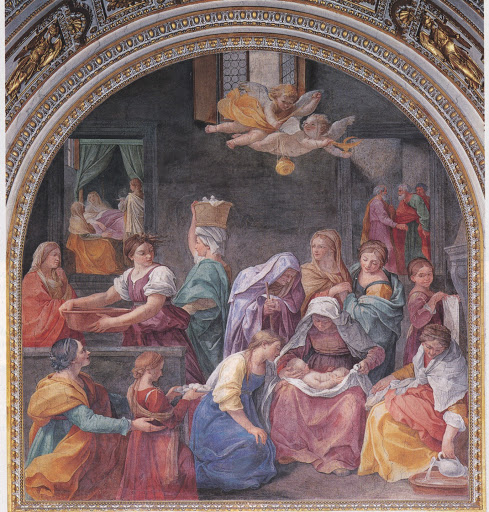
La Nascita della Vergine di Guido Reni
Guido Reni affrescò la Nascita della Vergine fra il 1609 e il 1611 nella parete d’ingresso del Palazzo del Quirinale.
Sant’Anna tiene in grembo la Madonna appena venuta al mondo, circondata da donne indaffarate a versare l’acqua, a portar via i panni con una cesta sulla testa e a offrire doni alla Piccola.
La Natività della Vergine di Andrea del Sarto
Andrea del Sarto affrescò la Natività della Vergine nella Basilica della Santissima Annunziata e precisamente all’interno del Chiostrino dei voti.
Iniziato nel 1513 e portato a termine nell’anno successivo, questo affresco racconta la nascita della Madonna all’interno di una camera da letto arredata nello stile fiorentino di quel tempo. Ovviamente si parla di una stanza di una classe assai agiata, non di quella molto più modesta e disadorna della gente comune.
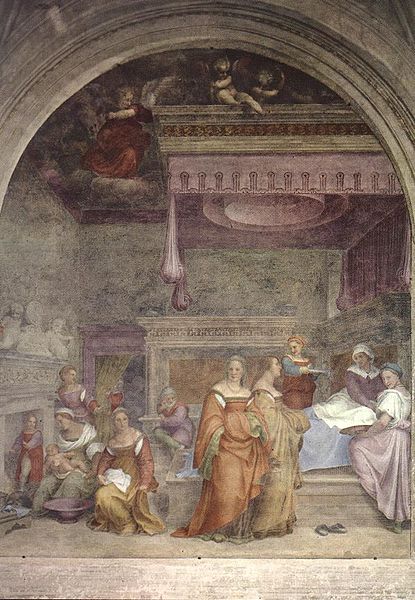
Esiste anche un disegno del tardo cinquecento di questa opera, attribuito a Maso da San Friano e oggi conservata nel Gabinetto dei Disegni e delle Stampe degli Uffizi.
La Nascita della Vergine del Caracci
Annibale Caracci dipinse fra il 1598 e il 1599 la Natività della Vergine che oggi si trova al Louvre. E’ un olio su tela di grandi dimensioni che venne commissionata all’artista per la Basilica della Santa Casa di Loreto.
Nel 1796 fu portata in Francia come bottino di guerra da parte di Napoleone e tutt’oggi si trova oltre confine.
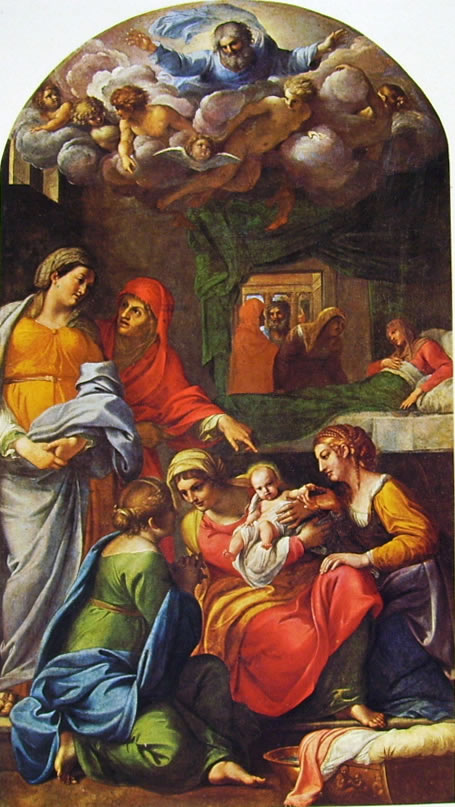
La tela è caratterizzata da un uso ben ponderato della luce e degli effetti chiaroscurali, che accentuano la profondità e il volume delle figure. n gruppo di donne vestite con panneggi morbidi e colori vivaci è in primo piano, mentre Sant’Anna, stanca per il parto, è a letto in secondo piano.
Nella parte più alta dell’opera si vede Dio Padre benedicente al di sopra di una nuvola, circondato da angeli e cherubini.
Per il momento il vostro Michelangelo Buonarroti vi saluta e vi da appuntamento ai prossimi post e sui social.
September 8: The Nativity of the Virgin in the History of Art
Today, September 8, marks the birth of the Virgin Mary. The holiday was introduced by Pope Sergius I, born in 650 and died in 701 AD.
Many artists have explored this theme over the centuries, and for this occasion, I want to share some of the most iconic works depicting this important moment.
Giotto’s Nativity of Mary
Giotto’s Nativity of Mary is part of the cycle in the Scrovegni Chapel in Padua. Saint Anne, advanced in age and with white hair, sits in bed as the midwife hands her her newborn daughter Mary.
The handmaid dressed in red appears to be offering Anne something to eat to recover from the pain of childbirth.
Below, Giotto depicts two more episodes. Just below the bed, two helpers are standing by, having just bathed Mary and swaddled her, so much so that one of them still has the swaddling clothes rolled up in his lap. Meanwhile, someone has come to visit the newborn, knocking on the door and offering clean clothes.
The Nativity of the Virgin by Pietro Lorenzetti
Pietro Lorenzetti painted the Nativity of the Virgin in tempera on wood between 1335 and 1342, now housed in the Museo dell’Opera del Duomo in Siena. It is the artist’s last documented work and was once part of the cycle depicting the story of Mary, designed to decorate the altar of San Savino in Siena Cathedral.
The altarpiece was commissioned in 1335 but completed several years later, in 1342, as evidenced by the dated signature on the work.
The Nativity of Mary by Ghirlandaio
Ghirlandaio frescoed this theme between 1486 and 1490 in the Tornabuoni Chapel in Florence. It was a medieval custom to tell the life of the Virgin following the apocryphal gospels. Ghirlandaio chose the Golden Legend by Jacobus de Varazze.
Joachim and Anna, the Madonna’s father and mother, respectively, were unable to conceive children. After several years of marriage, they embraced under the Golden Gate of Jerusalem, and Anna received Mary into her womb. Her immaculate conception was described in this way by Varazze.
Look at the photo of the fresco I propose below. At the top of the stairs, Ghirlandaio painted the episode of the Golden Gate, which symbolizes the conception of Mary. In the central scene, Anna, surrounded by her maids, has just given birth to the Virgin Mary.
The Birth of the Virgin by Guido Reni
Guido Reni frescoed the Birth of the Virgin between 1609 and 1611 on the entrance wall of the Quirinale Palace.
Saint Anne holds the newborn Madonna in her lap, surrounded by women busily pouring water, carrying away laundry with baskets on their heads, and offering gifts to the Baby.
The Nativity of the Virgin by Andrea del Sarto
Andrea del Sarto frescoed the Nativity of the Virgin in the Basilica of the Santissima Annunziata, specifically inside the Chiostrino dei Voti. Begun in 1513 and completed the following year, this fresco depicts the birth of the Madonna in a bedroom furnished in the Florentine style of the time. Obviously, this is a room belonging to a very wealthy class, not the much more modest and unadorned one of the common people.
There is also a late 16th-century drawing of this work, attributed to Maso da San Friano and now housed in the Cabinet of Prints and Drawings of the Uffizi.
The Birth of the Virgin by Caracci
Annibale Caracci painted the Nativity of the Virgin, now in the Louvre, between 1598 and 1599. It is a large oil on canvas commissioned from the artist for the Basilica of the Holy House of Loreto.
In 1796, it was brought to France as spoils of war by Napoleon and remains abroad today.
The canvas is characterized by a thoughtful use of light and chiaroscuro effects, which accentuate the depth and volume of the figures. A group of women dressed in soft draperies and bright colors is in the foreground, while Saint Anne, tired from childbirth, lies in bed in the background.
At the top of the work, God the Father is seen blessing from above a cloud, surrounded by angels and cherubs.
For now, your Michelangelo Buonarroti bids farewell and looks forward to seeing you in future posts and on social media.

Sostienici – Support Us
Se questo blog ti piace e ti appassiona, puoi aiutarci a farlo crescere sempre più sostenendoci in modo concreto condividendo i post, seguendo le pagine social e con un contributo che ci aiuta ad andare avanti con il nostro lavoro di divulgazione. . ENGLISH: If you like and are passionate about this blog, you can help us make it grow more and more by supporting us in a concrete way by sharing posts, following social pages and with a contribution that helps us to move forward with our dissemination work.
10,00 €
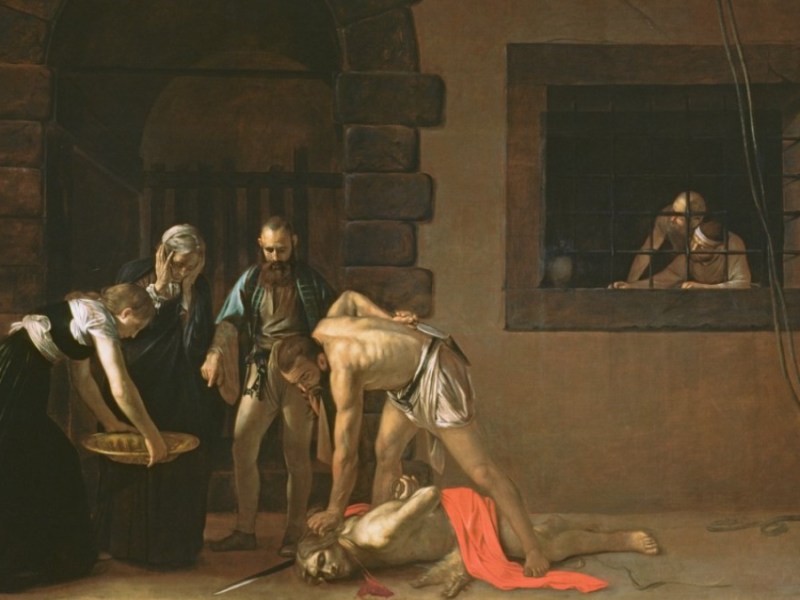
29 agosto, Martirio di San Giovanni Battista: le opere più belle nell’arte
🇮🇹Martirio di San Giovanni Battista, 29 agosto: scopri cinque capolavori di Caravaggio, Tiziano, Solario, Guido Reni e Mattia Preti dedicati alla sua tragica morte… 🇬🇧Martyrdom of Saint John the Baptist, August 29: discover five masterpieces by Caravaggio, Titian, Solario, Guido Reni, and Mattia Preti dedicated to his tragic death…

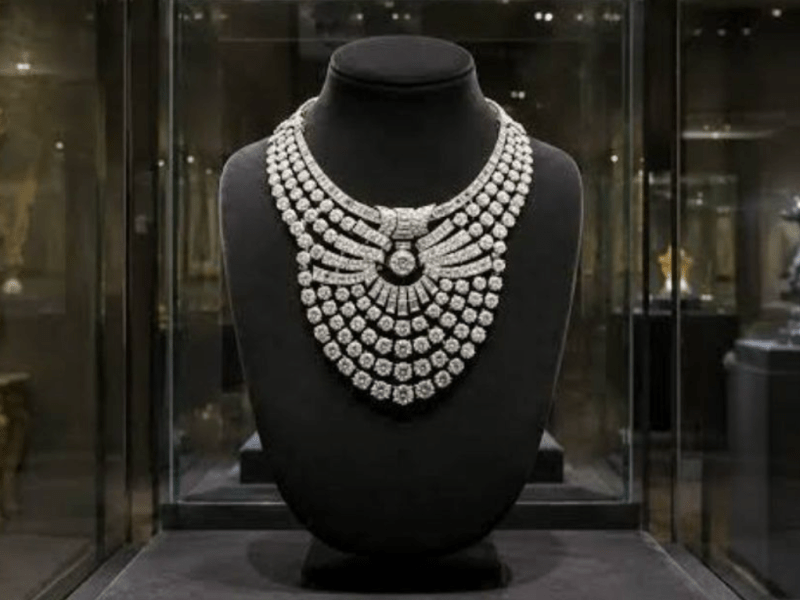
Rubata a Vienna la collana della regina Nazli: 673 diamanti e oltre 200 carati, caccia ai due ladri
🇮🇹Rubata a Vienna una collana Van Cleef & Arpels con 673 diamanti appartenuta alla regina Nazli d’Egitto: valeva 4,3 milioni di dollari. Caccia ai ladri… 🇬🇧A Van Cleef & Arpels necklace with 673 diamonds that belonged to Queen Nazli of Egypt was stolen in Vienna: it was worth $4.3 million. The hunt for the thieves…
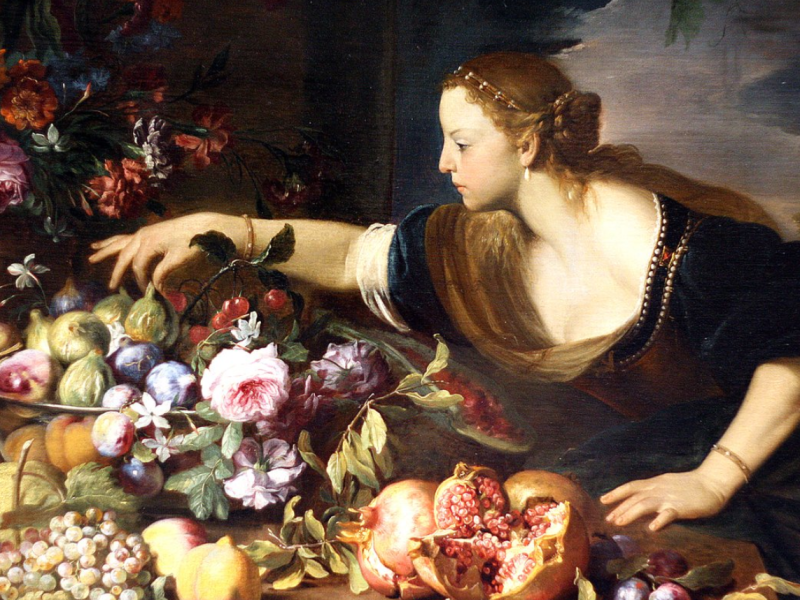
I Brueghel a Milano, la grande mostra che svela come nacquero i generi della pittura europea
🇮🇹Dal 29 settembre 2026 Palazzo Reale di Milano ospita la grande mostra sui Brueghel: oltre 80 opere raccontano la nascita dei generi pittorici europei… 🇬🇧From September 29, 2026, Palazzo Reale in Milan will host a major exhibition on the Brueghels: over 80 works recount the birth of European pictorial genres…
Condividi:

Questo sono io




sostienici

Sostienici – Support Us
Se questo blog ti piace e ti appassiona, puoi aiutarci a farlo crescere sempre più sostenendoci in modo concreto condividendo i post, seguendo le pagine social e con un contributo che ci aiuta ad andare avanti con il nostro lavoro di divulgazione. . ENGLISH: If you like and are passionate about this blog, you can help us make it grow more and more by supporting us in a concrete way by sharing posts, following social pages and with a contribution that helps us to move forward with our dissemination work.
€10,00


Articolo molto interessante
✨🌹✨
"Mi piace"Piace a 1 persona
Grazie :-*
"Mi piace"Piace a 1 persona