

In Via San Gregorio Armeno a Napoli è Natale tutto l’anno
Natale viene una volta all’anno ovunque nel mondo fuorché a Napoli. In Via San Gregorio Armeno, conosciuta anche come la Via dei Presepi, le atmosfere natalizie son sempre di stagione, anche quando le temperature oltrepassano i 40°C all’ombra e i cocomero è maturo al punto giusto.
Ubicata tra il decumano maggiore di Via dei Tribunali e Spaccanapoli, decumano inferiore, la strada dei presepi in epoca romana faceva parte dell’agorà mentre in epoca romana ospitava il macellum, ovvero il mercato.

Appena si ci immerge nella stretta via, ci si ritrova ad ammirare veri capolavori di arte presepiale, rigorosamente fatti a mano. Le botteghe artigiane specializzate nella realizzazione delle statuine hanno cominciato a insediarsi qui tra il Seicento e il Settecento.
Oggi la strada è una delle più frequentate dai turisti soprattutto nel periodo natalizio, quando addirittura viene messo in pratica il senso unico di marcia a piedi.
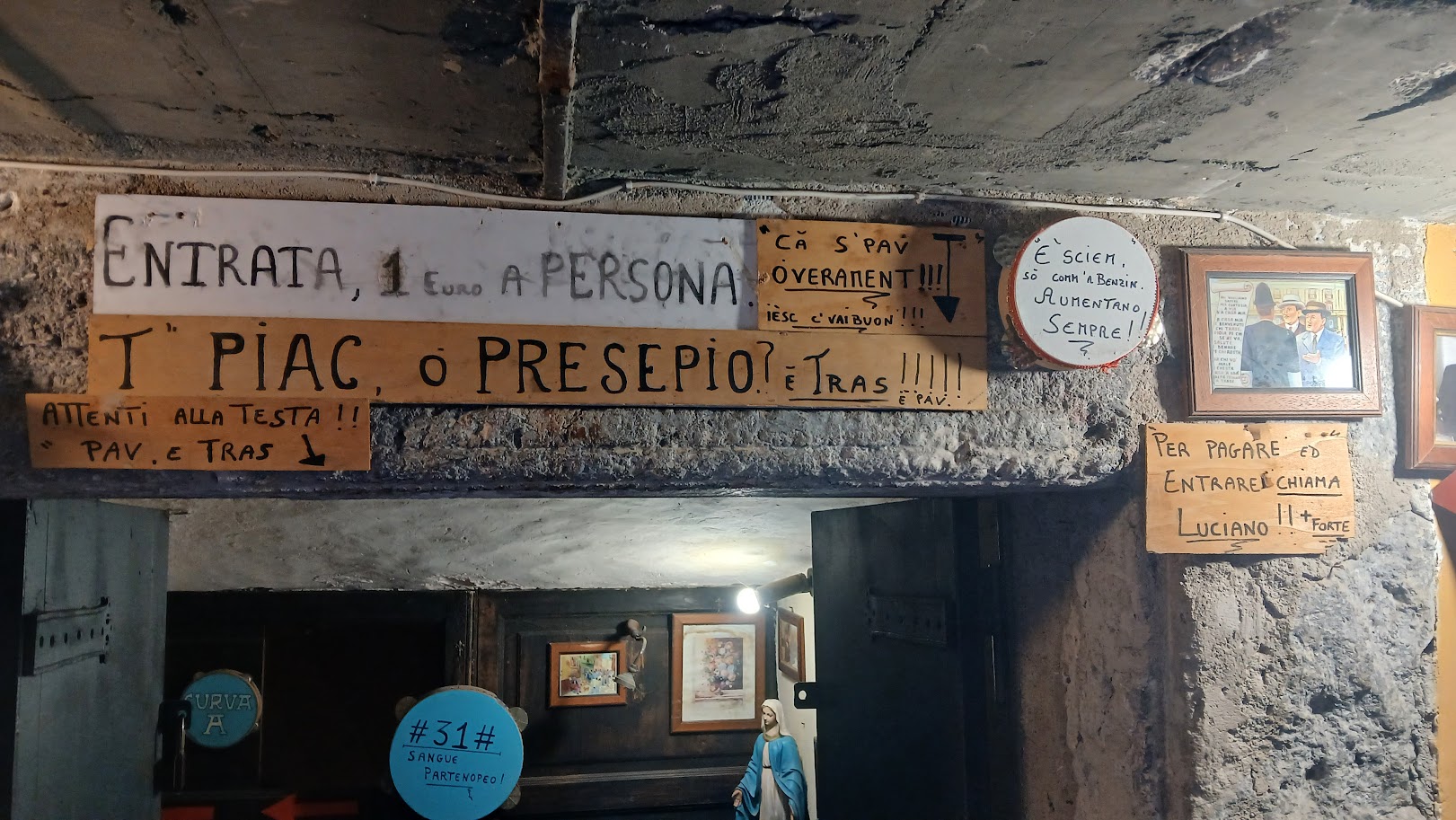
Mentre mi muovo da una bottega all’altra, con i banconi che espongono le ceste di uova e le galline in miniatura fronte via, mi perdo tra quei colori e le loro simbologie che mi fanno pensare a opere in cui niente è stato dipinto lì a caso.

La tradizione presepiale napoletana in via San Gregorio Armeno trova la sua massima espressione e custodisce fascino e autenticità di secoli di storia e tradizione.
La terracotta è il materiale più utilizzato per realizzare le figure iconiche del presepe napoletano. Modellata a mano per creare le forme base delle statuine, lascia spazio al gesso quando è necessario dar forma a dettagli più fini come volti, mani e piedi.

Le statuine poi vengono abbigliate con stoffe, a volte pregiate e altre più umili a seconda del personaggio in questione. I Re Magi sono i personaggi abbigliati in modo più sfarzoso, con tessuti di manifattura orientale mentre per i venditori o i pastori si scelgono tessuti poveri che denotano le loro condizioni sociali.

Tra le botteghe storiche più antichedi Via San Gregorio Armeno c’è quella dei Fratelli Capuano, fondata nel 1840. Oltre a realizzare statuine di altissimo artigianato, prepara paesaggi in sughero e legno. Basti pensare che da questa bottega sono stati realizzati presepi che hanno arricchito il Palazzo Reale di Madrid.
Altra bottega storica è quella di Genny di Virgilio, maestro presepista rinomato che crea anche statuine di personaggi che hanno un ruolo nella società moderna. Non mancano infatti statuine dei cantanti più apprezzati dalle nuove generazioni, soubrette e pure papa Leone XIV da poco eletto.
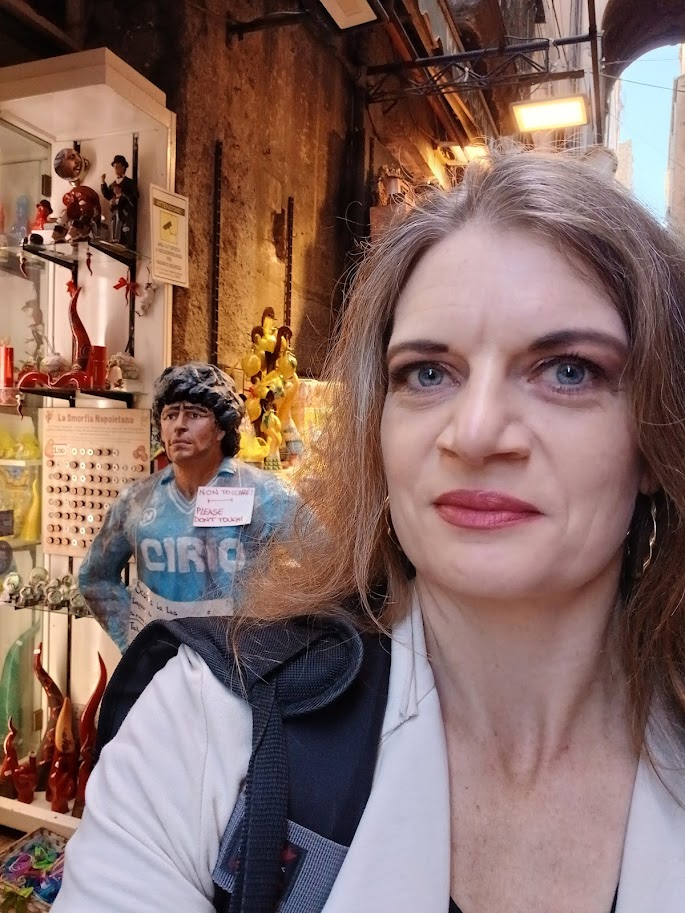
Come si fa a tornare a casa senza acquistare niente? Impossibile. Almeno un Benino bisogna acquistarlo soprattutto se ancora manca nel presepe di casa.
E’ il personaggio principale del presepe napoletano: è lui infatti che si sogna la Natività e tutto il nugolo di personaggi che si muovono attorno. Sempre addormentato, Benino è il simbolo dell’attesa che ci separa dal Natale.
Difficile resistere alla tentazione di prendere anche un pescatore, con quei pantaloni arrotolati fino al ginocchio e la camicia aperta sul petto.

Con la canna da pesca o senza, è sempre vicino al banco del besce ben fornito. Indossa quasi sempre vesti colorate e ha un aspetto trasandato: raffigura la vita e simboleggia la pesca delle anime con un esplicito riferimento a Cristo come pescatore di anime per l’appunto.
Per il momento il sempre vostro Michelangelo Buonarroti vi saluta dandovi appuntamento ai prossimi post e sui social, sperando di poter tornare presto a Napoli.
On Via San Gregorio Armeno in Naples, it’s Christmas all year round.
Christmas comes once a year everywhere in the world except Naples. On Via San Gregorio Armeno, also known as the Street of Nativity Scenes, the Christmas atmosphere is always in season, even when temperatures soar above 40°C in the shade and the watermelon is perfectly ripe.
Located between the main decumanus of Via dei Tribunali and Spaccanapoli, the lower decumanus, the street of nativity scenes was part of the agora in Roman times, while in Roman times it housed the macellum, or market.
As soon as you enter the narrow street, you find yourself admiring true masterpieces of nativity scene art, rigorously handmade. Artisan workshops specializing in the creation of figurines began to establish themselves here between the 17th and 18th centuries. Today, the street is one of the busiest with tourists, especially during the Christmas season, when it even becomes a one-way street.
As I wander from one shop to another, with the stalls displaying baskets of eggs and miniature chickens facing the street, I lose myself in the colors and their symbolism, which remind me of works where nothing was painted there by chance.
The Neapolitan nativity scene tradition on Via San Gregorio Armeno finds its highest expression, preserving the charm and authenticity of centuries of history and tradition. Terracotta is the most commonly used material to create the iconic figures of the Neapolitan nativity scene. Modeled by hand to create the basic forms of the figurines, it is replaced with plaster when finer details such as faces, hands, and feet are needed.
The figurines are then dressed in fabrics, sometimes precious and sometimes more humble, depending on the character in question. The Three Wise Men are the most sumptuously dressed figures, wearing oriental fabrics, while the vendors and shepherds are dressed in humble fabrics that denote their social status.
Among the oldest historic workshops on Via San Gregorio Armeno is that of the Capuano Brothers, founded in 1840. In addition to crafting exquisitely crafted figurines, they also create cork and wood landscapes. Suffice it to say that this workshop has created nativity scenes that have adorned the Royal Palace in Madrid.
Another historic workshop is that of Genny di Virgilio, a renowned master nativity scene maker who also creates figurines of figures who play a role in modern society. Indeed, there are figurines of the most popular singers of the younger generations, showgirls, and even the recently elected Pope Leo XIV.
How can you go home without buying anything? Impossible. You have to buy at least one Benino, especially if you don’t have one in your home nativity scene. He’s the main character of the Neapolitan nativity scene: he’s the one who dreams of the Nativity and the whole swarm of characters moving around it. Always asleep, Benino is the symbol of the anticipation that separates us from Christmas.
It’s hard to resist the temptation to also catch a fisherman, with his trousers rolled up to the knee and his shirt open at the chest. With or without a fishing rod, he’s always near the well-stocked fish counter. He almost always wears colorful clothes and has a shabby appearance: he represents life and symbolizes the fishing of souls, an explicit reference to Christ as the fisherman of souls.
For now, yours truly, Michelangelo Buonarroti bids you farewell, saying he’ll see you in future posts and on social media, hoping to return to Naples soon.

Sostienici – Support Us
Se questo blog ti piace e ti appassiona, puoi aiutarci a farlo crescere sempre più sostenendoci in modo concreto condividendo i post, seguendo le pagine social e con un contributo che ci aiuta ad andare avanti con il nostro lavoro di divulgazione. . ENGLISH: If you like and are passionate about this blog, you can help us make it grow more and more by supporting us in a concrete way by sharing posts, following social pages and with a contribution that helps us to move forward with our dissemination work.
10,00 €
Condividi:


Questo sono io





sostienici

Sostienici – Support Us
Se questo blog ti piace e ti appassiona, puoi aiutarci a farlo crescere sempre più sostenendoci in modo concreto condividendo i post, seguendo le pagine social e con un contributo che ci aiuta ad andare avanti con il nostro lavoro di divulgazione. . ENGLISH: If you like and are passionate about this blog, you can help us make it grow more and more by supporting us in a concrete way by sharing posts, following social pages and with a contribution that helps us to move forward with our dissemination work.
€10,00


1 commento »