
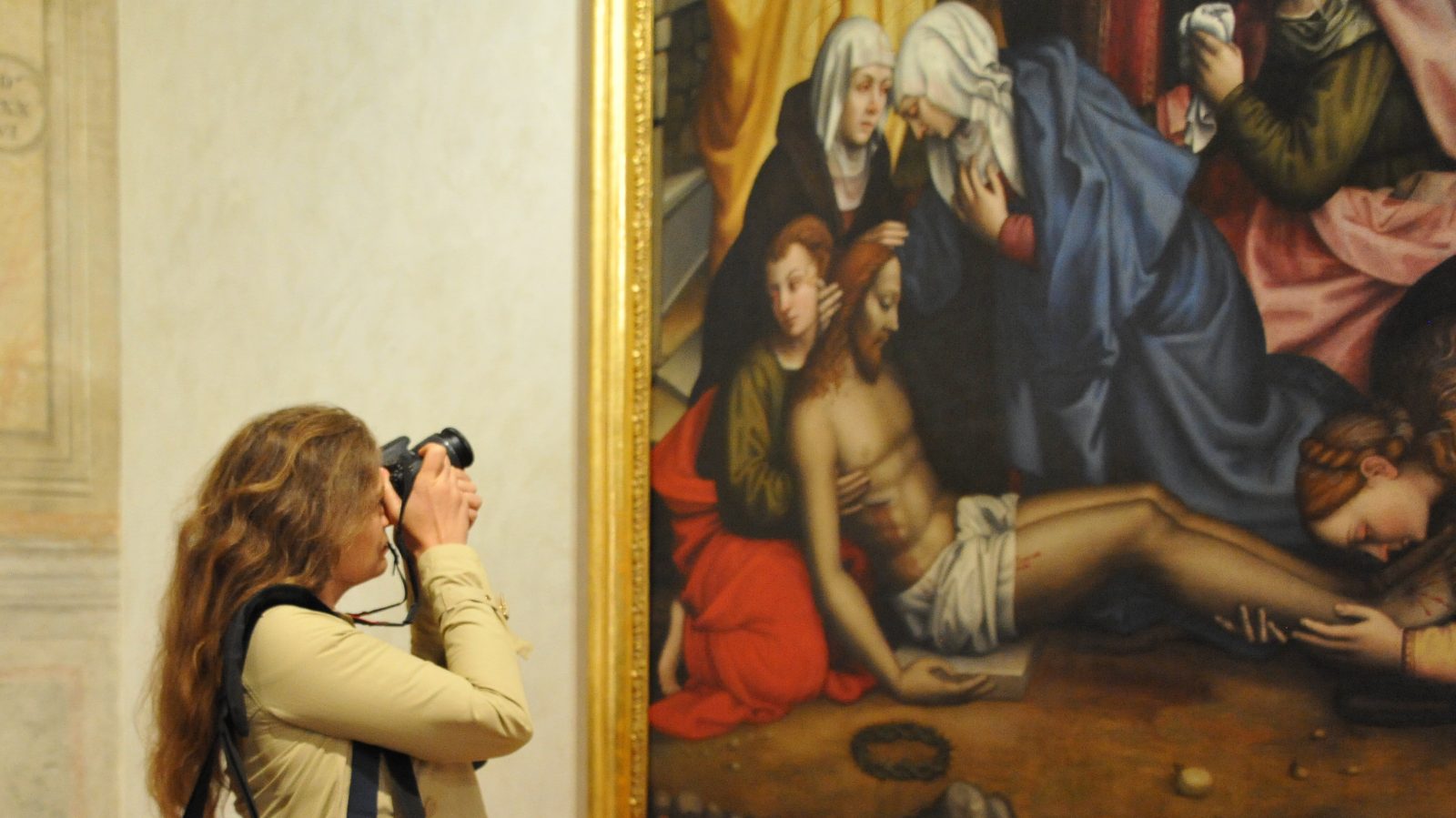
11 luglio 1593: muore l’Arcimboldo
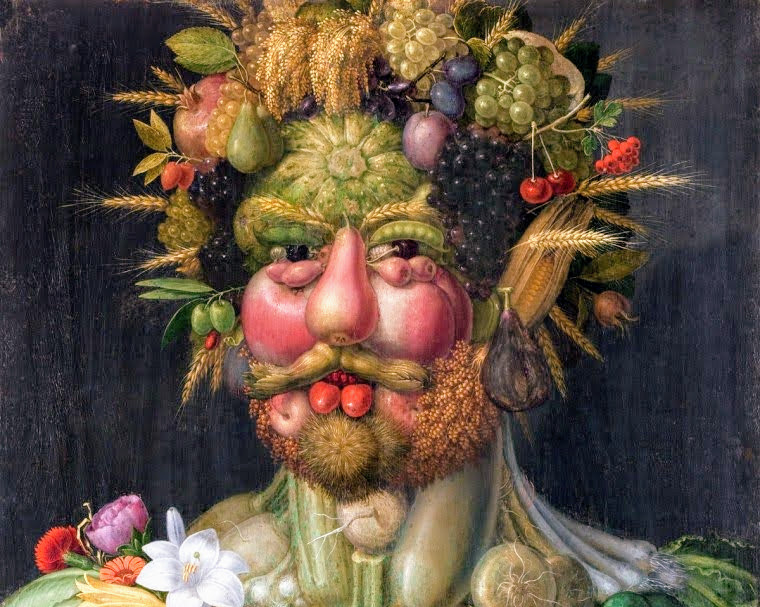
Era l’11 luglio del 1593 quando Giuseppe Arcimboldo passò a miglior vita a Milano. Geniale artista, passò alla storia per i suoi ritratti compositi, opere straordinarie nelle quali i volti umani sono formati da assemblaggi di frutta, verdura, fiori, animali, libri o altri oggetti.
Arcimboldo era nato nel 1527 a Milano e le sue prime esperienze artistiche furono nella bottega del padre, Biagio Arcimboldo, anch’egli pittore. Iniziò come disegnatore di vetrate per il Duomo di Milano, dove lavorò tra il 1549 e il 1558.
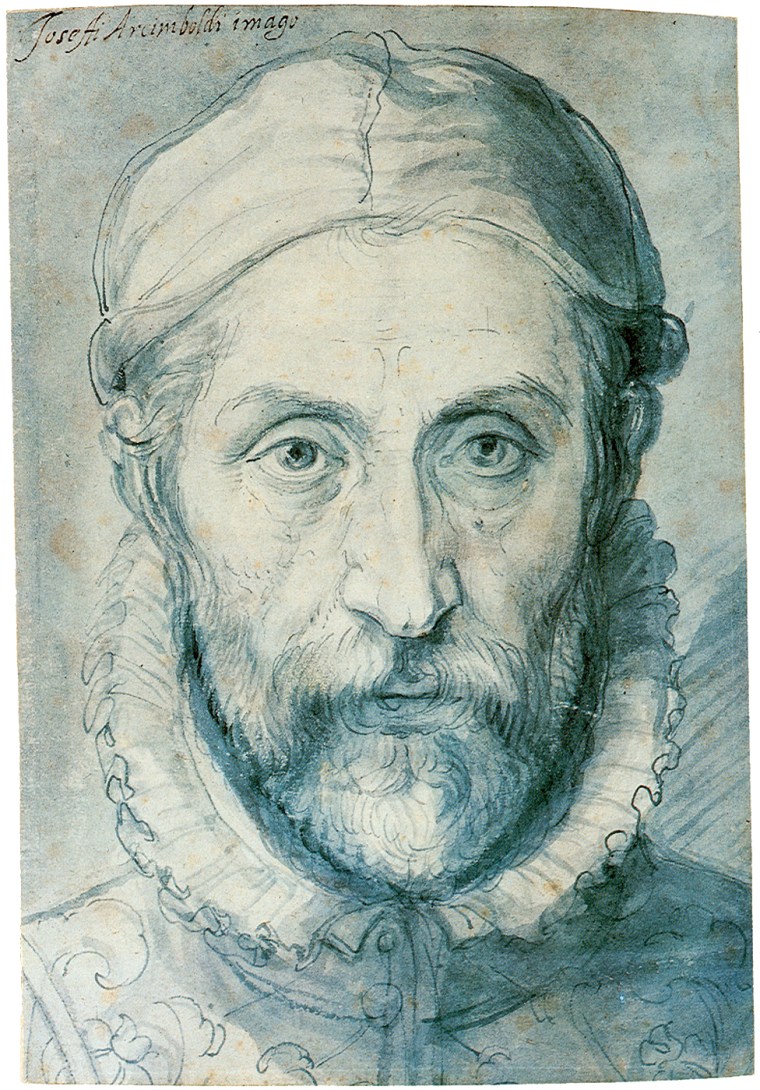
“… pittore raro, e in molte altre virtù studioso, e eccellente; e dopo l’aver dato saggio di lui, e del suo valore, così nella pittura come in diverse bizzarrie, non solo nella patria, ma ancor fuori, acquistasse gran lode…” Così definì l’Arcimboldo lo storico a lui contemporaneo Paolo Morigia che oltretutto era pure un suo caro amico.
Il Periodo Imperiale: la Corte degli Asburgo
La svolta nella sua carriera avvenne nel 1562, quando fu chiamato alla corte degli Asburgo a Vienna, al servizio dell’Imperatore Ferdinando I. In seguito, continuò a lavorare per i suoi successori, Massimiliano II e Rodolfo II, spostandosi con la corte a Praga. Questo fu il periodo più prolifico e innovativo della sua carriera.
Presso la corte imperiale, Arcimboldo non era solo un pittore. Le sue capacità spaziavano in molti campi: fu anche architetto, ingegnere idraulico, scenografo, costumista, e persino organizzatore di feste e tornei di corte. La sua versatilità e il suo ingegno erano molto apprezzati dagli imperatori, che erano grandi estimatori delle scienze naturali, dell’alchimia e delle “mirabilia” (cose meravigliose e insolite). L’ambiente intellettuale della corte asburgica fu l’humus perfetto per la fioritura del suo talento eccentrico e la sua curiosità per il mondo naturale.
I Ritratti Compositi
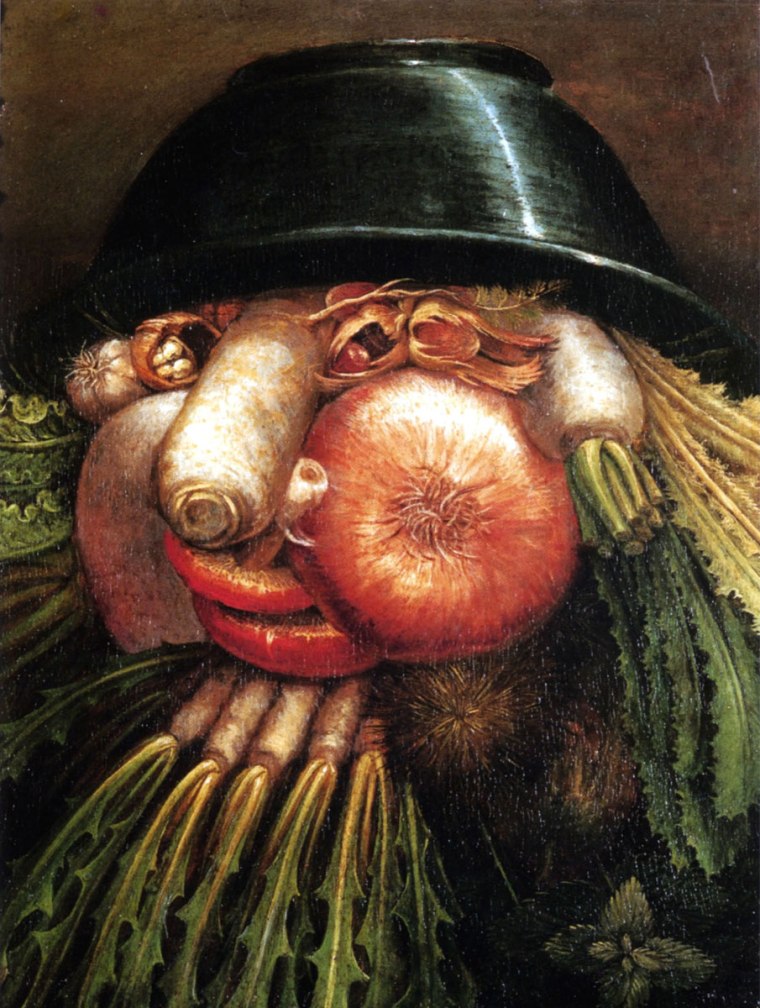
È in questo periodo che Arcimboldo sviluppa appieno il suo stile distintivo. Le sue teste composite erano delle vere e proprie allegorie visive che celebravano la ricchezza della natura e il potere dell’imperatore, capace di dominare e organizzare la varietà del mondo. Opere come la serie delle “Stagioni” (Primavera, Estate, Autunno, Inverno) o degli “Elementi” (Aria, Acqua, Terra, Fuoco) sono esempi lampanti..
Ogni elemento del ritratto come le carote, l’uva e gli uccelli, si fondono con gli altri per creare un volto umano dall’espressione spesso enigmatica o ironica. Le sue opere non erano solo giochi visivi, ma contenevano spesso allusioni e significati profondi, apprezzati dai sofisticati intellettuali della corte.

Il Ritorno a Milano
Dopo circa 25 anni di servizio presso gli Asburgo, nel 1587 Arcimboldo ottenne il permesso di tornare nella sua Milano, seppur mantenendo il titolo onorifico di “conte palatino” conferitogli da Rodolfo II. Continuò a dipingere, creando alcune delle sue ultime opere, tra cui il celebre “Vertumno”, un ritratto di Rodolfo II composto interamente da frutti, fiori e verdure, simbolo della sua magnificenza e prosperità.
La Riscoperta
Dopo la sua morte, Arcimboldo e i suoi capolavoro caddero in oblio per diversi secoli. Fu riscoperto e ampiamente rivalutato nel Novecento, a partire dai surrealisti, che videro in lui un precursore della loro ricerca sull’inconscio, sul sogno e sull’accostamento inaspettato di elementi.
Oggi, Arcimboldo viene celebrato come genio visionario.
Per il momento il sempre vostro Michelangelo Buonarroti vi saluta dandovi appuntamento ai prossimi post e sui social.
July 11, 1593: Arcimboldo dies
It was July 11, 1593, when Giuseppe Arcimboldo passed away in Milan. A brilliant artist, he went down in history for his composite portraits, extraordinary works in which human faces are formed from assemblages of fruit, vegetables, flowers, animals, books, and other objects.
Arcimboldo was born in 1527 in Milan, and his first artistic experiences were in the workshop of his father, Biagio Arcimboldo, also a painter. He began as a stained glass designer for the Milan Cathedral, where he worked between 1549 and 1558. This experience provided him with a solid foundation in composition and the use of color, elements he would later enhance in his most famous works.
“…a rare painter, and studious and excellent in many other virtues; and after having given proof of himself and his worth, both in painting and in various eccentricities, not only in his homeland but also abroad, he acquired great praise…” This is how the contemporary historian Paolo Morigia, who was also a close friend, described Arcimboldo.
The Imperial Period: The Habsburg Court
The turning point in his career came in 1562, when he was called to the Habsburg court in Vienna, to serve Emperor Ferdinand I. He subsequently continued to work for his successors, Maximilian II and Rudolf II, moving with the court to Prague. This was the most prolific and innovative period of his career.
At the imperial court, Arcimboldo was not just a painter. His skills spanned many fields: he was also an architect, hydraulic engineer, set designer, costume designer, and even the organizer of court parties and tournaments. His versatility and ingenuity were highly valued by the emperors, who were great admirers of the natural sciences, alchemy, and “mirabilia” (wonderful and unusual things). The intellectual environment of the Habsburg court was the perfect breeding ground for his eccentric talent and curiosity about the natural world to flourish.
Composite Portraits
It was during this period that Arcimboldo fully developed his distinctive style. His composite heads were true visual allegories celebrating the richness of nature and the power of the emperor, capable of dominating and organizing the world’s diversity. Works such as the “Seasons” series (Spring, Summer, Autumn, Winter) or the “Elements” series (Air, Water, Earth, Fire) are shining examples.
Each element in the portrait, such as the carrots, grapes, and birds, blends with the others to create a human face with an often enigmatic or ironic expression. His works were not merely visual games; they often contained allusions and profound meanings, appreciated by the sophisticated intellectuals of the court.
The Return to Milan
After approximately 25 years of service to the Habsburgs, in 1587 Arcimboldo was granted permission to return to his native Milan, though he retained the honorary title of “Count Palatine” bestowed upon him by Rudolf II. He continued to paint, creating some of his last works, including the famous “Vertumnus,” a portrait of Rudolf II composed entirely of fruit, flowers, and vegetables, a symbol of his magnificence and prosperity.
The Rediscovery
After his death, Arcimboldo and his masterpieces fell into oblivion for several centuries. He was rediscovered and widely reevaluated in the twentieth century, beginning with the Surrealists, who saw in him a precursor in their exploration of the unconscious, dreams, and the unexpected juxtaposition of elements.
Today, Arcimboldo is celebrated as a visionary genius.
For now, yours truly, Michelangelo Buonarroti bids farewell and invites you to join him in future posts and on social media.

Sostienici – Support Us
Se questo blog ti piace e ti appassiona, puoi aiutarci a farlo crescere sempre più sostenendoci in modo concreto condividendo i post, seguendo le pagine social e con un contributo che ci aiuta ad andare avanti con il nostro lavoro di divulgazione. . ENGLISH: If you like and are passionate about this blog, you can help us make it grow more and more by supporting us in a concrete way by sharing posts, following social pages and with a contribution that helps us to move forward with our dissemination work.
10,00 €
Condividi:


Questo sono io





sostienici

Sostienici - Support Us
Se questo blog ti piace e ti appassiona, puoi aiutarci a farlo crescere sempre più sostenendoci in modo concreto condividendo i post, seguendo le pagine social e con un contributo che ci aiuta ad andare avanti con il nostro lavoro di divulgazione. . ENGLISH: If you like and are passionate about this blog, you can help us make it grow more and more by supporting us in a concrete way by sharing posts, following social pages and with a contribution that helps us to move forward with our dissemination work.
€10,00


