

La Scultura del giorno: la Sacerdotessa Livia
Il Museo Archeologico di Napoli custodisce un patrimonio incredibile di opere e manufatti. Per chi come me ama la scultura è uno di quei musei imperdibili nei quali vale la pena trascorrere ore e ore per ammirare i dettagli di capolavori mozzafiato.
Tra le tante sculture che espone nelle prime sale, si può vedere l’antica Sacerdotessa detta Livia, scolpita nel terzo quarto del I secolo d.C.
Mi sorprende sempre rintracciare a quasi duemila anni di distanza i segni della lavorazione lasciati da chi ha scolpito quei preziosi marmi.
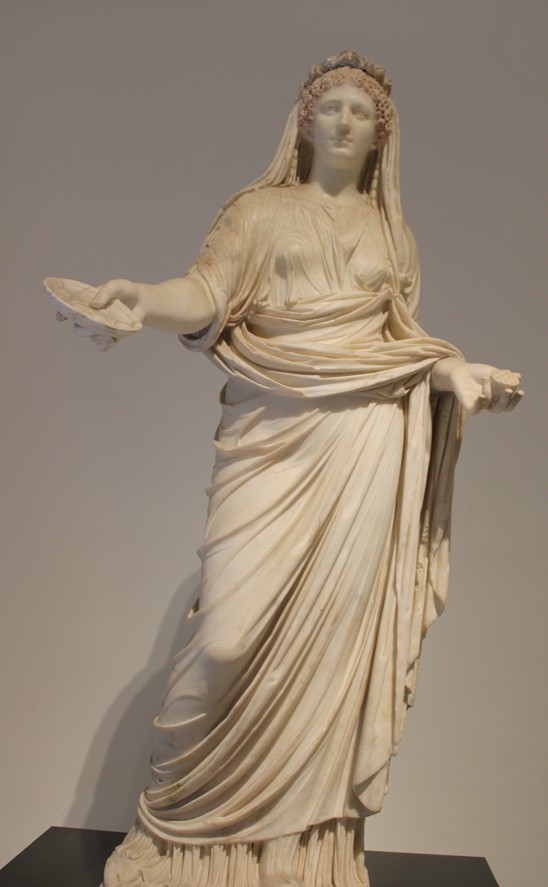
L’opera raffigura la giovane sacerdotessa con il capo velato. Indossa un abito da cerimonia con tanto di infula, la benda realizzata abitualmente in lana bianca o rossa che aveva una simbologia sacra. Veniva infatti mostrata da sacerdoti, sacerdotesse oppure dalle vittime sacrificali.
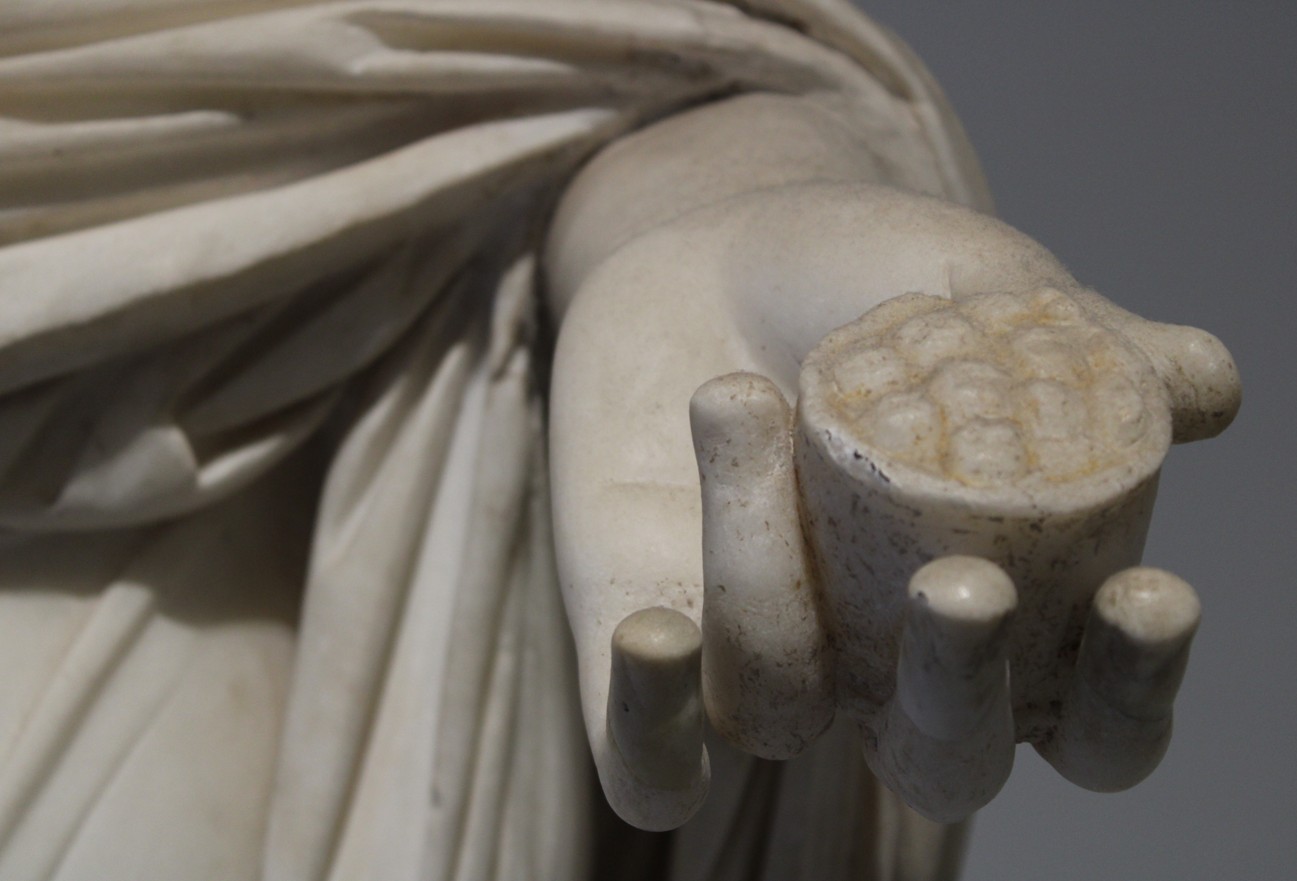
Sulla testa sfoggia una corona d’alloro mentre nella mano destra sostiene il contenitore per l’incenso: tutti elementi che mostrano il suo status di sacerdotessa.

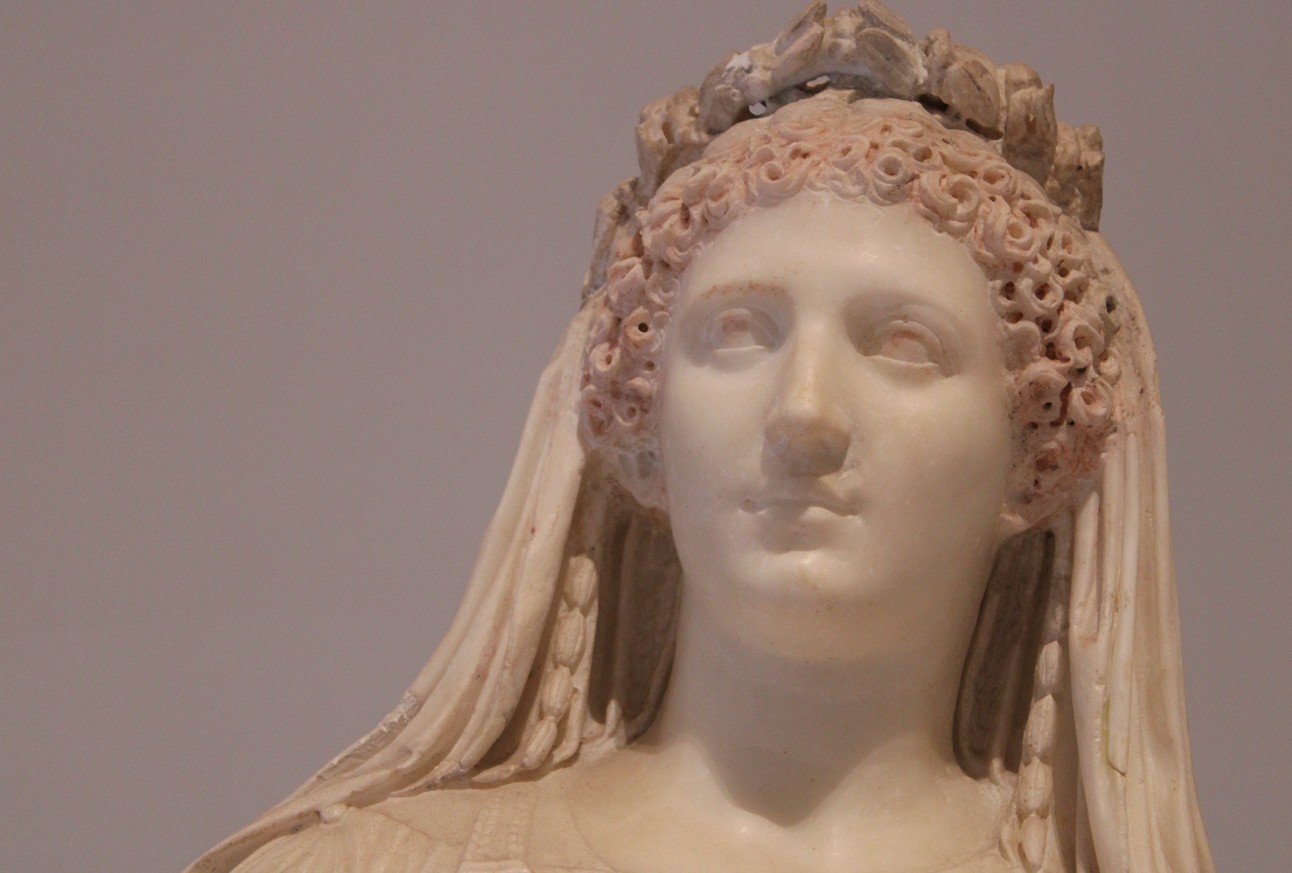
La scultura proviene dal Macellum di Pompei e, osservandola con attenzione e a distanza ravvicinata, si possono apprezzare tracce di colore, soprattutto nella capigliatura riccia ma anche sul volto e sulla veste riccamente panneggiata.
Il Macellum si trova nel Foro. Non solo fungeva da mercato ma anche da fulcro per eventi di rappresentanza religiosa e politica.
Proprio nel Macellum erano presenti sculture a dimensioni naturali che raffiguravano imperatori e membri della famiglia imperiale.
Dopo che Livia Drusilla, moglie di Augusto e madre di Tiberio, morì nel 29 d.C, in tutto l’impero si diffuse a macchia d’olio la presenza di sacerdotesse che avevano il compito di venerarla. Queste donne venivano scelte tra quelle di più alto rango.
Non è da escludere che la scultura in questione sia proprio una di queste sacerdotesse, testimonianza tangibile del ruolo attivo delle donne durante le cerimonie di culto.
Per il momento il sempre vostro Michelangelo Buonarroti vi saluta dandovi appuntamento ai prossimi post e sui social.
Sculpture of the day: the priestess Livia
The Archaeological Museum of Naples houses an incredible heritage of works and artifacts. For those like me who love sculpture, it is one of those unmissable museums where it is worth spending hours and hours admiring the details of breathtaking masterpieces.
Among the many sculptures on display in the first rooms, you can see the ancient Priestess called Livia, sculpted in the third quarter of the first century AD. It always amazes me to trace, almost two thousand years later, the signs of the workmanship left by those who sculpted those precious marbles.
The work depicts the young priestess with her head veiled. She wears a ceremonial dress complete with infula, the bandage that was usually made of white or red wool that had a sacred symbolism. It was in fact shown by priests, priestesses or sacrificial victims.
On her head she wears a laurel wreath while in her right hand she holds the incense container: all elements that show her status as a priestess.
The sculpture comes from the Macellum of Pompeii and, observing it carefully and at close range, you can appreciate traces of color, especially in the curly hair but also on the face and on the richly draped dress.
The Macellum is located in the Forum of Pompeii which not only served as a market but also as a hub for religious and political events. In the Macellum there were life-size sculptures depicting emperors but also members of the imperial family.
After Livia Drusilla, wife of Augustus and mother of Tiberius, in 29 AD, the presence of priestesses who had the task of venerating her spread like wildfire throughout the empire. These women were chosen from among those of the highest rank.
It cannot be ruled out that the sculpture in question is precisely one of these priestesses, tangible evidence of the active role of women during religious ceremonies.
For the moment, yours ever Michelangelo Buonarroti bids you farewell, making an appointment with you in the next posts and on social media.

Sostienici – Support Us
Se questo blog ti piace e ti appassiona, puoi aiutarci a farlo crescere sempre più sostenendoci in modo concreto condividendo i post, seguendo le pagine social e con un contributo che ci aiuta ad andare avanti con il nostro lavoro di divulgazione. . ENGLISH: If you like and are passionate about this blog, you can help us make it grow more and more by supporting us in a concrete way by sharing posts, following social pages and with a contribution that helps us to move forward with our dissemination work.
10,00 €
Condividi:


Questo sono io





sostienici

Sostienici – Support Us
Se questo blog ti piace e ti appassiona, puoi aiutarci a farlo crescere sempre più sostenendoci in modo concreto condividendo i post, seguendo le pagine social e con un contributo che ci aiuta ad andare avanti con il nostro lavoro di divulgazione. . ENGLISH: If you like and are passionate about this blog, you can help us make it grow more and more by supporting us in a concrete way by sharing posts, following social pages and with a contribution that helps us to move forward with our dissemination work.
€10,00


