
La Scultura del giorno: San Pietro del Finelli nella Cappella del Tesoro di San Gennaro
La scultura del giorno di cui voglio parlarvi oggi è il monumentale San Pietro, scolpito da Giuliano Finelli per arricchire la Cappella del Tesoro di San Gennaro, ubicata nel Duomo di Napoli dedicato a Santa Maria Assunta.
Fa da pendand alla scultura di San Paolo, sempre realizzata dal Finelli. Entrambe le sculture si trovano nelle nicchie posizionate ai lati dell’ingresso della cappella.
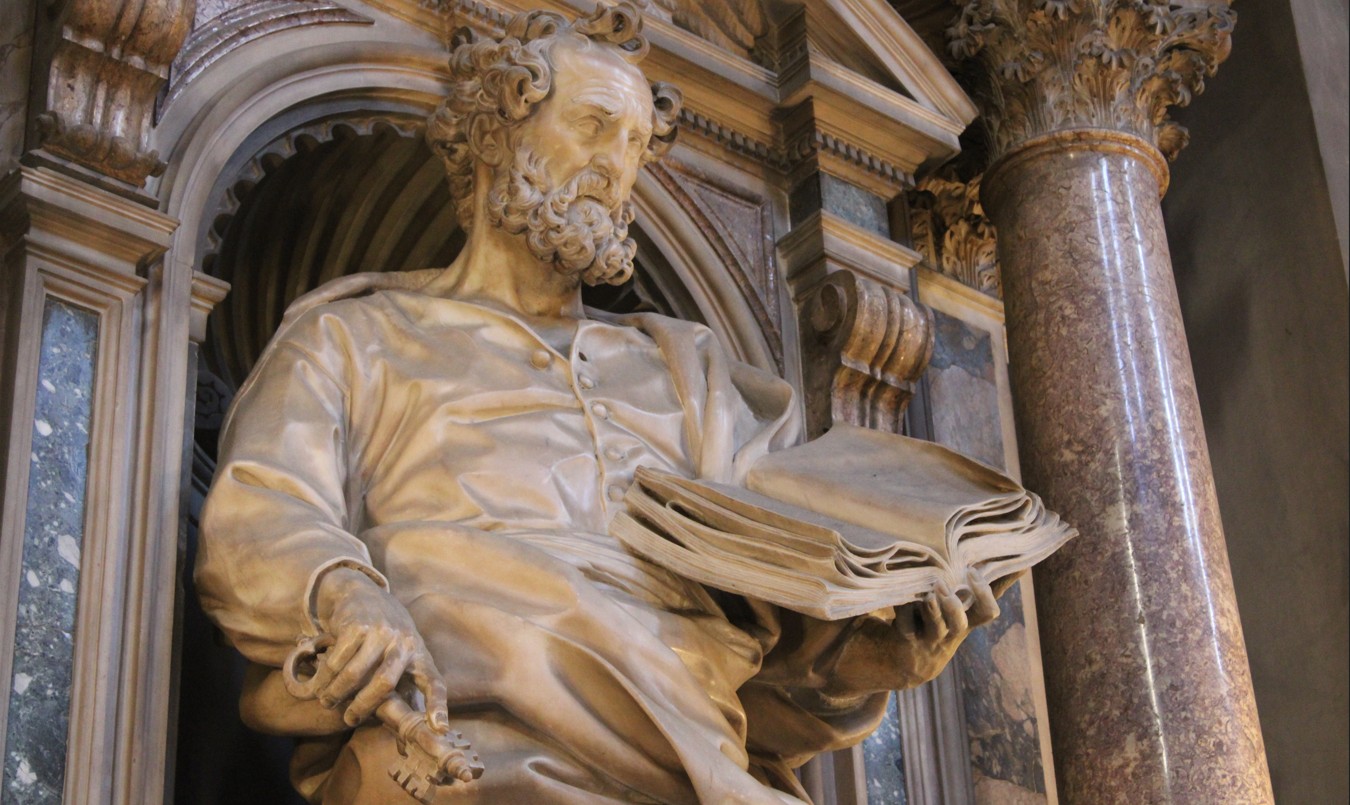
San Pietro è abbigliato con una semplice tunica abbottonata sul davanti ed è avvolto da un ampio mantello panneggiato che gli poggia sulle spalle. Ha un’evidente stempiatura e capelli ricci che si fondono con la barba, mossi dal vento.
Con la mano sinistra sostiene un libro aperto mentre con la destra tiene le chiavi d’oro e d’argento. Quella d’oro allude al potere sul regno dei cieli mentre quella d’argento simboleggia l’autorità spirituale del papato in terra.
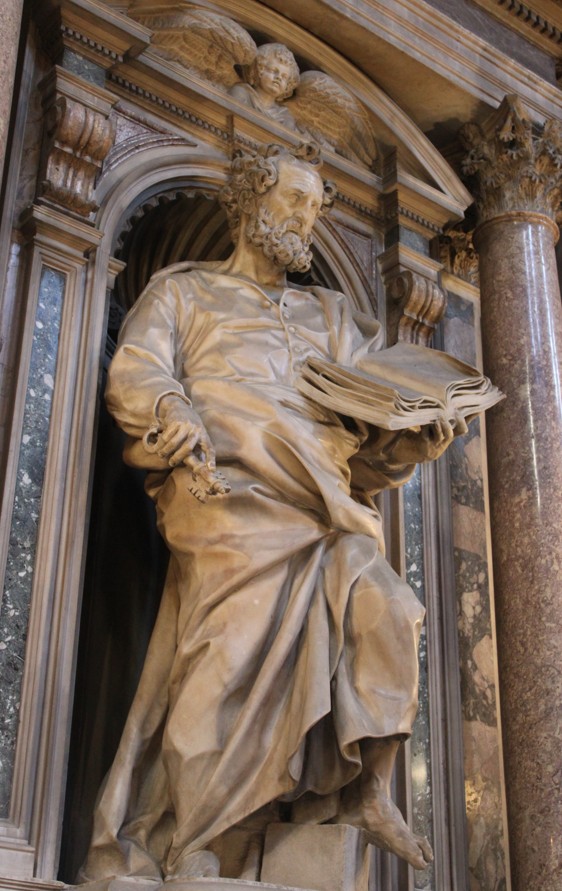
Nonostante le dimensioni della scultura, Giuliano Finelli prestò particolare attenzione ai dettagli, come d’altro canto era solito fare. Guardate per esempio con quanta maestria riuscì a rendere le vene sulle mani e sul piede che rimane scoperto e semi-sospeso nel vuoto.
Giuliano Finelli fu un grande artista del Seicento. Nato a Carrara nel 1601, si formò artisticamente nella bottega di Michelangelo Naccherino, artista di transizione tra il tardo Manierismo e il primo Barocco. Fu proprio Naccherino a portarlo a Napoli, un centro artistico vivace dove il giovane Giuliano poté affinare la sua tecnica e venire a contatto con diverse influenze.

Il vero punto di svolta nella sua carriera arrivò con il successivo trasferimento a Roma. Qui, entrò nell’orbita del grande Gian Lorenzo Bernini, diventando uno dei suoi più stretti collaboratori. Lavorò a stretto contatto con Bernini su alcune delle sue opere più celebri, come il San Longino per la Basilica di San Pietro. Al Finelli viene attribuita in particolare la realizzazione della lancia e di alcuni dettagli della veste del santo, dimostrando già una notevole abilità nel rendere la drammaticità e la dinamicità delle figure barocche.
Il rapporto tra i due artisti però non fu esattamente idilliaco. Finelli, dotato di un talento indiscusso e di una forte personalità, mal sopportava di rimanere sempre all’ombra del geniale Bernini. Pensate che fu proprio lui a scolpire il fogliame del celeberrimo gruppo di Apollo e Dafne.

Giuliano Finelli, giustamente, ambiva a un riconoscimento autonomo e a esprimere il proprio stile. Questa ambizione lo portò a scontrarsi con Bernini e, inevitabilmente, a prendere le distanze dalla sua bottega.
Una delle opere che segnò la sua affermazione come scultore indipendente fu il raffinato Busto di Maria Dugioli. Straordinaria fu la sua attenzione ai dettagli resi con un realismo estremo che lo distinsero da Bernini, il cui stile era decisamente più teatrale.
Tornato a Napoli Finelli ebbe modo di scolpire ben 13 opere colossali per il Duomo di Napoli, tra le quali compare proprio il San Pietro.

Per il momento il sempre vostro Michelangelo Buonarroti vi saluta dandovi appuntamento ai prossimi post e sui social.
Sculpture of the day: Finelli’s Saint Peter in the Chapel of the Treasure of San Gennaro
The sculpture of the day that I want to talk to you about today is the monumental Saint Peter, sculpted by Giuliano Finelli to enrich the Chapel of the Treasure of San Gennaro, located in the Cathedral of Naples dedicated to Santa Maria Assunta.
It is a pendant to the sculpture of Saint Paul, also made by Finelli. Both sculptures are located in the niches positioned on the sides of the entrance to the chapel.
Saint Peter is dressed in a simple tunic buttoned on the front and is wrapped in a large draped cloak that rests on his shoulders. He has a clear receding hairline and curly hair that blends with his beard, moved by the wind.
With his left hand he holds an open book while with his right he holds the gold and silver keys. The gold one alludes to the power over the kingdom of heaven while the silver one symbolizes the spiritual authority of the papacy on earth.
Despite the size of the sculpture, Giuliano Finelli paid particular attention to detail, as he usually did. Look, for example, at how masterfully he managed to render the veins on the hands and on the foot that remains uncovered and semi-suspended in the void.
Giuliano Finelli was a great artist of the seventeenth century. Born in Carrara in 1601, he trained artistically in the workshop of Michelangelo Naccherino, an artist of the transition between late Mannerism and early Baroque. It was Naccherino who brought him to Naples, a lively artistic center where the young Giuliano could refine his technique and come into contact with different influences.
The real turning point in his career came with the subsequent move to Rome. Here, he entered the orbit of the great Gian Lorenzo Bernini, becoming one of his closest collaborators. He worked closely with Bernini on some of his most famous works, such as the San Longino for St. Peter’s Basilica. Finelli is credited in particular with the creation of the spear and some details of the saint’s robe, already demonstrating a notable ability in rendering the drama and dynamism of baroque figures.
The relationship between the two artists, however, was not exactly idyllic. Finelli, gifted with undisputed talent and a strong personality, could not stand to always remain in the shadow of the brilliant Bernini. Consider that it was he who sculpted the foliage of the famous group of Apollo and Daphne.
Giuliano Finelli, rightly, aspired to independent recognition and to express his own style. This ambition led him to clash with Bernini and, inevitably, to distance himself from his workshop.
One of the works that marked his affirmation as an independent sculptor was the refined Bust of Maria Dugioli. His attention to detail rendered with extreme realism was extraordinary, distinguishing him from Bernini, whose style was decidedly more theatrical.
Back in Naples Finelli had the opportunity to sculpt 13 colossal works for the Cathedral of Naples, among which appears precisely the Saint Peter.
For the moment the always your Michelangelo Buonarroti bids you farewell, giving you an appointment for the next posts and on social media.

Sostienici – Support Us
Se questo blog ti piace e ti appassiona, puoi aiutarci a farlo crescere sempre più sostenendoci in modo concreto condividendo i post, seguendo le pagine social e con un contributo che ci aiuta ad andare avanti con il nostro lavoro di divulgazione. . ENGLISH: If you like and are passionate about this blog, you can help us make it grow more and more by supporting us in a concrete way by sharing posts, following social pages and with a contribution that helps us to move forward with our dissemination work.
10,00 €
Condividi:


Questo sono io





sostienici

Sostienici – Support Us
Se questo blog ti piace e ti appassiona, puoi aiutarci a farlo crescere sempre più sostenendoci in modo concreto condividendo i post, seguendo le pagine social e con un contributo che ci aiuta ad andare avanti con il nostro lavoro di divulgazione. . ENGLISH: If you like and are passionate about this blog, you can help us make it grow more and more by supporting us in a concrete way by sharing posts, following social pages and with a contribution that helps us to move forward with our dissemination work.
€10,00


