
La Scultura del Giorno: Psyche di Capua del I secolo a.C.
La scultura del giorno che voglio proporvi sembra scolpita ieri da un’artista contemporaneo eppure, le sue origini, risalgono a un periodo compreso tra la fine del I secolo a.C. e il I secolo d.C.
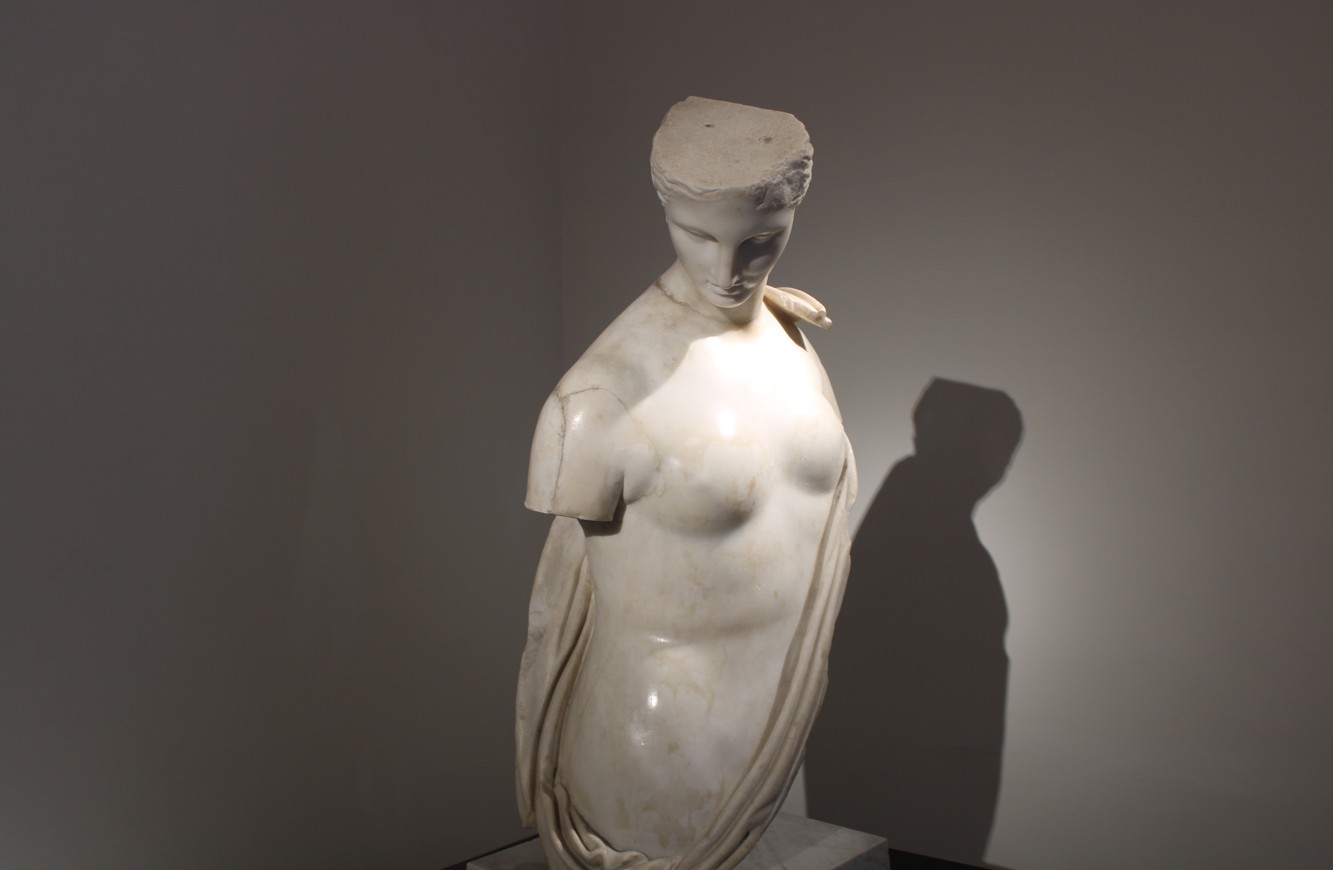
Vi sto parlando della cosiddetta Psyche di Capua, più propriamente una Venere, realizzata con marmo bianco e rinvenuta nel settembre 1726 nell’anfiteatro campano a Santa Maria Capua Vetere.
Faceva parte della decorazione del porticato della summa cavea ma per vederla oggi vi basterà entrare nello stupefacente Museo Archeologico di Napoli.
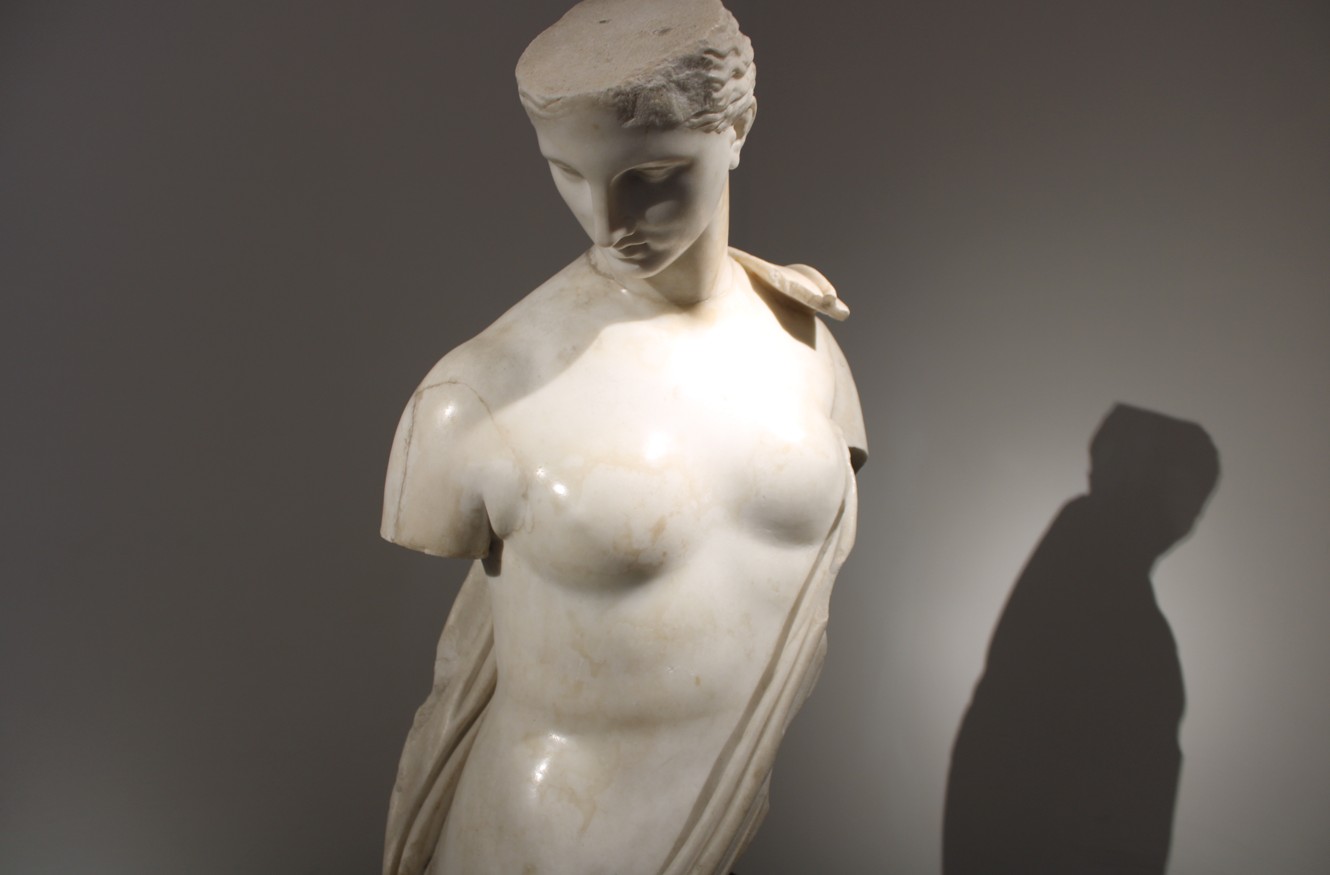
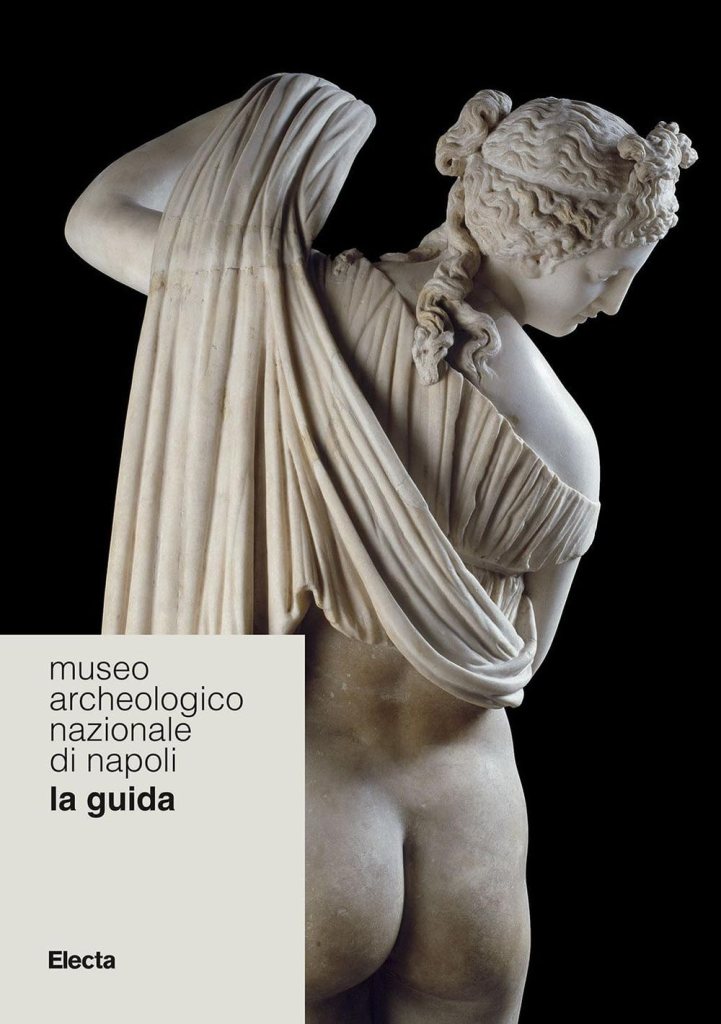
L’opera rappresenta una figura femminile abbigliata con una veste che le sta scivolando di dosso. Appoggiata sulla spalla sinistra, è annodata all’altezza del fianco destro e le lascia scoperto il seno e la pancia.
…una bellezza tanto straordinaria, tanto nota non si poteva né descrivere,
né lodare adeguatamente per l’inadeguatezza del linguaggio umano.Dalle Metamorfosi di Apuleio
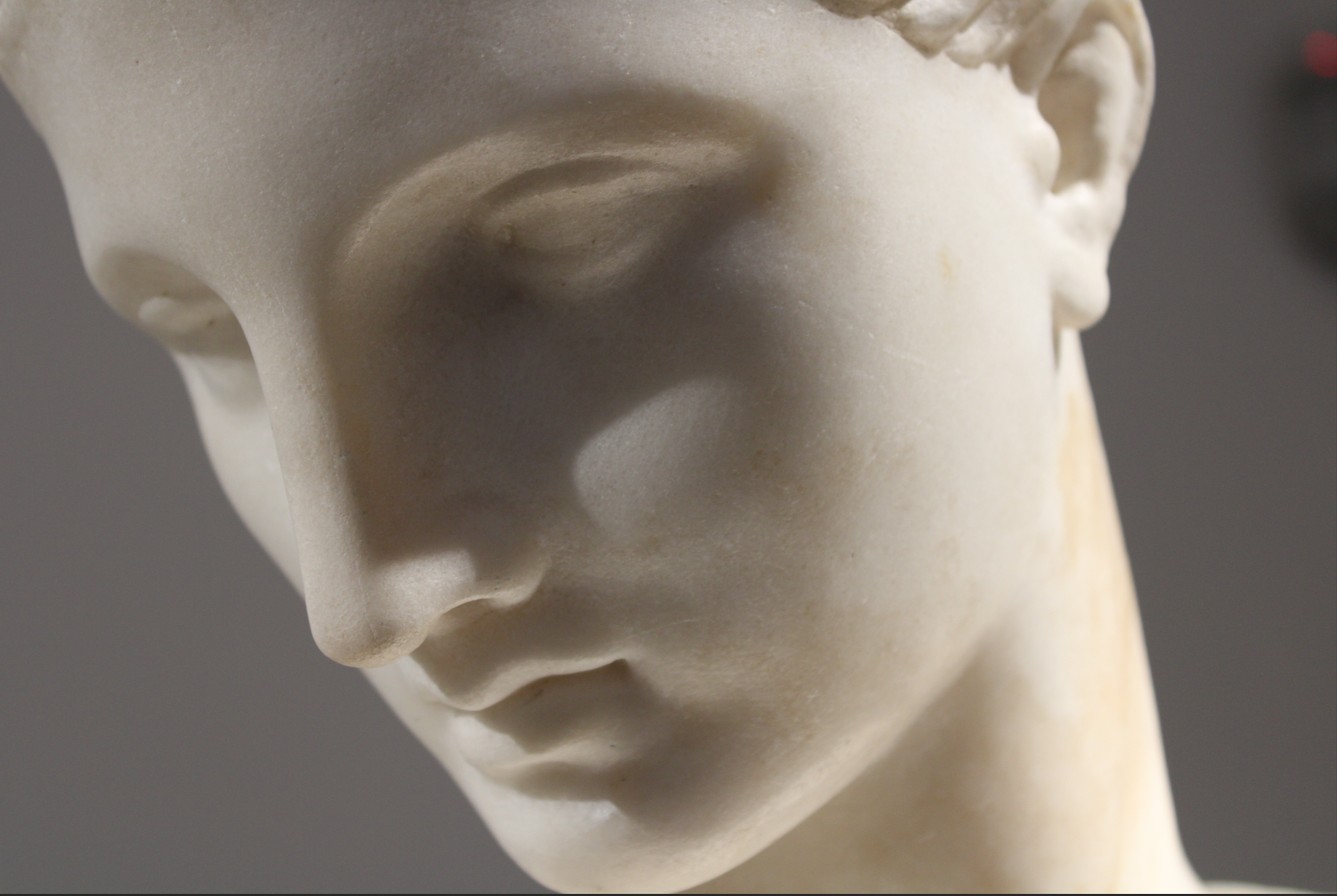
Venere risulta mutila nella parte superiore della testa e nelle braccia. Ha il capo rivolto verso il basso mentre il busto è sottoposto a un’evidente torsione.
In origine fu identificata erroneamente come Psyche ma più probabilmente raffigura Venere, la dea dell’amore.
Infatti mancano gli attributi tipici di Psyche come la farfalla o le ali anche se, sulle spalle, presenta dei fori che un tempo potrebbero essere serviti per imperniare le appendici alate. Chissà quale forma aveva in origine questa straordinaria scultura.
Ma chi è lo scultore che ha realizzato la Venere di Capua?
Le ipotesi sono più di una e tutte plausibili. secondo Benndorg e Overbeck ha la grazia e le forme sinuose tipiche di Prassitele e della sua scuola mentre secondo Furtwängler potrebbe trattarsi invece di un lavoro di Skopas, con quel patos accentuato dalle movenze del corpo.
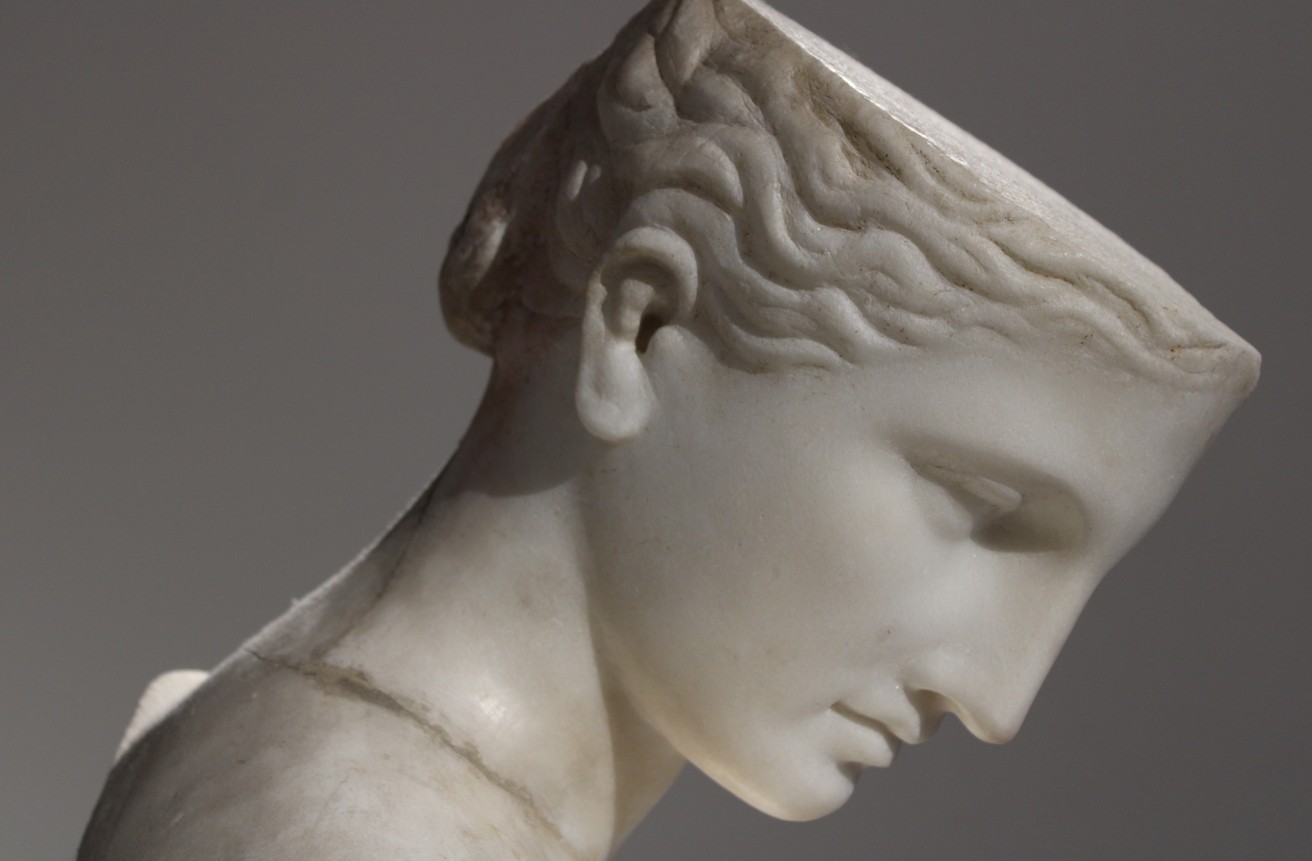
Vi risulterà insolita la lucidatura quasi estrema della Venere osservandola dal vero: cosa assai rara per sculture così antiche. In effetti quel trattamento del marmo è il frutto di un’eccessiva carteggiatura effettuata durante un restauro settecentesco un po’ troppo azzardato.
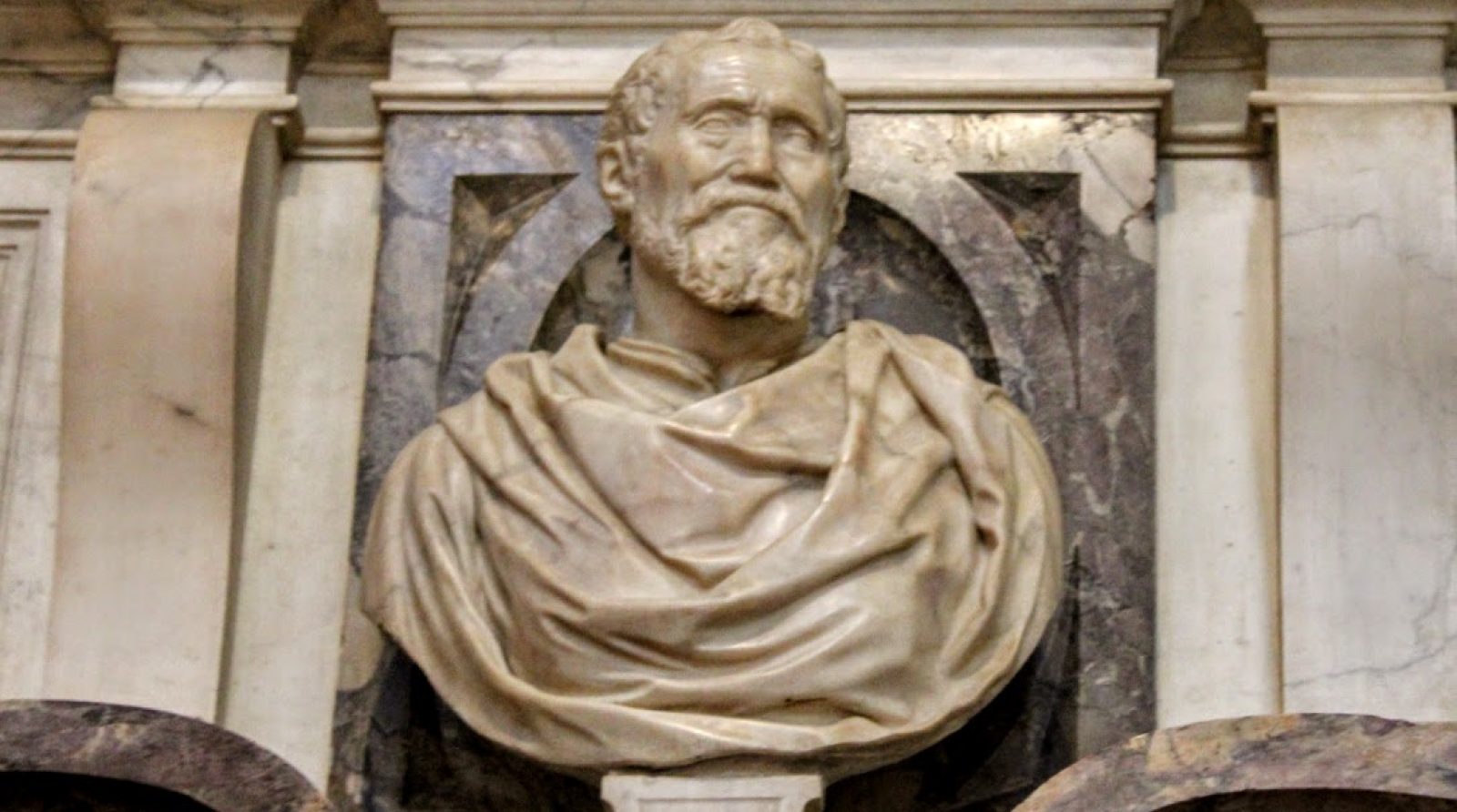
Per il momento il sempre vostro Michelangelo Buonarroti vi saluta dandovi appuntamento ai prossimi post e sui social.
Sculpture of the Day: Psyche of Capua from the 1st century BC
The sculpture of the day that I want to propose to you today seems to have been sculpted yesterday by a contemporary artist and yet its origins date back to a period between the end of the 1st century BC and the 1st century AD.
You are talking about the so-called Psyche of Capua, more precisely a Venus, sculpted in white marble and found in September 1726 in the Campanian amphitheater in Santa Maria Capua Vetere.
It was part of the decoration of the portico of the summa cavea but to see it today you just need to enter the amazing Archaeological Museum of Naples.
The work represents a female figure dressed in a dress that is slipping off her. Resting on the left shoulder, it is knotted at the height of the right hip and leaves her breast and belly uncovered.
“…a beauty so extraordinary, so well known could neither be described nor praised adequately due to the inadequacy of human language” – from Apuleius’ Metamorphoses.
Venus is mutilated in the upper part of the head and in the arms. Her head is turned downwards while her torso is clearly torsion.
Originally she was mistakenly identified as Psyche but more likely she represents Venus, the goddess of love. In fact, the typical attributes of Psyche such as the butterfly or wings are missing even if, on the shoulders there are holes that could once have served to hinge the winged appendages. Who knows what shape this extraordinary sculpture originally had.
But who is the sculptor who created the Venus of Capua?
There are more than one hypothesis and all plausible. according to Benndorg and Overbeck it has the grace and sinuous forms typical of Praxiteles and his school while according to Furtwängler it could instead be a work by Skopas, with that pathos accentuated by the movements of the body.
The almost extreme polishing of the Venus will seem unusual to you when observing it in person: something very rare for such ancient sculptures. In fact that treatment of the marble is the result of excessive sanding carried out during an eighteenth-century restoration that was a bit too risky.
For the moment, your ever Michelangelo Buonarroti bids you farewell, making an appointment to see you in the next posts and on social media.

Sostienici – Support Us
Se questo blog ti piace e ti appassiona, puoi aiutarci a farlo crescere sempre più sostenendoci in modo concreto condividendo i post, seguendo le pagine social e con un contributo che ci aiuta ad andare avanti con il nostro lavoro di divulgazione. . ENGLISH: If you like and are passionate about this blog, you can help us make it grow more and more by supporting us in a concrete way by sharing posts, following social pages and with a contribution that helps us to move forward with our dissemination work.
10,00 €


Condividi:


Questo sono io





sostienici

Sostienici – Support Us
Se questo blog ti piace e ti appassiona, puoi aiutarci a farlo crescere sempre più sostenendoci in modo concreto condividendo i post, seguendo le pagine social e con un contributo che ci aiuta ad andare avanti con il nostro lavoro di divulgazione. . ENGLISH: If you like and are passionate about this blog, you can help us make it grow more and more by supporting us in a concrete way by sharing posts, following social pages and with a contribution that helps us to move forward with our dissemination work.
€10,00


