
Giudizio Universale: Gregorio XIII ne fece cancellare 8 metri quadrati
Papa Gregorio XIII, al secolo Ugo Boncompagni, fu eletto papa il 13 maggio del 1572, otto anni dopo la mia dipartita dal vostro mondo.
In pochi ricordano il suo nome o il suo papato ma operò un importante sfregio sul mio Giudizio Universale. Non bastarono le censure che pure lui fece portare avanti da chi, dopo Daniele da Volterra, fu incaricato di coprire le nudità dei corpi. Lui si spinse ben oltre e fece coprire la fascia più bassa dell’affresco o meglio, la fece letteralmente distruggere celandola per sempre alla vista di tutti.

Gregorio XIII volle infatti che il piano del presbiterio venisse rialzato con tre gradini, eliminando così la fascia più bassa del mio preziosissimo affresco. Cancellò ben 8 metri quadrati di superficie dipinta con lo sfondo su quale si adagiavano le figure tutt’oggi visibili. Di tale porzione del Giudizio Universale ne rimane testimonianza nella copia che il Venusti aveva realizzato su tavola, su commissione del cardinale Alessandro Farnese.
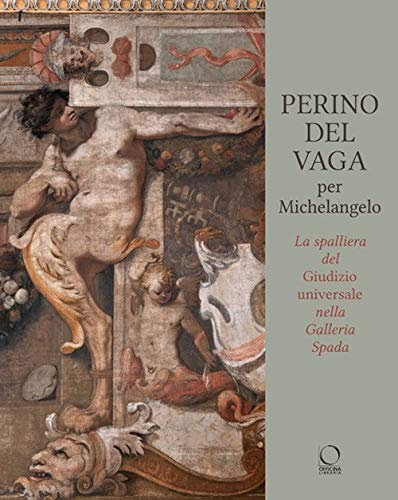
A quel punto diventò inutile l’arazzo che Perino del Vaga si era premurato di disegnare e far realizzare nelle Fiandre per collocare proprio nella zona inferiore.

Dopo l’inaugurazione dei Giudizio Universale avvenuta durante le solenni celebrazioni della vigilia di Ognissanti del 1541, era stato papa Paolo III Farnese a voler collocare nell’altezza compresa fra il pavimento rialzato e il mio affresco, un arazzo tessuto in seta e oro.
Con il mio consenso, affidò quel lavoro a Perino del Vaga. Avrebbe dunque dovuto preparare il modello da tessere per completare la parete d’altare.
Le figure presenti avevano un puro scopo ornamentale e l’artista le aveva realizzate sull’esempio dei miei dipinti, soprattutto della volta. Quel suo cartone avrebbe poi essere tessuto nelle Fiandre e, collocato in loco, avrebbe esaltato il mio Giudizio e rifinito la parte sottostante, compresa fra le due porte.

Con Papa Gregorio XIII quel progetto terminò bruscamente. Lui poco amò il tema del Giudizio Universale tanto da proibirne a Roma ogni rappresentazione teatrale ad eccezion fatta dal Christus Iudex scritto dal gesuita Stefano Tucci.
Addirittura, al di sopra della Porta del Giudizio dell’antica basilica costantiniana al tempo ancora non demolita, volle far affrescare dallo Zuccari la Vocazione di San Pietro eliminando il vecchio affresco che riproduceva proprio il Giudizio Universale.
Per il momento il sempre vostro Michelangelo Buonarroti vi saluta dandovi appuntamento ai prossimi post e sui social.
Last Judgement: Gregory XIII had 8 square meters of it erased
Pope Gregory XIII, born Ugo Boncompagni, was elected pope on May 13, 1572, eight years after my departure from your world.
Few people remember his name or his papacy, but he made a major disfigurement of my Last Judgement. The censorship that he also had carried out by those who, after Daniele da Volterra, were responsible for covering the nakedness of the bodies, was not enough. He went much further and had the lowest section of the fresco covered, or rather, he had it literally destroyed, hiding it forever from everyone’s view.
In fact, Gregory XIII wanted the presbytery floor to be raised with three steps, thus eliminating the lowest section of my precious fresco. He erased 8 square meters of painted surface with the background on which the figures still visible today rested. Evidence of this portion of the Last Judgement remains in the copy that Venusti had made on wood, commissioned by Cardinal Alessandro Farnese.
At that point the tapestry that Perino del Vaga had taken care to design and have made in Flanders to place in the lower area became useless.
After the inauguration of the Last Judgement during the solemn celebrations on the eve of All Saints in 1541, it was Pope Paul III Farnese who wanted to place a tapestry woven in silk and gold at the height between the raised floor and my fresco.
With my consent, he entrusted that work to Perino del Vaga. He would therefore have to prepare the model to be woven to complete the altar wall.
The figures present had a purely ornamental purpose and the artist had created them following the example of my paintings, especially the vault. His cartoon would then have been woven in Flanders and, placed there, would have exalted my Last Judgement and finished the part underneath, between the two doors.
With Pope Gregory XIII that project ended abruptly. He did not like the theme of the Last Judgement so much that he prohibited any theatrical representation in Rome with the exception of Christus Iudex written by the Jesuit Stefano Tucci.
Indeed, above the Last Judgement Door of the ancient Constantinian basilica at the time not yet demolished, he wanted Zuccari to fresco the Calling of Saint Peter, eliminating the old fresco that reproduced the Last Judgement.
For the moment, yours truly Michelangelo Buonarroti bids you farewell, making an appointment to see you in the next posts and on social media.

Sostienici – Support Us
Se questo blog ti piace e ti appassiona, puoi aiutarci a farlo crescere sempre più sostenendoci in modo concreto condividendo i post, seguendo le pagine social e con un contributo che ci aiuta ad andare avanti con il nostro lavoro di divulgazione. . ENGLISH: If you like and are passionate about this blog, you can help us make it grow more and more by supporting us in a concrete way by sharing posts, following social pages and with a contribution that helps us to move forward with our dissemination work.
10,00 €
Condividi:


Questo sono io





sostienici

Sostienici – Support Us
Se questo blog ti piace e ti appassiona, puoi aiutarci a farlo crescere sempre più sostenendoci in modo concreto condividendo i post, seguendo le pagine social e con un contributo che ci aiuta ad andare avanti con il nostro lavoro di divulgazione. . ENGLISH: If you like and are passionate about this blog, you can help us make it grow more and more by supporting us in a concrete way by sharing posts, following social pages and with a contribution that helps us to move forward with our dissemination work.
€10,00


Senza esagerare nella critica, fu il più vandalo dei vandali
"Mi piace"Piace a 1 persona
nessuna esagerazione, anzi…
"Mi piace""Mi piace"