
La Scultura del giorno: Narciso di Hiolle
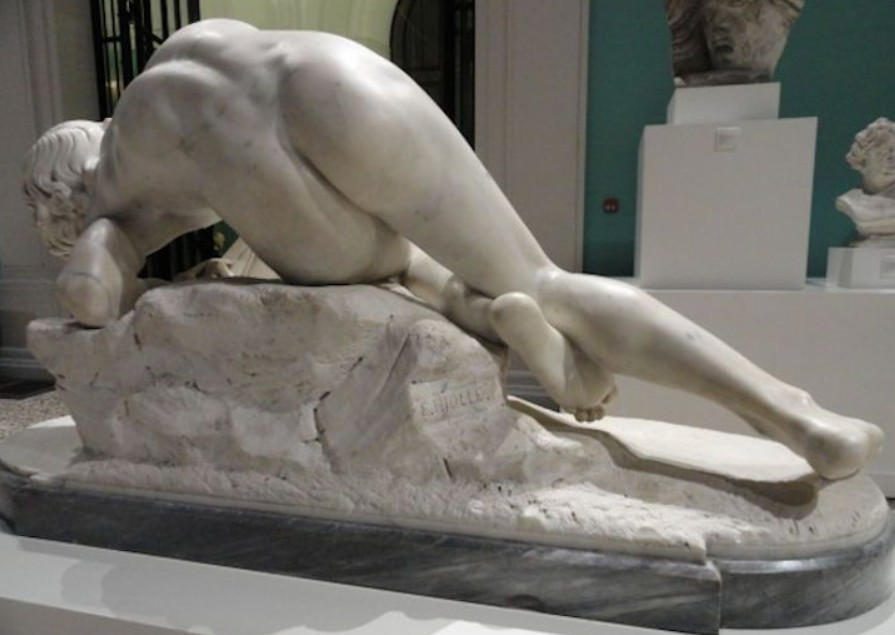
L’opera del giorno di cui voglio parlarvi oggi è la scultura di Narciso, realizzata dall’artista Eugène-Ernest Hiolle nel 1868, oggi custodita nel Musée des Beaux-Arts de Valenciennes, in Francia.
La scultura fu pensata dall’artista durante il suo periodo di pensionato a Villa Medici a Roma e raffigura la storia del giovane Narciso, narrata nel terzo libro delle Metamorfosi di Ovidio.

La storia di Narciso
Narciso era un giovane di straordinaria bellezza, figlio del dio fluviale Cefiso e della ninfa Liriope. Prima della sua nascita, la madre consultò il celebre indovino Tiresia per conoscere il destino del figlio. Lui le predisse che Narciso avrebbe vissuto a lungo se però non non avesse mai visto il proprio volto riflesso.
I genitori così si premurarono di nascondere tutti gli specchi presenti in casa. Narciso crebbe diventando un giovane di rara bellezza, tanto da suscitare l’amore di ninfe e fanciulle che puntualmente rifiutava, causando dolore e sofferenza.

La dea Nemesi, custode della vendetta divina, decise di punire Narciso per la sua superbia e per aver spezzato il cuore di Eco. Un giorno, mentre Narciso si dissetava presso una fonte, vide la sua immagine riflessa nell’acqua. Innamoratosi perdutamente della propria bellezza, rimase incantato a contemplarsi, incapace di distogliere lo sguardo.
Consumato dal desiderio inappagabile di possedere la sua immagine, Narciso si lasciò morire sulla riva della fonte. Nel punto in cui cadde, nacque un fiore che prese il suo nome: il narciso.
La scultura di Narciso
Lo scultore francese ottocentesco Hiolle volle raffigurare il giovane Narciso accanto all’acqua mentre ammira estasiato il suo riflesso.
La mano destra accarezza la superficie delle acque facendole increspare, come se stesse sfiorando le guance dell’amato. Il suo corpo assume una posa languida e aggraziata mentre il volto è efebico.

Osservando con attenzione noterete che già in questa scultura è scritto il destino di Narciso. Tra i capelli infatti spuntano già una manciata di narcisi.
Al momento questa scultura si trova in Italia, all’interno del percorso espositivo ‘Il Ritratto dell’Artista Nello specchio di Narciso. Il volto, la maschera, il selfie’, presso i Musei di San Domenico di Forlì.
Per il momento il sempre vostro Michelangelo Buonarroti vi saluta dandovi appuntamento ai prossimi post e sui social.

Sculpture of the day: Narcissus by Hiolle
The work of the day that I want to talk to you about today is the sculpture of Narcissus, created by the artist Eugène-Ernest Hiolle in 1868, now kept in the Musée des Beaux-Arts de Valenciennes, in France.
The sculpture was conceived by the artist during his period of retirement at Villa Medici in Rome and depicts the story of the young Narcissus, narrated in the third book of Ovid’s Metamorphoses.
The story of Narcissus
Narcissus was a young man of extraordinary beauty, son of the river god Cephisus and the nymph Liriope. Before his birth, his mother consulted the famous soothsayer Tiresias to know the fate of her son. He predicted that Narcissus would live a long time if he never saw his own face reflected.
So his parents took care to hide all the mirrors in the house. Narcissus grew up to be a young man of rare beauty, so much so that he aroused the love of nymphs and maidens that he promptly rejected, causing pain and suffering.
The goddess Nemesis, guardian of divine vengeance, decided to punish Narcissus for his pride and for having broken Echo’s heart. One day, while Narcissus was quenching his thirst at a spring, he saw his image reflected in the water. Having fallen madly in love with his beauty, he remained enchanted by contemplating himself, unable to look away.
Consumed by the insatiable desire to possess his image, Narcissus let himself die on the bank of the spring. At the point where he fell, a flower grew that took his name: the narcissus.
The sculpture of Narcissus
The nineteenth-century French sculptor Hiolle wanted to depict the young Narcissus next to the water while he admires his reflection in ecstasy.
The right hand caresses the surface of the waters, making them ripple, as if it were touching the cheeks of the beloved.
Her body assumes a languid and graceful pose while her face is ephebic.
If you look carefully you will notice that the destiny of Narcissus is already written in this sculpture. In fact, a handful of daffodils are already sprouting from her hair.
At the moment this sculpture is in Italy, within the exhibition itinerary ‘The Portrait of the Artist in the Mirror of Narcissus. The Face, the Mask, the Selfie’, at the Museums of San Domenico in Forlì.
For the moment, your ever Michelangelo Buonarroti bids you farewell, making an appointment with you in the next posts and on social media.

Sostienici – Support Us
Se questo blog ti piace e ti appassiona, puoi aiutarci a farlo crescere sempre più sostenendoci in modo concreto condividendo i post, seguendo le pagine social e con un contributo che ci aiuta ad andare avanti con il nostro lavoro di divulgazione. . ENGLISH: If you like and are passionate about this blog, you can help us make it grow more and more by supporting us in a concrete way by sharing posts, following social pages and with a contribution that helps us to move forward with our dissemination work.
10,00 €
Condividi:


Questo sono io





sostienici

Sostienici – Support Us
Se questo blog ti piace e ti appassiona, puoi aiutarci a farlo crescere sempre più sostenendoci in modo concreto condividendo i post, seguendo le pagine social e con un contributo che ci aiuta ad andare avanti con il nostro lavoro di divulgazione. . ENGLISH: If you like and are passionate about this blog, you can help us make it grow more and more by supporting us in a concrete way by sharing posts, following social pages and with a contribution that helps us to move forward with our dissemination work.
€10,00


