

La sfida lanciata da Corradino di Svevia, scolpita nel marmo da Corti
Lo scultore Costantino Corti scolpì la figura di Corradino di Svevia nel 1872, riprendendo la storia di un personaggio realmente esistito durante il Medioevo.
Corradino fu l’ultimo regnante degli Svevi, divenuto re da adolescente. Corti fissò nel marmo un momento drammatico, ovvero quello che precedette la sua esecuzione, ordinata dal re di Sicilia Carlo d’Angiò.

Incatenato al polso sinistro, sta per lanciare il guanto alla folla con l’altra mano: un evidente invito a rivendicare il suo sangue che da lì a poco sarà versato.
La fierezza nello sguardo del giovane, la postura eretta e quel guanto che sta per lanciare che molto somiglia all’atto dello sguainare di una spada, mettono in luce la bravura di Costantino Corti, scultore oggi purtroppo quasi dimenticato.
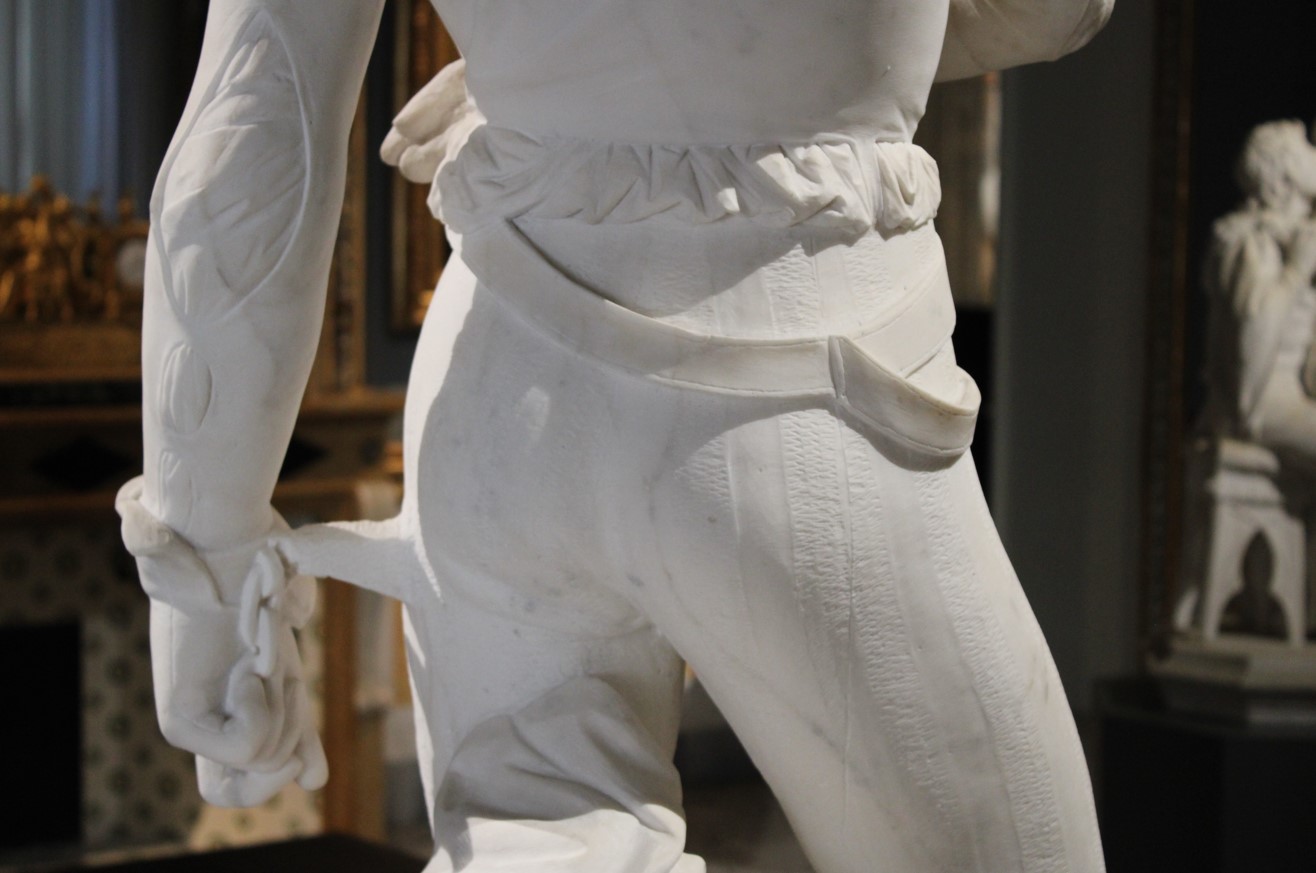
Osservando a distanza ravvicinata la scultura, si nota la raffinata lavorazione del marmo. Gli sbuffi della camicia che fuoriescono dal corpetto così come la straordinaria trama della calzamaglia, sono dei veri e propri pezzi di bravura di Corti.
Corradino di Svevia si è tolto il mantello e lo ha posato sul rocchio di colonna alle sue spalle, coprendo parzialmente il Crocifisso come a suggerire che la giustizia, quella Divina, farà comunque il suo corso, al di là di quello che decidono gli uomini.
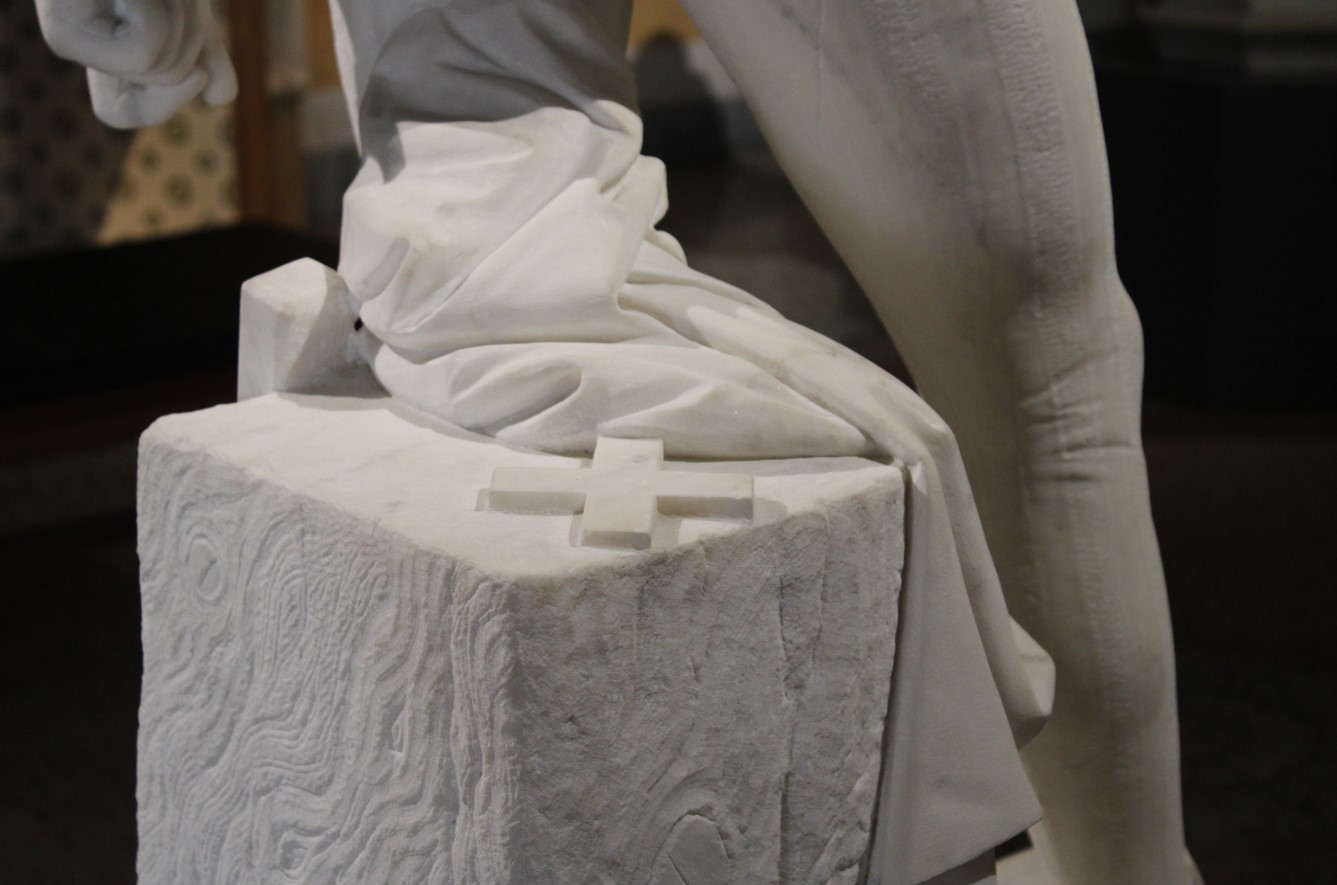
La scultura di Federico di Svevia fu presentata dallo scultore all’Esposizione nazionale di Milano del 1872 e comprata dall’Accademia di Brera.
Dal 1902 si trova in prestito alla Galleria di Arte Moderna di Milano.

Per il momento il sempre vostro Michelangelo Buonarroti vi saluta dandovi appuntamento ai prossimi post e sui social.
Sculpture of the day: Corradino di Svevia by Corti
The sculptor Costantino Corti sculpted the figure of Corradino di Svevia in 1872, taking up the story of a character who really existed during the Middle Ages.
Corradino was the last ruler of the Swabians, who became king as a teenager. Corti captured a dramatic moment in the marble, that which preceded his execution, ordered by the king of Sicily Charles of Anjou.
Chained to the left wrist, he is about to throw the glove to the crowd with the other hand: an obvious invitation to claim his blood that will soon be shed.
The pride in the young man’s gaze, the erect posture and the glove he is about to throw that closely resembles the act of unsheathing a sword, highlight the skill of Costantino Corti, a sculptor who is unfortunately almost forgotten today.
Looking at the sculpture from close up, you can see the refined workmanship of the marble. The puffs of the shirt that come out of the bodice as well as the extraordinary texture of the tights, are real pieces of bravura by Corti.
Corradino di Svevia took off his cloak and placed it on the column drum behind him, partially covering the Crucifix as if to suggest that justice, the Divine one, will take its course anyway, beyond what men decide.
The sculpture of Frederick of Swabia was presented by the sculptor at the National Exhibition of Milan in 1872 and purchased by the Brera Academy. Since 1902 it has been at the Galleria di Arte Moderna in Milan.
For the moment, yours truly Michelangelo Buonarroti bids you farewell, making an appointment with you in the next posts and on social media.

Sostienici – Support Us
Se questo blog ti piace e ti appassiona, puoi aiutarci a farlo crescere sempre più sostenendoci in modo concreto condividendo i post, seguendo le pagine social e con un contributo che ci aiuta ad andare avanti con il nostro lavoro di divulgazione. . ENGLISH: If you like and are passionate about this blog, you can help us make it grow more and more by supporting us in a concrete way by sharing posts, following social pages and with a contribution that helps us to move forward with our dissemination work.
10,00 €
Condividi:


Questo sono io





sostienici

Sostienici – Support Us
Se questo blog ti piace e ti appassiona, puoi aiutarci a farlo crescere sempre più sostenendoci in modo concreto condividendo i post, seguendo le pagine social e con un contributo che ci aiuta ad andare avanti con il nostro lavoro di divulgazione. . ENGLISH: If you like and are passionate about this blog, you can help us make it grow more and more by supporting us in a concrete way by sharing posts, following social pages and with a contribution that helps us to move forward with our dissemination work.
€10,00


