

Le Opere del Natale: la Natività di Andrea Previtali
L’opera del Natale che vi propongo oggi è la Natività di Andrea Previtali custodita nella Galleria dell’Accademia di Venezia.
Il dipinto fa parte di un ciclo composto da cinque episodi, probabilmente realizzato durante la seconda permanenza a Venezia del pittore, attorno al 1520.
La scena della Natività si svolge all’interno di una capanna in cui sono ben evidenti i travi in legno e non è da escludere che la costruzione così strutturata fosse stata ispirata da una stampa nordica.

In secondo piano, a sinistra, come in un flashback, Previtali dipinse la scena dell’Annunciazione mentre sotto avanzano le levatrici con bacile, brocca e braciere che fanno diretto riferimento al primo bagnetto del Neonato ma anche alla prefigurazione del Battesimo.
Le rovine di un edificio, come in questo caso, sono spesso presenti nelle natività cinquecentesche e mostrano la gloria del passato ma anche l’epoca pagana che per l’appunto ‘va in rovina’ con la venuta di Cristo sulla terra.
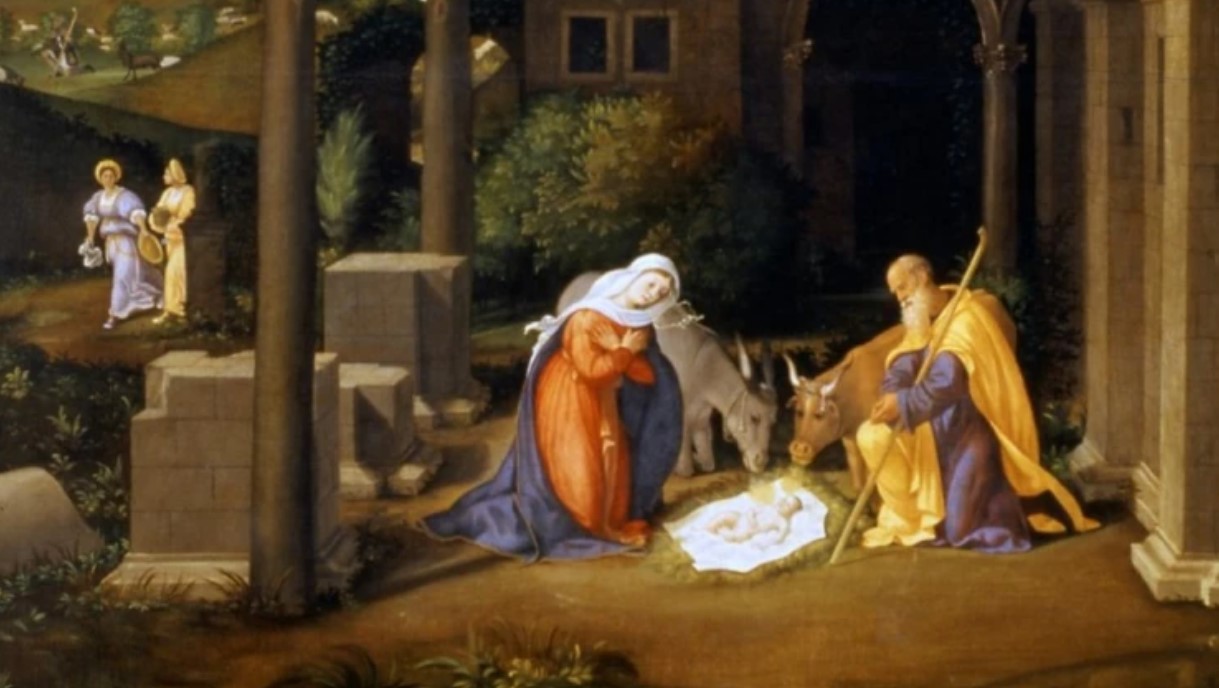
Gesù Bambino appena venuto alla luce è stato deposto su un telo bianco che lo protegge dall’aspra paglia della mangiatoia. Quel lenzuolo è un diretto riferimento al sudario che 33 anni dopo accoglierà il corpo oramai esanime di Cristo adulto.
Il bue e l’asinello riscaldano con il loro fiato il nuovo Nato proprio come sta scritto nella profezia di Isaia “Il bue riconosce il suo proprietario e l’asino la mangiatoia del suo padrone“.
Per il momento il sempre vostro Michelangelo Buonarroti vi saluta dandovi appuntamento ai prossimi post e sui social.

The Christmas Works: the Nativity by Andrea Previtali
The Christmas work that I propose to you today is the Nativity by Andrea Previtali kept in the Galleria dell’Accademia in Venice.
The painting is part of a cycle composed of five episodes, probably created during the painter’s second stay in Venice, around 1520.
The Nativity scene takes place inside a hut in which the wooden beams are clearly visible and it cannot be ruled out that the construction was thus structured was inspired by a Nordic print.
In the background, on the left, as in a flashback, Previtali painted the scene of the announcement while below the midwives advance with a basin, jug and brazier that directly refer to the first bath of the Newborn but also to the prefiguration of the Baptism.
The ruins of a building, as in this case, are often present in sixteenth-century nativities and show the glory of the past but also the pagan era that precisely ‘goes to ruin’ with the coming of Christ on earth.
Baby Jesus, just born, was placed on a white cloth that protects him from the harsh straw of the manger. That sheet is a direct reference to the shroud that 33 years later will welcome the now lifeless body of the adult Christ.
The ox and the donkey warm the new born with their breath just as it is written in the prophecy of Isaiah “The ox recognizes its owner and the donkey his master’s manger“.
For the moment, the ever-your Michelangelo Buonarroti bids you farewell, making an appointment with you in the next posts and on social media.

Sostienici – Support Us
Se questo blog ti piace e ti appassiona, puoi aiutarci a farlo crescere sempre più sostenendoci in modo concreto condividendo i post, seguendo le pagine social e con un contributo che ci aiuta ad andare avanti con il nostro lavoro di divulgazione. . ENGLISH: If you like and are passionate about this blog, you can help us make it grow more and more by supporting us in a concrete way by sharing posts, following social pages and with a contribution that helps us to move forward with our dissemination work.
10,00 €
Condividi:


Questo sono io





sostienici

Sostienici – Support Us
Se questo blog ti piace e ti appassiona, puoi aiutarci a farlo crescere sempre più sostenendoci in modo concreto condividendo i post, seguendo le pagine social e con un contributo che ci aiuta ad andare avanti con il nostro lavoro di divulgazione. . ENGLISH: If you like and are passionate about this blog, you can help us make it grow more and more by supporting us in a concrete way by sharing posts, following social pages and with a contribution that helps us to move forward with our dissemination work.
€10,00


