

La Scultura del giorno: Maria e il suo agnello di Bortone
La scultura del giorno che vi propongo oggi è Maria e il suo piccolo agnello, scolpita dall’artista salentino Ippazio Antonio Bortone tra la fine dell’Ottocento e l’inizio del Novecento.
Maria è vestita con gli abiti tradizionali salentini, con il capo coperto dal fazzoletto orlato di pizzo e una fascia alta con i lacci che le stringono il busto.

La bambina gioca con l’agnellino: le tende una corda e lui la morde divertito. All’agnello è già stata messa la campana al collo per evitare che si perda.
Mentre cammina infatti la campana suona e si può capire dove si trovi anche nel caso in cui scomparisse dalla vista.
La grazia della composizione e l’attenzione al dettaglio sono le cose che colpiscono di più di questo lavoro in marmo di Carrara. Osservate con quanta cura Bortone scolpì il pelo dell’animale, i dettagli dell’abito della bambina e la sua espressione del volto.
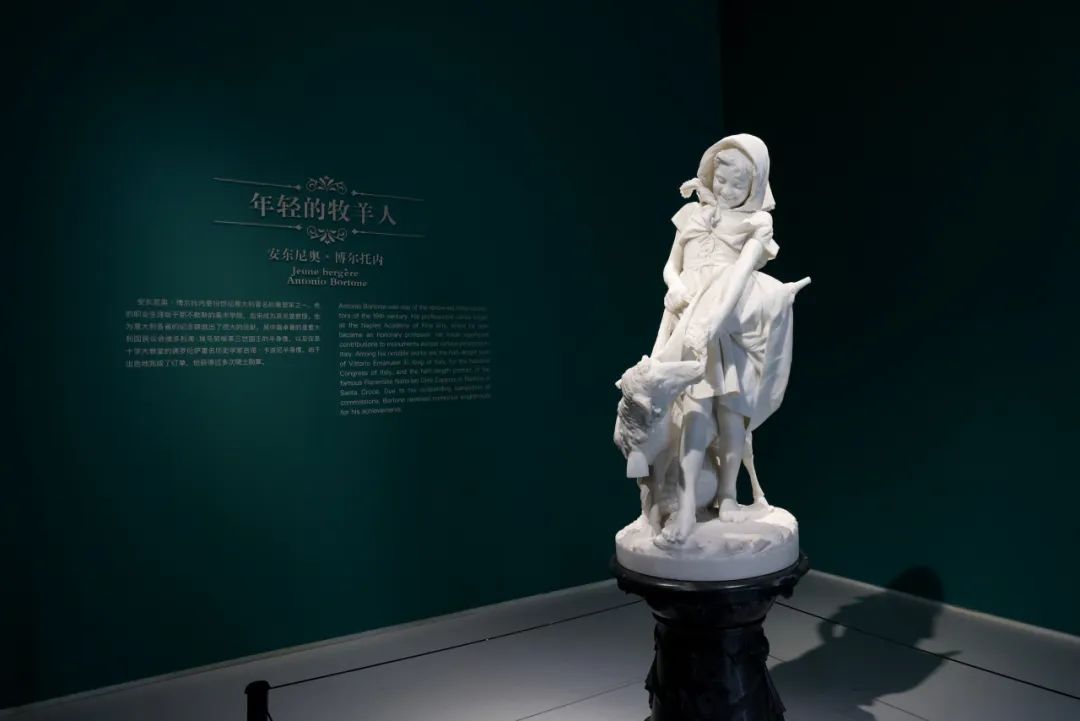
Lo scultore Antonio Bortone nacque a Ruffano, in provincia di Lecce, il 13 giugno del 1844. Era figlio di un fabbro e della madre si hanno pochissime tracce. Dimostrò fin dalla più giovane età una predisposizione per l’arte, tanto da scolpire un ritratto del padre all’età di soli dieci anni.
La sua formazione artistica si svolse tra Lecce e Napoli, dove ebbe modo di affinare le sue tecniche scultoree e di confrontarsi con le correnti artistiche del tempo.
Galeotta fu Firenze mi verrebbe da pensare. Proprio nella città del Rinascimento che lo accolse nel 1866, incontrò Dupré che ne colse subito il grande talento definendolo fin da subito come suo collega.

Fu proprio a Firenze che Bortone scolpì alcune delle sue opere più mirabili ed ebbe modo di lavorare anche per l’Opera del Duomo e la Basilica di Santa Croce. Lavorò per tutta la vita, fino alla vigilia della sua dipartita dal vostro mondo, accaduta a 94 anni nel 1938.
La scultura di Maria con il suo agnello appartiene a una collezione privata.
Per il momento il sempre vostro Michelangelo Buonarroti vi saluta dandovi appuntamento ai prossimi post e sui social.
Sculpture of the day: Maria and her lamb by Bortone
The sculpture of the day that I propose to you today is Maria and her little lamb, sculpted by the Salento artist Ippazio Antonio Bortone between the end of the nineteenth century and the beginning of the twentieth century.
Maria is dressed in traditional Salento clothes, with her head covered by a lace-edged handkerchief and a high band with laces that tighten her bust.
The little girl plays with the lamb: she holds out a rope and it bites it amusedly. The lamb has already had a bell placed around its neck to prevent it from getting lost.
In fact, while it walks, the bell rings and you can understand where it is even if it disappears from view.
The grace of the composition and the attention to detail are the things that strike you most about this work in Carrara marble. Observe carefully how carefully Bortone sculpted the animal’s fur, the details of the little girl’s dress and her facial expression.
The sculptor Antonio Bortone was born in Ruffano, in the province of Lecce, on June 13, 1844. He was the son of a blacksmith and there are very few traces of his mother. From a very young age he showed a predisposition for art, so much so that he sculpted a portrait of his father at the age of just ten.
His artistic training took place between Lecce and Naples, where he had the opportunity to refine his sculptural techniques and to compare himself with the artistic trends of the time.
Florence was the go-between, I would think. It was precisely in the Renaissance city that welcomed him in 1866 that he met Dupré who immediately grasped his great talent, immediately defining him as his colleague.
It was precisely in Florence that Bortone sculpted some of his most admirable works and also had the opportunity to work for the Opera del Duomo and the Basilica of Santa Croce. He worked all his life, until the eve of his departure from your world, which occurred at 94 years of age in 1938.
The sculpture of Mary with her lamb belongs to a private collection.
For the moment, yours ever Michelangelo Buonarroti bids you farewell, making an appointment with you in the next posts and on social media.

Sostienici – Support Us
Se questo blog ti piace e ti appassiona, puoi aiutarci a farlo crescere sempre più sostenendoci in modo concreto condividendo i post, seguendo le pagine social e con un contributo che ci aiuta ad andare avanti con il nostro lavoro di divulgazione. . ENGLISH: If you like and are passionate about this blog, you can help us make it grow more and more by supporting us in a concrete way by sharing posts, following social pages and with a contribution that helps us to move forward with our dissemination work.
10,00 €
Condividi:


Questo sono io





sostienici

Sostienici – Support Us
Se questo blog ti piace e ti appassiona, puoi aiutarci a farlo crescere sempre più sostenendoci in modo concreto condividendo i post, seguendo le pagine social e con un contributo che ci aiuta ad andare avanti con il nostro lavoro di divulgazione. . ENGLISH: If you like and are passionate about this blog, you can help us make it grow more and more by supporting us in a concrete way by sharing posts, following social pages and with a contribution that helps us to move forward with our dissemination work.
€10,00


