
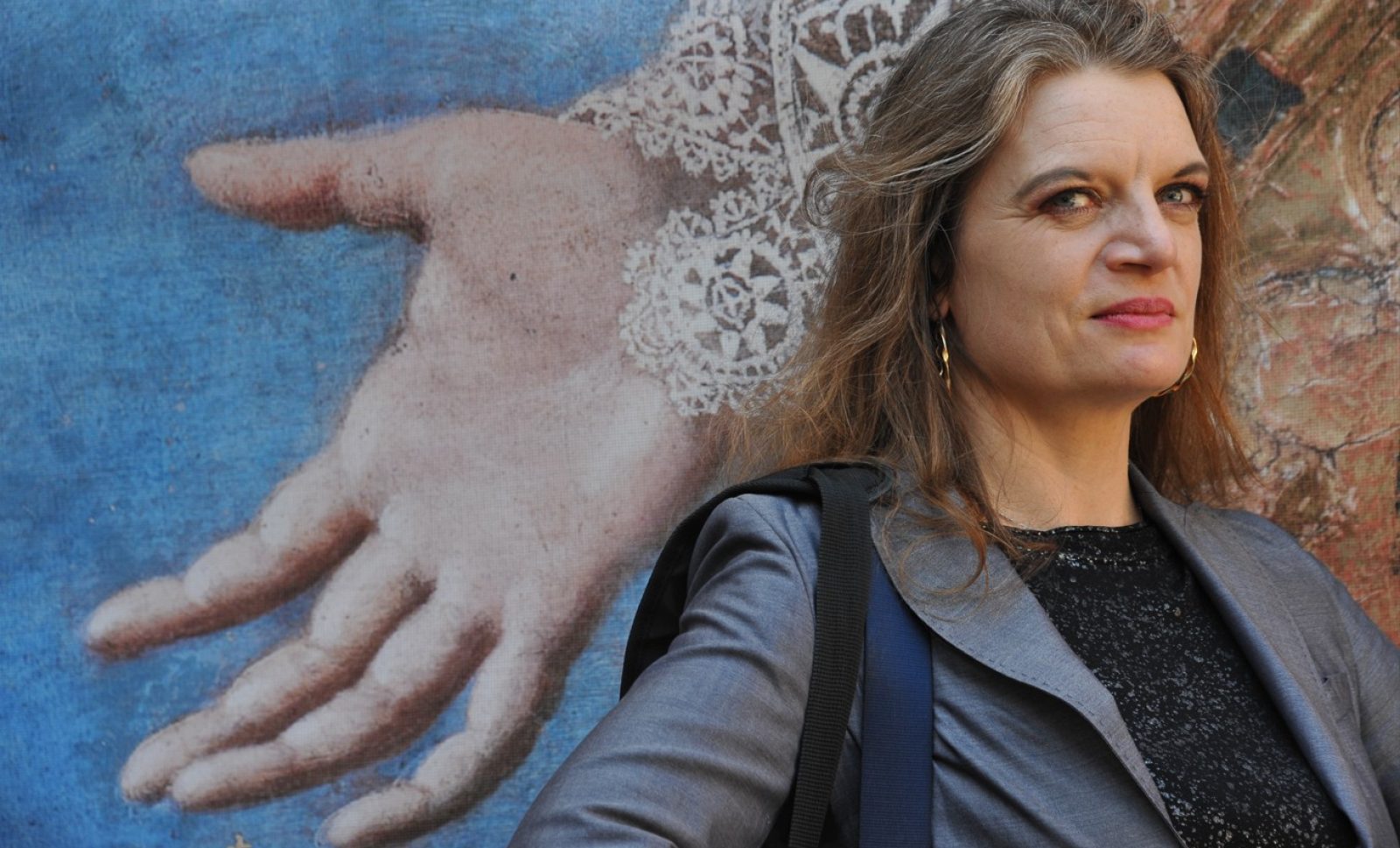
La moda italiana nel Cinquecento mostrata nei dipinti
La moda Italiana ha sempre avuto una marcia in più. Pensate che già nella prima metà del Cinquecento dettava legge e tutta Europa. Le corti di allora guardavano proprio all’Italia, imitando gli stili più all’avanguardia per tentare di rimanere al passo.
Ovviamente vi sto parlando del modo di vestire dei signori, di chi aveva parecchie palanche in tasca o depositate nei banchi. La gente comune e i poveracci avevano altro a cui pensare: era già complicato mettere assieme il pranzo con la cena.
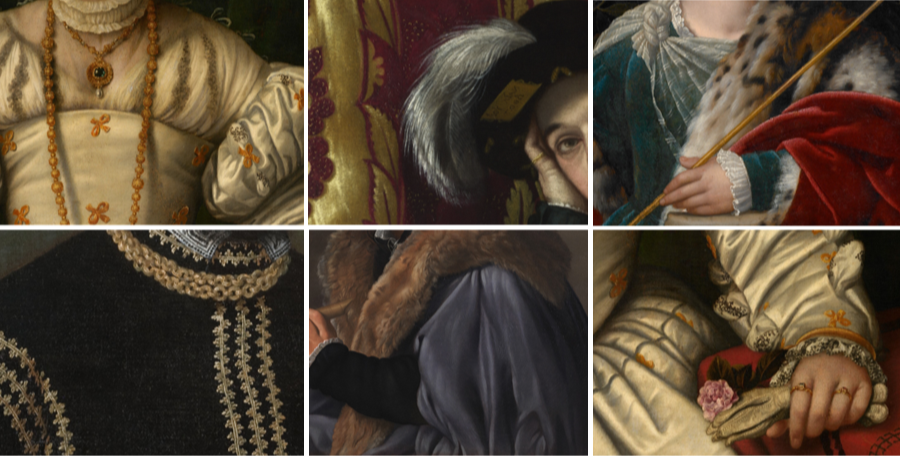
Si faceva largo impiego di bottoni gioiello, dei veri e propri capolavori a se stanti, ma anche la scelta di trame preziose era simbolo di status sociali molto elevati.
L’utilizzo di pellicce e piume poi arricchiva capi confezionati su misura con stoffe ricercatissime.
Non solo.
Le fogge degli abiti era diversa da luogo a luogo in Italia ma in comune avevano la ricchezza dei filati, l’aggiunta di perle a non finire fino ad arrivare agli estremi tipici dell’Inghilterra settecentesca dove vesti femminili e maschili venivano appesantite da filze infinite di perle.
Per sopperire alla mancanza di questi preziosi e abbassare anche il costo delle vesti già di per se molto esose, venivano realizzate perle in vetro: meno durevoli spesso ma anche con un costo minore rispetto a quelle prodotte dalle ostriche.
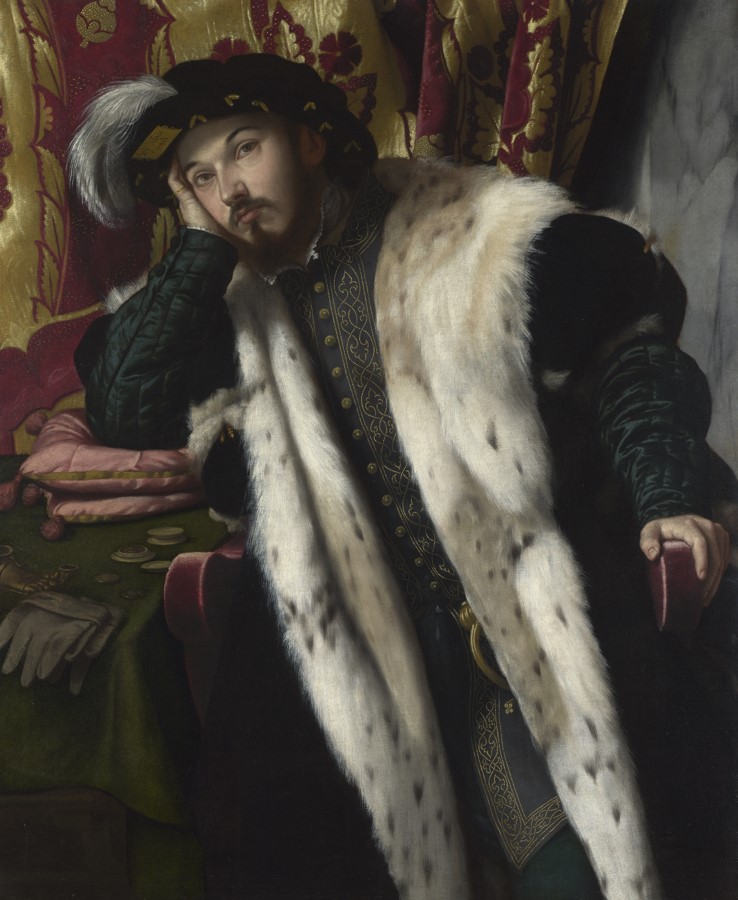
Fortunato Martinengo. 1540-1545 circa Olio su tela, 114 × 94,4 cm
Londra, National Gallery
I ritratti di Moretto (1496 circa – 1554), Romanino (1484/1487 – 1560) e Savoldo (1480/85 – post 1548), sono lo specchio della moda dell’epoca dettata dalle corti di Milano e Mantova, ma anche da città di grande prestigio come Brescia che, importante centro di approvvigionamento di tessuti, prosperava grazie a famiglie facoltose amanti del lusso e sicuramente in cerca di visibilità.

ph. Alberto Mancini
Già dalla fine del Quattrocento, la stravaganza delle fogge, i colori esclusivi e le preziose trame, i materiali ricercati, gli inserti in pelliccia, le collane e gli anelli, le piume e i ricami che rimandano a emblemi delle diverse case nobiliari, fecero dell’abbigliamento un fondamentale veicolo della propria immagine facendo sfoggio di ricchezza e potere.
Per gli uomini erano molto ricercati i pantaloni a sbuffo sulle cosce e aderenti sui polpacci, per mettere in evidenza la muscolatura ma anche per mostrare il ruolo che avevano nella società.

Ritratto di gentildonna come Salomè
1537 circa
Olio su tavola, 58,5 x 38 cm
Brescia, Pinacoteca Tosio Martinengo
Le donne erano solite indossare gonne molto lunghe e larghe, riccamente decorate che mettevano in evidenza la loro vita più sedentaria anche perché muoversi agevolmente con quegli abiti non era cosa semplice. Non per questo però avevano un ruolo meno importante nella società, soprattutto dal punto di vista intellettuale.
Per esempio, la coppia di sposi Girolamo Martinengo ed Eleonora Gonzaga dipinti da Moretto, mostrano al contempo raffinatezza e ostentazione. Si unirono in matrimonio il 4 febbraio 1543 con nozze fastose durate tre giorni con banchetti, cortei e spettacoli. In quell’occasione ci furono anche un gran numero di cambi d’abito con tanto di ricchissime gioie abbinate.

Dama in bianco
1540-1545 ca.
Olio su tela, 106,4 x 87,6 cm
Washington, National Gallery of Art
Ori e perle che potevano essere portate solo dalle donne sposate, arricchivano l’elaborata acconciatura di Eleonora.
L’abito in raso bianco e impunture dorate che indossa è evidente sia stato confezionato con tessuti sostenuti che parlano esplicitamente senza proferir parola della condizione di agiatezza della donna. Il consorte Girolamo, condottiero della Serenissima, si fa dipingere da Moretto con un abbigliamento nero con ricami dorati e copricapo completo di piuma.
Furono proprio quelli gli anni in cui il colore nero smise di essere considerato un colore negativo, del diavolo o dei popolani, ma divenne particolarmente ricercato tra le famiglie più danarose.
Ottenere tessuti neri era molto complesso e richiedeva una lunghissima lavorazione.
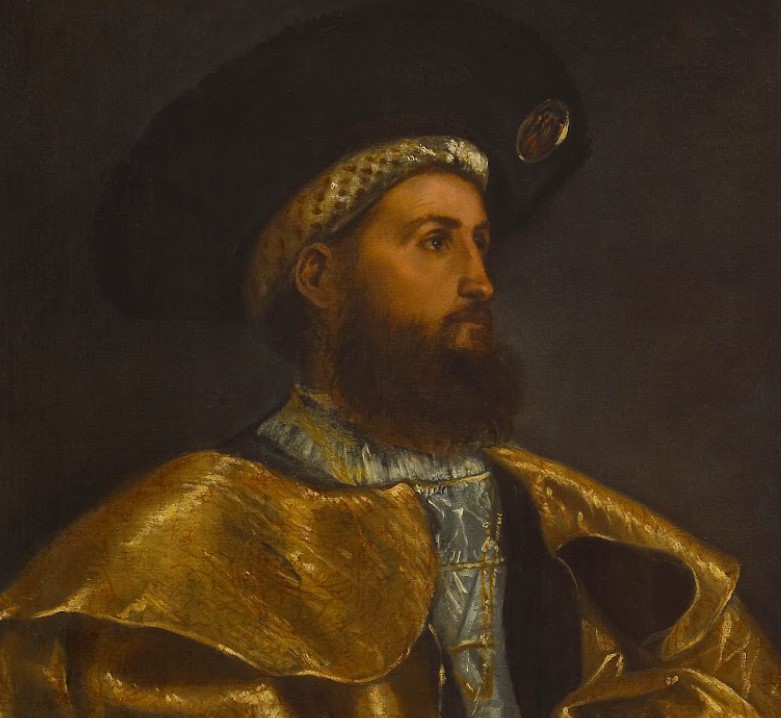
Ritratto di gentiluomo
1530-1540 circa
Olio su tela, 76 x 65 cm
Allentown, Allentown Art Museum
Tra le altre tendenze singolari di quei decenni del Cinquecento è l’utilizzo del farsetto, ovvero una giacchetta maschile imbottita e attillata confezionata su misura che metteva in evidenza l’anatomia del corpo per renderlo ancora più plastico.
E vogliamo parlare anche della moda del pene finto?
Ebbene si, nella parte anteriore dei pantaloni veniva applicato con stringhe o bottoni un sacchetto a forma ricurva riempito con carta o con tessuti per aumentare visivamente le dimensioni naturali del pene.
La mostra Il Rinascimento a Brescia, un progetto di Fondazione Brescia Musei e Comune di Brescia, co-prodotta da Skira, a cura di Roberta D’Adda, Filippo Piazza ed Enrico Valseriati, visitabile fino al 16 febbraio 2025 al Museo di Santa Giulia di Brescia, è una buona occasione per ammirare da vicino le fogge degli abiti del primo Cinquecento, scoprendo così abiti straordinari, acconciature inusuali ma anche tessuti ricercati, gioielli e accessori di voga all’epoca.
Per il momento il sempre vostro Michelangelo Buonarroti vi saluta dandovi appuntamento ai prossimi post e sui social.
Italian fashion in the 16th century told in paintings
Italian fashion has always had an edge. Just think that already in the first half of the 16th century it dictated the law and all of Europe looked to Italy, imitating the most avant-garde styles.
Obviously I’m talking about the way the lords dressed, those who had a lot of money in their pockets or deposited in the stalls. The common people and the poor had other things to think about: it was already complicated to put together lunch and dinner.
There was a wide use of jewel buttons, true masterpieces in themselves, but also the choice of precious textures was a symbol of very high social status. The use of furs and feathers then enriched tailor-made garments with very refined fabrics.
And not only that.
The styles of clothing were different from place to place in Italy but they had in common the richness of the yarns, the addition of endless pearls to the extremes typical of eighteenth-century England where women’s and men’s clothes were weighed down by endless strings of pearls. To make up for the lack of these precious items and also lower the cost of the already very expensive clothes, glass pearls were made: often less durable but also with a lower cost than those produced by oysters.
The exhibition The Renaissance in Brescia, a project of the Brescia Museums Foundation and the Municipality of Brescia, co-produced by Skira, curated by Roberta D’Adda, Filippo Piazza and Enrico Valseriati, open until February 16, 2025 at the Santa Giulia Museum in Brescia, is a good opportunity to admire the styles of clothing from the early sixteenth century up close, thus discovering extraordinary clothes, unusual hairstyles but also refined fabrics, jewelry and accessories in vogue at the time.
The portraits of Moretto (around 1496 – 1554), Romanino (1484/1487 – 1560) and Savoldo (1480/85 – post 1548), are the mirror of the fashion of the time dictated by the courts of Milan and Mantua, but also by cities of great prestige such as Brescia which, an important center for the supply of fabrics, prospered thanks to wealthy families who loved luxury and certainly sought visibility.
Already from the end of the fifteenth century, the extravagance of the styles, the exclusive colors and the precious textures, the refined materials, the fur inserts, the necklaces and rings, the feathers and the embroidery that recalled the emblems of the various noble houses, made clothing a fundamental vehicle of one’s image, showing off wealth and power.
For men, trousers with a puffed thigh and tight calves were very sought after, to highlight the muscles but also to show the role they had in society.
Women used to wear very long and wide skirts, richly decorated that highlighted their more sedentary lifestyle also because moving a lot with those clothes was not easy. However, this did not mean they had a less important role in society, especially from an intellectual point of view.
For example, the married couple Girolamo Martinengo and Eleonora Gonzaga painted by Moretto, show both refinement and ostentation. They were married on February 4, 1543 with a sumptuous wedding that lasted three days with banquets, processions and shows. On that occasion there were also a large number of changes of dress with very rich matching jewels.
Gold and pearls that could only be worn by married women, enriched Eleonora’s elaborate hairstyle. The white satin dress with gold stitching that she is wearing is evidently made with sturdy fabrics that speak explicitly without uttering a word of the woman’s wealthy condition. Consort Girolamo, leader of the Serenissima, is painted by Moretto wearing black clothing with gold embroidery and a headdress complete with feathers. Those were the years in which the color black stopped being considered a negative color, of the devil or of the common people, but became particularly sought after among the wealthiest families.
Obtaining black fabrics was very complex and required a very long process.
Among the other singular trends of those decades of the sixteenth century is the use of the doublet, that is, a padded and tight men’s jacket made to measure that highlighted the anatomy of the body to make it even more plastic.
And do we want to talk about the fashion of the fake penis? Well yes, a curved-shaped bag filled with paper or fabrics was applied to the front of the trousers with strings or buttons to visually increase the natural size of the penis.
The exhibition currently underway at the Santa Giulia Museum in Brescia is an opportunity to appreciate all these peculiarities with your own eyes, but also to clarify your ideas about how people lived in the 16th century, which saints they were devoted to, which books they read, what music they listened to, and to learn about other interesting curiosities.
“The Renaissance in Brescia. Moretto, Romanino, Savoldo. 1512-1552” will remain open to the public until February 16, 2025.
For the moment, yours truly, Michelangelo Buonarroti bids you farewell, making an appointment to see you in the next posts and on social media.

Sostienici – Support Us
Se questo blog ti piace e ti appassiona, puoi aiutarci a farlo crescere sempre più sostenendoci in modo concreto condividendo i post, seguendo le pagine social e con un contributo che ci aiuta ad andare avanti con il nostro lavoro di divulgazione. . ENGLISH: If you like and are passionate about this blog, you can help us make it grow more and more by supporting us in a concrete way by sharing posts, following social pages and with a contribution that helps us to move forward with our dissemination work.
10,00 €
-
La Deposizione del Pontormo: il capolavoro dell’artista
🇮🇹Ti coinvolge. Ti mette a disagio. Ti costringe a sentire. E’ la Deposizione dalla Croce, dipinta da Jacopo Pontormo tra il 1525 e il 1528 per la Cappella Capponi… 🇬🇧It draws you in. It makes you uncomfortable. It forces you to feel. It’s the Deposition from the Cross, painted by Jacopo Pontormo between 1525 and…
-
Non chiamatelo Braghettone: il 4 aprile del 1566 muore Daniele da Volterra, l’artista che salvò il Giudizio Universale
🇮🇹Braghettone? No, molto di più. Il 4 aprile 1566 moriva Daniele da Volterra, il mio allievo più fedele, l’uomo che mi rimase accanto fino all’ultimo respiro e che salvò il mio Giudizio Universale dalla distruzione… 🇬🇧Braghettone? No, much more. On April 4, 1566, Daniele da Volterra died, my most faithful student, the man who remained…
-
Venerdì Santo: gli “Ecce Homo” più intensi della storia dell’arte
🇮🇹Ecce Homo. Da Antonello da Messina a Tintoretto, fino al sorprendente capolavoro di Antonio Ciseri, questo soggetto ha attraversato i secoli raccontando dolore, umanità e coscienza… 🇬🇧Ecce Homo. From Antonello da Messina to Tintoretto, to Antonio Ciseri’s astonishing masterpiece, this subject has spanned the centuries, recounting pain, humanity, and conscience…
Condividi:


Questo sono io





sostienici

Sostienici – Support Us
Se questo blog ti piace e ti appassiona, puoi aiutarci a farlo crescere sempre più sostenendoci in modo concreto condividendo i post, seguendo le pagine social e con un contributo che ci aiuta ad andare avanti con il nostro lavoro di divulgazione. . ENGLISH: If you like and are passionate about this blog, you can help us make it grow more and more by supporting us in a concrete way by sharing posts, following social pages and with a contribution that helps us to move forward with our dissemination work.
€10,00


