
La Scultura del giorno: il Perseo di Canova
La scultura del giorno che voglio proporvi oggi è il Perseo di Canova che lo scultore volle raffigurare trionfante, con il braccio teso mentre mostra la testa di Medusa appena recisa.
Mettendo in mostra il suo corpo privo di vesti, com’era in uso nella scultura greca che celebrava gli eroi, Perseo stringe nell’altra mano la spada uncinata che gli era stata data da Ermete.
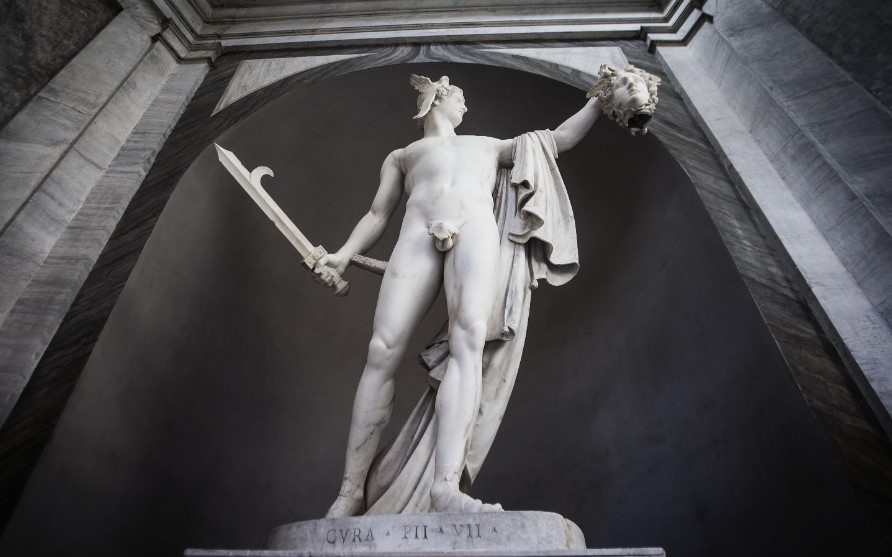
Sicuramente la posa dell’opera di Canova vi riporterà alla mente una scultura più antica che ha la medesima posa: l’Apollo del Belvedere. Non c’è dubbio che lo scultore abbia tratto ispirazione da quel capolavoro per da forma alla scultura iniziata a partire dal 1797.
Perseo fu commissionato all’artista dal tribuno francese Onorato Duveyriez ma però, quando fu ultimata nel 1801, fu papa Pio VII ad acquistarla per 2mila zecchini.

Il pontefice volle collocarla nei Musei Vaticani cercando di compensare le numerose perdite di opere d’arte che le truppe napoleoniche avevano portato in Francia, definite dallo storico Paul Wescher come “il più grande spostamento di opere d’arte della storia”.
Napoleone perpetrò vent’anni consecutivi di spoliazioni, dal 1797 fino al 1815. In questo lungo periodo di tempo il territorio italiano perse opere grandiose come giustappunto Apollo del Belvedere, il celeberrimo Laocoonte, la Venere Capitolina, capolavori di Tiziano, Guercino, Guido Reni, Hayez, Barocci, Veronese, Canova stesso e di tanti altri artisti.

Stando a quanto riportato nel catalogo pubblicato nel Bulletin de la Société de l’histoire de l’art français del 1936, solo per quanto riguarda i dipinti, ne furono portati in Francia 506 ma solo 249 ritornarono in Italia, 248 sono rimasti in Francia e 9 furono indicati come non rintracciabili.
In un primo momento il Perseo fu collocato sul basamento dell’Apollo del Belvedere che Napoleone aveva voluto far arrivare a Parigi. Oggi invece è collocato assieme ai Due Pugilatori, all’interno dei Musei Vaticani.

Esiste una seconda versione del Perseo, commissionata all’artista da Waleria Strynowska Tarnowska, una contessa polacca. Realizzata tra il 1804 e il 1806, è la scultura oggi custodita nel Metropolitan Museum di New York.
Il gesso originale invece è custodito nel Museo Gypsoteca Canova di Possagno.

Per il momento il sempre vostro Michelangelo Buonarroti vi saluta dandovi appuntamento ai prossimi post e sui social.
Sculpture of the day: Canova’s Perseus
The sculpture of the day that I want to propose to you today is Canova’s Perseus, which the sculptor wanted to depict triumphant, with his arm outstretched while showing the head of Medusa that had just been severed.
Showing off his body without clothes, as was customary in Greek sculpture that celebrated heroes, Perseus holds in his other hand the hooked sword that had been given to him by Hermes.
The pose of Canova’s work will certainly bring to mind an older sculpture that has the same pose: the Apollo Belvedere. There is no doubt that the sculptor drew inspiration from that masterpiece to shape the sculpture that he began in 1797.
Perseus was commissioned to the artist by the French tribune Onorato Duveyriez, but when it was completed in 1801, it was Pope Pius VII who purchased it for 2,000 sequins.
The pontiff wanted to place it in the Vatican Museums, trying to compensate for the numerous losses of works of art that Napoleon’s troops had brought to France, defined by the historian Paul Wescher as “the greatest movement of works of art in history”.
Napoleon perpetrated twenty consecutive years of plunder, from 1797 to 1815. In this long period of time, the Italian territory lost great works such as the Apollo Belvedere, the famous Laocoon, the Capitoline Venus, masterpieces by Titian, Guercino, Guido Reni, Hayez, Barocci, Veronese, Canova himself and many other artists.
According to the catalogue published in the Bulletin de la Société de l’histoire de l’art français in 1936, only 506 paintings were taken to France, but only 249 returned to Italy, 248 remained in France and 9 were reported as untraceable.
Initially, the Perseus was placed on the base of the Apollo Belvedere that Napoleon had wanted to bring to Paris. Today, however, it is placed together with the Two Boxers, inside the Vatican Museums.
There is a second version of the Perseus, commissioned from the artist by Waleria Strynowska Tarnowska, a Polish countess. Made between 1804 and 1806, it is the sculpture now kept in the Metropolitan Museum of New York.
The original plaster cast is kept in the Museo Gypsoteca Canova in Possagno.
For now, yours ever Michelangelo Buonarroti bids you farewell, making an appointment to see you in the next posts and on social media.

Sostienici – Support Us
Se questo blog ti piace e ti appassiona, puoi aiutarci a farlo crescere sempre più sostenendoci in modo concreto condividendo i post, seguendo le pagine social e con un contributo che ci aiuta ad andare avanti con il nostro lavoro di divulgazione. . ENGLISH: If you like and are passionate about this blog, you can help us make it grow more and more by supporting us in a concrete way by sharing posts, following social pages and with a contribution that helps us to move forward with our dissemination work.
10,00 €
-
Venerdì Santo: la Crocifissione secondo Tiepolo
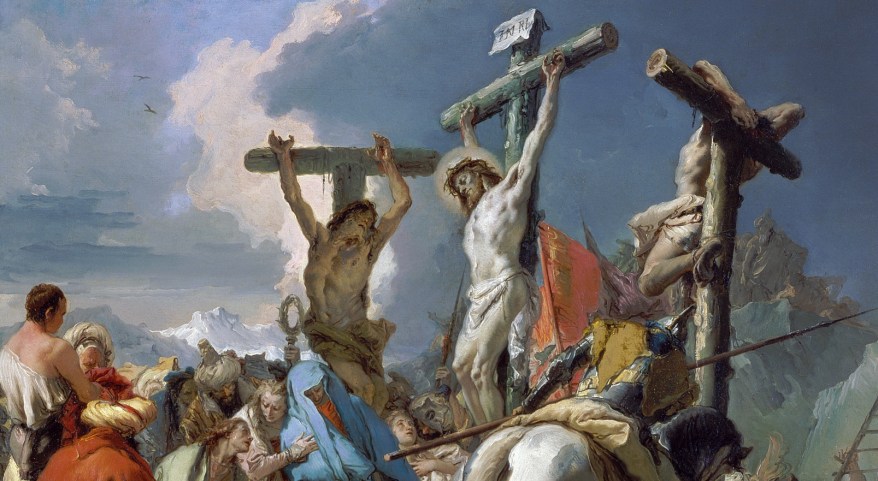
🇮🇹Nel giorno del Venerdì Santo, c’è un’opera che riesce ancora a scuotere lo sguardo. La Crocifissione di Giambattista Tiepolo non è come le altre: niente simmetrie perfette, niente distanza. Qui si entra dentro la scena, da un punto di vista obliquo, tra movimento, tensione e umanità… 🇬🇧On Good Friday, there’s a work that still manages…
-
Festival La Versiliana 2026: tra musica, teatro e grandi narrazioni
Dal 17 luglio al 23 agosto 2026, la pineta di Marina di Pietrasanta ospiterà la 47ª edizione del Festival La Versiliana. Una kermesse aperta a tutti nella quale linguaggi diversi dialogano tra loro in un equilibrio tra tradizione e contemporaneità.
-
Giovedì Santo: l’Ultima Cena di Allori che pochi conoscono a Firenze
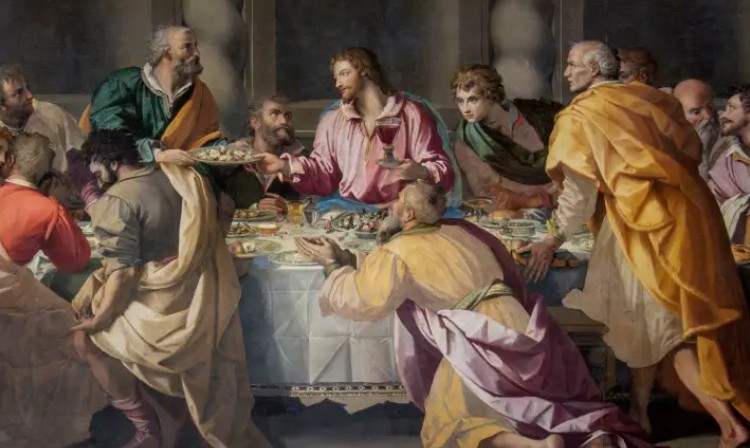
🇮🇹Nel cuore di Museo di Santa Maria Novella, a Firenze, si conserva una delle interpretazioni più affascinanti e meno note dell’Ultima Cena: quella realizzata da Alessandro Allori nel 1584… 🇬🇧In the heart of the Santa Maria Novella Museum in Florence, one of the most fascinating and least-known interpretations of the Last Supper is preserved: the…
Condividi:


Questo sono io





sostienici

Sostienici – Support Us
Se questo blog ti piace e ti appassiona, puoi aiutarci a farlo crescere sempre più sostenendoci in modo concreto condividendo i post, seguendo le pagine social e con un contributo che ci aiuta ad andare avanti con il nostro lavoro di divulgazione. . ENGLISH: If you like and are passionate about this blog, you can help us make it grow more and more by supporting us in a concrete way by sharing posts, following social pages and with a contribution that helps us to move forward with our dissemination work.
€10,00


