
Aman e quello scorcio sorprendente
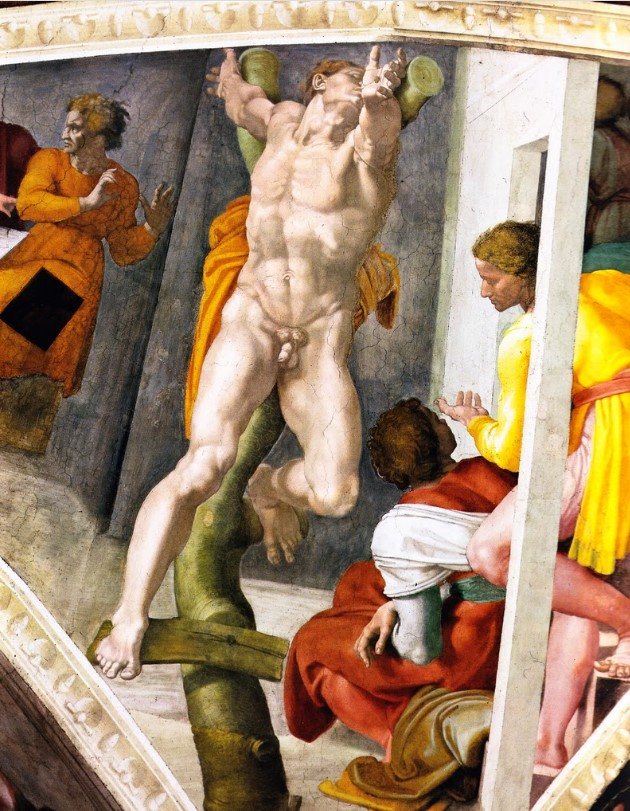
Tra gli scorci più sorprendenti che affrescai nella volta della Cappella Sistina, c’è quello di Aman.
Crocifisso su una croce a Y invece che impiccato come viene narrato nel Libro di Ester della Bibbia, posto in quella posizione ebbi modo di mostrare meglio il suo corpo.
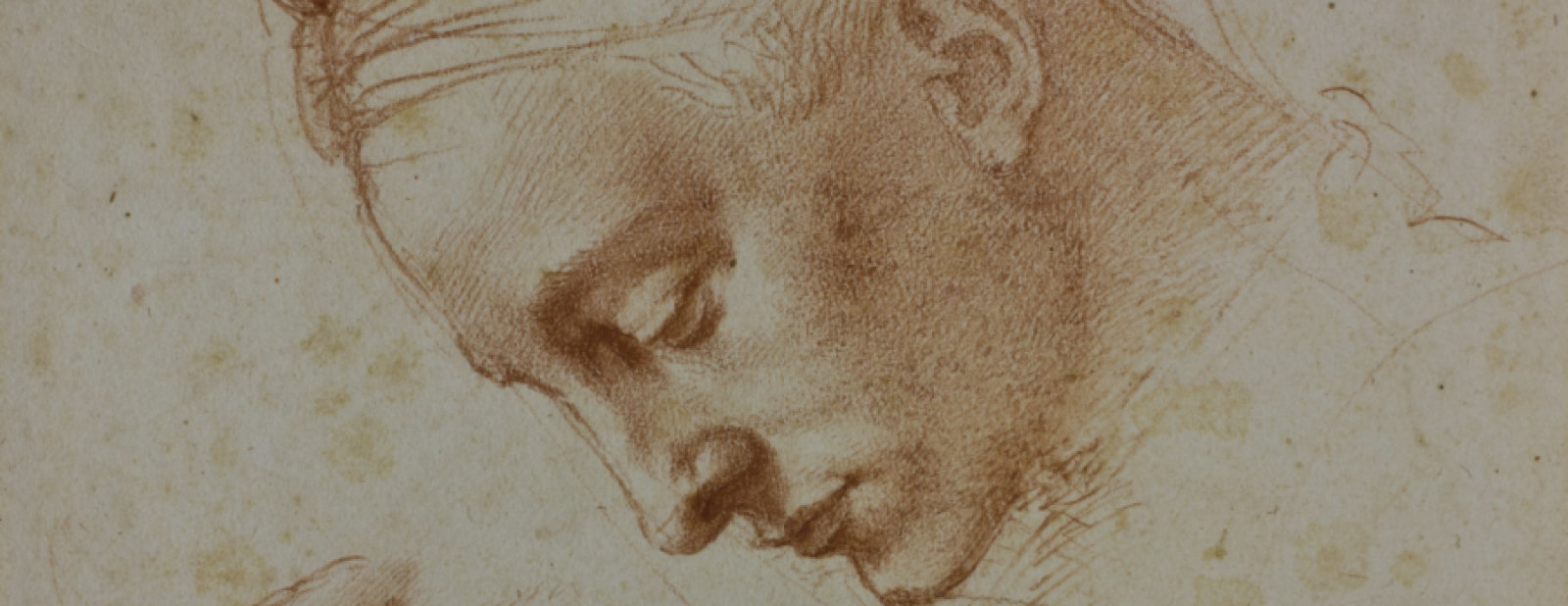
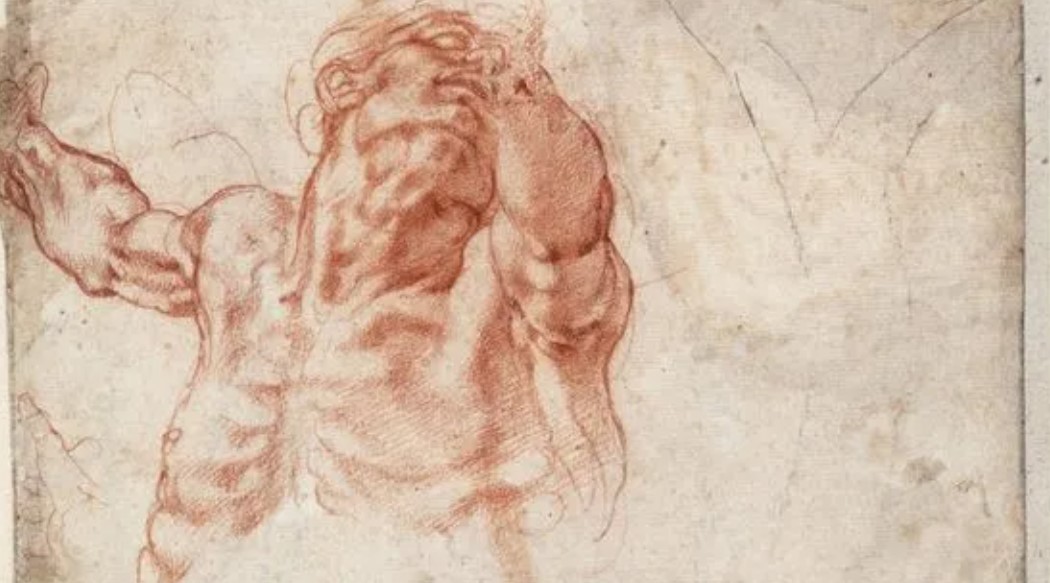
Vigorosa e potente, la muscolatura di Aman la studiai a lungo come a lungo studiai la sua posa per renderla il più realistica e impattante possibile.
Il re persiano Assuero lo aveva nominato Visir ma lui non si fece scrupoli e cercò di sterminare l’intero popolo ebraico. Il re, rendendosi conto di ciò che stava accadendo, lo uccise senza remore.
Crocifiggerlo nella volta invece che impiccarlo come viene narrato fu per me necessario per creare un parallelismo con la crocifissione di Cristo.
Quel vertiginoso scorcio prospettico mi consentì anche di dar forza a quel corpo che poco a poco stava morendo ma anche di incrementare la drammaticità di quel momento.
Aman incombe sulle teste dei fedeli che con il naso all’insù lo guardano da secoli e secoli.
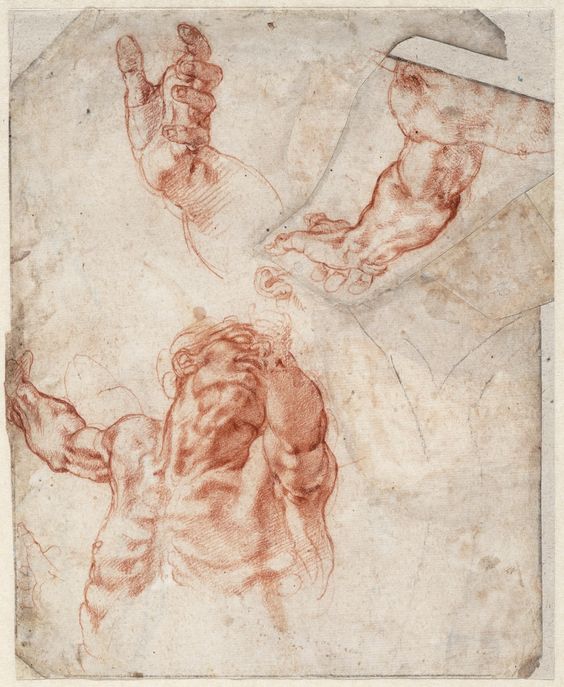
Nel disegno oggi appartenente al Teylers Museum di Haarlem potete osservare gli studi che feci di Aman e delle sue braccia viste di scorcio.
Per il momento il sempre vostro Michelangelo Buonarroti vi saluta dandovi appuntamento ai prossimi post e sui social.
Aman and that surprising glimpse
Among the most surprising glimpses that I frescoed in the vault of the Sistine Chapel, there is that of Aman.
Crucified on a Y-cross instead of hanged as narrated in the Book of Esther of the Bible, placed in that position I had the opportunity to show his body.
Vigorous and powerful, I studied Aman’s musculature for a long time as I studied his pose for a long time to make it as realistic and impactful as possible.
The Persian king Ahasuerus had appointed him vizier but he had no scruples and tried to exterminate the entire Jewish people. The king, realizing what was happening, killed him without hesitation.
Crucifying him in the vault instead of hanging him as narrated was necessary for me to create a parallel with the crucifixion of Christ.
That dizzying perspective view also allowed me to give strength to that body that was slowly dying but also to increase the drama of that moment.
Aman looms over the heads of the faithful who have been looking at him with their noses in the air for centuries and centuries.
In the drawing now belonging to the Teylers Museum in Haarlem you can see the studies I made of Aman and his arms seen from a foreshortened angle.
For the moment, your ever Michelangelo Buonarroti bids you farewell, making an appointment to see you in the next posts and on social media.

Sostienici – Support Us
Se questo blog ti piace e ti appassiona, puoi aiutarci a farlo crescere sempre più sostenendoci in modo concreto condividendo i post, seguendo le pagine social e con un contributo che ci aiuta ad andare avanti con il nostro lavoro di divulgazione. . ENGLISH: If you like and are passionate about this blog, you can help us make it grow more and more by supporting us in a concrete way by sharing posts, following social pages and with a contribution that helps us to move forward with our dissemination work.
10,00 €
-

Cesare Lapini, Psiche e il vaso che non doveva aprire
🇮🇹Vi racconto Psiche di Cesare Lapini, raffinata scultura in marmo del 1885: il mito del vaso proibito, Amore, Venere e la curiosità di Psiche… 🇬🇧Let me tell you about *Psyche* by Cesare Lapini, an exquisite marble sculpture from 1885: the myth of the forbidden vessel, Cupid, Venus, and Psyche’s curiosity…
-

Cappella Bardi: Giotto la affrescò aggiungendo tanti ritocchi a secco
🇮🇹Dopo quattro anni di restauro, le Storie di San Francesco di Giotto nella Cappella Bardi di Santa Croce tornano leggibili con nuove scoperte… 🇮🇹 After four years of restoration, Giotto’s *Stories of Saint Francis* in the Bardi Chapel of Santa Croce are once again legible, revealing new discoveries…
-

Firenze, restaurati i bronzi di Ferdinando I e Cosimo II della Cappella dei Principi
🇮🇹Nella Cappella dei Principi del Museo delle Cappelle Medicee di Firenze si sono conclusi gli interventi di conservazione sui monumentali bronzi dorati realizzati da Pietro Tacca e Ferdinando Tacca. Restaurati anche i reliquiari della Cripta Medicea, ora presentati in un nuovo allestimento… 🇬🇧Conservation work on the monumental gilded bronzes created by Pietro Tacca and Ferdinando…
Condividi:


Questo sono io




sostienici

Sostienici – Support Us
Se questo blog ti piace e ti appassiona, puoi aiutarci a farlo crescere sempre più sostenendoci in modo concreto condividendo i post, seguendo le pagine social e con un contributo che ci aiuta ad andare avanti con il nostro lavoro di divulgazione. . ENGLISH: If you like and are passionate about this blog, you can help us make it grow more and more by supporting us in a concrete way by sharing posts, following social pages and with a contribution that helps us to move forward with our dissemination work.
€10,00


Ciao, innanzitutto complimenti per il blog! Ho trovato questo articolo molto interessante e pieno di spunti di riflessione. Grazie per aver condiviso queste informazioni!
"Mi piace"Piace a 1 persona
Grazie di cuore, un abbraccio
"Mi piace""Mi piace"