
Il magnifico arazzo Millefiori, noto anche come arazzo dell’Adorazione
Nei Musei Civici di Pistoia è custodito un autentico capolavoro, proveniente dalle Fiandre. E’ l’arazzo Millefiori, noto anche come arazzo dell’Adorazione che fu realizzato tra il 1530 e il 1535 nella cittadina di Enghien.
Largo 7,90 metri e altro 2,70, ha un ordito a due capi e una trama realizzata in lana tinta con numerose sfumature e seta grezza.
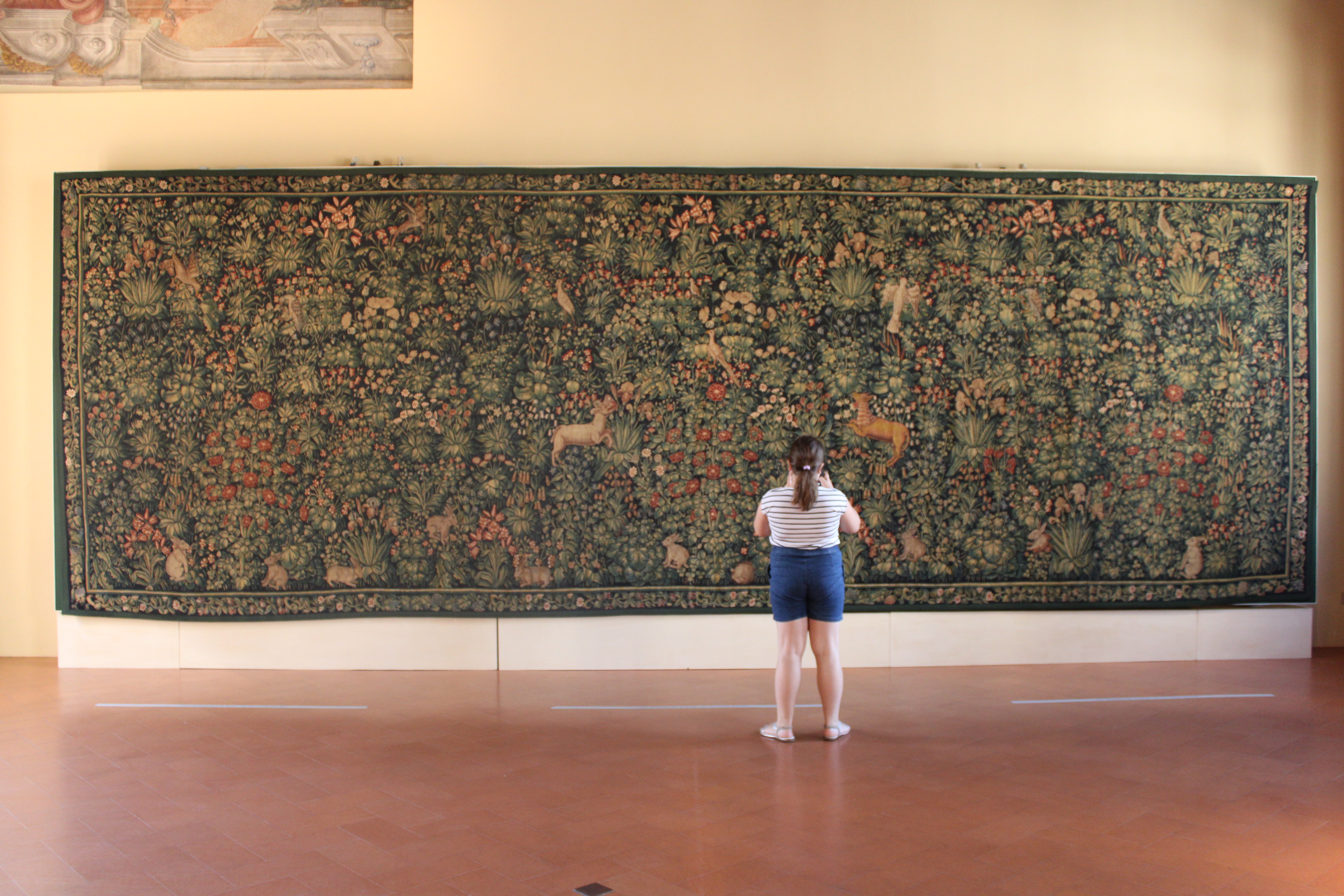
Il grande arazzo è noto per l’intricata decorazione che propone piante e fiori, intervallata da animali a quattro zampe e volatili, tessuti con una resa particolarmente naturalistica.
Nonostante tutte le indagini che sono state fatte nel corso degli anni, ancora oggi non è chiara quale fosse la collocazione originaria di questo capolavoro e da chi fu commissionato.
Il fondo dell’arazzo è di un bel blu scuro sul quale si nota la presenza di un gran numero di specie vegetali, probabilmente allusive al Paradiso Terrestre o chissà, forse al Giardino Celeste.

In questo contesto si muovono indisturbati lepri che entrano ed escono dalle tane, un unicorno simbolo sia cristologico che di castità, un falco che abitualmente nell’iconologia viene associato alla nobiltà e un airone, allegoria della lealtà e della vigilanza.
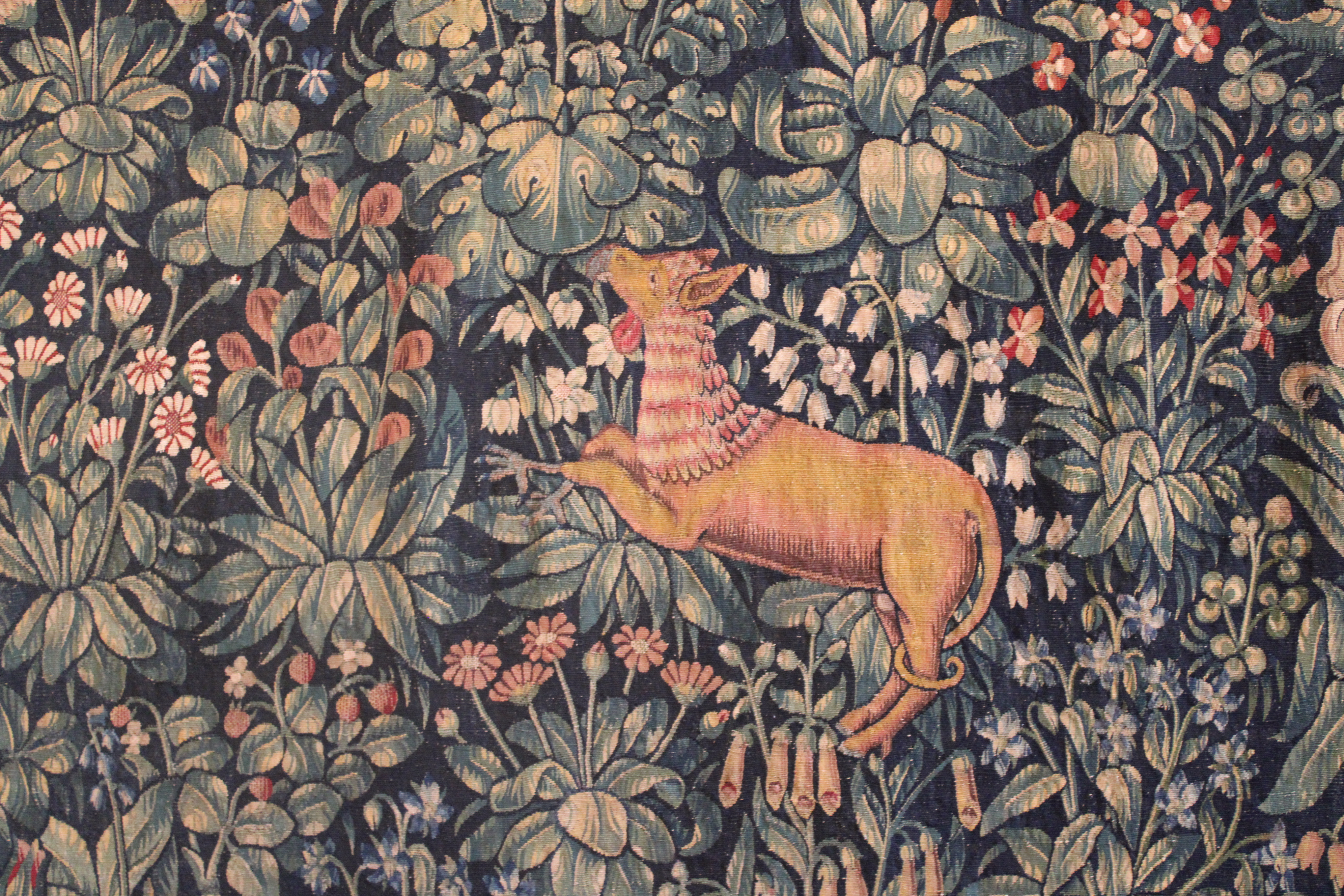
Aguzzando la vista si vede anche un cane riconducibile alla fedeltà ma anche all’intelligenza e alla devozione e una iena, allegoria dell’infedeltà.
Gli altri volatili riprodotti nella parte più alta dell’arazzo sono forse le anime dei Santi. E’ certo che ogni pianta e ogni animale sull’arazzo risponda a una precisa allegoria ma tuttavia rimane un’opera enigmatica e difficile da interpretare.
Non è difficile notare come i tre cespugli di rosa canina spartiscano l’opera in sezioni diverse e come compaiano regolarmente in alto dei gigli, fiore attribuito spesso alla Vergine.

L’inusuale creatività compositiva così come la non casuale scelta cromatica della trama e dell’ordito appartenente al Duomo di Pistoia e in questo periodo esposto ai Musei Civici della città rende ancor più raro il manufatto.
Un tempo veniva esposto solo durante i riti della Settimana Santa, ecco perché oggi è noto anche come ‘L’arazzo dell’Adorazione’.
Per il momento il sempre vostro Michelangelo Buonarroti vi saluta dandovi appuntamento ai prossimi post e sui social.
© Riproduzione riservata
The magnificent Millefiori tapestry, also known as the Adoration tapestry
The Civic Museums of Pistoia house an authentic masterpiece from Flanders. It is the Millefiori tapestry, also known as the Adoration tapestry, which was made between 1530 and 1535 in the town of Enghien.
7.90 meters wide and 2.70 meters high, it has a two-ply warp and a weft made of wool dyed with numerous shades and raw silk.
The large tapestry is known for its complex decoration that offers an intricate decoration of plants and flowers interspersed with four-legged animals and birds that have a very naturalistic rendering.
Despite all the investigations that have been carried out over the years, it is still not clear today what the original location of this masterpiece was and who commissioned it.
The background of the tapestry is a dark blue on which we can see the presence of a large number of plant species, probably alluding to the Earthly Paradise or, who knows, perhaps to the Heavenly Garden.
In this context, hares move undisturbed, entering and exiting their burrows, a unicorn, a symbol of both Christology and chastity, a hawk that in iconology is usually associated with nobility and a heron, an allegory of loyalty and vigilance.
If you look closely, you can also see a dog, which can be traced back to loyalty but also to intelligence and devotion, and a hyena, an allegory of infidelity.
The other birds reproduced in the highest part of the tapestry are perhaps the souls of the Saints. It is certain that each plant and each animal on the tapestry corresponds to a specific allegory, but nevertheless it remains an enigmatic work and difficult to interpret.
It is not difficult to notice how the three dog rose bushes divide the work into different sections and how lilies regularly appear at the top, a flower often attributed to the Virgin.
The unusual compositional creativity as well as the non-random chromatic choice of the weft and warp belonging to the Cathedral of Pistoia and currently exhibited at the Civic Museums of the city makes the artifact even rarer.
It was once exhibited only during the rites of Holy Week, which is why today it is also known as the ‘Tapestry of Adoration’.
For the moment, your ever Michelangelo Buonarroti bids you farewell, making an appointment with you in the next posts and on social media.
© All rights reserved

Sostienici – Support Us
Se questo blog ti piace e ti appassiona, puoi aiutarci a farlo crescere sempre più sostenendoci in modo concreto condividendo i post, seguendo le pagine social e con un contributo che ci aiuta ad andare avanti con il nostro lavoro di divulgazione. . ENGLISH: If you like and are passionate about this blog, you can help us make it grow more and more by supporting us in a concrete way by sharing posts, following social pages and with a contribution that helps us to move forward with our dissemination work.
10,00 €
-
La Pietà di Tincolini: a Pontedera l’arte torna a fare domande scomode
🇮🇹“Pietà”, la scultura di Filippo Tincolini, insieme alle parole di Federico Quaranta e Andrea Pezzi, non è stato solo uno spettacolo. È stata una domanda lanciata in faccia al pubblico, impossibile da evitare: siamo ancora capaci di provare pietà? 🇬🇧 “Pietà,” Filippo Tincolini’s sculpture, along with the words of Federico Quaranta and Andrea Pezzi, wasn’t…
-
Ai Musei Vaticani i fasti barocchi di Urbano VIII: in mostra gli arazzi della manifattura Barberini
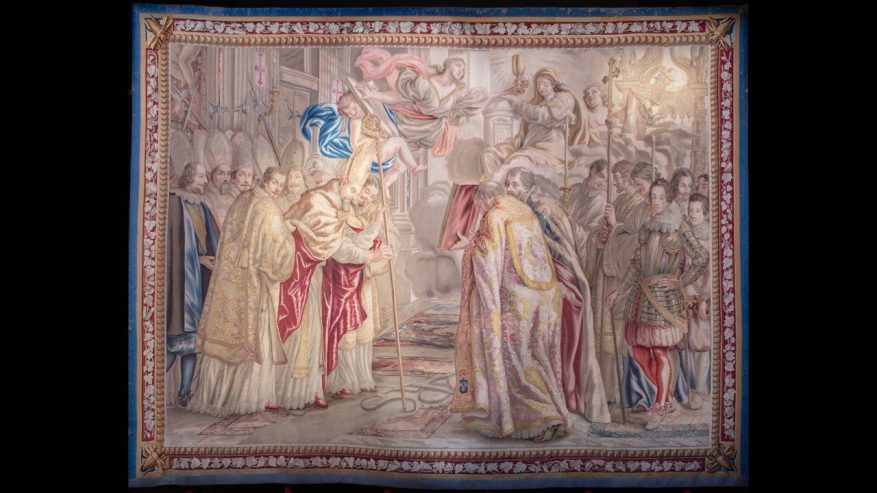
🇮🇹A quattro secoli dalla consacrazione della Basilica di San Pietro, i Musei Vaticani dedicano una mostra all’Arazzeria Barberini, simbolo di una cultura visiva capace di fondere magnificenza estetica e affermazione politica… 🇬🇧Four centuries after the consecration of St. Peter’s Basilica, the Vatican Museums are dedicating an exhibition to the Barberini Tapestry Factory, a symbol of…
-
Le Opere della Pasqua: come la Resurrezione ha ispirato Arte e Cultura
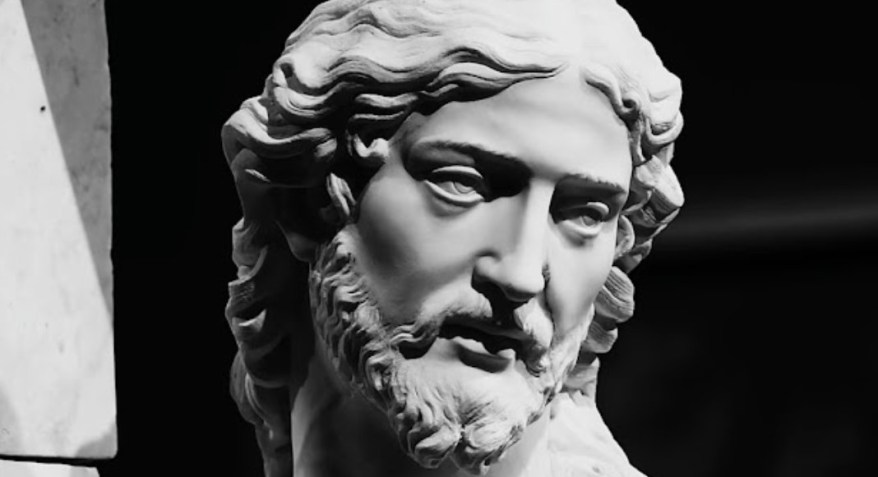
🇮🇹La Pasqua, oltre ad essere una ricorrenza religiosa è un momento in cui la storia, l’arte e la spiritualità si intrecciano per raccontare il fulcro della fede cristiana: la resurrezione di Cristo. .. 🇬🇧Easter, beyond being a religious holiday, is a moment when history, art, and spirituality intertwine to recount the core of the Christian…
Condividi:


Questo sono io





sostienici

Sostienici – Support Us
Se questo blog ti piace e ti appassiona, puoi aiutarci a farlo crescere sempre più sostenendoci in modo concreto condividendo i post, seguendo le pagine social e con un contributo che ci aiuta ad andare avanti con il nostro lavoro di divulgazione. . ENGLISH: If you like and are passionate about this blog, you can help us make it grow more and more by supporting us in a concrete way by sharing posts, following social pages and with a contribution that helps us to move forward with our dissemination work.
€10,00


