
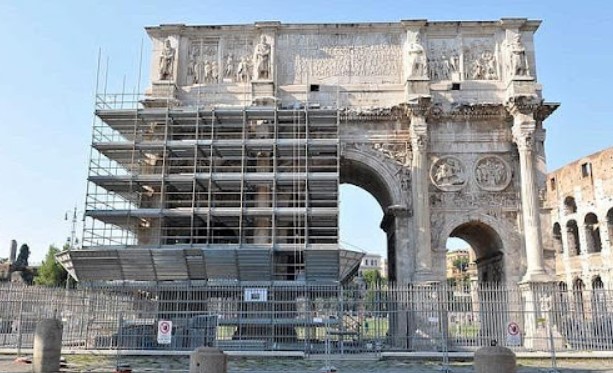
Arco di Costantino: danneggiato da un fulmine
Durante il nubifragio che nella giornata di ieri ha interessato il centro di Roma, l’antico Arco di Costantino è stato colpito da un fulmine riportando danneggiamenti.
Il Parco Archeologico del Colosseo precisa in una nota che l’intervento di recupero dei frammenti staccati dall’opera sono stati prontamente recuperati dai tecnici.

I funzionari infatti sono arrivati sul posto poco dopo per mettere in sicurezza le schegge cadute a terra e al momento si sta valutando l’entità del danno.
Solo tre giorni fa ha avuto inizio il cantiere di restauro dell’Arco di Costantino che interessa il fronte Sud per la manutenzione programmata.
L’Arco di Costantino è uno dei monumenti iconici di Roma che testimonia la grandezza dell’Impero Romano e la sua evoluzione. Situato a breve distanza dal Colosseo, lungo l’antica via dei trionfi, l’arco trionfale celebra la vittoria di Costantino I su Massenzio nella battaglia di Ponte Milvio del 28 ottobre 312.

L’arco ha un’altezza di 21 metri ed è largo 28 ed è ricco di rilievo che raccontano le vicende dell’imperatore Costantino.
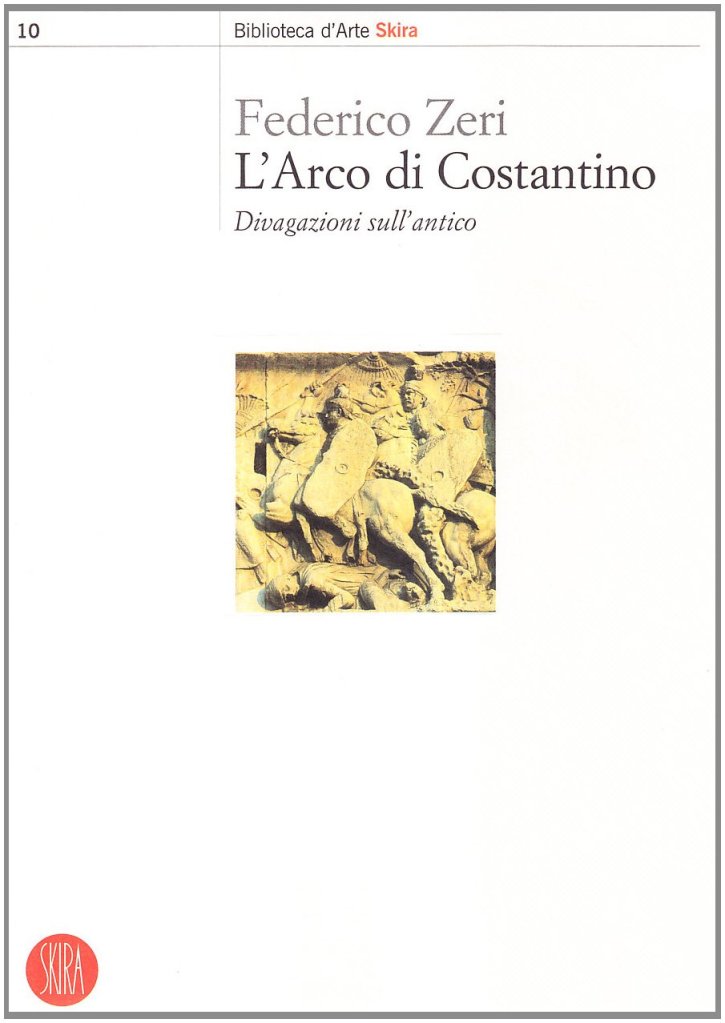
La sua costruzione, avvenuta nel 315 d.C., è un palese esempio di quello che considero come riciclo romano. I marmi dell’opera derivano dal disfacimento di monumenti più antichi, come quelli di Traiano, Adriano e Marco Aurelio.
Non bisogna dimenticare che l’Arco di Costantino non è solo un monumento celebrativo, ma anche un potente strumento di propaganda. Le sculture e i rilievi raffigurano scene di battaglia, trionfi imperiali e divinità, esaltano la figura di Costantino come un imperatore vittorioso e divinizzato. Questo messaggio ideologico mirava a legittimare il nuovo ordine politico instaurato da Costantino e a consolidarne il potere.
Per il momento il sempre vostro Michelangelo Buonarroti vi saluta dandovi appuntamento ai prossimi post e sui social.
© Riproduzione riservata

Arch of Constantine: damaged by lightning
During the storm that hit the center of Rome yesterday, the ancient Arch of Constantine was struck by lightning, causing damage.
In a note, the Colosseum Archaeological Park specifies that the recovery intervention of the fragments that broke away from the work were promptly recovered by technicians.
In fact, officials arrived on site shortly after to secure the splinters that fell to the ground and the extent of the damage is currently being assessed.
Only three days ago, the restoration work on the Arch of Constantine began, involving the southern front for scheduled maintenance.
The Arch of Constantine is one of the iconic monuments of Rome that bears witness to the greatness of the Roman Empire and its evolution. Located a short distance from the Colosseum, along the ancient Via dei Trionfi, the triumphal arch celebrates the victory of Constantine I over Maxentius in the Battle of Ponte Milvio on 28 October 312.
The arch is 21 metres high and 28 metres wide and is full of reliefs that tell the story of the Emperor Constantine. Its construction, which took place in 315 AD, is a clear example of what I consider Roman recycling. The marbles of the work derive from the disintegration of older monuments, such as those of Trajan, Hadrian and Marcus Aurelius.
It should not be forgotten that the Arch of Constantine is not only a celebratory monument, but also a powerful propaganda tool. The sculptures and reliefs depict battle scenes, imperial triumphs and divinities, exalting the figure of Constantine as a victorious and deified emperor. This ideological message aimed to legitimize the new political order established by Constantine and to consolidate his power.
For the moment, yours ever Michelangelo Buonarroti bids you farewell and invites you to the next posts and on social media.
© Reproduction reserved

Sostienici – Support Us
Se questo blog ti piace e ti appassiona, puoi aiutarci a farlo crescere sempre più sostenendoci in modo concreto condividendo i post, seguendo le pagine social e con un contributo che ci aiuta ad andare avanti con il nostro lavoro di divulgazione. . ENGLISH: If you like and are passionate about this blog, you can help us make it grow more and more by supporting us in a concrete way by sharing posts, following social pages and with a contribution that helps us to move forward with our dissemination work.
10,00 €
-
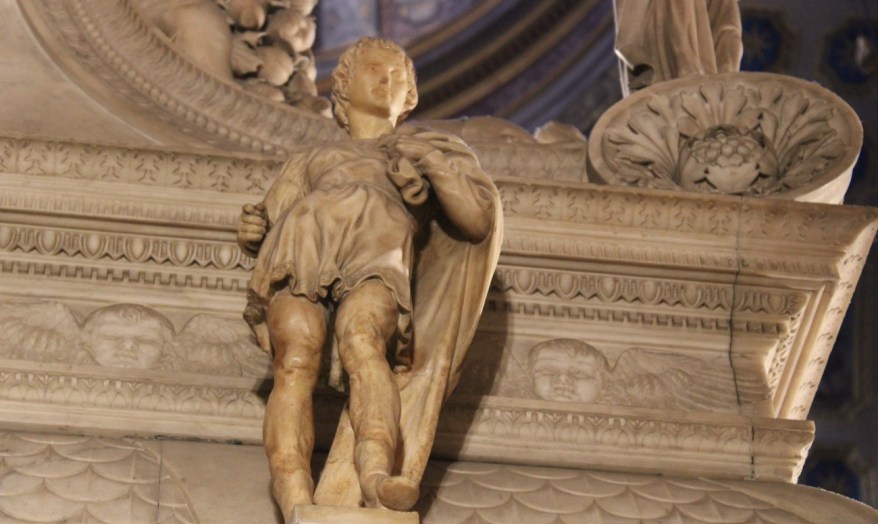
Il mio primo soggiorno a Bologna e l’incontro con Giovan Francesco Aldrovandi
🇮🇹Fuggii da Firenze a soli 19 anni. Senza certezze, senza protezioni. Solo con il mio talento. A Bologna trovai rifugio nella casa di Giovan Francesco Aldrovandi… 🇬🇧I fled Florence at just 19. Without certainties, without protection. Only with my talent. In Bologna, I found refuge in the home of Giovan Francesco Aldrovandi…
-
11 aprile 1514: muore Donato Bramante, il genio della scala elicoidale
🇮🇹Era l’11 aprile 1514 quando Donato Bramante morì a Roma. La sua scomparsa non cancellò però le tensioni, le rivalità e i giudizi contrastanti che avevano accompagnato tutta la sua carriera… 🇬🇧It was April 11, 1514, when Donato Bramante died in Rome. His passing, however, did not erase the tensions, rivalries, and conflicting opinions that…
-
Dentro l’hangar 12 del Carnevale di Viareggio: dove la cartapesta prende vita con Marzia Etna
🇮🇹Ho incontrato Marzia Etna, maestra carrista da 40 anni: mentre racconta, le brillano gli occhi. E capisci subito una cosa: questo non è solo un lavoro, è vita tra carta a calco, ferro e sogni… 🇬🇧I met Marzia Etna, a master float builder for 40 years: her eyes sparkle as she talks. And you immediately…
Condividi:


Questo sono io





sostienici

Sostienici – Support Us
Se questo blog ti piace e ti appassiona, puoi aiutarci a farlo crescere sempre più sostenendoci in modo concreto condividendo i post, seguendo le pagine social e con un contributo che ci aiuta ad andare avanti con il nostro lavoro di divulgazione. . ENGLISH: If you like and are passionate about this blog, you can help us make it grow more and more by supporting us in a concrete way by sharing posts, following social pages and with a contribution that helps us to move forward with our dissemination work.
€10,00


