

Gli Egizi e i Doni del Nilo: ecco com’è la mostra a Forte dei Marmi
Questa mattina me ne sono andato a visitare la mostra in corso al Fortino Leopoldo I di Forte dei Marmi ‘Gli Egizi e i Doni del Nilo, organizzata dal Museo Egizio di Torino in collaborazione con Villa Bertelli.
L’esposizione consente di apprezzare a tutto tondo 24 reperti provenienti direttamente dal Museo Egizio di Torino e di fare un viaggio appassionante nell’Antico Egitto. Una mostra capace di affascinare gli adulti e calamitare l’attenzione dei più piccoli.

Nella prima sala ci si trova faccia a faccia con un tipico modellino di imbarcazione dei corredi funerari del Primo Periodo Intermedio (2118 – 1980 a.C.)realizzato in legno prima stuccato e poi dipinto.
Sull’imbarcazione si nota la decorazione con la coppia di occhi udjat a protezione dello scafo. Questa tipologia di natanti solitamente raffiguravano il viaggio del defunto verso la città sacra di Abido.

Nella seconda sala si possono apprezzare i quattro vasi canopi di Ptahhotep in alabastro del Terzo Periodo Intermedio (1076-943 a.C.) provenienti da Saqqara. Si tratta di un set completo di vasi che conteneva le viscere del defunto, per l’occasione prestato dalla Galleria della Cultura materiale del Museo Egizio di Torino.
I coperchi sono scolpiti con le teste dei figli di Horus e avevano la funzione di proteggere il contenuto. Nello specifico nelle teste sono identificabili la testa umana di Amset a testa umana, Hapi con il capo di falco, Duamutef a testa di babbuino e Qebehsenuef che mostra la testa di sciacallo.

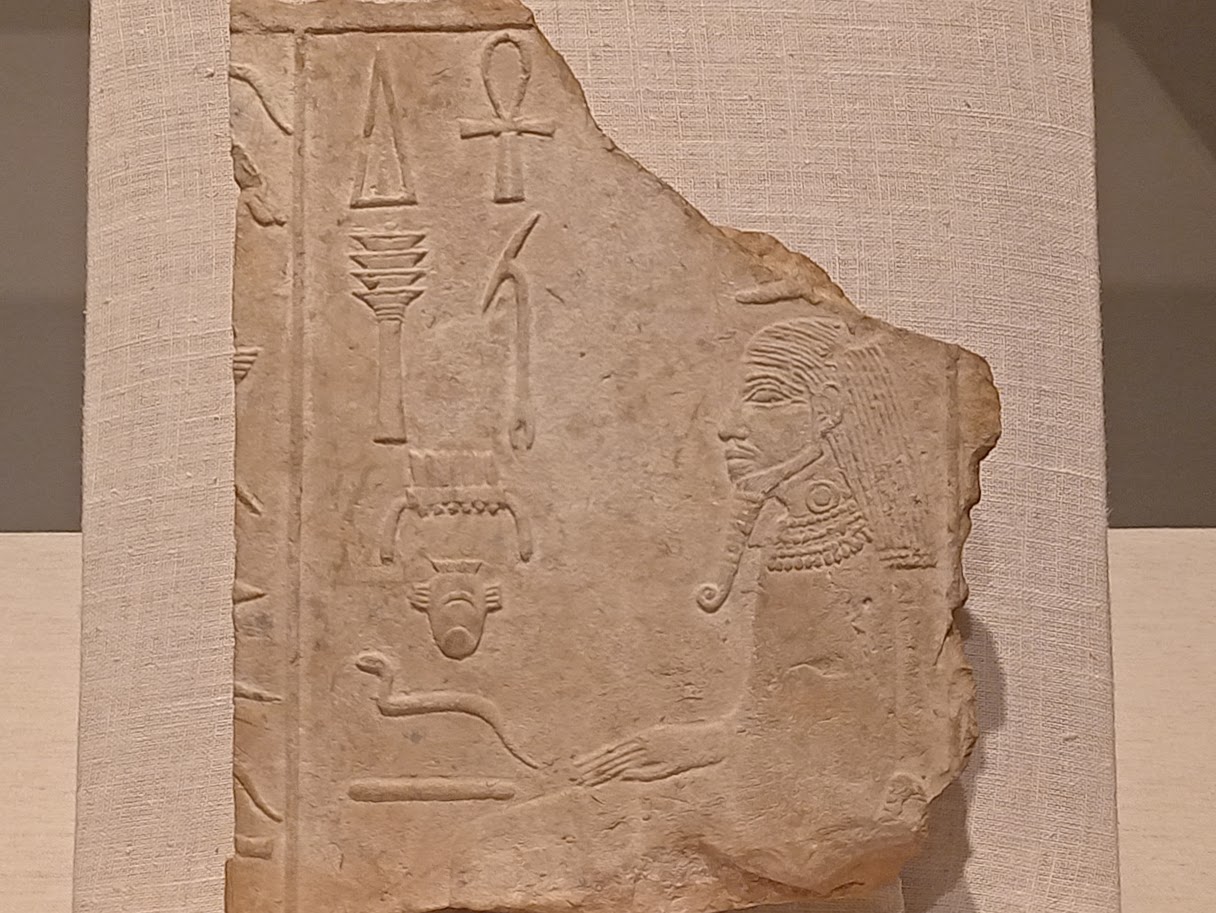
Di particolare interesse è anche il frammento di un edificio cultuale del re Djoser con iscrizioni geroglifiche in calcare, della III dinastia dell’Antico Regno, datato tra il 2650 e il 2580 a.C.
Fu rinvenuto nell’area del tempio a Eliopoli e cossente di riconoscere sulla destra il sovrano Djoser seduto in trono, con tanto di parrucca, collare usekh e barba finta. Dinanzi a lui è apprezzabile una colonna di testo
geroglifico che recita così: “Dotato di vita, stabilità, potere e gioia per sempre”.
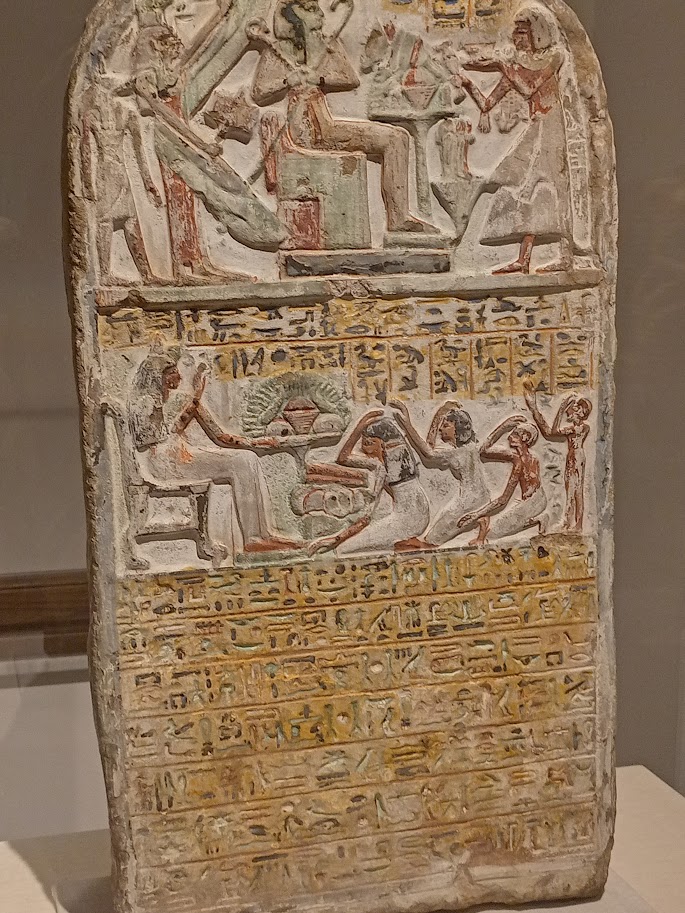
Nella Stele funeraria di Nya in calcare e stucco dipinta del Nuovo Regno si vede il defunto Nya in adorazione delle divinità Osiride, Nefertiti e Anubi.
Nell’ultimo registro in basso invece è scritta con i geroglifici una lunga formula di offerta.
Interessanti i quattro amuleti che raffigurano il bambino reale in oro del Nuovo Regno, l’ippopotamo in calcedonio dell’Epoca Tarda, l’entità ibrida in lapislazzuli di Epoca Tarda e Bes in pietra ollare sempre di Epoca Tarda.

Gli amuleti, di dimensioni ridotte, erano considerati oggetti magici e potevano raffigurare diversi soggetti.
Stupisce la raffinatezza dei loro dettagli che mostra la straordinaria abilità che gli egizi avevano raggiunto nella lavorazione dei differenti materiali.
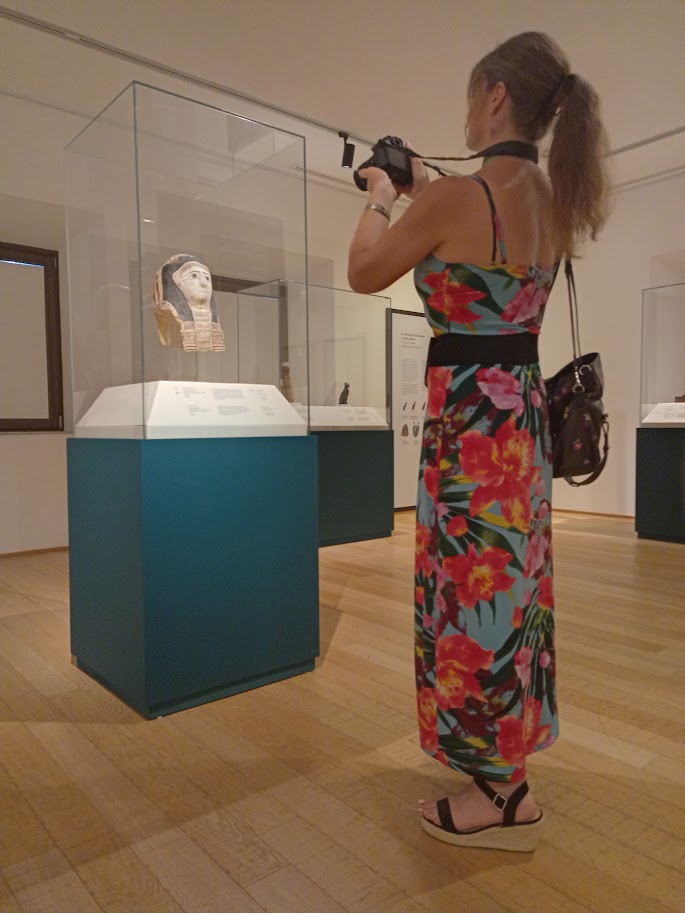
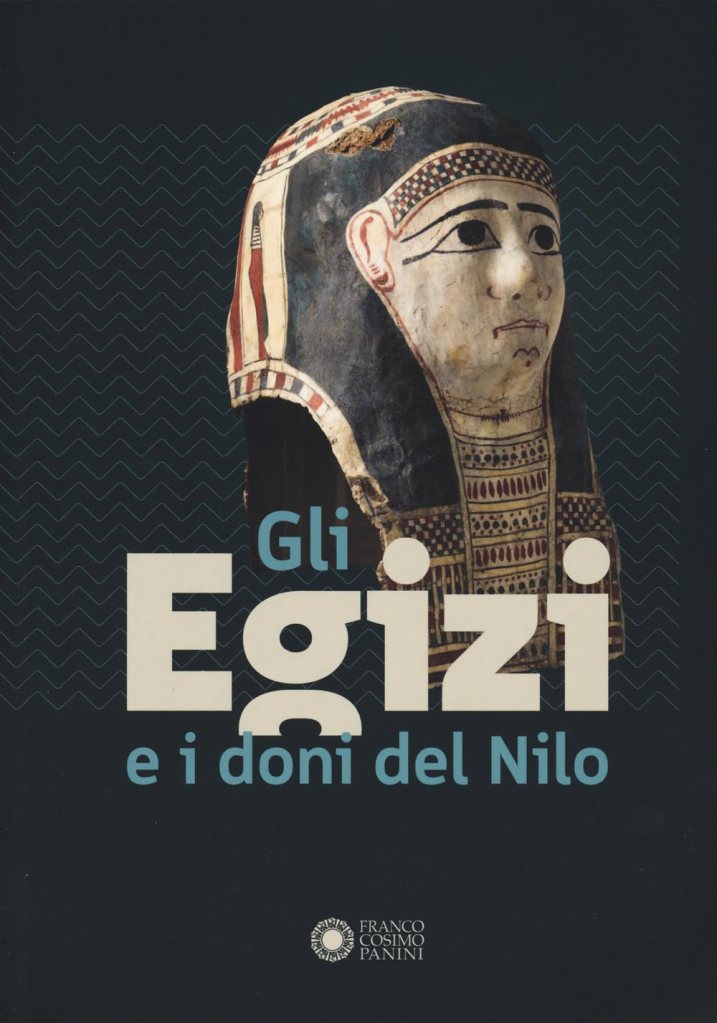
La parte della mostra ‘Gli Egizi e i Doni del Nilo’ che custodisce i reperti archeologici termina con la maschera funeraria dipinta n cartonnage di epoca ellenistica (II sec. a.C .- I sec. d.C.) proveniente da Assiut.
La parte pittorica originale riproduce occhi, bocca, naso, orecchie in nero e rosso mentre il volto è incorniciato dalla parrucca nera. Sul petto si apprezza il collare a diversi filari mentre sul capo è stato dipinto uno scarabeo nero con il disco solare rosso.

Al piano superiore del Fortino Leopoldo I si entra nella sezione didattica in cui vengono proposti filmanti esplicativi.
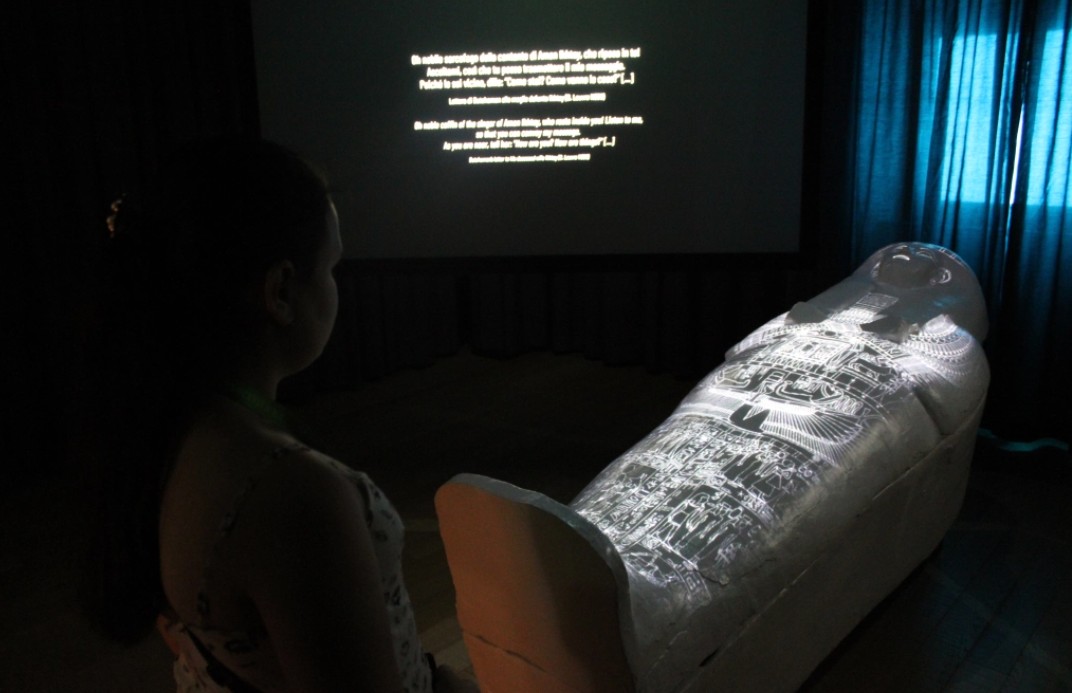
Nell’ultima sala ci si trova faccia a faccia con un sarcofago in resina che poco a poco viene animato da una ricostruzione virtuale del sarcofago di Butehamon che aiuta lo spettatore a capire alcune sue peculiarità.

Riprodotto in scala 1:1 a partire dai rilievi condotti dal Politecnico di Milano e stampato in 3D, il sarcofago, attraverso un sistema di mapping, racconterà in modo dinamico come fu concepito, realizzato e successivamente restaurato.
A me e alle mie piccole accompagnatrici questa mostra è molto piaciuta e credo proprio ritornerò anche quest’inverno per vederla ancora una volta.
L’ingresso ha un costo di 10 euro mentre il ridotto 5, prezzo in in cui è inclusa l’audioguida narrata da niente meno che dallo scrittore fortemarmino Fabio Genovesi.

Se desiderate acquistare il catalogo della mostra ‘Gli Egizi e i Doni del Nilo, lo trovate QUA.
Per il momento il sempre vostro Michelangelo Buonarroti vi saluta dandovi appuntamento ai prossimi post e sui social.
© Riproduzione riservata


Sostienici – Support Us
Se questo blog ti piace e ti appassiona, puoi aiutarci a farlo crescere sempre più sostenendoci in modo concreto condividendo i post, seguendo le pagine social e con un contributo che ci aiuta ad andare avanti con il nostro lavoro di divulgazione. . ENGLISH: If you like and are passionate about this blog, you can help us make it grow more and more by supporting us in a concrete way by sharing posts, following social pages and with a contribution that helps us to move forward with our dissemination work.
10,00 €
The Egyptians and the Gifts of the Nile: this is what the exhibition in Forte dei Marmi is like
This morning I went to visit the exhibition underway at Fortino Leopoldo I in Forte dei Marmi ‘The Egyptians and the Gifts of the Nile’, organized by the Egyptian Museum of Turin in collaboration with Villa Bertelli.
The exhibition allows you to fully appreciate 24 finds coming directly from the Egyptian Museum of Turin and to take an exciting journey into Ancient Egypt. An exhibition capable of fascinating adults and attracting the attention of the little ones.
In the first room you come face to face with a typical model of a boat from the funerary objects of the First Intermediate Period (2118 – 1980 BC) made of wood that was first stuccoed and then painted.
On the boat you can see the decoration with the pair of udjat eyes protecting the hull. This type of vessel usually depicted the journey of the deceased to the sacred city of Abydos.
In the second room you can admire the four alabaster canopic jars of Ptahhotep from the Third Intermediate Period (1076-943 BC) from Saqqara. This is a complete set of jars that contained the viscera of the deceased, lent for the occasion by the Gallery of Material Culture of the Egyptian Museum of Turin.
The lids are carved with the heads of the sons of Horus and had the function of protecting the contents. Specifically, the heads include the human head of Amset with a human head, Hapi with the head of a falcon, Duamutef with the head of a baboon and Qebehsenuef showing the head of a jackal.
Of particular interest is also the fragment of a cult building of King Djoser with hieroglyphic inscriptions in limestone, from the Third Dynasty of the Old Kingdom, dated between 2650 and 2580 BC.
It was found in the temple area of Heliopolis and allows us to recognize on the right the sovereign Djoser seated on a throne, complete with wig, usekh collar and false beard. In front of him is a column of hieroglyphic text that reads as follows: “Endowed with life, stability, power and joy forever”.
In the funerary stele of Nya in limestone and painted stucco of the New Kingdom, the deceased Nya is seen in adoration of the deities Osiris, Nefertiti and Anubis.
In the last register at the bottom, a long offering formula is written in hieroglyphics.
Of interest are the four amulets depicting the royal child in gold from the New Kingdom, the hippopotamus in chalcedony from the Late Period, the hybrid entity in lapis lazuli from the Late Period and Bes in soapstone also from the Late Period.
The amulets, of small dimensions, were considered magical objects and could depict different subjects.
The refinement of their details is surprising, showing the extraordinary skill that the Egyptians had achieved in working with different materials.
The part of the exhibition ‘The Egyptians and the Gifts of the Nile’ that houses the archaeological finds ends with the funerary mask painted in cartonnage from the Hellenistic period (2nd century BC – 1st century AD) from Assiut.
The original pictorial part reproduces eyes, mouth, nose, ears in black and red while the face is framed by the black wig. On the chest you can appreciate the collar with several rows while on the head a black scarab with a red solar disk has been painted.
On the upper floor of Fortino Leopoldo I you enter the educational section where explanatory films are proposed.
In the last room you find yourself face to face with a resin sarcophagus that is gradually animated by a virtual reconstruction of the Butehamon sarcophagus that helps the viewer understand some of its peculiarities.
Reproduced in 1:1 scale starting from the surveys conducted by the Polytechnic of Milan and printed in 3D, the sarcophagus, through a mapping system, will dynamically tell how it was conceived, created and subsequently restored.
My little companions and I really liked this exhibition and I think I will return this winter to see it once again.
The entrance fee is 10 euros while the reduced fee is 5, a price that includes the audio guide narrated by none other than the writer from Forte dei Marmi Fabio Genovesi.
If you wish to purchase the catalogue of the exhibition ‘Gli Egizi e i Doni del Nilo’, you can find it HERE.
For the moment, your ever Michelangelo Buonarroti bids you farewell, making an appointment with you in the next posts and on social media.
© All rights reserved
Sostienici – Support Us
Se questo blog ti piace e ti appassiona, puoi aiutarci a farlo crescere sempre più sostenendoci in modo concreto condividendo i post, seguendo le pagine social e con un contributo che ci aiuta ad andare avanti con il nostro lavoro di divulgazione. . ENGLISH: If you like and are passionate about this blog, you can help us make it grow more and more by supporting us in a concrete way by sharing posts, following social pages and with a contribution that helps us to move forward with our dissemination work.
10,00 €
-
Festival La Versiliana 2026: tra musica, teatro e grandi narrazioni
Dal 17 luglio al 23 agosto 2026, la pineta di Marina di Pietrasanta ospiterà la 47ª edizione del Festival La Versiliana. Una kermesse aperta a tutti nella quale linguaggi diversi dialogano tra loro in un equilibrio tra tradizione e contemporaneità.
-
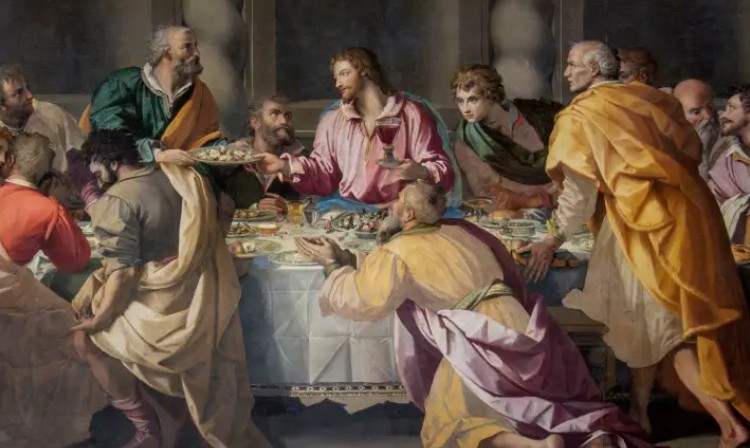
Giovedì Santo: l’Ultima Cena di Allori che pochi conoscono a Firenze
🇮🇹Nel cuore di Museo di Santa Maria Novella, a Firenze, si conserva una delle interpretazioni più affascinanti e meno note dell’Ultima Cena: quella realizzata da Alessandro Allori nel 1584… 🇬🇧In the heart of the Santa Maria Novella Museum in Florence, one of the most fascinating and least-known interpretations of the Last Supper is preserved: the…
-
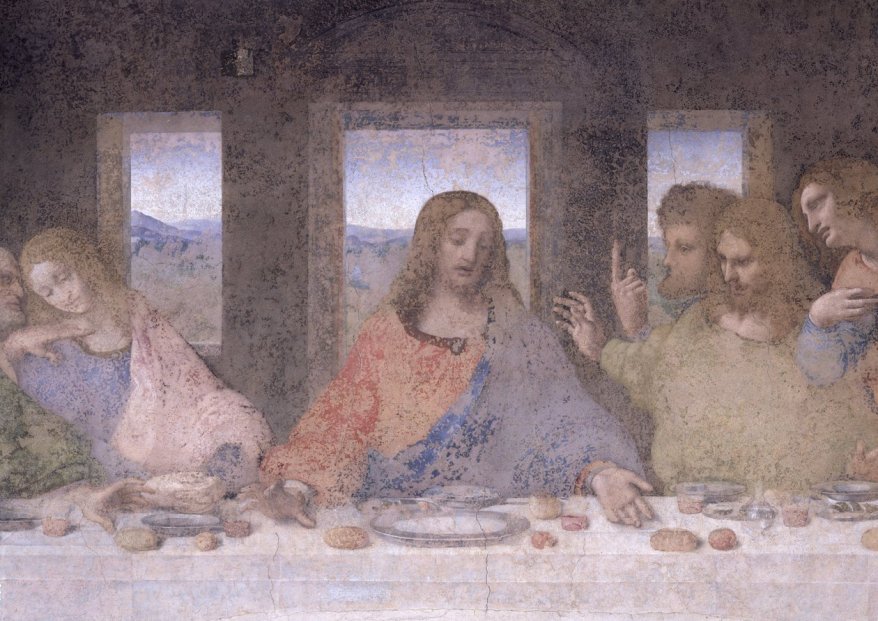
Cenacolo di Leonardo: i dettagli che raccontano il tradimento
🇮🇹Nel Cenacolo di Leonardo da Vinci, custodito a Santa Maria delle Grazie, Cristo annuncia il tradimento e il tempo si ferma… 🇬🇧In Leonardo da Vinci’s Last Supper, housed in Santa Maria delle Grazie, Christ announces the betrayal and time stands still…
Condividi:


Questo sono io





sostienici

Sostienici – Support Us
Se questo blog ti piace e ti appassiona, puoi aiutarci a farlo crescere sempre più sostenendoci in modo concreto condividendo i post, seguendo le pagine social e con un contributo che ci aiuta ad andare avanti con il nostro lavoro di divulgazione. . ENGLISH: If you like and are passionate about this blog, you can help us make it grow more and more by supporting us in a concrete way by sharing posts, following social pages and with a contribution that helps us to move forward with our dissemination work.
€10,00


