
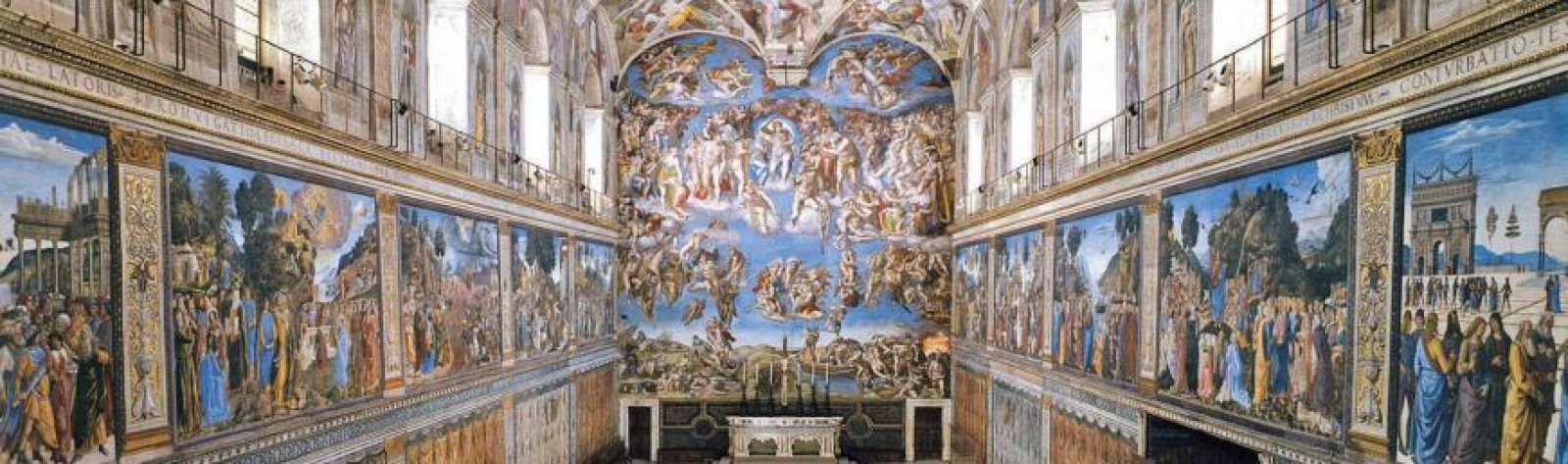
Giudizio Universale: non feci parsimonia di pose
Affrescando il Giudizio Universale, diedi forma con i pennelli a un gran numero di pose differenti. Osservando l’opera vi renderete conto che i corpi raffigurati assumono un po’ tutte le pose possibili.
Non feci certo parsimonia nello scegliere atteggiamenti e modi per riprodurre anime sante e anime dannate, angeli e demoni.
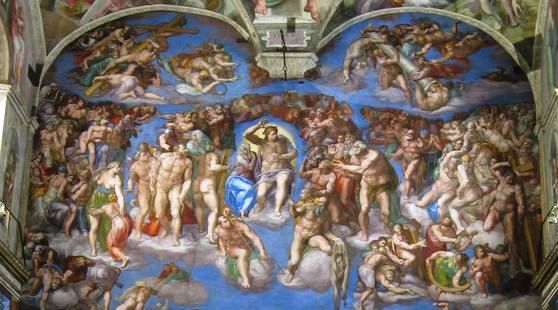
Corpi contorti e figure più lineari, pose spesso serpentinate per conferirgli il dinamismo di cui necessitavano.
Scrisse il mio caro amico Giorgio Vasari in merito: “Il rispetto e l’amore di papa Paolo III per Michelangelo tanto era grande che non voleva mai causargli dispiacere. In queto dipinto Michelangelo espresse tutto ciò che l’arte della pittura può fare con la figura umana, senza omettere un atteggiamento o un gesto“.
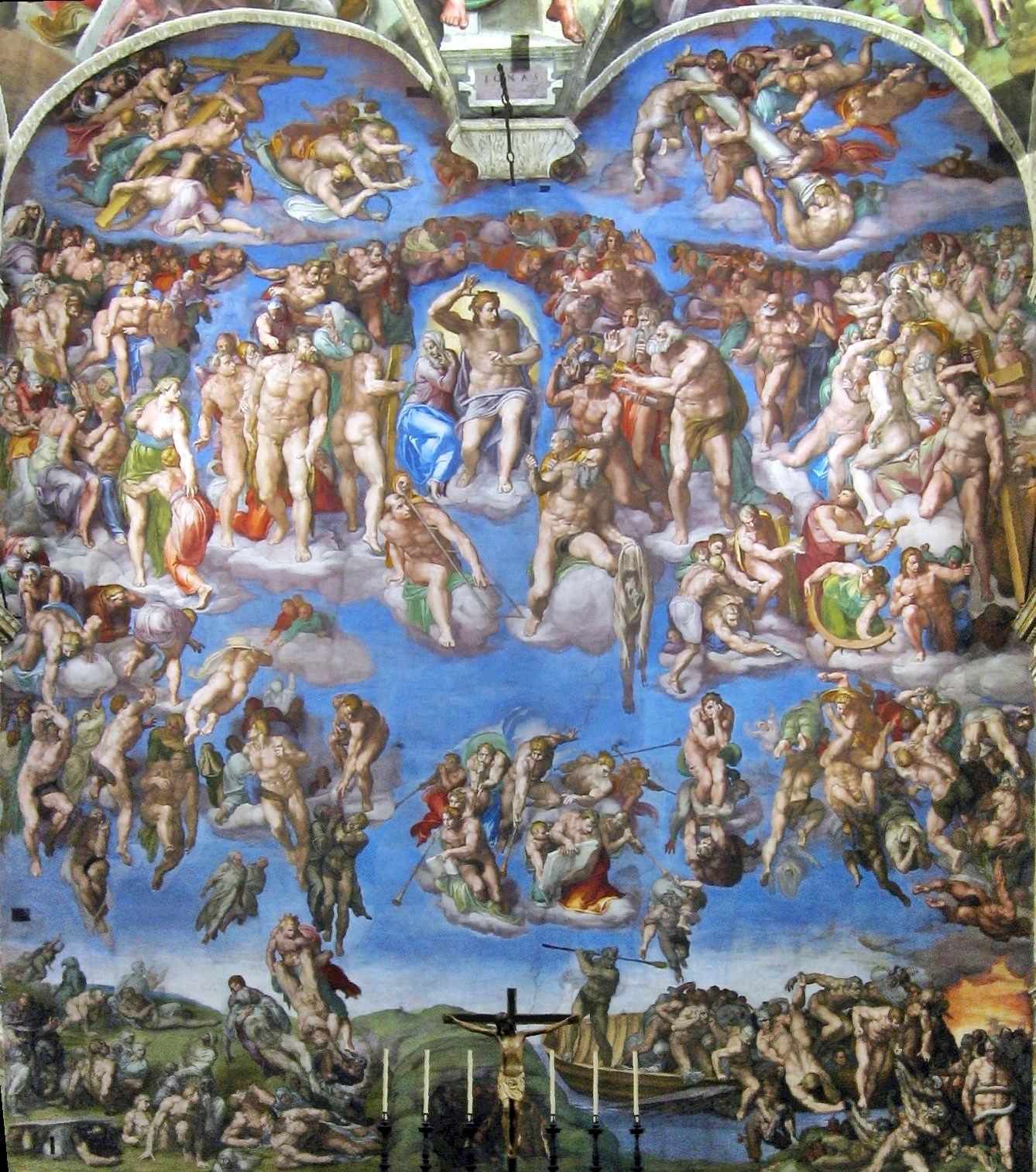
Iniziai a metter mano al Giudizio all’età di 61 anni, nel 1536. Immaginate cosa volesse dire nel Cinquecento intraprendere un’impresa titanica simile quando la vita media era sui 35 anni circa, con un’elevata mortalità infantile.
Ero considerato molto anziano all’epoca ma ancora pieno di energie da spendere per regalare ai contemporanei e ai posteri un’opera tanto grandiosa che tutt’oggi continua a meravigliare il mondo.

Per il momento il sempre vostro Michelangelo Buonarroti vi saluta dandovi appuntamento ai prossimi post e sui social.
Last Judgement: I was not sparing with poses
When I frescoed the Last Judgement, I gave shape to a large number of different poses with my brushes. Looking at the work, you will realize that the bodies depicted assume almost all possible poses.
I was certainly not sparing in choosing attitudes and ways to reproduce holy souls and damned souls, angels and demons.
Twisted bodies and more linear figures, often serpentine poses to give them the dynamism they needed. My dear friend Giorgio Vasari wrote about it: “Pope Paul III’s respect and love for Michelangelo was so great that he never wanted to displease him. In this painting Michelangelo expressed everything that the art of painting can do with the human figure, without omitting an attitude or a gesture”
I began to work on the Last Judgement at the age of 61, in 1536. Imagine what it meant in the sixteenth century to undertake such a titanic undertaking when the average life span was about 35 years, with a high infant mortality rate.
I was considered very old at the time but still full of energy to spend to give contemporaries and posterity a work so grandiose that even today continues to amaze the world.
For the moment, your ever Michelangelo Buonarroti bids you farewell, making an appointment with you in the next posts and on social media.
-
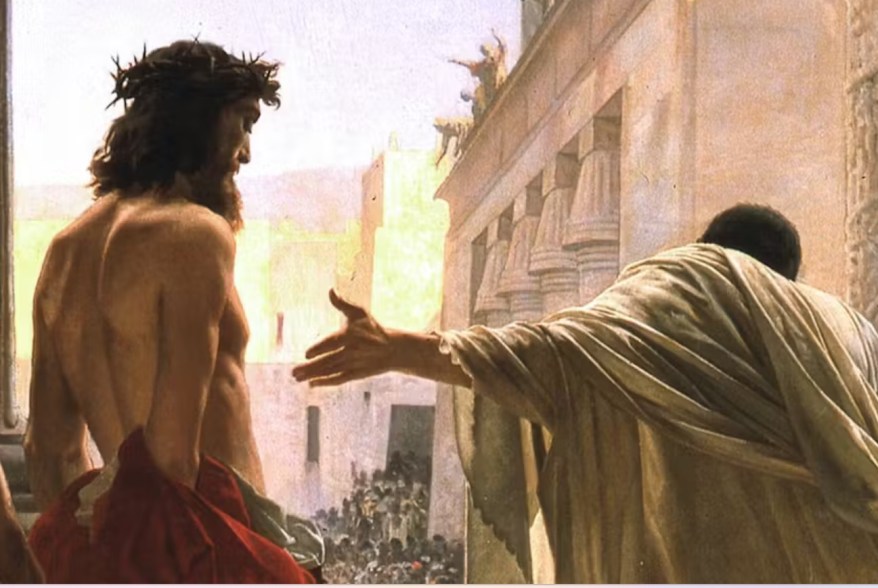
Venerdì Santo: gli “Ecce Homo” più intensi della storia dell’arte
🇮🇹Ecce Homo. Da Antonello da Messina a Tintoretto, fino al sorprendente capolavoro di Antonio Ciseri, questo soggetto ha attraversato i secoli raccontando dolore, umanità e coscienza… 🇬🇧Ecce Homo. From Antonello da Messina to Tintoretto, to Antonio Ciseri’s astonishing masterpiece, this subject has spanned the centuries, recounting pain, humanity, and conscience…
-
Attacco hacker agli Uffizi: rubati dati sensibili, mappe e codici di sicurezza
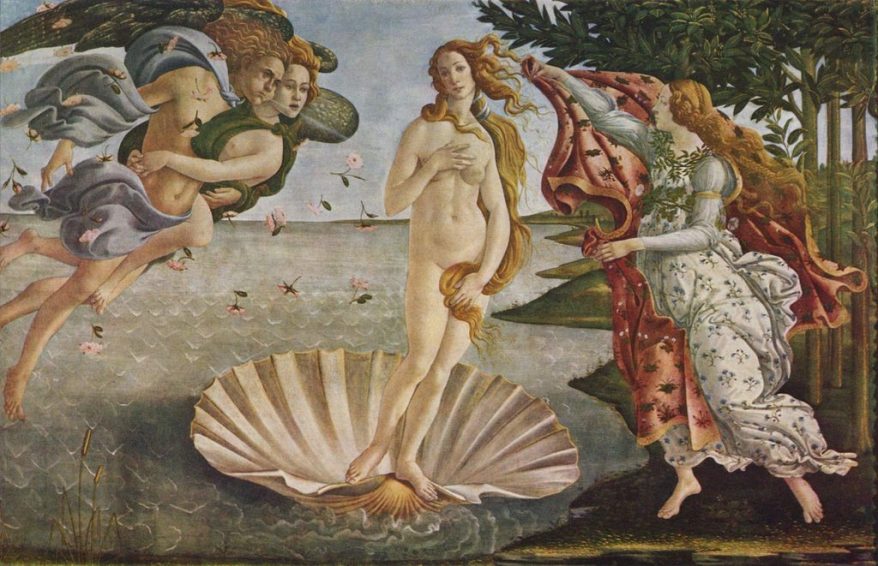
🇮🇹Attacco hacker alle Gallerie degli Uffizi: rubati dati sensibili, mappe e sistemi di sicurezza. A rischio opere, archivi e cybersicurezza del patrimonio artistico… 🇬🇧Hacker attack on the Uffizi Galleries: sensitive data, maps, and security systems stolen. Works of art, archives, and the cybersecurity of the artistic heritage are at risk…
-
Venerdì Santo: la Crocifissione secondo Tiepolo
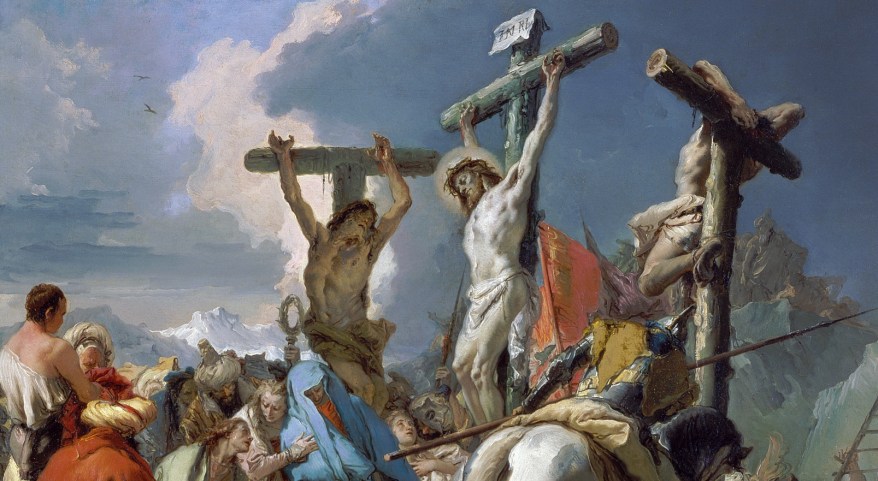
🇮🇹Nel giorno del Venerdì Santo, c’è un’opera che riesce ancora a scuotere lo sguardo. La Crocifissione di Giambattista Tiepolo non è come le altre: niente simmetrie perfette, niente distanza. Qui si entra dentro la scena, da un punto di vista obliquo, tra movimento, tensione e umanità… 🇬🇧On Good Friday, there’s a work that still manages…
Condividi:


Questo sono io





sostienici

Sostienici – Support Us
Se questo blog ti piace e ti appassiona, puoi aiutarci a farlo crescere sempre più sostenendoci in modo concreto condividendo i post, seguendo le pagine social e con un contributo che ci aiuta ad andare avanti con il nostro lavoro di divulgazione. . ENGLISH: If you like and are passionate about this blog, you can help us make it grow more and more by supporting us in a concrete way by sharing posts, following social pages and with a contribution that helps us to move forward with our dissemination work.
€10,00


Bel affresco
"Mi piace"Piace a 1 persona