

Pietro da Cortona: il capolavoro sulla volta di Palazzo Barberini a Roma
L’opera del giorno che vi propongo oggi è il grande affresco realizzato da Pietro da Cortona sulla volta del salone di Palazzo Barberini, a Roma, su commissione del cardinale Maffeo Barberini.
L’artista toscano lavorò a questo capolavoro fra il 1632 e il 1639 ma nel 1637 interruppe i lavori per un viaggio che lo portò a Firenze e in altri luoghi dell’Italia Settentrionale.
Affrescò 600 metri quadrati di superficie con un’opera grandiosa che lo consacrò come l’inventore di un linguaggio figurativo innovativo.
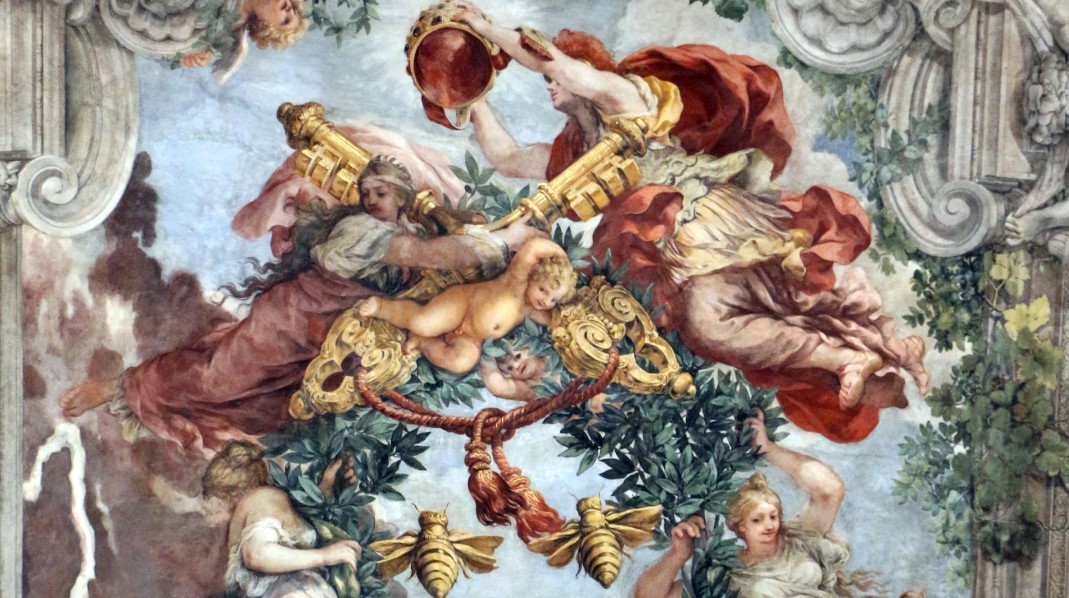
Scelse un soggetto nel quale sacro e profano si mischiano per esaltare al massimo la famiglia Barberini. Dopo aver mostrato questo incredibile lavoro, divenne uno dei più richiesti e stimati artisti sulla scena nel Seicento.
Pietro da Cortona ideò una grande macchina decorativa nella quale l’insieme viene percepito come una massa di figure in continuo movimento. Fu pagato con 3910 scudi: una cifra altissima per l’epoca.
Per dar forma all’idea dell’affresco, Pietro da Cortona prese come punto di riferimento il poema allegorico de “L’Elettione di Urbano Papa VIII”, composto dall’umanista di Pistoia Francesco Bracciolini, nonché segretario del cardinale Antonio Barberini.

Nell’affresco l’artista rappresentò il piano che la Divina Provvidenza ebbe per far eleggere al soglio pontificio Urbano VIII e gli effetti benefici che tale elezione ebbe sulla Chiesa tutta.
Mitologia ed epica, storia romana, leggenda e favola diventano un tutt’uno per proiettando la storia antica su quella presente.
Osservando con attenzione la volta si notano le grandi api in trionfo al centro della volta, simbolo della famiglia Barberini. Minerva che trionfa sui Giganti è poco distante così come si può ravvisare Bacco Ebbro.
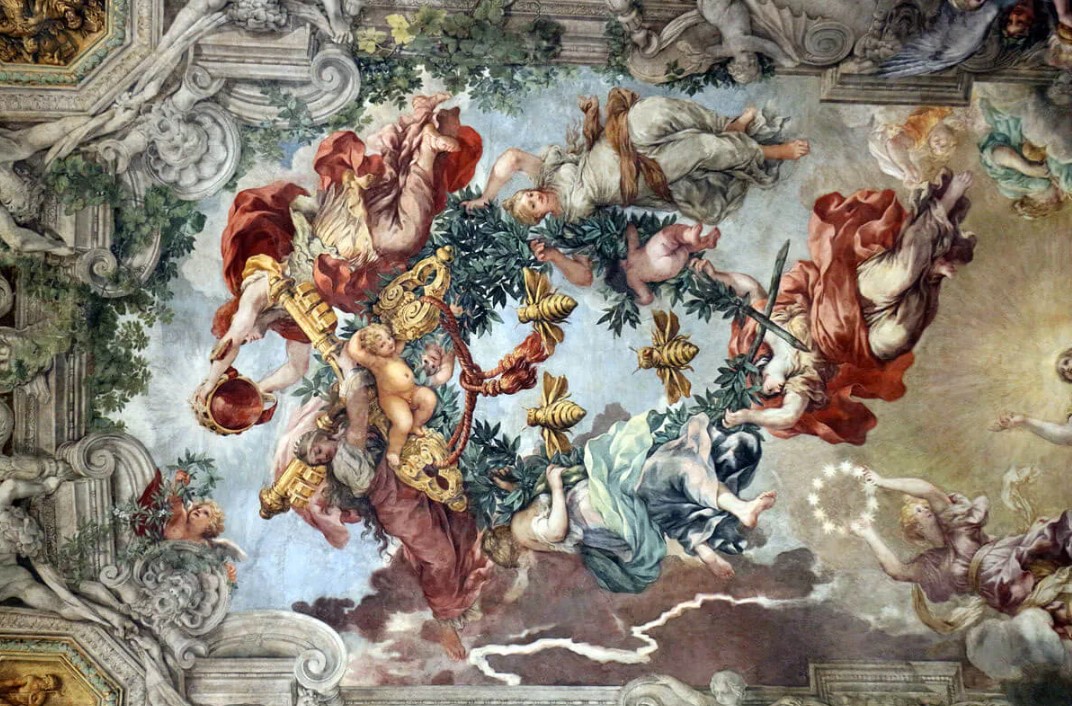
Pietro da Cortona condusse il complesso affresco aiutato da alcuni allievi, iniziando l’opera dalla cornice e procedendo verso il centro.
Per creare un effetto vibrato, era solito passare da tinte molto forti a colori molto chiari sovrapponendo allo strato pittorico sottostante altro colore mediante una tecnica affine al puntinismo.

Il successo di questo affresco fu enorme tanto che le riproduzioni e gli studi fatti di parti dell’opera iniziarono a circolare ben presto in tutta Europa, consacrando l’artista come uno dei più grandi artisti del Barocco.
per il momento il sempre vostro Michelangelo Buonarroti vi saluta dandovi appuntamento ai prossimi post e sui social.

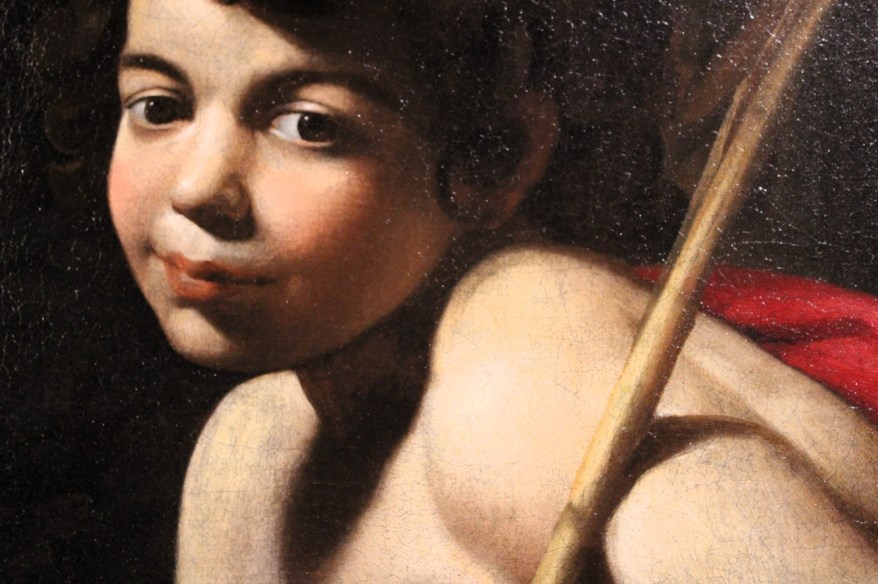
Pietro da Cortona: The Masterpiece of the Vault of Palazzo Barberini in Rome
The work of the day that I propose to you today is the large fresco created by Pietro da Cortona on the vault of the large hall of Palazzo Barberini, in Rome, commissioned by Cardinal Maffeo Barberini.
The artist worked on this masterpiece between 1632 and 1639 but in 1637 he interrupted the work for a trip that took him to Florence and other places in Northern Italy. The Tuscan artist frescoed 600 square meters of surface with a grandiose fresco that consecrated him as the inventor of an innovative figurative language.
He chose a subject in which the sacred and the profane mix to exalt the Barberini family to the maximum. After showing this incredible work, he became one of the most sought-after and esteemed artists on the scene in the seventeenth century.
Pietro da Cortona conceived a large decorative machine in which the whole is perceived as a mass of continuously moving figures. He was paid 3910 scudi: a very high sum for the time.
To give shape to the idea of the fresco, Pietro da Cortona took as a point of reference the allegorical poem of “The Election of Urban Pope VIII”, composed by the humanist from Pistoia Francesco Bracciolini, as well as secretary of Cardinal Antonio Barberini.
In the fresco the artist represented the plan of Divine Providence that he had to elect Urban VIII to the papacy and the beneficial effects that this election had on the entire Church.
Mythology and epic, Roman history, legend and fable become one by projecting ancient history onto the present one.
Looking carefully at the vault you notice the large bees in triumph at the center of the vault, symbol of the Barberini family. Minerva triumphing over the Giants is not far away, as can be seen Bacchus Drunken.
Pietro da Cortona conducted the complex fresco aided by some students, starting the work from the frame and proceeding towards the center. To create a vibrato effect, he used to move from very strong to very light colors by superimposing other colors on the underlying paint layer using a technique similar to pointillism.
The success of this fresco was enormous, so much so that reproductions and studies made of parts of the work soon began to circulate throughout Europe, establishing the artist as one of the greatest Baroque artists.
for the moment your always Michelangelo Buonarroti greets you and will meet you in the next posts and on social media.

Sostienici – Support Us
Se questo blog ti piace e ti appassiona, puoi aiutarci a farlo crescere sempre più sostenendoci in modo concreto condividendo i post, seguendo le pagine social e con un contributo che ci aiuta ad andare avanti con il nostro lavoro di divulgazione. . ENGLISH: If you like and are passionate about this blog, you can help us make it grow more and more by supporting us in a concrete way by sharing posts, following social pages and with a contribution that helps us to move forward with our dissemination work.
10,00 €
-
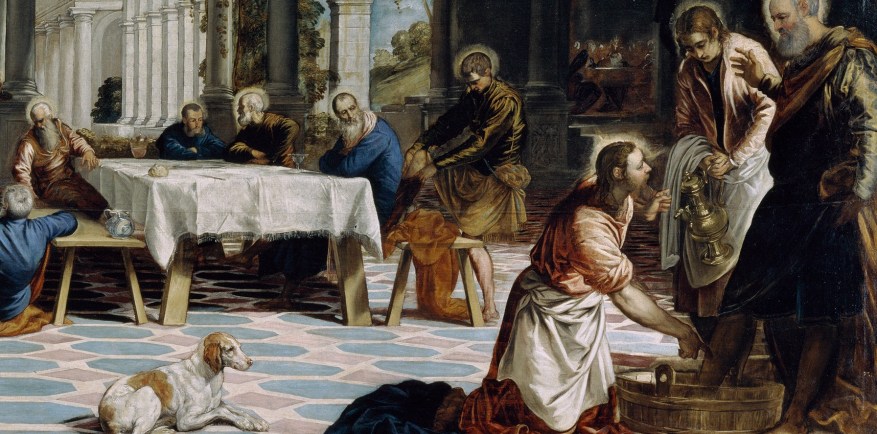
La Lavanda dei Piedi di Tintoretto: Il Capolavoro Veneziano al Prado
🇮🇹Tra i capolavori più affascinanti del Rinascimento veneziano, “La Lavanda dei Piedi” di Jacopo Tintoretto rappresenta un perfetto equilibrio tra spiritualità, innovazione compositiva e straordinaria forza narrativa… 🇬🇧Among the most fascinating masterpieces of the Venetian Renaissance, Jacopo Tintoretto’s “The Washing of the Feet” represents a perfect balance between spirituality, compositional innovation, and extraordinary narrative force…
-
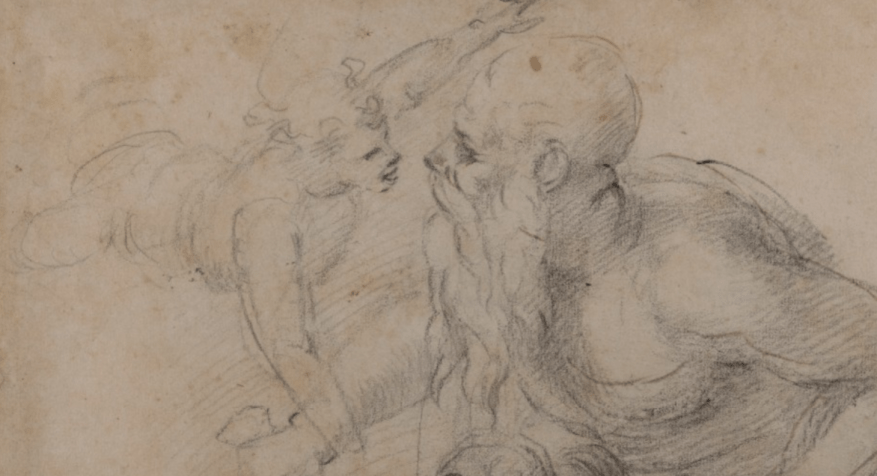
Il Sacrificio di Isacco e quel momento tra la vita e la morte
🇮🇹Oggi voglio raccontarvi alcuni dettagli sul mio disegno del Sacrificio di Isacco, conservato oggi a Casa Buonarroti. Su quel foglio volli tracciare il momento preciso in cui la paura fa spazio al miracolo… 🇬🇧Today I want to tell you some details about my drawing of the Sacrifice of Isaac, now preserved at Casa Buonarroti. On…
-
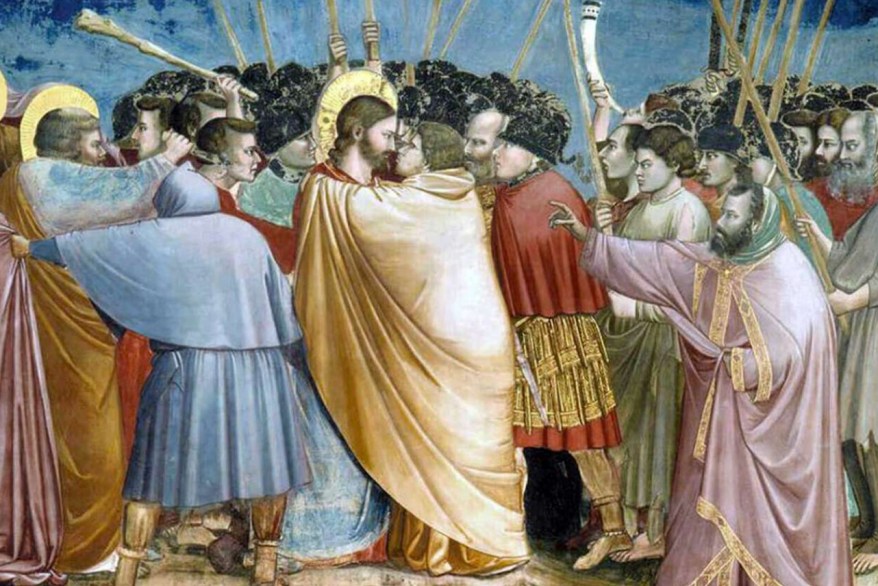
Mercoledì Santo: il giorno del tradimento di Giuda affrescato da Giotto
🇮🇹Il Mercoledì Santo è il giorno del silenzio, della riflessione e del tradimento. È il momento in cui Giuda sceglie di vendere Gesù per trenta denari, segnando uno dei passaggi più dolorosi della Settimana Santa…. 🇬🇧Holy Wednesday is a day of silence, reflection, and betrayal. ✝It is the moment when Judas chooses to sell Jesus…
Condividi:


Questo sono io





sostienici

Sostienici - Support Us
Se questo blog ti piace e ti appassiona, puoi aiutarci a farlo crescere sempre più sostenendoci in modo concreto condividendo i post, seguendo le pagine social e con un contributo che ci aiuta ad andare avanti con il nostro lavoro di divulgazione. . ENGLISH: If you like and are passionate about this blog, you can help us make it grow more and more by supporting us in a concrete way by sharing posts, following social pages and with a contribution that helps us to move forward with our dissemination work.
€10,00


che spettacolo unico!!! 👍👍👍👍👍👍👍👍
"Mi piace"Piace a 1 persona
straordinario
"Mi piace"Piace a 1 persona