

Gli Dei ritornano. I bronzi di San Casciano al Mann di Napoli
I bronzi riemersi dalle acque calde nel territorio dell’antica città stato etrusca di Chiusi fino al 30 giugno 2024 saranno in mostra al Museo Archeologico Nazionale di Napoli con l’esposizione “Gli Dei ritornano. I bronzi di San Casciano”.
Rispetto al percorso espositivo allestito precedentemente alle Scuderie del Quirinale ci sono importanti novità come la proposta di reperti inediti, mai presentati prima al pubblico.
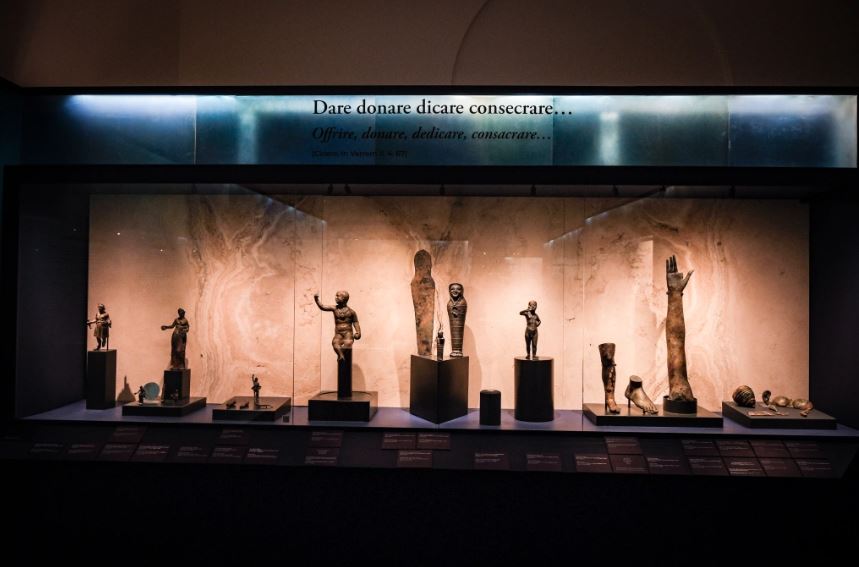
Gli straordinari ritrovamenti effettuati nell’estate 2022 e le nuove scoperte fatte nel 2023 nel santuario termale etrusco e romano del Bagno Grande di San Casciano dei Bagni permetteranno ai visitatori di fare un vero e proprio viaggio a ritroso nel tempo.
Dall’età del bronzo fino all’età imperiale, la grande tradizione di produzioni in bronzo di quell’area dell’Etruria viene proposta al pubblico in un percorso assai suggestivo
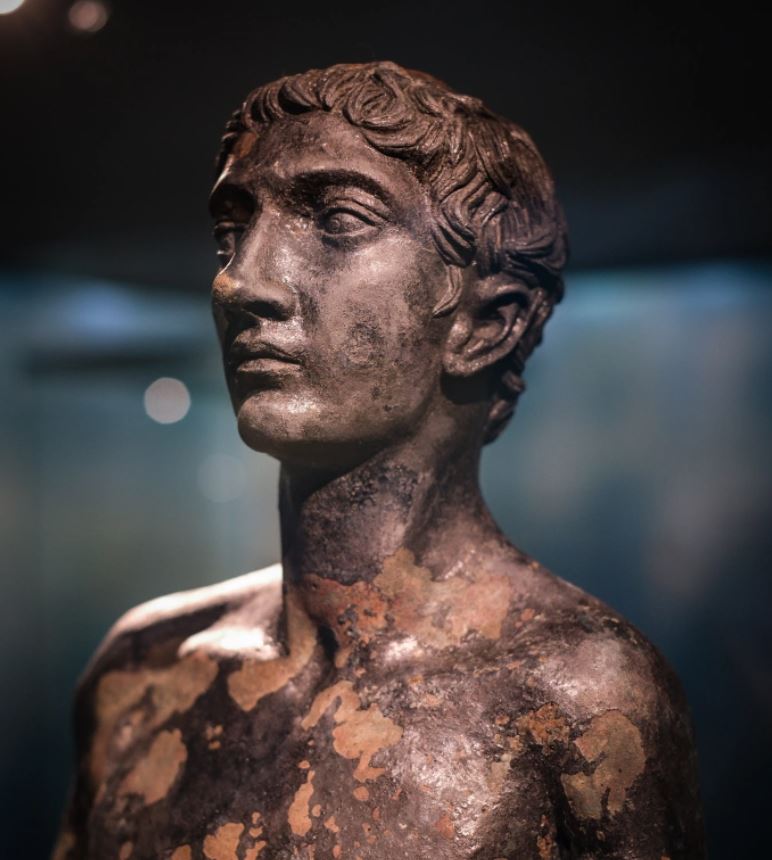
Oltre venti statue e statuette, migliaia di monete in bronzo ed ex-voto anatomici narrano una storia di devozione, di culti e riti in luoghi sacri dove l’acqua termale era usata anche a fini terapeutici. L’eccezionale stato di conservazione delle statue ha permesso di tramandare lunghe iscrizioni in etrusco e latino che restituiscono nuovi dati sul rapporto tra Etruschi e Romani, sui culti presso le sorgenti termali e sulle divinità qui venerate.
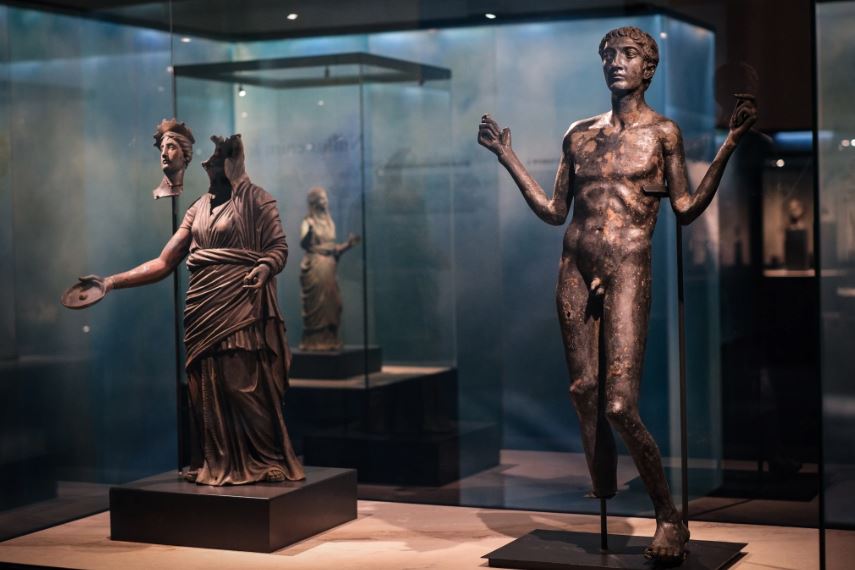
Tra i reperti mai esposti al pubblico vale la pena soffermarsi sulla statua in bronzo che rappresenta una figura
femminile con le mani aperte per la preghiera. La donna indossa un chitone e un mantello. Ha il viso incorniciato da una chioma finemente pettinata con le lunghe trecce che le ricadono sul petto.
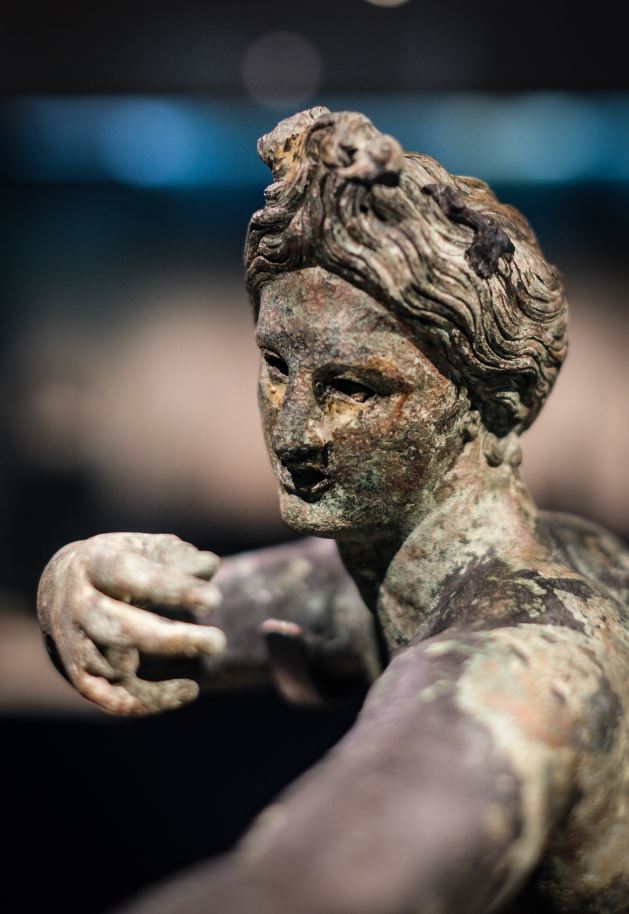
La scultura rimanda a figure con manto trasverso diffuse sin dalla prima età ellenistica e può essere datata alla metà del II secolo a.C. Il manufatto è stato rinvenuto nell’insieme di offerte all’interno della vasca sacra, in un gruppo di statue che abbracciavano un grande tronco di quercia. La scultura di devota orante era deposta a testa in giù, come a voler rivolgere la sua preghiera verso il cuore della sorgente termale.
Il secondo reperto inedito è la base di un donario in travertino con un’iscrizione bilingue. La metà destra è redatta in etrusco, con lettura da destra a sinistra, mentre la metà sinistra è in latino, con una lettura da sinistra a destra: [f]lere havens – [fon]s caldus che si può tradurre (Io sono il) Nume della Fonte – (Io sono il) Fonte Caldo.
A parlare è la divinità stessa, che dobbiamo pensare rappresentata al di sopra della base del donario. Si tratta di un documento eccezionale dell’uso pubblico dell’etrusco ancora all’inizio dell’età augustea. La divinità, che sta
parlando nelle due lingue, ben rappresenta l’esistenza di destinatari diversi fra le comunità
accolte dal santuario: l’esigenza comune era di essere compresi da tutti.
Dalla campagna di scavo del 2023 al santuario del Bagno Grande provengono numerosi nuovi bronzi,
riconducibili alle pratiche religiose e rituali di questo luogo di cura termale. Tra questi spicca un reperto che può essere inserito nel gruppo degli ex-voto anatomici: probabilmente si tratta di un rene.
Intagliato in un prezioso frammento di cristallo di rocca perfettamente trasparente, con rare e impercettibili impurità, vi è un pendente a forma di pesciolino. Il cristallo di rocca era ritenuto nell’antichità portatore di numerose proprietà benefiche e mediche, oltre a essere usato come lente ustoria per curare le ferite.
Inoltre, essendo interpretato come ghiaccio pietrificato, era reputato utile a preservare il sonno dei defunti e a ritardarne il disfacimento del corpo. Il reperto si data ai primi decenni del I sec. a.C. ed è stato rinvenuto presso la sorgente di acqua fredda esterna al tempio, dentro un focolare, in associazione con una lama di coltello in ferro.
Fra le opere in mostra al Museo Archeologico Nazionale di Napoli, si notano la splendida statua in marmo dell’Afrodite del tipo di Doidalsas, copia romana di età traianea (II secolo d.C.) da un originale ellenistico, rinvenuta nel Cinquecento presso la sorgente della Doccia della Testa.
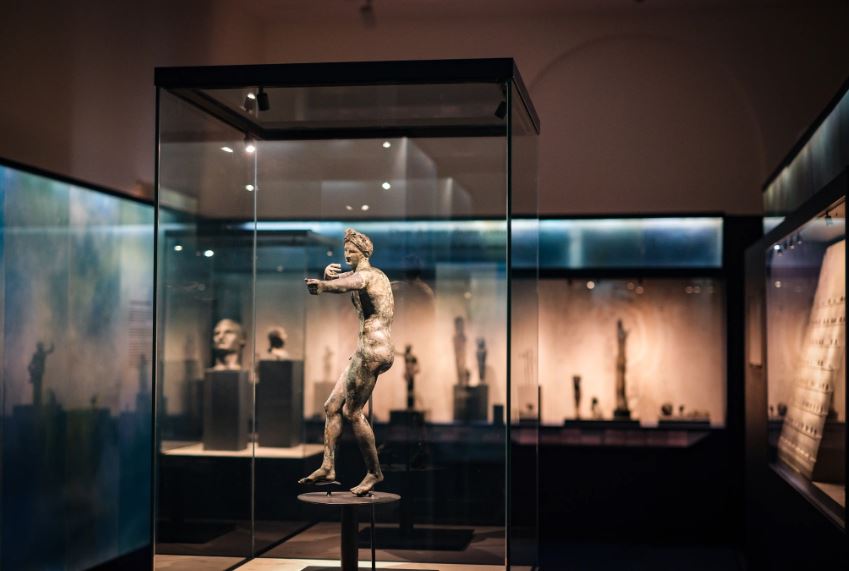
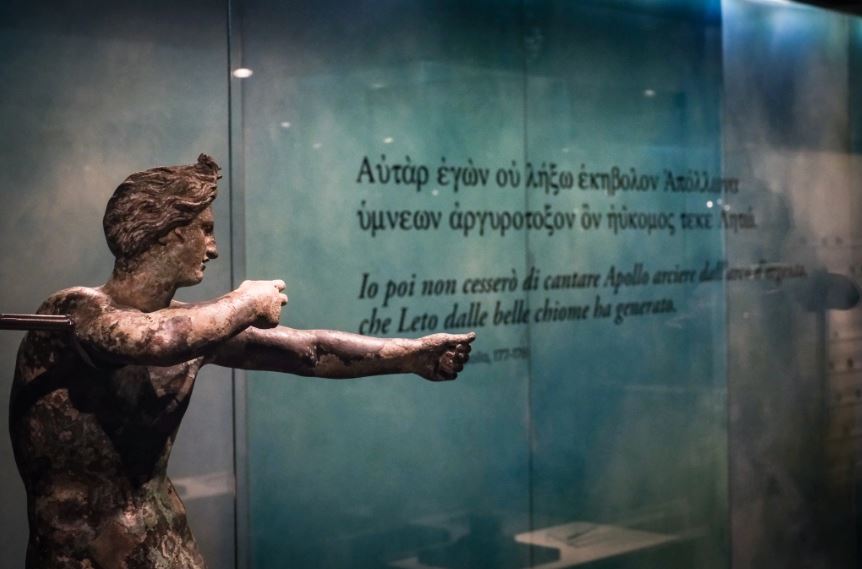
Dalla vasca sacra del Bagno Grande, proviene invece la statua in bronzo di Apollo in atto di scagliare una freccia, risalente al 100 a.C. Accanto alle statue delle divinità, vi sono le raffigurazioni di offerenti, come il personaggio togato databile al I secolo a.C., che presenta molte affinità con il celebre Arringatore conservato al Museo Archeologico Nazionale di Firenze.
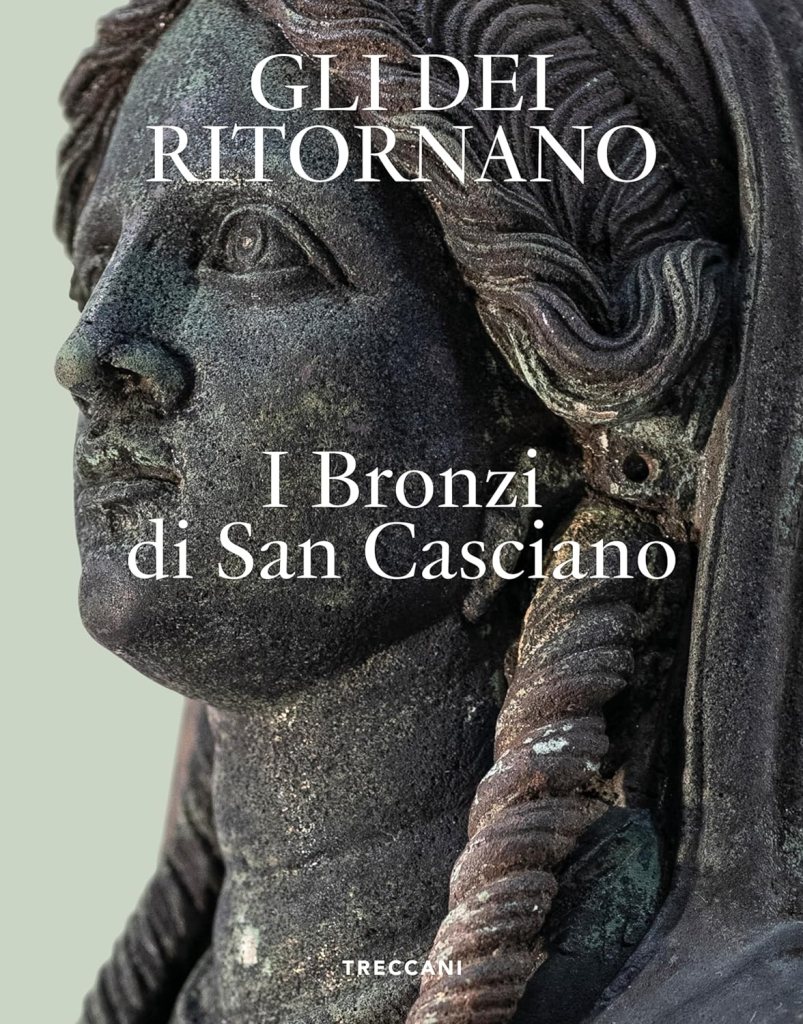
La mostra “Gli Dei ritornano. I bronzi di San Casciano” è accompagnata da un catalogo curato da Treccani, con la sponsorizzazione tecnica di Intesa Sanpaolo e lo trovate QUA.
Per il momento il vostro Michelangelo Buonarroti vi saluta dandovi appuntamento ai prossimi post e sui social.
The Gods return. The bronzes of San Casciano at the Mann in Naples
The bronzes re-emerged from the warm waters in the territory of the ancient Etruscan city-state of Chiusi will be on display at the National Archaeological Museum of Naples until 30 June 2024 with the exhibition “The Gods return. The bronzes of San Casciano”.
Compared to the exhibition itinerary previously set up at the Scuderie del Quirinale, there are important innovations such as the proposal of unpublished finds, never before presented to the public.
The extraordinary finds made in the summer of 2022 and the new discoveries made in 2023 in the Etruscan and Roman thermal sanctuary of Bagno Grande in San Casciano dei Bagni will allow visitors to take a real journey back in time.
From the Bronze Age to the Imperial Age, the great tradition of bronze productions of that area of Etruria is offered to the public in a very suggestive journey
Over twenty statues and figurines, thousands of bronze coins and anatomical votive offerings tell a story of devotion, cults and rites in sacred places where the thermal water was also used for therapeutic purposes. The exceptional state of conservation of the statues has allowed the handing down of long inscriptions in Etruscan and Latin which provide new data on the relationship between the Etruscans and Romans, on the cults at the thermal springs and on the divinities venerated here.
Among the finds never exhibited to the public, it is worth focusing on the bronze statue representing a figure
female with hands open for prayer. The woman wears a chiton and a cloak. Her face is framed by finely combed hair with long braids falling over her chest. The sculpture refers to figures with transverse cloaks widespread since the early Hellenistic age and can be dated to the mid-2nd century BC. The artifact is
was found among the offerings inside the sacred basin, in a group of statues that embraced a large oak trunk. The sculpture of a devout woman praying was placed upside down, as if to direct her prayer towards the heart of the thermal spring.
The second unpublished find is the base of a travertine donary with a bilingual inscription. The right half is written in Etruscan, reading from right to left, while the left half is in Latin, reading from left to right: [f]lere havens – [fon]s caldus which can be translated (I am the ) God of the Source – (I am the) Hot Source.
The divinity itself speaks, which we must think of as represented above the base of the donario. This is an exceptional document of the public use of Etruscan still at the beginning of the Augustan age. The divinity, which is
speaking in the two languages, it well represents the existence of different recipients between the communities
welcomed by the sanctuary: the common need was to be understood by everyone.
Numerous new bronzes came from the 2023 excavation campaign at the Bagno Grande sanctuary,
attributable to the religious and ritual practices of this spa spa. Among these, an artifact stands out that can be included in the group of anatomical ex-votos: it is probably a kidney.
Carved in a precious fragment of perfectly transparent rock crystal, with rare and imperceptible impurities, there is a pendant in the shape of a small fish. Rock crystal was considered in ancient times to have numerous beneficial and medical properties, as well as being used as a burning lens to treat wounds.
Furthermore, being interpreted as petrified ice, it was considered useful for preserving the sleep of the deceased and delaying the decay of the body. The find dates back to the first decades of the 1st century. B.C. and was found near the cold water spring outside the temple, inside a hearth, in association with an iron knife blade.
Among the works on display at the National Archaeological Museum of Naples, we note the splendid marble statue of Aphrodite of the Doidalsas type, a Roman copy from the Trajan age (2nd century AD) from a Hellenistic original, found in the 16th century near the Doccia spring of the head.
From the sacred pool of the Bagno Grande comes the bronze statue of Apollo shooting an arrow, dating back to 100 BC. Alongside the statues of the divinities, there are depictions of offerers, such as the togated figure dating back to the 1st century BC, which has many affinities with the famous Orator preserved in the National Archaeological Museum of Florence.
For the moment, your Michelangelo Buonarroti greets you and will meet you in future posts and on social media.

Sostienici – Support Us
Se questo blog ti piace e ti appassiona, puoi aiutarci a farlo crescere sempre più sostenendoci in modo concreto condividendo i post, seguendo le pagine social e con un contributo che ci aiuta ad andare avanti con il nostro lavoro di divulgazione. . ENGLISH: If you like and are passionate about this blog, you can help us make it grow more and more by supporting us in a concrete way by sharing posts, following social pages and with a contribution that helps us to move forward with our dissemination work.
10,00 €
-
Giovedì Santo: l’Ultima Cena di Allori che pochi conoscono a Firenze
🇮🇹Nel cuore di Museo di Santa Maria Novella, a Firenze, si conserva una delle interpretazioni più affascinanti e meno note dell’Ultima Cena: quella realizzata da Alessandro Allori nel 1584… 🇬🇧In the heart of the Santa Maria Novella Museum in Florence, one of the most fascinating and least-known interpretations of the Last Supper is preserved: the…
-
Cenacolo di Leonardo: i dettagli che raccontano il tradimento
🇮🇹Nel Cenacolo di Leonardo da Vinci, custodito a Santa Maria delle Grazie, Cristo annuncia il tradimento e il tempo si ferma… 🇬🇧In Leonardo da Vinci’s Last Supper, housed in Santa Maria delle Grazie, Christ announces the betrayal and time stands still…
-
La Lavanda dei Piedi di Tintoretto: Il Capolavoro Veneziano al Prado
🇮🇹Tra i capolavori più affascinanti del Rinascimento veneziano, “La Lavanda dei Piedi” di Jacopo Tintoretto rappresenta un perfetto equilibrio tra spiritualità, innovazione compositiva e straordinaria forza narrativa… 🇬🇧Among the most fascinating masterpieces of the Venetian Renaissance, Jacopo Tintoretto’s “The Washing of the Feet” represents a perfect balance between spirituality, compositional innovation, and extraordinary narrative force…
Condividi:


Questo sono io





sostienici

Sostienici – Support Us
Se questo blog ti piace e ti appassiona, puoi aiutarci a farlo crescere sempre più sostenendoci in modo concreto condividendo i post, seguendo le pagine social e con un contributo che ci aiuta ad andare avanti con il nostro lavoro di divulgazione. . ENGLISH: If you like and are passionate about this blog, you can help us make it grow more and more by supporting us in a concrete way by sharing posts, following social pages and with a contribution that helps us to move forward with our dissemination work.
€10,00


