

La Scultura del giorno: il Ritorno di Auguste Seysses
La scultura del giorno che vi propongo oggi è il Ritorno dello scultore francese Auguste Seysses.
L’opera fu realizzata dall’artista nel 1898 e oggi è custodita presso il Musée des Augustins in Francia.
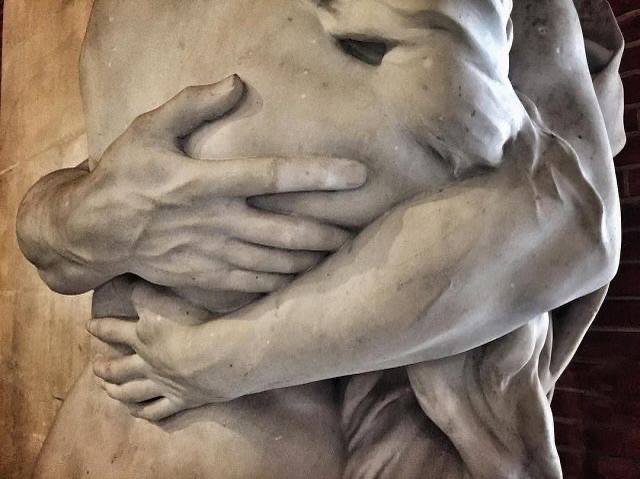
L’opera fu presentata dall’artista all’Esposizione Universale di Parigi del 1900 e fu molto apprezzata sia dal pubblico e dalla critica.
Raffigura un abbraccio appassionato tra due giovani dopo che si incontrano di nuovo dopo essere stati a lungo divisi e lontani.
L’uomo e la donna sono completamente nudi e fra loro lo scultore interpose solo un panneggio che in qualche modo potesse rendere meno scandalose le due figure appoggiate l’una all’altra.

In quell’abbraccio e in quel bacio, Auguste Seysses mise in gioco tutto il suo erotismo trasmettendolo alle sculture che poco a poco prendevano forma sotto le sue dita.
Lo scultore Auguste Seysses, al secolo Félix Auguste Léonard Antoine Seisses, era nato a Tolosa il 23 agosto 1862. Fece parte del gruppo dei cosiddetti Toulousains e si formò presso la scuola di Belle Arti di Parigi sotto la guida di Alexandre Falguière.
Esordì per la prima volta al Salon degli artisti francesi dal 1891 e successivamente, tra il 1896 e il 1902, lavorò sotto la direzione di Alphonse Mucha alla modellazione della scultura Femme aux lilies e Natura.

Auguste Seysses fu nominato cavaliere della Legione d’Onore il 14 dicembre 1900 e venne poi promosso ufficiale il 21 ottobre dello stesso anno.
Il 7 luglio 1946 passò a miglior vita a Château-Thierry.
Per il momento il sempre vostro Michelangelo Buonarroti vi saluta dandovi appuntamento ai prossimi post e sui social.
Sculpture of the day: The Return of Auguste Seysses
The sculpture of the day that I propose to you today is the Return by the French sculptor Auguste Seysses.
The work was created by the artist in 1898 and is today kept at the Musée des Augustins in France.
The work was presented by the artist at the Universal Exhibition in Paris in 1900 and was highly appreciated by both the public and critics.
It depicts a passionate embrace between two young people after they meet again after having been separated and apart for a long time. The man and the woman are completely naked and the sculptor only placed a drapery between them that could somehow make the two figures leaning against each other less scandalous.
In that embrace and that kiss, Auguste Seysses put all his eroticism into play, transmitting it to the sculptures that little by little took shape under his fingers.
The sculptor Auguste Seysses, born Félix Auguste Léonard Antoine Seisses, was born in Toulouse on 23 August 1862. He was part of the group of the so-called Toulousains and trained at the School of Fine Arts in Paris under the guidance of Alexandre Falguière.
He first made his debut at the Salon of French Artists in 1891 and subsequently, between 1896 and 1902, worked under the direction of Alphonse Mucha on the modeling of the sculpture Femme aux lilies and Nature.
Auguste Seysses was appointed knight of the Legion of Honor on 14 December 1900 and was then promoted to officer on 21 October of the same year.
On 7 July 1946 he passed away in Château-Thierry.
For the moment, your always Michelangelo Bunoarroti greets you and will meet you in the next posts and on social media.

Sostienici – Support Us
Se questo blog ti piace e ti appassiona, puoi aiutarci a farlo crescere sempre più sostenendoci in modo concreto condividendo i post, seguendo le pagine social e con un contributo che ci aiuta ad andare avanti con il nostro lavoro di divulgazione. . ENGLISH: If you like and are passionate about this blog, you can help us make it grow more and more by supporting us in a concrete way by sharing posts, following social pages and with a contribution that helps us to move forward with our dissemination work.
8,00 €
-
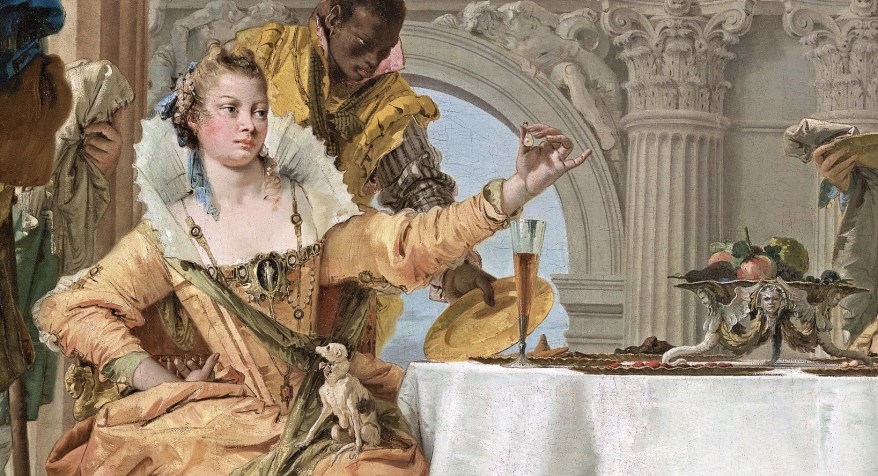
Quando Cleopatra umiliò Roma: il significato nascosto del celebre dipinto di Tiepolo
🇮🇹 Il dipinto che vi propongo è pura teatralità, lusso e strategia. Cleopatra scommette con Marco Antonio di poter offrire il banchetto più sontuoso della storia e per vincere compie un gesto folle… 🇬🇧 The painting I propose is pure theatricality, luxury, and strategy. Cleopatra bets Mark Antony that she can offer the most sumptuous…
-
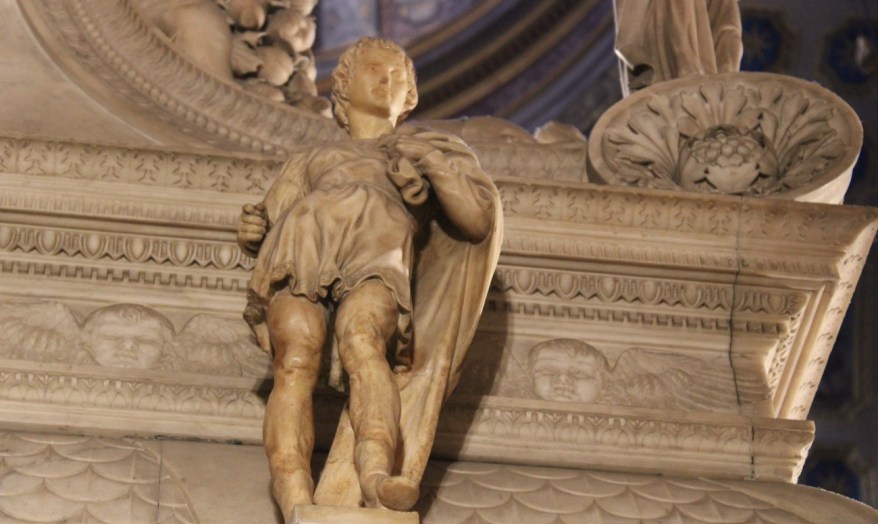
Il mio primo soggiorno a Bologna e l’incontro con Giovan Francesco Aldrovandi
🇮🇹Fuggii da Firenze a soli 19 anni. Senza certezze, senza protezioni. Solo con il mio talento. A Bologna trovai rifugio nella casa di Giovan Francesco Aldrovandi… 🇬🇧I fled Florence at just 19. Without certainties, without protection. Only with my talent. In Bologna, I found refuge in the home of Giovan Francesco Aldrovandi…
-
11 aprile 1514: muore Donato Bramante, il genio della scala elicoidale
🇮🇹Era l’11 aprile 1514 quando Donato Bramante morì a Roma. La sua scomparsa non cancellò però le tensioni, le rivalità e i giudizi contrastanti che avevano accompagnato tutta la sua carriera… 🇬🇧It was April 11, 1514, when Donato Bramante died in Rome. His passing, however, did not erase the tensions, rivalries, and conflicting opinions that…
Condividi:


Questo sono io





sostienici

Sostienici – Support Us
Se questo blog ti piace e ti appassiona, puoi aiutarci a farlo crescere sempre più sostenendoci in modo concreto condividendo i post, seguendo le pagine social e con un contributo che ci aiuta ad andare avanti con il nostro lavoro di divulgazione. . ENGLISH: If you like and are passionate about this blog, you can help us make it grow more and more by supporting us in a concrete way by sharing posts, following social pages and with a contribution that helps us to move forward with our dissemination work.
€10,00


