

La Scultura del giorno: Sira di Alessandro Rondoni
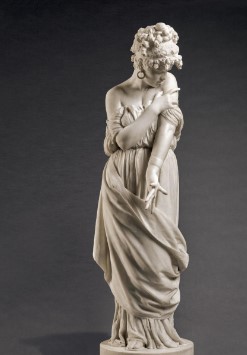
La scultura del giorno che vi propongo oggi è Sira, scolpita da Alessandro Rondoni nel 1877 che volle ispirarsi a un popolare romanzo dato alle stampe nel 1854.
Il libro in questione è Fabiola o la Chiesa delle Catacombe del cardinale inglese Nicholas Wiseman, ambientato nel IV secolo d.C.

In quelle pagine viene raccontata la storia dell’eroina Fabiola, una privilegiata ragazza romana la cui schiava Sira è una cristiana in incognito.
Se il suo credo fosse stato scoperto, sarebbe sicuramente stata perseguitata dal regime dell’imperatore. Quando però durante un momento di rabbia Fabiola colpisce e ferisce la schiava Sira, la sua reazione leale e umile sconvolge Fabiola che poco a poco si converte al critianesimo.

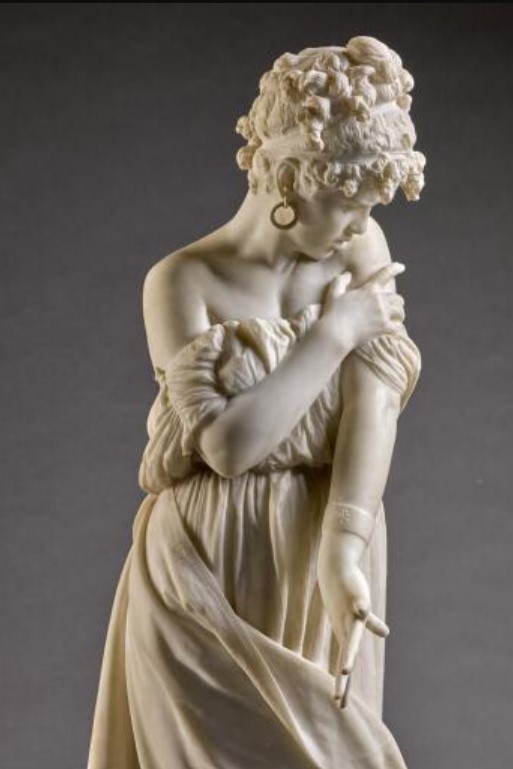
Rondoni scolpì Sira appena dopo essere stata colpita da Fabiola. Si guarda la parte offesa del braccio e nel volto ha impressa una smorfia che ben fa percepire allo spettatore non solo il dolore provato in quel momento ma anche l’umiliazione subita.
E’ l’opera più riuscita dell’artista, esposta per la prima volta a Napoli nel 1877 poi a Torino, Roma e infine a Londra nel 1888. Una versione a grandezza naturale dell’opera è custodita presso la Galleria Nazionale d’Arte Moderna di Roma ed è quella che l’artista presentò all’Esposizione di Napoli, dove fu acquistata dal Ministero della Pubblica Istruzione.
Il romanzo di Fabiola divenne molto popolare all’epoca in Italia tanto che, qualche anno dopo, nel 1918, fu riproposto in un film.
Il soggetto esotico era perfetto per l’artist che, seguendo la moda orientalista del suo tempo, non esitò nel sceglierlo per scolpirlo con la sua maestria. La fronte corrugata della giovane, le dita allargate e quell’abito che lascia scoperte le spalle mettono in evidenza le origini orientali della giovane e il suo disappunto per ciò che era appena accaduto.
Osservate con attenzione quegli orecchini a cerchio ai lobi e le ciocche finemente scolpite: dei dettagli che solo un grande scultore oggi spesso dimenticato poteva essere in grado di realizzare.
Alessandro Rondoni, dopo aver studiato presso l’Istituto Bellini di Novara, ebbe modo di frequentare l’Accademia Albertina di Torino sotto l’attenta guida del grande Vincenzo Vela.
Le influenze del suo maestro contribuiranno a determinare il suo stile per il resto della vita. La scutura di Sira riscosse fin da subito un grande riscontro da parte del pubblico e della critica tanto che Pietro Ferrigni la volle definire come “una delle opere più perfette, più carezzose in vista, più vagamente immaginate ed eseguite della mostra di scultura”

Per il momento il vostro Michelangelo Buonarroti vi saluta dandovi appuntamento ai prossimi post e sui social.

Sculpture of the day: Sira by Alessandro Rondoni
The sculpture of the day that I propose to you today is Sira, sculpted by Alessandro Rondoni in 1877 who wanted to take inspiration from a popular novel published in 1854.
The book in question is Fabiola or the Church of the Catacombs by the English cardinal Nicholas Wiseman, set in the 4th century AD.
In those pages the story of the heroine Fabiola is told, a privileged Roman girl whose slave Sira is a Christian in disguise.
If her beliefs were discovered, she would certainly be persecuted by the emperor’s regime. However, when during a moment of anger Fabiola hits and injures the slave Sira, her loyal and humble reaction shocks Fabiola who little by little converts to Christianity.
Rondoni sculpted Sira just after being hit by Fabiola. She looks at the offended part of her arm and has a grimace on her face that allows the viewer to perceive not only the pain felt in that moment but also the humiliation suffered.
It is the artist’s most successful work, exhibited for the first time in Naples in 1877 then in Turin, Rome and finally in London in 1888. A life-size version of the work is kept at the National Gallery of Modern Art of Rome and is the one that the artist presented at the Naples Exhibition, where it was purchased by the Ministry of Public Education.
Fabiola’s novel became very popular at the time in Italy, so much so that, a few years later, in 1918, it was made into a film.
The exotic subject was perfect for the artist who, following the orientalist fashion of his time, did not hesitate in choosing it to sculpt with his mastery. The young woman’s furrowed forehead, her spread fingers and that dress that leaves her shoulders uncovered highlight the young woman’s oriental origins and her disappointment at what had just happened.
Look carefully at those hoop earrings on the lobes and the finely sculpted locks: details that only a great sculptor often forgotten today could have been able to create.
Alessandro Rondoni, after studying at the Bellini Institute in Novara, had the opportunity to attend the Albertina Academy in Turin under the careful guidance of the great Vincenzo Vela.
The influences of his teacher will help determine his style for the rest of his life. Sira’s sculpture immediately received great response from the public and critics, so much so that Pietro Ferrigni wanted to define it as “one of the most perfect, most caressing in sight, most vaguely imagined and executed works of the sculpture exhibition”
For the moment, your Michelangelo Buonarroti greets you and will meet you in future posts and on social media.

Sostienici – Support Us
Se questo blog ti piace e ti appassiona, puoi aiutarci a farlo crescere sempre più sostenendoci in modo concreto condividendo i post, seguendo le pagine social e con un contributo che ci aiuta ad andare avanti con il nostro lavoro di divulgazione. . ENGLISH: If you like and are passionate about this blog, you can help us make it grow more and more by supporting us in a concrete way by sharing posts, following social pages and with a contribution that helps us to move forward with our dissemination work.
8,00 €
-
Sotto un cielo di glicine: la magia di Villa Bardini
🇮🇹Per pochi giorni all’anno, il pergolato di Villa Bardini si trasforma in un tunnel lilla lungo 70 metri, dove profumo e bellezza si intrecciano sopra una delle viste più romantiche di Firenze… 🇬🇧For a few days a year, the pergola of Villa Bardini transforms into a 70-meter-long lilac tunnel, where scent and beauty intertwine above…
-
Come se la giustizia negata in vita possa compiersi altrove
🇮🇹Se davvero l’anima, una volta sciolta dal corpo, ritorna sulla terra per vivere ancora, così mi domando, quale sorte attende chi oggi appare tanto bella ai miei occhi, ma così crudele nel cuore? 🇬🇧If the soul, once freed from the body, truly returns to earth to live again, I ask myself, what fate awaits the…
-
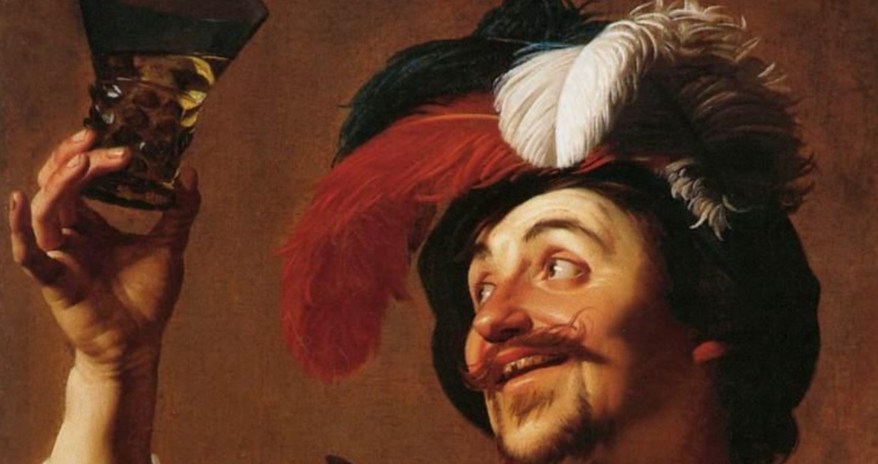
Quel sorriso del violinista felice di Gerrit van Honthorst
🇮🇹Un brindisi, un sorriso, una luce che taglia il buio. Conoscete il dipinto del violinista felice con un bicchiere di vino (1624) di Gerrit van Honthorst?… 🇬🇧A toast, a smile, a light that cuts through the darkness. Are you familiar with the painting of the Happy Violinist with a Glass of Wine (1624) by Gerrit…
Condividi:


Questo sono io





sostienici

Sostienici – Support Us
Se questo blog ti piace e ti appassiona, puoi aiutarci a farlo crescere sempre più sostenendoci in modo concreto condividendo i post, seguendo le pagine social e con un contributo che ci aiuta ad andare avanti con il nostro lavoro di divulgazione. . ENGLISH: If you like and are passionate about this blog, you can help us make it grow more and more by supporting us in a concrete way by sharing posts, following social pages and with a contribution that helps us to move forward with our dissemination work.
€10,00


