
Le Opere del Natale: la Sacra Famiglia di Rembrandt
L’Opera del Natale che vi propongo oggi è la Sacra Famiglia con angeli dipinta da Rembrandt a olio su tela nel 1645.
E’ un’opera iconica che raffigura la Vergine Maria, San Giuseppe, il Bambino Gesù e un gruppo di angeli. L’opera con la sua intensità riesce a esprimere al meglio la sacralità e la bellezza della famiglia Santa.
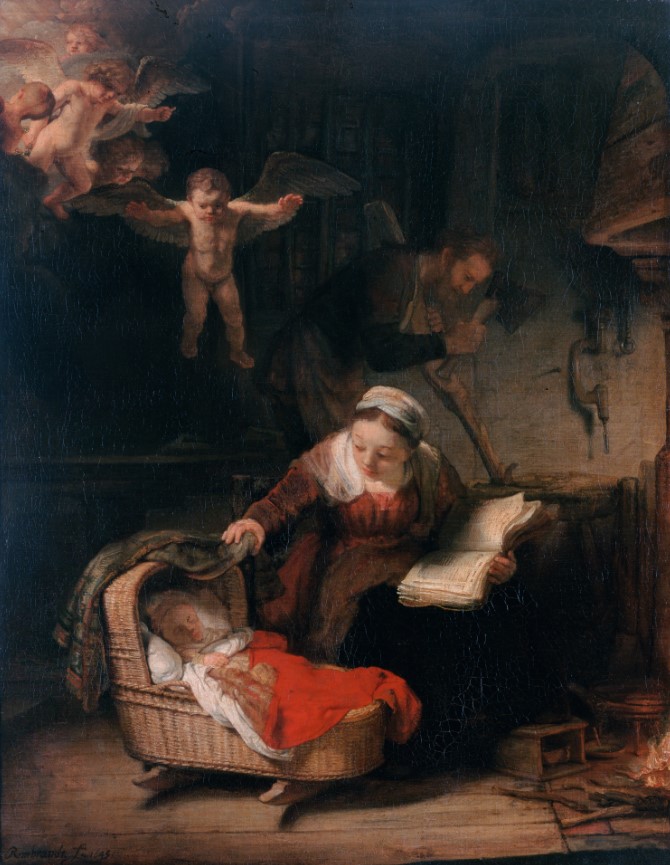
La scena si svolge all’interno della bottega di falegnameria di San Giuseppe. Gli attrezzi del mestiere rimangono nella zona in penombra e si può osservare Giuseppe al lavoro mentre realizza un giogo.
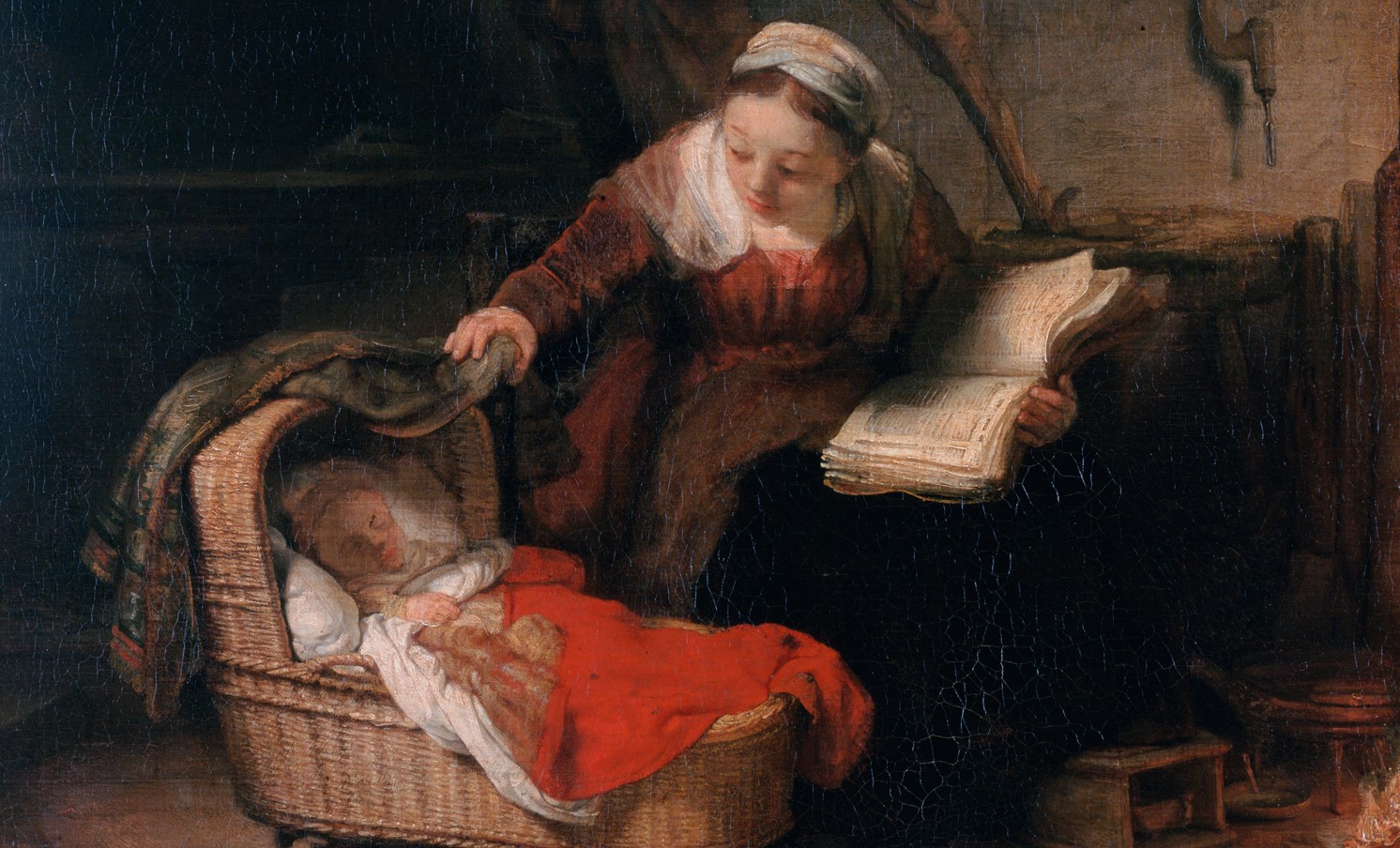
Maria invece è in primo piano ed è illuminata da una luce proveniente dall’alto. Si protende in avanti sopra la culla con Gesù mentre tiene in grembo un libro aperto. Quel volume probabilmente è la Bibbia e sta leggendo le profezie che riguardano la nascita di suo Figlio ma anche quello che i profeti annunciarono in merito alla sua morte.
Osservate con attenzione gli angeli in volo che si stanno dirigendo verso la Madre e il Figlio. Uno in particolare ha le braccia aperte a croce e non è affatto un gesto casuale ma l’evocazione della sorte che toccherà a Cristo.
Rembrandt ha saputo rendere la scena con maestria, utilizzando la sua abilità nel dipingere la luce e le ombre per creare un’atmosfera mistica. I volti dei personaggi sono segnati da espressioni amorevoli.

I toni caldi e i giochi di luce adoperati dall’artista conferiscono al dipinto una bellezza senza tempo. Ogni dettaglio è curato con grande precisione, rendendo ogni figura vivida e realistica.
L’opera appartenente al Museo dell’Hermitage di San Pietroburgo è firmata e datata dall’artista con la scritta “REMBRANDT F. 1645”.
Per il momento il vostro Michelangelo Buonarroti vi saluta dandovi appuntamento ai prossimi post e sui social.

The Christmas Works: Rembrandt’s Holy Family
The Christmas work that I propose to you today is the Holy Family with angels painted by Rembrandt in oil on canvas in 1645.
It is an iconic work that depicts the Virgin Mary, Saint Joseph, the Baby Jesus and a group of angels. The work with its intensity manages to best express the sacredness and beauty of the Holy family.
The scene takes place inside San Giuseppe’s carpentry shop. The tools of the trade remain in the dim area and you can observe Giuseppe at work while he makes a yoke.
Mary, on the other hand, is in the foreground and is illuminated by a light coming from above. She leans forward over the crib with Jesus while she holds an open book in her lap. That volume is probably the Bible and she is reading the prophecies regarding the birth of her Son but also what the prophets announced regarding her death.
Observe carefully the flying angels who are heading towards the Mother and the Son. One in particular has his arms open like a cross and it is not at all a casual gesture but the evocation of the fate that will befall Christ.
Rembrandt was able to render the scene with mastery, using his ability to paint light and shadows to create a mystical atmosphere. The faces of the characters are marked by loving and sacred expressions.
The warm tones and the play of light used by the artist give the painting a timeless beauty. Every detail is taken care of with great precision, making each figure vivid and realistic.
The work belonging to the Hermitage Museum in St. Petersburg is signed and dated by the artist with the writing “REMBRANDT F. 1645”.
For the moment, your Michelangelo Buonarroti greets you and will meet you in future posts and on social media.

Sostienici – Support Us
Se questo blog ti piace e ti appassiona, puoi aiutarci a farlo crescere sempre più sostenendoci in modo concreto condividendo i post, seguendo le pagine social e con un contributo che ci aiuta ad andare avanti con il nostro lavoro di divulgazione. . ENGLISH: If you like and are passionate about this blog, you can help us make it grow more and more by supporting us in a concrete way by sharing posts, following social pages and with a contribution that helps us to move forward with our dissemination work.
8,00 €
-
La Pietà di Tincolini: a Pontedera l’arte torna a fare domande scomode
🇮🇹“Pietà”, la scultura di Filippo Tincolini, insieme alle parole di Federico Quaranta e Andrea Pezzi, non è stato solo uno spettacolo. È stata una domanda lanciata in faccia al pubblico, impossibile da evitare: siamo ancora capaci di provare pietà? 🇬🇧 “Pietà,” Filippo Tincolini’s sculpture, along with the words of Federico Quaranta and Andrea Pezzi, wasn’t…
-
Ai Musei Vaticani i fasti barocchi di Urbano VIII: in mostra gli arazzi della manifattura Barberini
🇮🇹A quattro secoli dalla consacrazione della Basilica di San Pietro, i Musei Vaticani dedicano una mostra all’Arazzeria Barberini, simbolo di una cultura visiva capace di fondere magnificenza estetica e affermazione politica… 🇬🇧Four centuries after the consecration of St. Peter’s Basilica, the Vatican Museums are dedicating an exhibition to the Barberini Tapestry Factory, a symbol of…
-
Le Opere della Pasqua: come la Resurrezione ha ispirato Arte e Cultura
🇮🇹La Pasqua, oltre ad essere una ricorrenza religiosa è un momento in cui la storia, l’arte e la spiritualità si intrecciano per raccontare il fulcro della fede cristiana: la resurrezione di Cristo. .. 🇬🇧Easter, beyond being a religious holiday, is a moment when history, art, and spirituality intertwine to recount the core of the Christian…
Condividi:


Questo sono io





sostienici

Sostienici – Support Us
Se questo blog ti piace e ti appassiona, puoi aiutarci a farlo crescere sempre più sostenendoci in modo concreto condividendo i post, seguendo le pagine social e con un contributo che ci aiuta ad andare avanti con il nostro lavoro di divulgazione. . ENGLISH: If you like and are passionate about this blog, you can help us make it grow more and more by supporting us in a concrete way by sharing posts, following social pages and with a contribution that helps us to move forward with our dissemination work.
€10,00


