
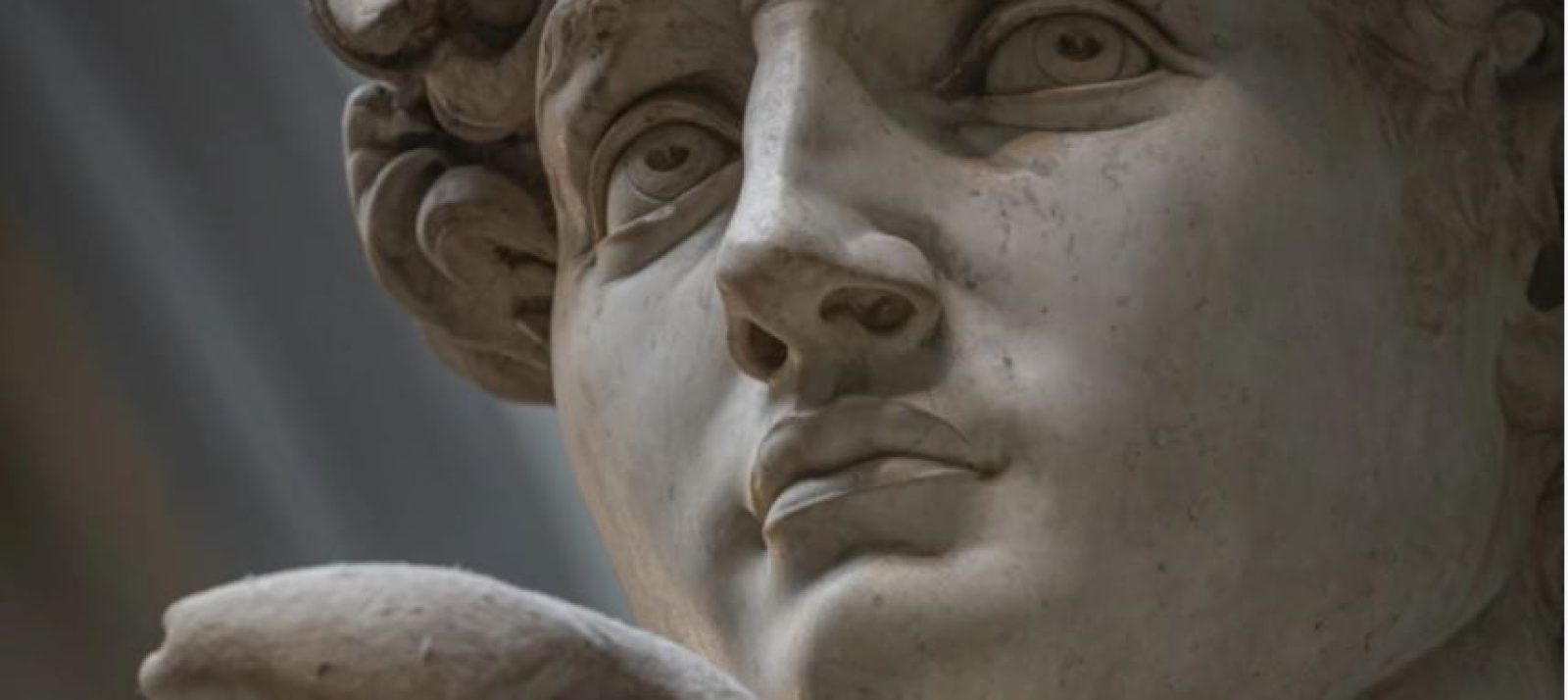
La Scultura del giorno: Apollo servito dalle Ninfe di Girardon
La scultura del giorno che vi propongo oggi è il grande gruppo di Apollo servito dalle Ninfe realizzato da Francois Girardon nel 1666 per i giardini della Reggia di Versailles.
Fu re Luigi XIV a commissionare allo scultore il monumentale complesso che esalta il dio Apollo per decorare la grotta dedicata a Teti.
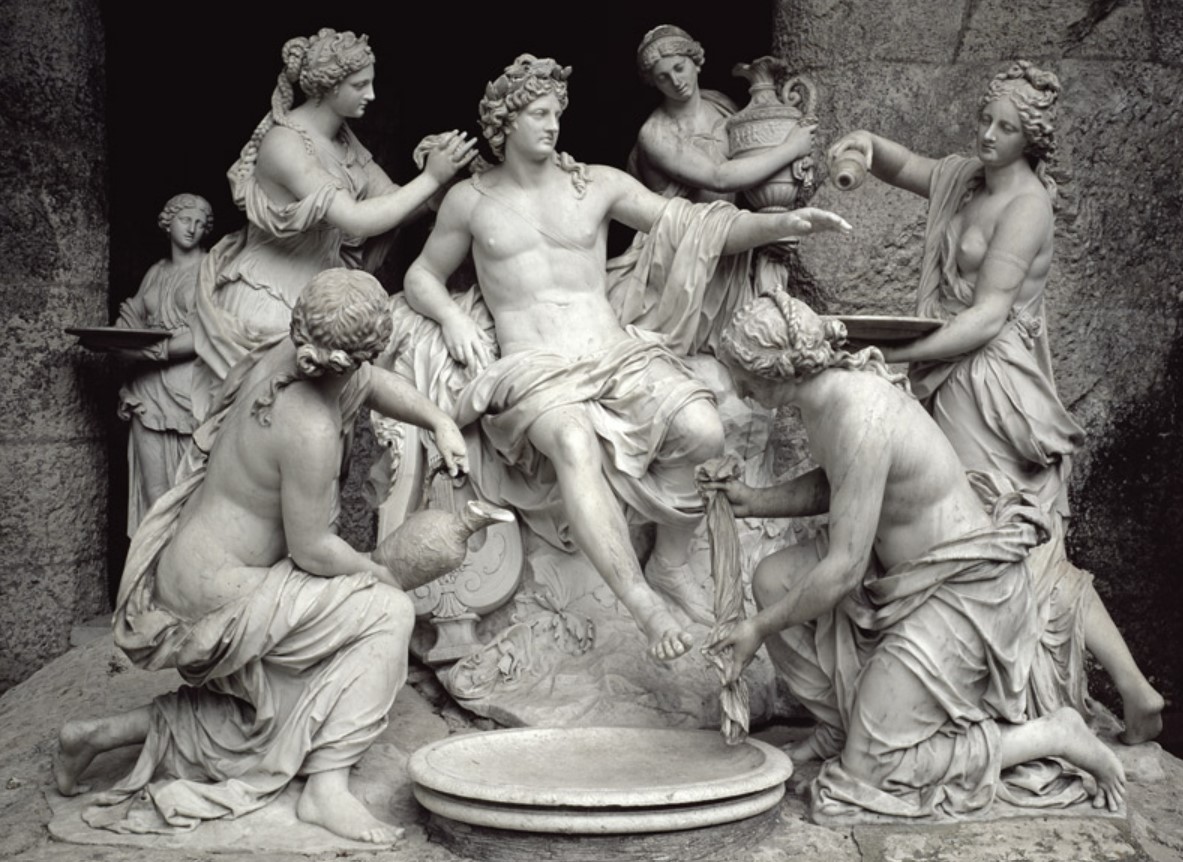
Teti nella mitologia è la titana sposa di Oceano e il re volle fargli costruire una grotta artificiale nella parte nord del giardino di Versailles, decorata con tre grandi gruppi scultorei che rimandassero col pensiero al Re Sole.
La grotta originale fu distrutta nel 1684 ma i gruppi scultorei furono tratti in salvo e oggi si trovano nelle Galleries des Moulages, all’interno della Reggia.
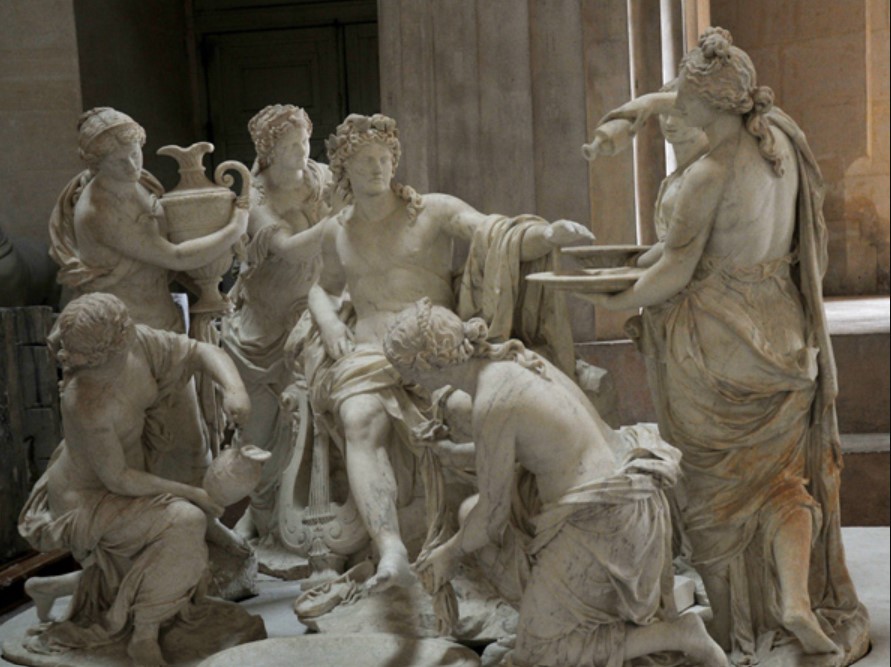
Le sette sculture in stile barocco del gruppo di Apollo servito dalle Ninfe sono il massimo capolavoro massimo di Girardon. Nell’intenzione dello scultore c’era ild esiderio di primeggiare su qualsiasi gruppi scultoreo fino al momento conosciuto.
Osservando il volto di Apollo non vi sarà difficile trovare una grande somiglianza con il più noto Apollo del Belvedere dei Musei Vaticani alla quale l’artista si ispirò liberamente.
Girardon infatti aveva compiuto un lungo viaggio in Italia nel 1657 e da sculture antiche che ebbe modo di apprezzare a Roma, trasse ispirazione.
Il virtuosismo di Girardon sa nella resa dei panneggi sottili che avvolgono le diverse figure rendendole ancora più affascinanti e in quella dei corpi proposti in differenti atteggiamenti.
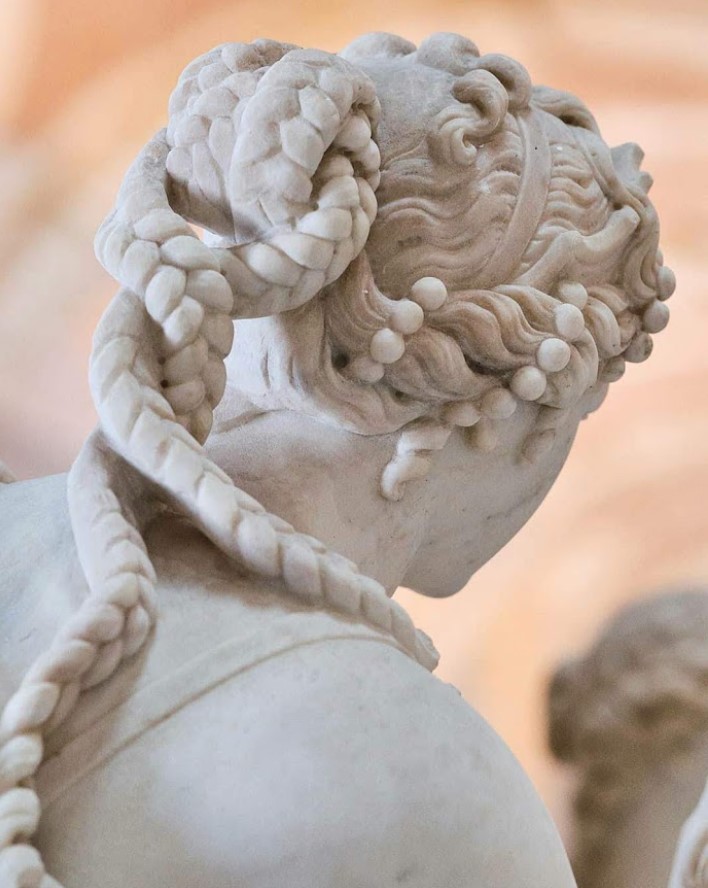
Mirabili anche gli oggetti che aiutano a capire lo svolgersi della scena come i vassoi, la lira, il panno che tiene nelle mani la ninfa che asciuga i piedi ad Apollo e le raffinatissime acconciature decorate con fili di perle.

Per il momento il vostro Michelangelo Buonarroti vi saluta dandovi appuntamento ai prossimi post e sui social.
Sculpture of the day: Apollo served by the Nymphs of Girardon
The sculpture of the day that I propose to you today is the large group of Apollo served by the Nymphs created by Francois Girardon in 1666 for the gardens of the Palace of Versailles.
It was King Louis XIV who commissioned the sculptor the monumental complex that exalts the god Apollo to decorate the cave dedicated to Thetis.
In mythology, Thetis is the titan wife of Oceanus and the king wanted him to build an artificial cave in the northern part of the garden of Versailles, decorated with three large sculptural groups that bring to mind the Sun King.
The original cave was destroyed in 1684 but the sculptural groups were saved and today are found in the Galleries des Moulages, inside the Palace.
The seven Baroque style sculptures of the group of Apollo served by the Nymphs are Girardon’s greatest masterpiece. In the sculptor’s intention there was the desire to excel over any sculptural group known up to the moment.
Observing the face of Apollo it will not be difficult to find a great resemblance to the better-known Apollo of the Belvedere of the Vatican Museums from which the artist freely took inspiration. In fact, Girardon had made a long trip to Italy in 1657 and he drew inspiration from ancient sculptures that he had the opportunity to appreciate in Rome.
Girardon’s virtuosity can be seen in the rendering of the subtle drapery that envelops the different figures making them even more fascinating and in that of the bodies proposed in different attitudes.
Also admirable are the objects that help us understand the unfolding of the scene such as the trays, the lyre, the cloth held in the hands of the nymph drying Apollo’s feet and the very refined hairstyles decorated with strings of pearls.
For the moment, your Michelangelo Buonarroti greets you and will meet you in future posts and on social media.

Sostienici – Support Us
Se questo blog ti piace e ti appassiona, puoi aiutarci a farlo crescere sempre più sostenendoci in modo concreto condividendo i post, seguendo le pagine social e con un contributo che ci aiuta ad andare avanti con il nostro lavoro di divulgazione. . ENGLISH: If you like and are passionate about this blog, you can help us make it grow more and more by supporting us in a concrete way by sharing posts, following social pages and with a contribution that helps us to move forward with our dissemination work.
8,00 €
-
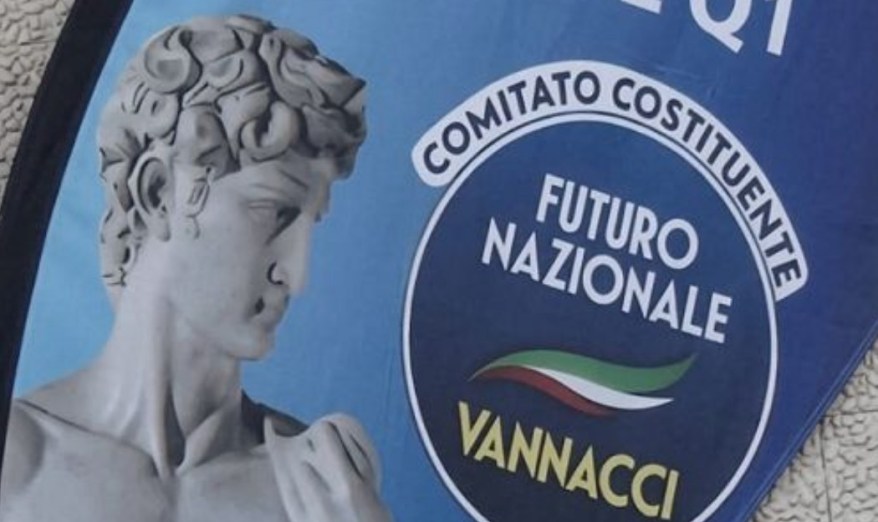
Il mio David utilizzato per propaganda politica
🇮🇹Il David finisce su manifesti politici senza autorizzazione. La Galleria dell’Accademia interviene sulla questione asserendo di non aver dato alcuna autorizzazione… 🇬🇧The David ends up on political posters without authorization. The Accademia Gallery intervenes on the issue, claiming it did not give any authorization..
-
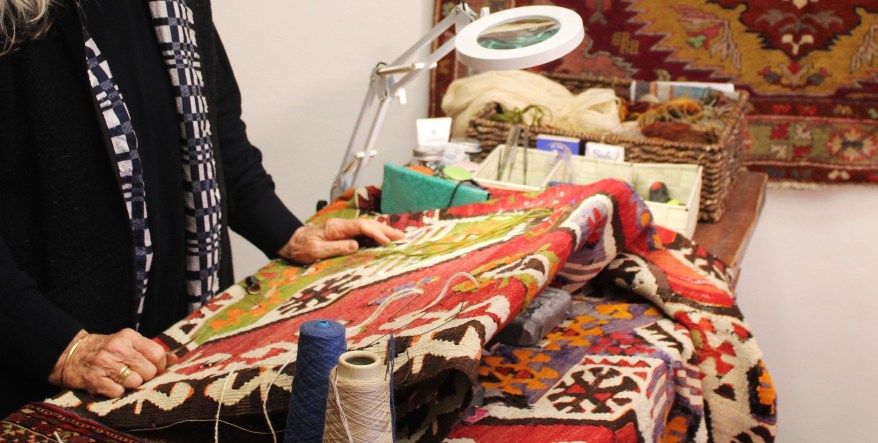
Restauro tappeti d’arte a Pietrasanta: tradizione e segreti di un laboratorio centenario
🇮🇹Il fascino dei tappeti d’arte prende vita a Pietrasanta. Venite con me nel laboratorio di “Restauro Tappeti d’Arte” di Orna Bachar e Benedetto Bumaguin, dove ogni tappeto antico è una vera opera d’arte… 🇬🇧The charm of artistic carpets comes to life in Pietrasanta. Come with me to Orna Bachar and Benedetto Bumaguin’s “Artistic Carpet Restoration”…
-
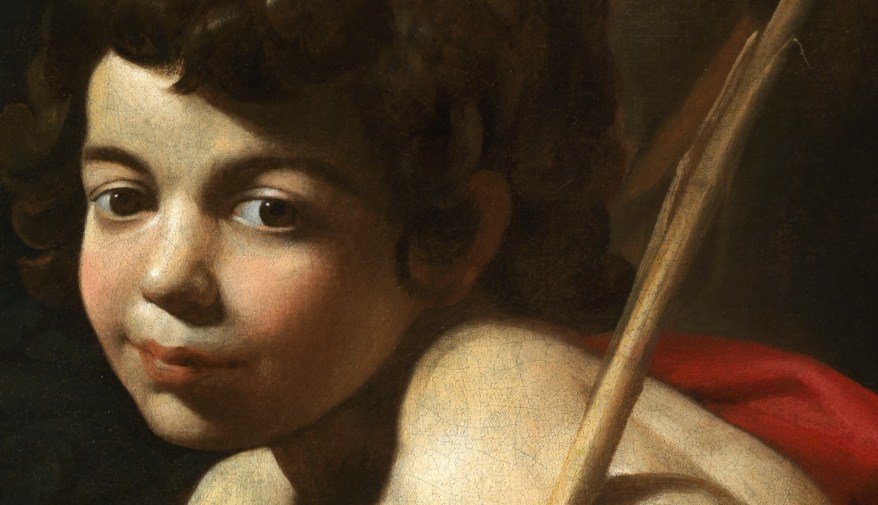
Battistello Caracciolo e il suo San Giovannino: il capolavoro che rivela l’eredità di Caravaggio
🇮🇹Per anni attribuito al Caravaggio, il San Giovannino del Caracciolo rivela invece la sensibilità unica di Battistello: un equilibrio perfetto tra realismo e dolcezza, tra inquietudine e grazia… 🇬🇧For years attributed to Caravaggio, Caracciolo’s Saint John the Baptist instead reveals Battistello’s unique sensitivity: a perfect balance between realism and sweetness, between restlessness and grace…
Condividi:


Questo sono io





sostienici

Sostienici – Support Us
Se questo blog ti piace e ti appassiona, puoi aiutarci a farlo crescere sempre più sostenendoci in modo concreto condividendo i post, seguendo le pagine social e con un contributo che ci aiuta ad andare avanti con il nostro lavoro di divulgazione. . ENGLISH: If you like and are passionate about this blog, you can help us make it grow more and more by supporting us in a concrete way by sharing posts, following social pages and with a contribution that helps us to move forward with our dissemination work.
€10,00


