

La Scultura del giorno: Delizie Materne di Ambrogio Borghi
La scultura del giorno che vi propongo oggi è Delizie Materne di Ambrogio Borghi, realizzata dall’artista nel 1870.
Ambrogio Borghi, celebre per la sua Chioma di Berenice, nel corso della sua vita realizzò molte opere che avevano come tema centrale la maternità. Ne realizzò talmente tante che iniziò a non sorprendere più durante le esposizioni, con lo stesso soggetto riproposti in vesti diverse ma con l’onnipresente madre con bambino.
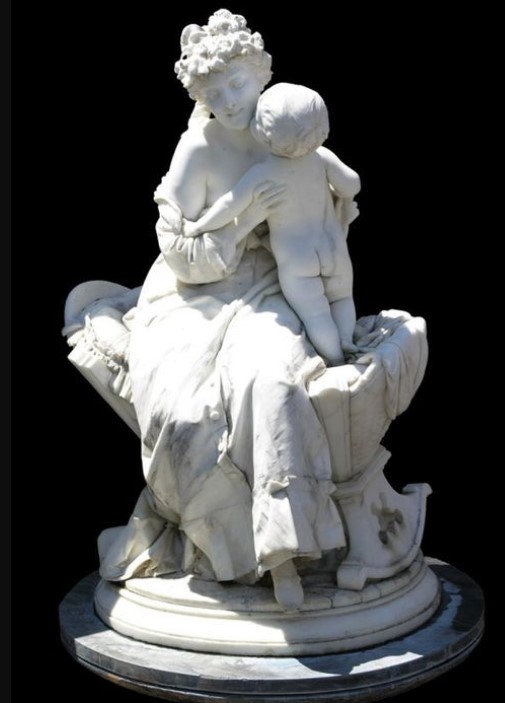
La scultura Delizie Materne fu proposta per la prima volta da Borghi all’Esposizione di Belle Arti a Brera del 1875, espone il gruppo in marmo Delizie Materne e successivamente, nel 1881, la propose all’Esposizione Nazionale di Milano assieme a Cola di Rienzi Giovinetto.
Nel 1884, il giornale L’Illustrazione Popolare, pubblica il suo gruppo Gioie Materne scrivendo dell’artista: “Borghi è un’artista milanese che lavora assai. Egli ha già fatto più d’un monumento per Vittorio Emanuele; ha tentato più generi – il forte col Cromwell, il delicato con questa ed altre opere, la scultura di tema storico, e quella generica: e in tutte dà prova di talento.”

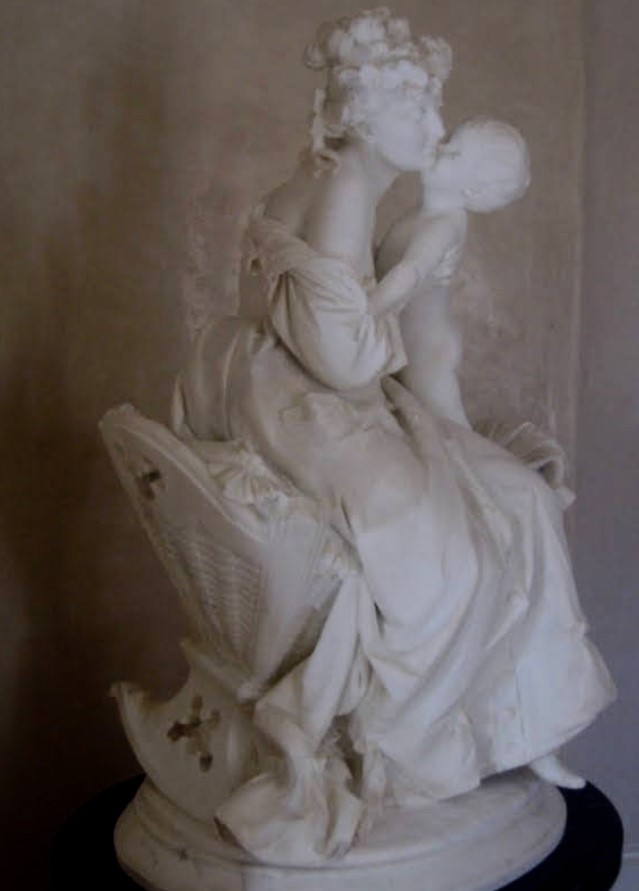
La giovane madre scolpita da Borghi probabilmente ha appena finito di allattare e ha ancora la veste che le scende dalle spalle. Realizzata in un tessuto abbastanza pesante, l’abito forma delle pieghe abbastanza rigide che rendono l’idea di una stoffa non leggerissima.
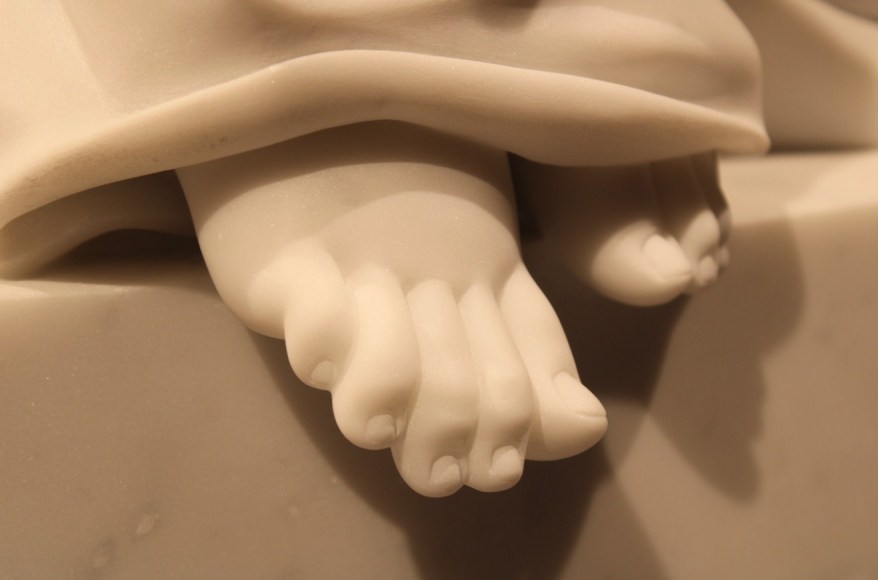
Al di sotto della veste si intravede la punta di una scarpa con la tomaia di stoffa.

La donna è seduta sulla culla intrecciata e sostiene il bambino sotto le braccia mentre le si avvicina e sta per darle un bacio.
Le Gioie Materne subirono in alcune esposizioni, come quella di Parigi a cui Borghi propose anche altre opere, non poche critiche proprio per la ripetitività del soggetto materno.
Per il momento il vostro Michelangelo Buonarroti vi saluta dandovi appuntamento ai prossimi post e sui social.
Sculpture of the day: Maternal Delights by Ambrogio Borghi
The sculpture of the day that I propose to you today is Materne Delizie by Ambrogio Borghi, created by the artist in 1870.
Ambrogio Borghi, famous for his Chioma di Berenice, during his life created many works that had motherhood as their central theme. He made so many that he began to no longer surprise during the exhibitions, with the same subject reproposed in different guises but with the ubiquitous mother and child.
The sculpture Delizie Materne was proposed for the first time by Borghi at the Brera Fine Arts Exhibition of 1875, he exhibited the Delizie Materne marble group and subsequently, in 1881, he proposed it at the National Exhibition in Milan together with Cola di Rienzi Giovinetto .
In 1884, the newspaper L’Illustration Popolare published his group Gioie Materne, writing about the artist: “Borghi is a Milanese artist who works a lot. He has already made more than one monument for Vittorio Emanuele; he has tried several genres – the strong with the Cromwell, the delicate with this and other works, the sculpture with a historical theme, and the generic one: and in all of them he shows his talent. ”
The young mother sculpted by Borghi has probably just finished breastfeeding and still has her dress hanging from her shoulders. Made of a fairly heavy fabric, the dress forms quite stiff folds that give the idea of a fabric that is not very light.
Underneath her dress can be seen the tip of a shoe with a cloth upper.
The woman is sitting on the woven cradle and she holds the baby under her arms as she approaches her and is about to give her a kiss.
The Maternal Joys suffered in some exhibitions, such as the one in Paris to which Borghi also proposed other works, not a few criticisms precisely because of the repetitiveness of the maternal subject.
For the moment, your Michelangelo Buonarroti greets you by making an appointment for the next posts and on social media.

Sostienici – Support Us
Se questo blog ti piace e ti appassiona, puoi aiutarci a farlo crescere sempre più sostenendoci in modo concreto condividendo i post, seguendo le pagine social e con un contributo che ci aiuta ad andare avanti con il nostro lavoro di divulgazione. . ENGLISH: If you like and are passionate about this blog, you can help us make it grow more and more by supporting us in a concrete way by sharing posts, following social pages and with a contribution that helps us to move forward with our dissemination work.
8,00 €
-
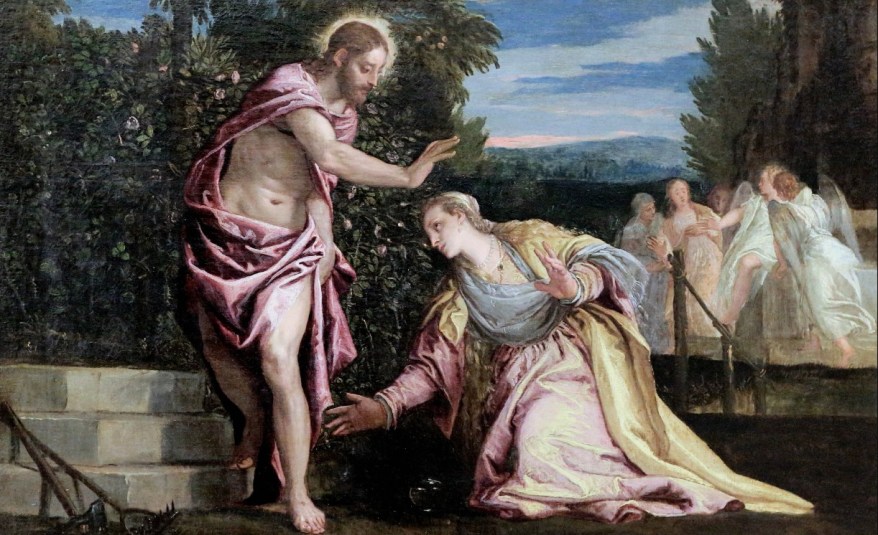
Pasquetta, tra spiritualità e arte: il significato del Lunedì dell’Angelo e i capolavori del “Noli me tangere”
🇮🇹Il Lunedì dell’Angelo racchiude uno dei momenti più intensi del Vangelo: l’incontro tra Gesù risorto e Maria Maddalena, raccontato nel celebre “Noli me tangere”. Un episodio che nei secoli ha ispirato artisti straordinari, dando vita a opere cariche di emozione, spiritualità e bellezza. .. 🇬🇧Easter Monday encompasses one of the most intense moments in the…
-
La Pietà di Tincolini: a Pontedera l’arte torna a fare domande scomode
🇮🇹“Pietà”, la scultura di Filippo Tincolini, insieme alle parole di Federico Quaranta e Andrea Pezzi, non è stato solo uno spettacolo. È stata una domanda lanciata in faccia al pubblico, impossibile da evitare: siamo ancora capaci di provare pietà? 🇬🇧 “Pietà,” Filippo Tincolini’s sculpture, along with the words of Federico Quaranta and Andrea Pezzi, wasn’t…
-
Ai Musei Vaticani i fasti barocchi di Urbano VIII: in mostra gli arazzi della manifattura Barberini
🇮🇹A quattro secoli dalla consacrazione della Basilica di San Pietro, i Musei Vaticani dedicano una mostra all’Arazzeria Barberini, simbolo di una cultura visiva capace di fondere magnificenza estetica e affermazione politica… 🇬🇧Four centuries after the consecration of St. Peter’s Basilica, the Vatican Museums are dedicating an exhibition to the Barberini Tapestry Factory, a symbol of…
Condividi:


Questo sono io





sostienici

Sostienici – Support Us
Se questo blog ti piace e ti appassiona, puoi aiutarci a farlo crescere sempre più sostenendoci in modo concreto condividendo i post, seguendo le pagine social e con un contributo che ci aiuta ad andare avanti con il nostro lavoro di divulgazione. . ENGLISH: If you like and are passionate about this blog, you can help us make it grow more and more by supporting us in a concrete way by sharing posts, following social pages and with a contribution that helps us to move forward with our dissemination work.
€10,00


