
6 agosto: la Trasfigurazione di Cristo nell’arte
Il 6 agosto la chiesa Cattolica ricorda la Trasfigurazione di Cristo, un’episodio della sua vita narrato dai Vangeli di Marco, Matteo e Luca. Gesù dinnanzi ai discepoli Pietro, Giovanni e Luca, cambia improvvisamente aspetto e si mostra pieno di luce, con una veste candida.
Assieme a Cristo compaiono Mosè ed Elia che parlano con Lui mentre da una nube si alza una voce che indica Gesù come il Figlio di Dio.
Lo splendore di Cristo è la sua Trascendenza mentre la presenza di Mosè ed Elia è la rappresentazione della legge e dei profeti.

“La sua faccia risplendette come il sole e le sue vesti divennero candide come la luce”
Matteo 17, 2
Cristo riferisce a Pietro, Giovanni e Luca che dopo la sua morte in croce, sarà quella l’immagine che vedranno tutti e dodici tutti gli apostoli.
Sono diversi gli artisti che nel corso dei secoli hanno raffigurato questo episodio dei Vangeli anche se fra tutti i dipinti, quello più celebre, rimane la Trasfigurazione di Raffaello oggi esposta nella Pinacoteca dei Musei Vaticani.
La Trasfigurazione di Raffaello
La Trasfigurazione è il grande dipinto a tempera grassa su tavola che fu commissionato per la cattedrale di San Giusto di Narbonne a Raffaello dal cardinale Giulio de’ Medici che poi diverrà papa Clemente VII. Il cardinale era stato nominato vescovo di quella chiesa nel 1515 e volle decorarla in modo magistrale commissionando per l’appunto questo capolavoro a Raffaello e chiedendo di realizzare a Sebastiano del Piombo la Resurrezione di Lazzaro.
E’ l’ultima opera a cui lavorò Raffaello prima di passare a miglior vita e il Vasari ne parlò così nelle Vite: “la più celebrata, la più bella e la più divina”. Nella parte alta dell’opera si vede Cristo durante la Trasfigurazione fra Mosè ed Elia mentre nella parte più bassa si nota la presenza degli Apostoli con il fanciullo ossesso.
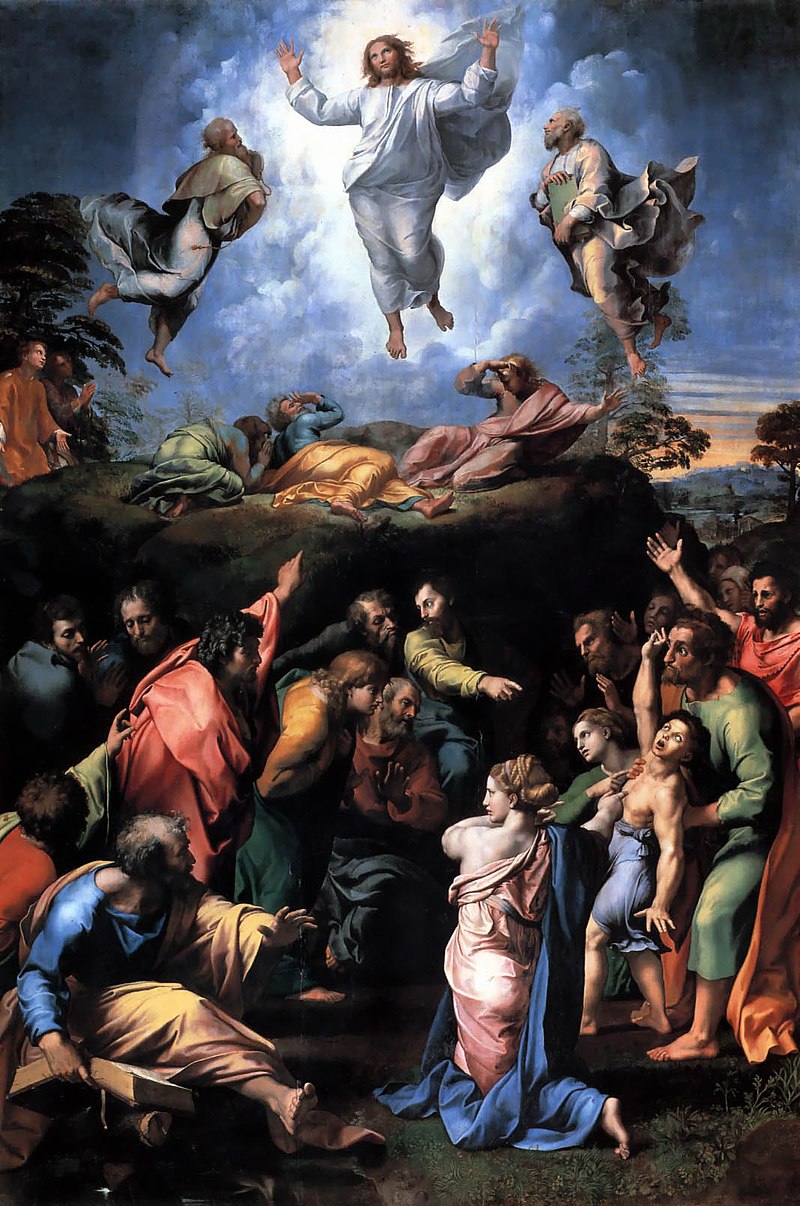
La Trasfigurazione non fu mai inviata oltralpe come previsto perché dopo la precoce morte di Raffaello, il cardinale volle che rimanesse a Roma e la donò successivamente alla chiesa di San Pietro in Montorio. Entrò a far parte della pinacoteca Vaticana solo dopo il 1816, anno della caduta di Napoleone. Ebbene sì, pure questa fu un’opera di cui si era impossessato indebitamente il Bonaparte ma grazie al cielo fu restituita.
La Trasfigurazione del Bellini
La Trasfigurazione dipinta da Giovanni Bellini è stata datata fra il 1478 e il 1479 anche se nel corso dei secoli il volto di Giacomo, quello di Pietro e le foglie dell’albero hanno subito delle ridipinture.
Oggi l’opera appartiene al Museo e Real Bosco di Capodimonte di Napoli ma si pensa che sia stata realizzata per la cappella Fioccardo della cattedrale di Santa Maria Annunciata di Vicenza.

Anche in questo caso si vede Cristo con una feste bianca in mezzo a Mosè ed Elia e inginocchiati ai loro piedi i tre apostoli, increduli e spaventati da quanto sta accadendo dinnanzi ai loro occhi.
La Trasfigurazione di Luca Giordano
Il dipinto a olio su tela della Trasfigurazione, fu commissionato a Luca Giordano dal Granduca Cosimo III per la cifra notevole di 500 scudi. Il pittore terminò l’opera e la consegnò ufficialmente al committente, ovvero al Guardaroba Generale, il 25 ottobre del 1685.
Gesù trascende sul monte Tabor divenendo fonte di luce che illumina Mosè ed Elia e inonda gli apostoli sconcertati.
Il dipinto della Trasfigurazione di Luca Giordano appartiene agli Uffizi ma non è esposto ma bensì ubicato nei depositi museali.

Per il momento il vostro Michelangelo Buonarroti vi saluta dandovi appuntamento ai prossimi post e sui social.
6 August: the Transfiguration of Christ in art
On August 6, the Catholic Church remembers the Transfiguration of Christ, an episode in his life narrated by the Gospels of Mark, Matthew and Luke. Before the disciples Peter, John and Luke, Jesus suddenly changes his appearance and shows himself full of light, with a white robe.
Together with Christ, Moses and Elijah appear talking to Him while a voice rises from a cloud indicating Jesus as the Son of God. The splendor of Christ is the Transcendence of him while the presence of Moses and Elijah is the representation of the law and of the prophets.
“His face shone like the sun and his garments became white as light” Matthew 17, 2
Christ reports to Peter, John and Luke that after his death on the cross, that will be the image that all twelve of the apostles will see.
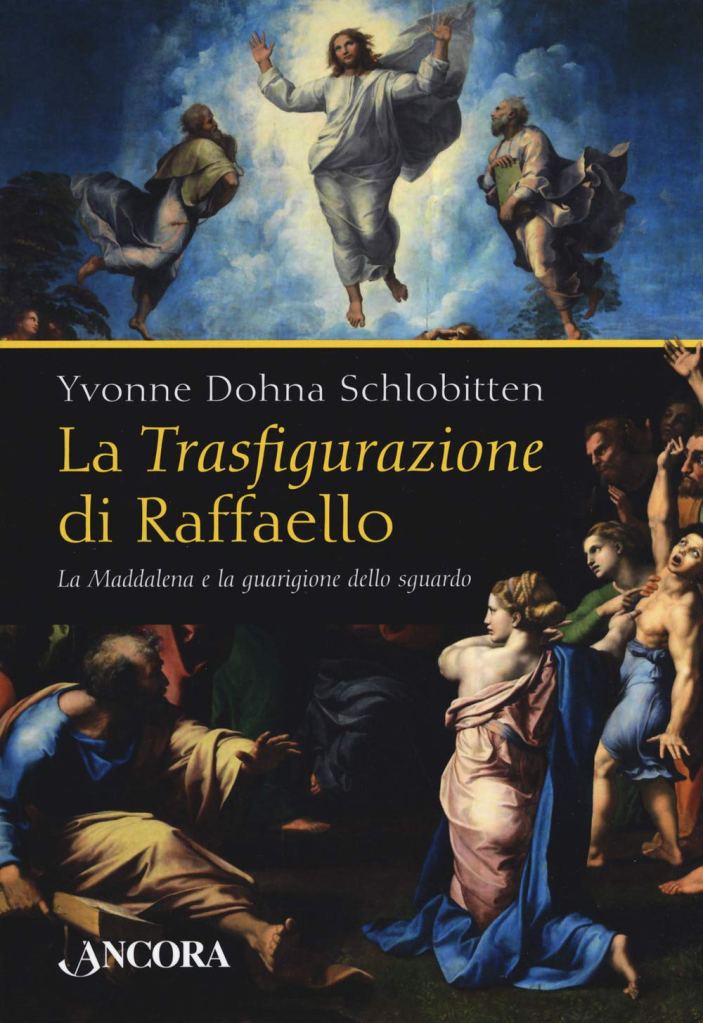
There are several artists who over the centuries have depicted this episode of the Gospels even if among all the paintings, the most famous one, remains the Transfiguration of Raphael, now exhibited in the Pinacoteca of the Vatican Museums.
The Transfiguration by Raphael
The Transfiguration is the large oily tempera painting on wood that was commissioned to Raphael for the Cathedral of San Giusto in Narbonne by Cardinal Giulio de ‘Medici who later became Pope Clement VII. The cardinal had been appointed bishop of that church in 1515 and wanted to decorate it in a masterly way by commissioning this masterpiece from Raphael and asking Sebastiano del Piombo to carry out the Resurrection of Lazarus.
It is the last work on which Raphael worked before passing away and Vasari spoke of it thus in the Lives: “the most celebrated, the most beautiful and the most divine”. In the upper part of the work we see Christ during the Transfiguration between Moses and Elijah while in the lower part we see the presence of the Apostles with the obsessed child.
The Transfiguration was never sent across the Alps as planned because after Raphael’s early death, the cardinal wanted it to remain in Rome and later donated it to the church of San Pietro in Montorio. It became part of the Vatican picture gallery only after 1816, the year of Napoleon’s fall. Well yes, this too was a work that Bonaparte had illegally taken possession of, but thank goodness it was returned.
The Transfiguration by Bellini
The Transfiguration painted by Giovanni Bellini was dated between 1478 and 1479, although over the centuries the face of James, that of Peter and the leaves of the tree have undergone repainting.
Today the work belongs to the Museum and Real Bosco di Capodimonte in Naples but it is thought that it was made for the Fioccardo chapel of the Cathedral of Santa Maria Annunciata in Vicenza.
Also in this case we see Christ with a white feast in the midst of Moses and Elijah and the three apostles kneeling at their feet, incredulous and frightened by what is happening before their eyes.
The Transfiguration by Luca Giordano
The oil painting on canvas of the Transfiguration was commissioned to Luca Giordano by the Grand Duke Cosimo III for the remarkable sum of 500 scudi. The painter finished the work and officially delivered it to the client, or to the General Wardrobe, on 25 October 1685.
Jesus transcends on Mount Tabor becoming a source of light that illuminates Moses and Elijah and floods the bewildered apostles.
Luca Giordano’s painting of the Transfiguration belongs to the Uffizi but is not exhibited but rather located in the museum deposits.
For the moment, your Michelangelo Buonarroti greets you by giving you an appointment at the next posts and on social networks.

Sostienici – Support Us
Se questo blog ti piace e ti appassiona, puoi aiutarci a farlo crescere sempre più sostenendoci in modo concreto condividendo i post, seguendo le pagine social e con un contributo che ci aiuta ad andare avanti con il nostro lavoro di divulgazione. . ENGLISH: If you like and are passionate about this blog, you can help us make it grow more and more by supporting us in a concrete way by sharing posts, following social pages and with a contribution that helps us to move forward with our dissemination work.
8,00 €
-
Pasqua tra arte e spiritualità: la Crocifissione di Tiziano alla Pinacoteca di Ancona
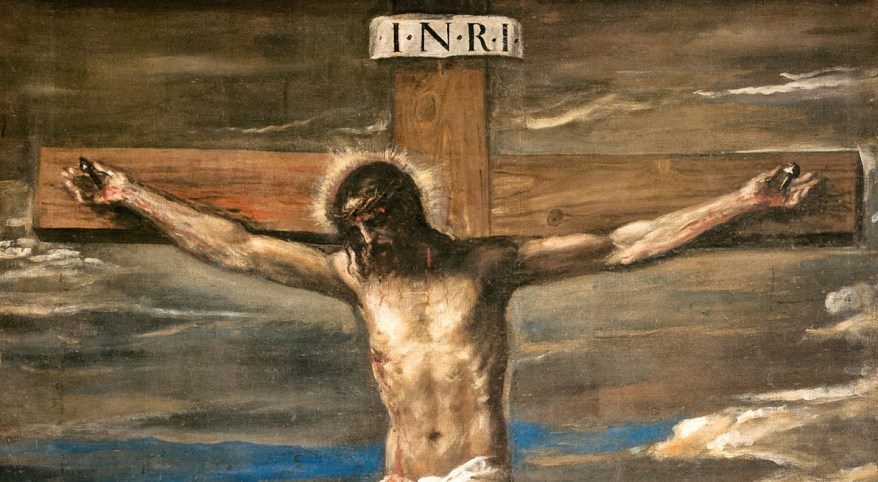
🇮🇹 Pasqua tra arte e emozione. Un’opera intensa, drammatica, capace di parlare ancora oggi al cuore di chi la osserva: è la Crocifissione di Tiziano… 🇬🇧 Easter between art and emotion. An intense, dramatic work, capable of still speaking to the hearts of those who observe it today: Titian’s Crucifixion…
-
Galleria Borghese riapre le mostre dossier: due esposizioni per riscoprire Penni e Provenzale
🇮🇹Le nuove mostre dossier alla Galleria Borghese: Penni e Provenzale protagonisti tra Rinascimento e Barocco, tra capolavori ritrovati e innovazione artistica… 🇬🇧The new dossier exhibitions at the Galleria Borghese: Penni and Provenzale protagonists between the Renaissance and Baroque periods, between rediscovered masterpieces and artistic innovation.
-
Primavera in Italia: i giardini più belli da visitare almeno una volta nella vita
🇮🇹Dai paesaggi romantici del Lazio alle terrazze panoramiche della Costiera Amalfitana: i giardini più belli d’Italia da visitare in primavera, tra fioriture spettacolari e scenari da sogno… 🇬🇧From the romantic landscapes of Lazio to the panoramic terraces of the Amalfi Coast: the most beautiful gardens in Italy to visit in spring, among spectacular blooms and…
Condividi:


Questo sono io





sostienici

Sostienici – Support Us
Se questo blog ti piace e ti appassiona, puoi aiutarci a farlo crescere sempre più sostenendoci in modo concreto condividendo i post, seguendo le pagine social e con un contributo che ci aiuta ad andare avanti con il nostro lavoro di divulgazione. . ENGLISH: If you like and are passionate about this blog, you can help us make it grow more and more by supporting us in a concrete way by sharing posts, following social pages and with a contribution that helps us to move forward with our dissemination work.
€10,00


L’ha ripubblicato su Pittura1arte2disegno3 Community Artistica Culturale.
"Mi piace""Mi piace"