

La sarta della Sistina
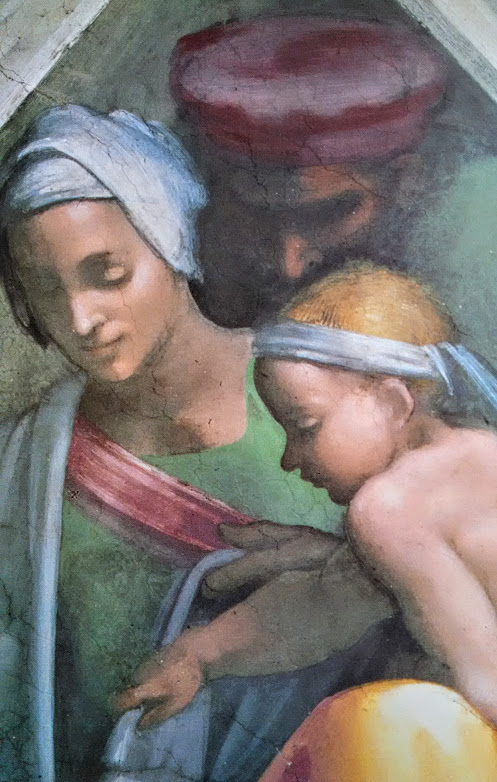
Avete mai notato la presenza di una sarta nella volta della Sistina? Ebbene sì, la potete vedere al di sopra della lunetta di Salomon, Booz e Obeth. È intenta a tagliare una stoffa con un grande paio di forbici sotto l’attenta osservazione del figlioletto.
Mentre nella lunetta sottostante dipinsi l’anziano Booz che litiga col bastone e la figlia Ruth e il nipotino Obeth che con la sua presenza allietò lo spirito del nonno, nella vela sopra scelsi di raffigurare probabilmente Salomone da bimbetto assieme ai genitori.

La sarta in questione potrebbe essere dunque la mamma di Salomone, abbigliata con una sopravveste verde divisa a metà all’altezza del petto da una tracolla rosa: lo stesso colore che poi adoperai per le maniche.
Ha il capo coperto da un velo bianco che le scende fin sulla spalla. Con la mano destra tiene le forbici mentre taglia il tessuto trattenuto dalla mano opposta.

Il bambino curioso, probabilmente Salomone, pare voglia provare con le sue manine la morbidezza della stoffa e guarda incuriosito il lavoro della mamma. E’ completamente nudo se si esclude la fascia che gli cinge il capo.

Dietro i due protagonisti della scena si vede il capo di un uomo coperto da un copricapo viola: anche lui sta osservando il lavoro della donna. Che sia il marito?
Dipinsi l’intera vela in sole due giornate iniziando dalla parte destre e dopo aver trasferito i cartoni sull’intonaco fresco con la tecnica dell’incisione diretta.
Per il momento il vostro Michelangelo Buonarroti vi saluta dandovi appuntamento ai prossimi post e sui social.
The seamstress of the Sistine Chapel
Have you ever noticed the presence of a seamstress in the vault of the Sistine Chapel? Yes, you can see it above the bezel of Salomon, Booz and Obeth. She is intent on cutting a fabric with a large pair of scissors under the careful observation of her little son.
While in the lunette below I painted the elderly Booz arguing with the stick and his daughter Ruth and his grandson Obeth who cheered the spirit of his grandfather with his presence, in the sail above I chose to probably depict Solomon as a child with his parents.
The seamstress in question could therefore be Solomon’s mother, dressed in a green surcoat divided in half at chest height by a pink shoulder strap: the same color that you will later use for her sleeves.
Her head is covered with a white veil that falls over her shoulder. With her right hand she holds the scissors while she cuts the fabric held by the opposite hand.
Have you ever noticed the presence of a seamstress in the vault of the Sistine Chapel? Yes, you can see it above the bezel of Salomon, Booz and Obeth. She is intent on cutting a fabric with a large pair of scissors under the careful observation of her little son.
While in the lunette below I painted the elderly Booz arguing with the stick and his daughter Ruth and his grandson Obeth who cheered the spirit of his grandfather with his presence, in the sail above I chose to probably depict Solomon as a child with his parents.
The seamstress in question could therefore be Solomon’s mother, dressed in a green surcoat divided in half at chest height by a pink shoulder strap: the same color that you will later use for the sleeves.
Her head is covered with a white veil that falls over her shoulder. With her right hand she holds the scissors while she cuts the fabric held by the opposite hand.
The curious child, probably Solomon, seems to want to try the softness of the fabric with his little hands and looks curiously at his mother’s work. He is completely naked except for the band that surrounds his head.
Behind the two protagonists of the scene we see the head of a man covered by a purple headdress: he too is observing the work of the woman. Could it be the husband?
I painted the entire sail in just two days, starting from the right side and after transferring the cartons onto the fresh plaster with the direct engraving technique.
For the moment, your Michelangelo Buonarroti greets you by giving you an appointment at the next posts and on social networks.

Sostienici – Support Us
Se questo blog ti piace e ti appassiona, puoi aiutarci a farlo crescere sempre più sostenendoci in modo concreto condividendo i post, seguendo le pagine social e con un contributo che ci aiuta ad andare avanti con il nostro lavoro di divulgazione. . ENGLISH: If you like and are passionate about this blog, you can help us make it grow more and more by supporting us in a concrete way by sharing posts, following social pages and with a contribution that helps us to move forward with our dissemination work.
5,00 €
ULTIMI ARTICOLI
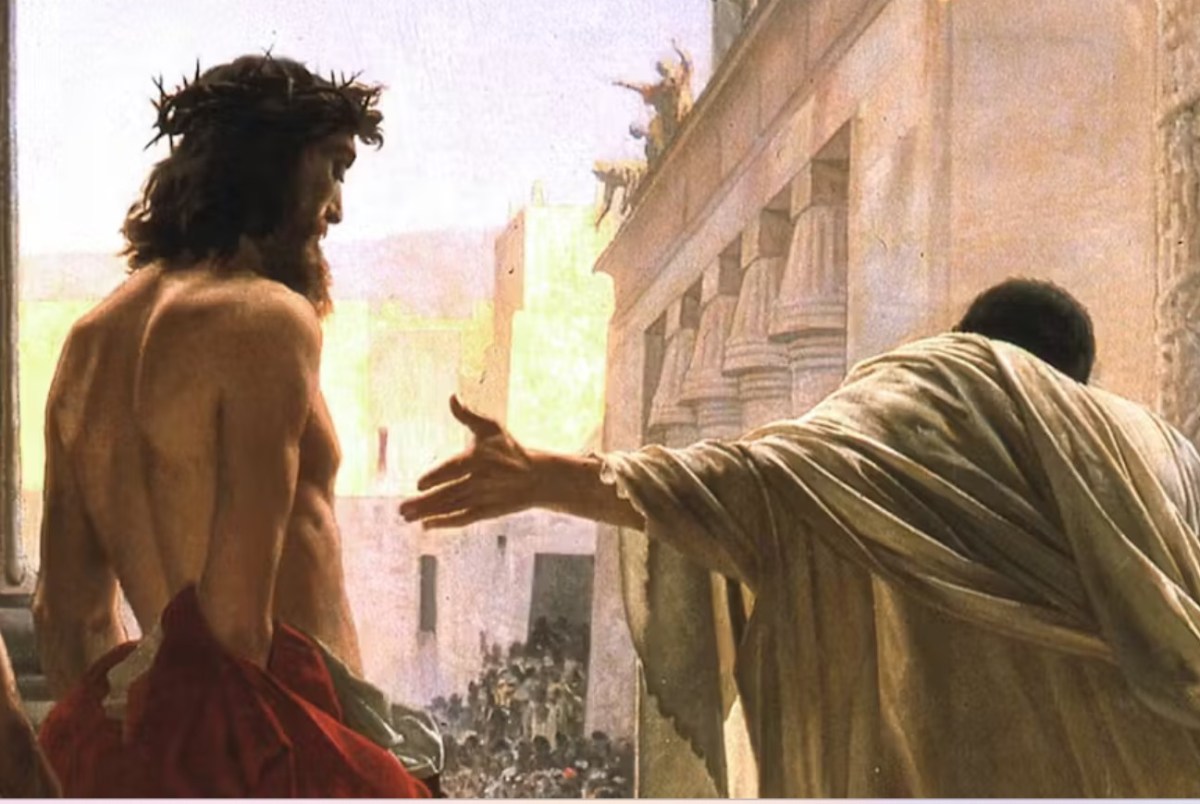
Venerdì Santo: gli “Ecce Homo” più intensi della storia dell’arte
🇮🇹Ecce Homo. Da Antonello da Messina a Tintoretto, fino al sorprendente capolavoro di Antonio Ciseri, questo soggetto ha attraversato i secoli raccontando dolore, umanità e coscienza… 🇬🇧Ecce Homo. From Antonello da Messina to Tintoretto, to Antonio Ciseri’s astonishing masterpiece, this subject has spanned the centuries, recounting pain, humanity, and conscience…
Attacco hacker agli Uffizi: rubati dati sensibili, mappe e codici di sicurezza
🇮🇹Attacco hacker alle Gallerie degli Uffizi: rubati dati sensibili, mappe e sistemi di sicurezza. A rischio opere, archivi e cybersicurezza del patrimonio artistico… 🇬🇧Hacker attack on the Uffizi Galleries: sensitive data, maps, and security systems stolen. Works of art, archives, and the cybersecurity of the artistic heritage are at risk…
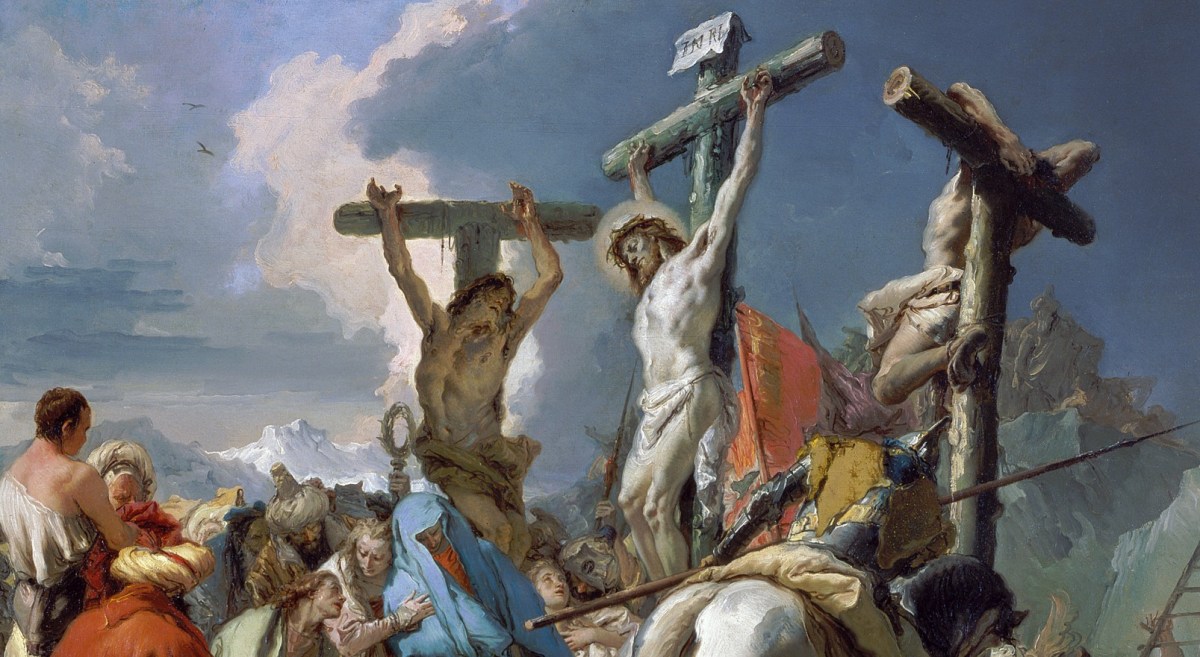
Venerdì Santo: la Crocifissione secondo Tiepolo
🇮🇹Nel giorno del Venerdì Santo, c’è un’opera che riesce ancora a scuotere lo sguardo. La Crocifissione di Giambattista Tiepolo non è come le altre: niente simmetrie perfette, niente distanza. Qui si entra dentro la scena, da un punto di vista obliquo, tra movimento, tensione e umanità… 🇬🇧On Good Friday, there’s a work that still manages…
Festival La Versiliana 2026: tra musica, teatro e grandi narrazioni
Dal 17 luglio al 23 agosto 2026, la pineta di Marina di Pietrasanta ospiterà la 47ª edizione del Festival La Versiliana. Una kermesse aperta a tutti nella quale linguaggi diversi dialogano tra loro in un equilibrio tra tradizione e contemporaneità.
Si è verificato un problema. Aggiorna la pagina e/o riprova in seguito.
Condividi:


Questo sono io





sostienici

Sostienici – Support Us
Se questo blog ti piace e ti appassiona, puoi aiutarci a farlo crescere sempre più sostenendoci in modo concreto condividendo i post, seguendo le pagine social e con un contributo che ci aiuta ad andare avanti con il nostro lavoro di divulgazione. . ENGLISH: If you like and are passionate about this blog, you can help us make it grow more and more by supporting us in a concrete way by sharing posts, following social pages and with a contribution that helps us to move forward with our dissemination work.
€10,00


