

Dentro l’hangar 12 del Carnevale di Viareggio: dove la cartapesta prende vita con Marzia Etna
Entrare nell’hangar 12 della Cittadella del Carnevale di Viareggio è un po’ come infilarsi dentro un sogno a grandezza naturale. L’ho fatto in occasione delle Giornate Europee dei Mestieri d’Arte, e ne sono uscito con le scarpe impolverate di sogni e la testa piena di storie.
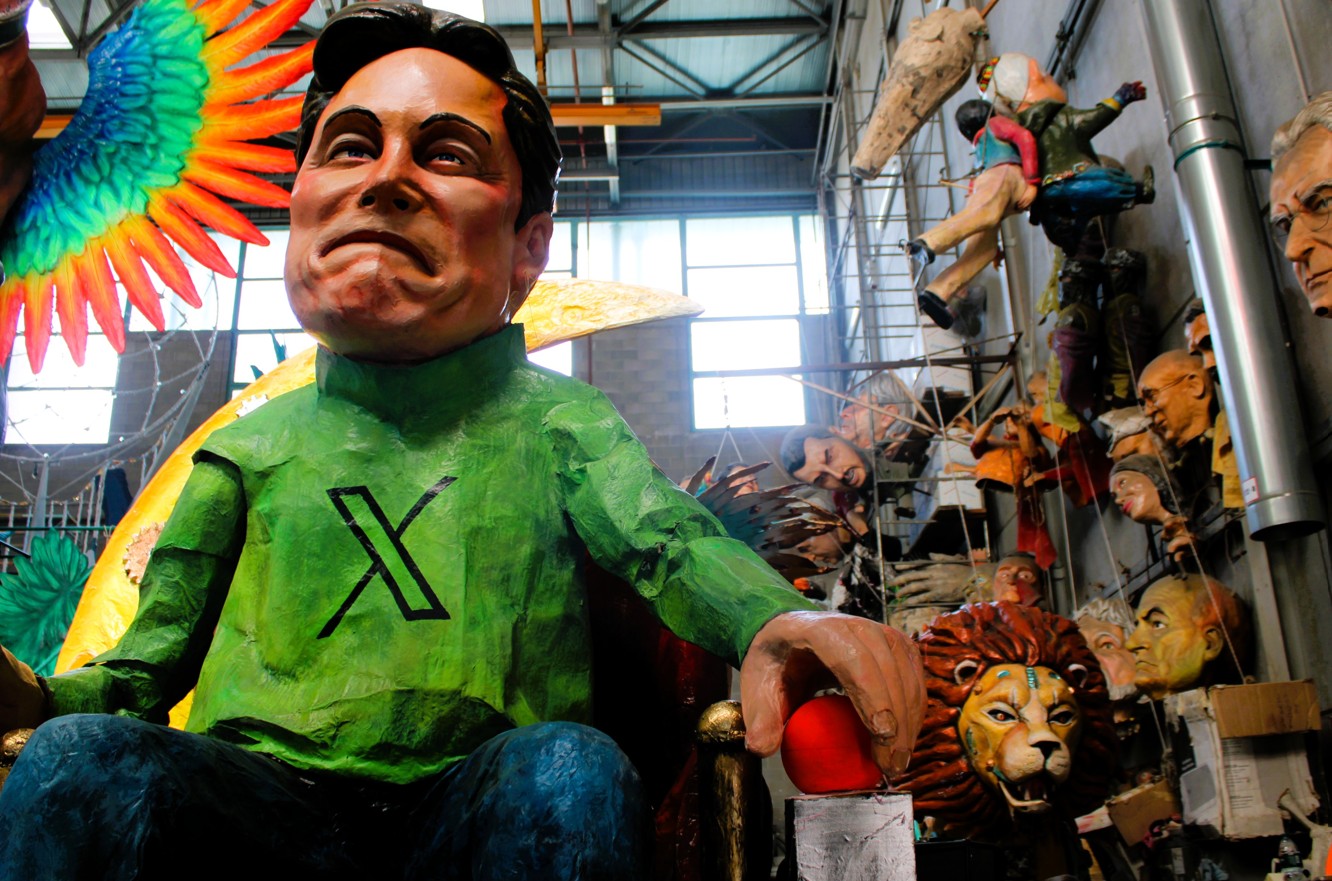
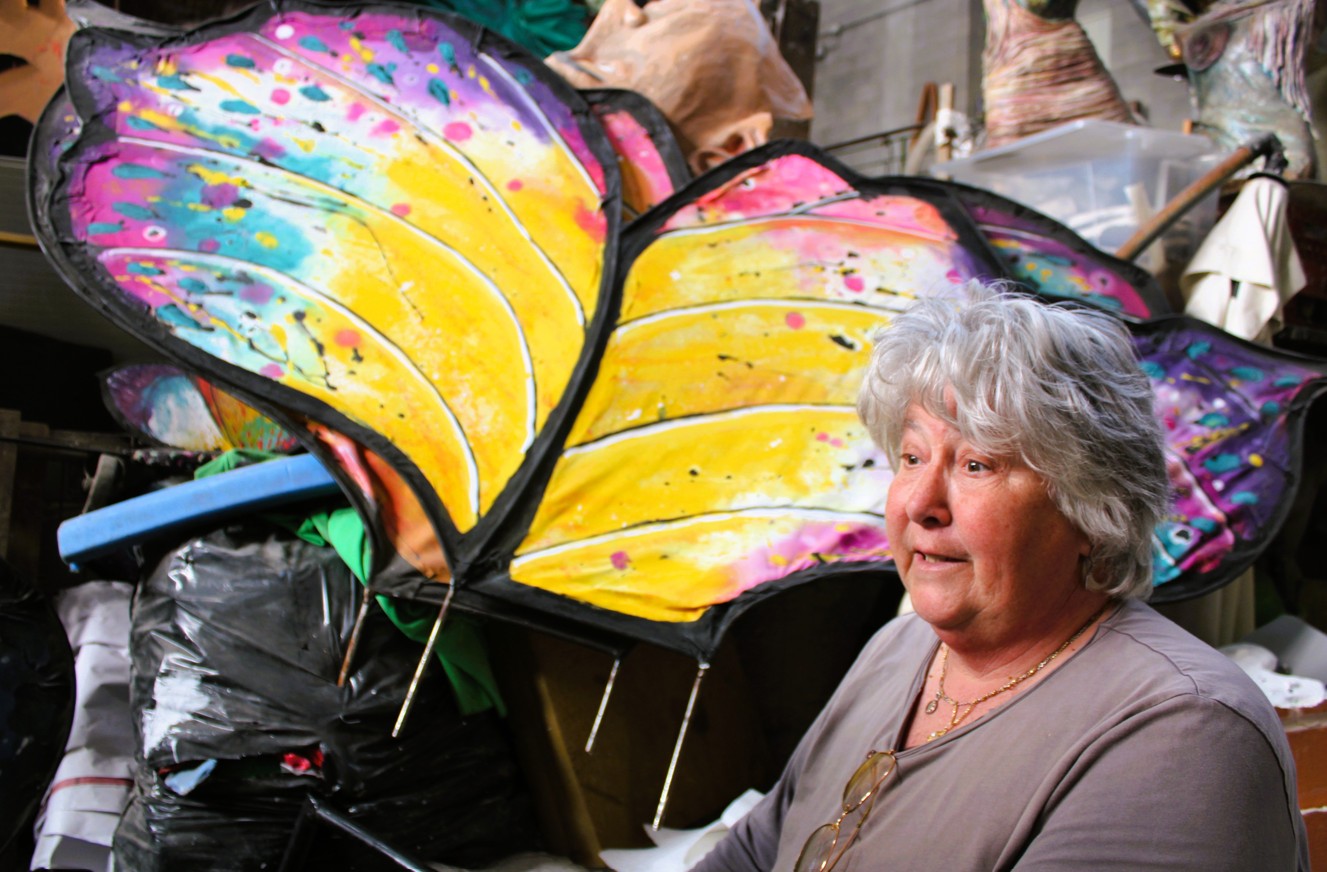
Qui lavora Marzia Etna. Solo “Marzia” per qualcuno, ma basta starci cinque minuti per capire che il nome sia un dettaglio: è la sua energia a riempire lo spazio. Da oltre quarant’anni è una maestra carrista del Carnevale di Viareggio, e condivide questo hangar con Fabrizio e Valentina Galli, tra strutture di ferro, teste giganti e ali colorate che sembrano appena palante sul mondo da un universo parallelo.
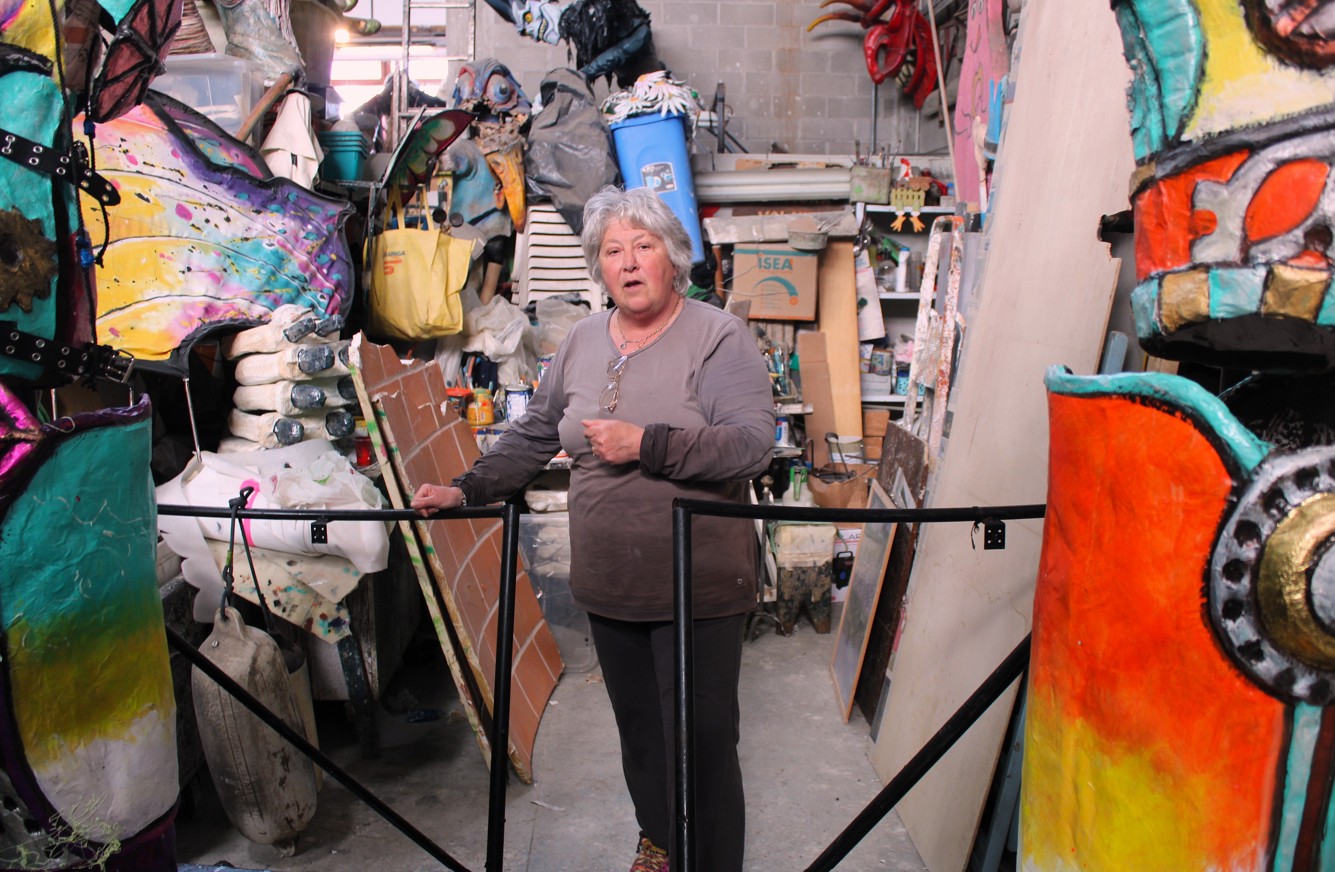
Un laboratorio dove tutto prende vita
L’hangar da fuori sembra un laboratorio ma da dentro si percepisce come un organismo vivo. C’è la creta sempre umida pronta a essere modellata nelle vasche, la colla fatta alla vecchia maniera con acqua e farina e strati di carta che, uno sopra l’altro, diventano corpi, volti, espressioni.
Marzia mi racconta — e mentre lo fa le brillano gli occhi come fari accesi — che qui tutto nasce da un’idea e da un disegno. Poi, con pazienza e mestiere, prende forma. Letteralmente.
«Quando riesco a riportare quello che ho in testa in tre dimensioni, allora sì, lì è una soddisfazione», mi dice. No, non è solo lavoro ma è vita. Il Carnevale a Viareggio è così: ti travolge, ti conquista e non ti molla più. Un’ossessione che riempie le giornate da mattina a sera, frutto di gioie e talvolta dolori.
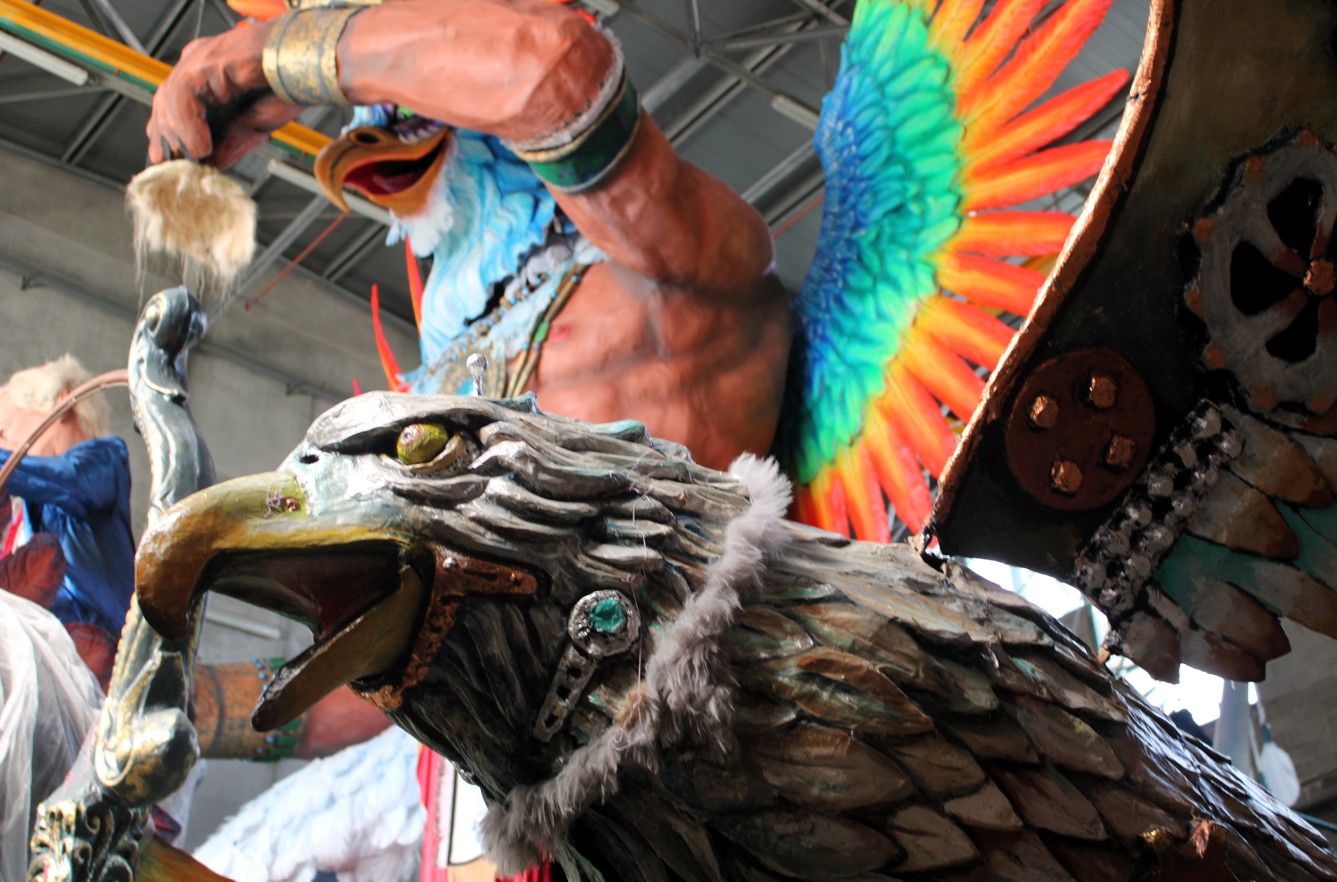
Tra carta a calco e arte in movimento
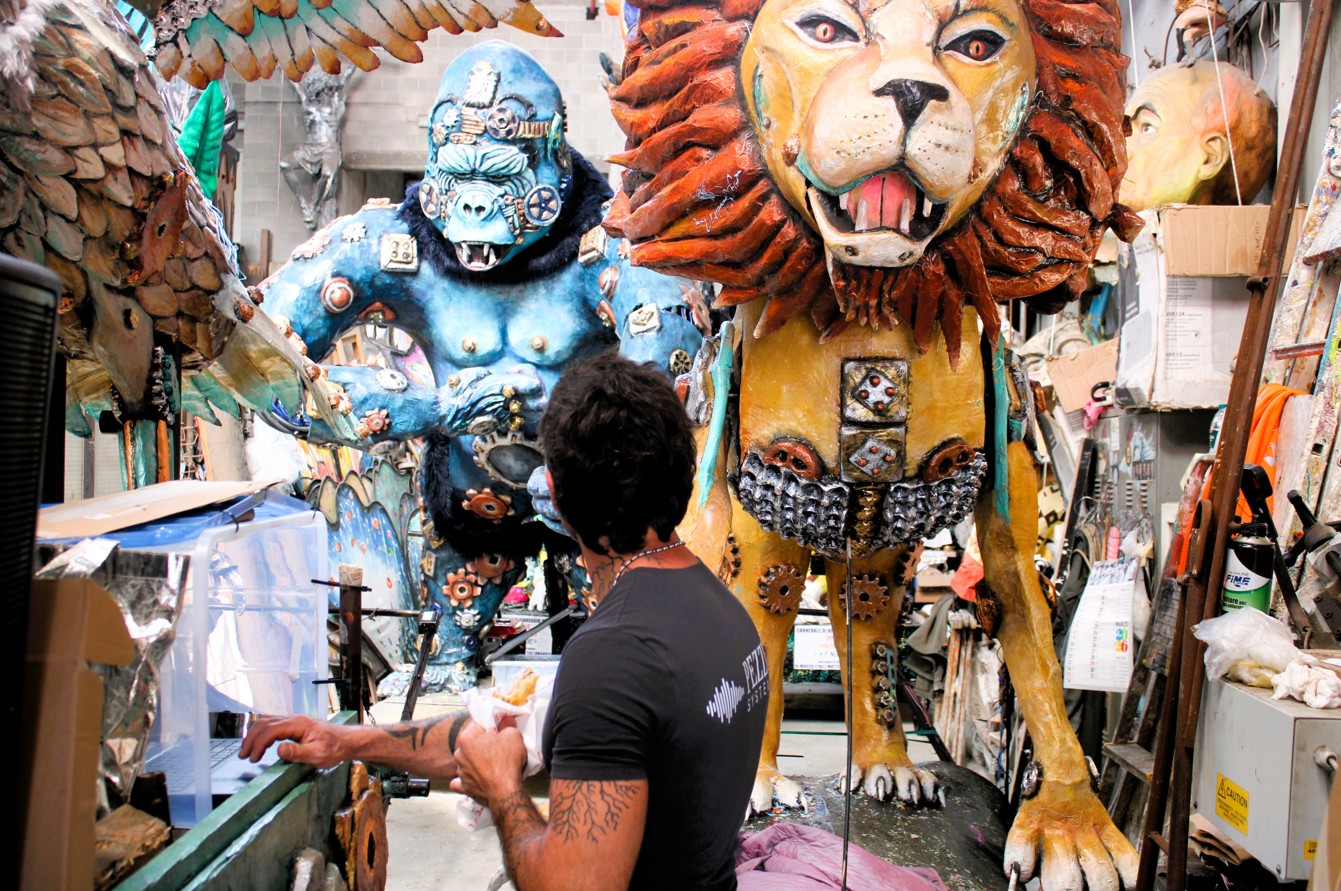
Se pensate alla cartapesta come qualcosa di statico, siete fuori strada. Quest’anno, mi racconta Marzia Etna, hanno inserito pistoni, motorini e perfino sistemi controllati via wifi nella mascherata intitolata “Dove andremo a finire?” che ha affrontto il tema dell’intelligenza artificiale, esplorando le sue implicazioni come forza trasformatrice.
Il risultato? Figure gigantesche che si muovono, respirano, ti guardano anzi, ti osservano.
E poi ci sono gli umanoidi: strutture in cartapesta indossate da ragazzi che, una volta montate pezzo per pezzo, diventano creature a metà tra robot e personaggi immaginari ma non così distanti dalla realtà.
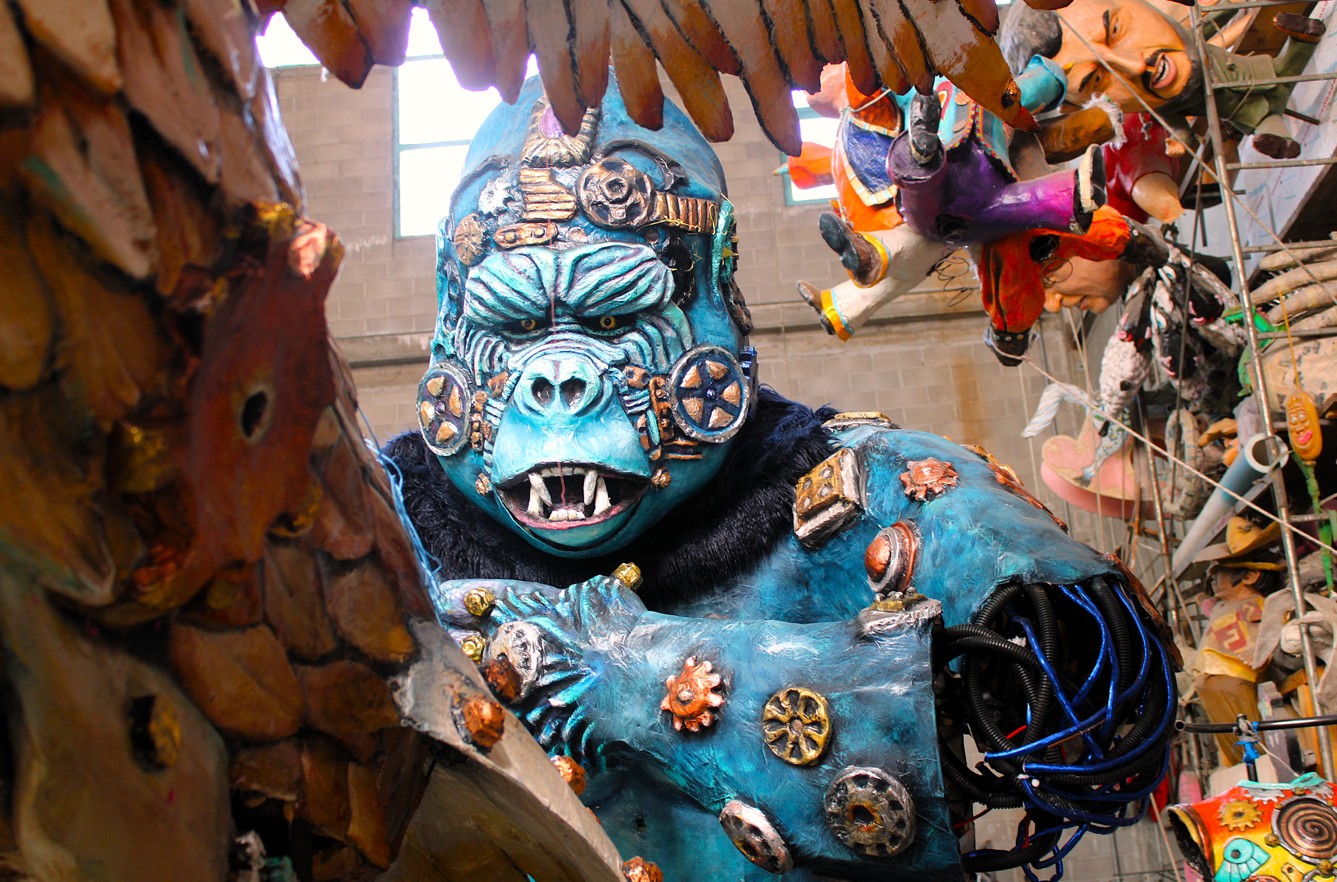
L’arte che non si butta mai (o quasi)
Alle pareti dell’hangar sono imbullonati scaffali che arrivano fino al tetto. Lì si accumulano calchi, pezzi, modelli. Alcuni vengono smontati, altri venduti a carnevali minori mentre altri restano lì per anni perché buttarli è quasi un tradimento.
«Poi ti serve proprio quel pezzo lì e magari l’hai buttato. Ne puoi fare uno nuovo, certo, ma non ti viene mai come quello che avevi fatto», dice la maestra carrista sorridendo.
Ogni creazione è unica, irripetibile.
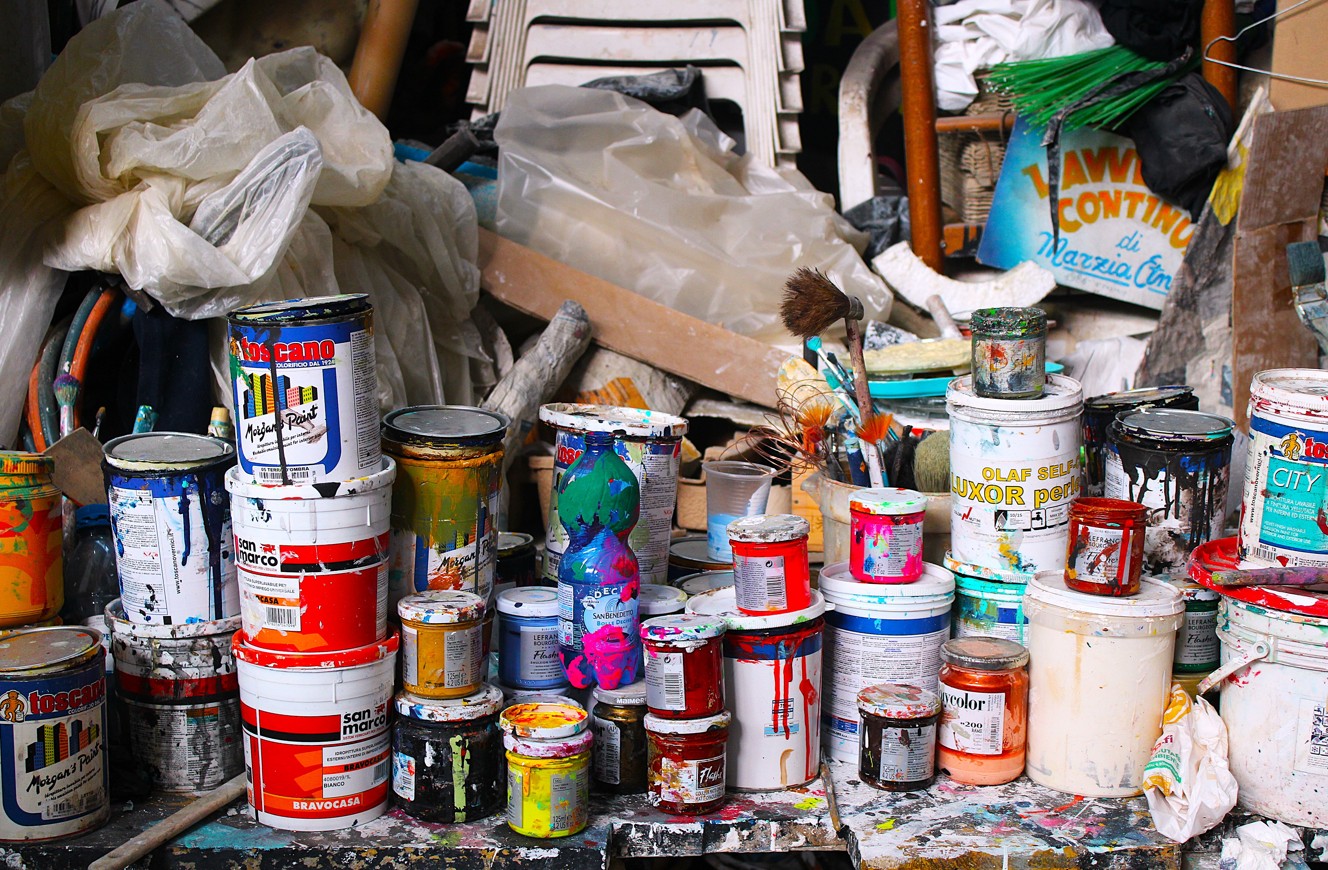
Un mestiere ancora controcorrente
Quello del carrista è un lavoro duro, fisico, spesso precario. Non è raro dover affiancare altre attività per arrivare a fine anno soprattutto per chi lavora ai carri di seconda categoria o alle mascherate. Marzia, infatti realizza anche opere in cartapesta, pitture, oggetti d’arredo e pezzi su commissione per case e locali.
La cartapesta, qui, diventa tutto: lampade, busti, installazioni.
Eppure, nonostante le difficoltà, si resta. Perché?
«Perché il Carnevale ti prende e non ti lascia più. Quando ero piccola stavo a Marco Polo, lì dove c’erano i vecchi hangar del Carnevale. I carristi mettevano fuori i telai fatti con i giunchi, sui quali rimaneva attaccata la creta mentre modellavano. Usavano un’argilla rossa che a me piaceva tantissimo, e io e mio fratello andavamo a “recuperare” quella che restava per lavorarla a casa.
Poi, vabbè, sono sempre stata portata per il disegno e per i lavori manuali. Ho frequentato il liceo artistico a Lucca e, dopo la scuola, prima ho fatto la postina, poi ho seguito il corso della Scuola della Cartapesta che si teneva agli hangar. Da lì è nato tutto: è iniziato questo amore per il Carnevale.
Ti innamori di questo lavoro. È una passione: perché, se così non fosse, dopo un po’ smetteresti. Non si riesce ad affrontare tutto quello che c’è dietro le quinte se non si sente, nel profondo, quella passione che ti spinge ad andare avanti anche quando vorresti mollare».
Una passione che non si spegne
Mentre parla del passato, degli anni difficili e dei grandi maestri con cui ha lavorato, Marzia si illumina.
È uno di quei casi in cui capisci che il lavoro non è solo lavoro: è identità.
E tra un ricordo e l’altro, tra una battuta ironica e una critica, nell’aria si percepisce già qualcosa.
Sì, perché anche se siamo appena usciti dall’ultima edizione, nell’hangar 12 aleggia già un’idea. Un’intuizione. Forse un progetto ancora informe, come la creta nella vasca.
Ma fidatevi: da qualche parte, tra quei telai e quei fogli di carta incollati, sta già nascendo la prossima mascherata che vedremo sfilare sui viali a mare di Viareggio durante il Carnevale 2027.
E conoscendo Marzia Etna, c’è da aspettarsi qualcosa che, ancora una volta, stupirà grandi e piccini.
Ringrazio la maestra carrista per la splendida accoglienza nel suo spazio creativo e per tutti i suoi generosi racconti in occasione delle GEMA, Giornate Europee dei Mestieri d’Arte: appuntamento internazionale dedicato alla valorizzazione dell’artigianato artistico e dei mestieri d’eccellenza.
Mi ha invitato a tornare a settembre, quando nell’hangar si comincerà a lavorare concretamente al progetto per il Carnevale di Viareggio 2027: non mancherò.
Per il momento il sempre vostro Michelangelo Buonarroti vi saluta dandovi appuntamento ai prossimi post e sui social.
Inside Hangar 12 of the Viareggio Carnival: where papier-mâché comes to life with Marzia Etna
Entering Hangar 12 of the Viareggio Carnival Citadel is a bit like stepping into a life-size dream. I did so during the European Days of Arts and Crafts, and I emerged with my shoes dusty with dreams and a head full of stories.
Marzia Etna works here. Just “Marzia” to some, but after spending five minutes there, you understand that the name is a detail: it’s her energy that fills the space. She has been a master float designer at the Viareggio Carnival for over forty years, and shares this hangar with Fabrizio and Valentina Galli, amidst iron structures, giant heads, and colorful wings that seem to barely touch the world from a parallel universe.
A laboratory where everything comes to life
From the outside, the hangar looks like a laboratory, but from the inside, it feels like a living organism. There’s the ever-wet clay ready to be shaped in the tubs, the glue made the old-fashioned way with water and flour, and layers of paper that, one on top of the other, become bodies, faces, expressions.
Marzia tells me—and as she does so, her eyes shine like headlights on the seafront—that here everything starts with an idea and a drawing. Then, with patience and skill, it takes shape. Literally.
“When I manage to translate what I have in my head into three dimensions, then yes, there’s satisfaction,” she tells me. No, it’s not just work, it’s life. Carnival in Viareggio is like that: it overwhelms you, it captivates you, and it never lets go. An obsession that fills your days from morning to night, the fruit of joy and sometimes pain.
Between tracing paper and art in motion
If you think of papier-mâché as something static, you’re wrong. This year, Marzia Etna tells me, they’ve incorporated pistons, motors, and even Wi-Fi-controlled systems into the masquerade entitled “Where Will We End Up?”, which tackled the topic of artificial intelligence, exploring its implications as a transformative force.
The result? Gigantic figures that move, breathe, and look at you—in fact, observe you.
And then there are the humanoids: papier-mâché structures worn by children that, once assembled piece by piece, become creatures halfway between robots and imaginary characters, yet not so far from reality.
Art that’s never thrown away (or almost never)
Shelves bolted to the walls of the hangar reach the roof. Casts, pieces, and models pile up there. Some are dismantled, others sold to smaller carnivals, while others remain there for years because throwing them away is almost a betrayal.
“Then you need that very piece, and maybe you throw it away. You can make a new one, sure, but it never turns out like the one you made,” says the master float maker, smiling.
Every creation is unique, unrepeatable.
A profession that still goes against the grain
Being a float maker is hard, physical, and often precarious work. It’s not uncommon to have to juggle other activities to make ends meet, especially for those who work on second-rate floats or masquerades. Marzia also creates papier-mâché works, paintings, furnishings, and commissioned pieces for homes and venues.
Here, papier-mâché becomes everything: lamps, busts, installations.
And yet, despite the difficulties, you stay. Why?
Because Carnival grabs you and never lets go. When I was little, I lived in Marco Polo, where the old Carnival hangars were. The float builders would set out frames made of reeds, to which the clay would stick as they modeled. They used a red clay that I loved, and my brother and I would go and “recover” the rest to work with at home.
Well, I’ve always had a knack for drawing and crafts. I attended art school in Lucca, and after school, I first worked as a postman, then I took a course at the Papier-mâché School, which was held at the hangars. That’s where it all started: this love for Carnival began.
You fall in love with this job. It’s a passion: because, if it weren’t, after a while you’d stop. You can’t face everything that goes on behind the scenes if you don’t feel, deep down, that passion that pushes you to keep going even when you want to give up.
A passion that never fades
As she talks about the past, the difficult years, and the great masters she worked with, Marzia lights up.
It’s one of those times when you understand that work isn’t just work: it’s identity.
And between one memory and another, between a quip and a critique, you can already feel something in the air.
Yes, because even though we’ve just come out of the last edition, an idea is already hovering in Hangar 12. An intuition. Perhaps a project still unformed, like clay in a tub.
But trust me: somewhere among those frames and glued sheets of paper, the next masquerade is already taking shape, the one we’ll see parading along the seaside avenues of Viareggio during Carnival 2027.
And knowing Marzia Etna, we can expect something that will, once again, amaze both adults and children.
I thank the master float designer for the wonderful welcome in her creative space and for all her generous stories during GEMA, the European Days of Artistic Crafts: an international event dedicated to the promotion of artistic craftsmanship and excellent trades.
She invited me to return in September, when the hangar will begin working on the Viareggio Carnival 2027 project: I won’t miss it.
For now, yours truly, Michelangelo Buonarroti bids you farewell and says he’ll see you in future posts and on social media.

Sostienici – Support Us
Se questo blog ti piace e ti appassiona, puoi aiutarci a farlo crescere sempre più sostenendoci in modo concreto condividendo i post, seguendo le pagine social e con un contributo che ci aiuta ad andare avanti con il nostro lavoro di divulgazione. . ENGLISH: If you like and are passionate about this blog, you can help us make it grow more and more by supporting us in a concrete way by sharing posts, following social pages and with a contribution that helps us to move forward with our dissemination work.
10,00 €
Condividi:


Questo sono io





sostienici

Sostienici – Support Us
Se questo blog ti piace e ti appassiona, puoi aiutarci a farlo crescere sempre più sostenendoci in modo concreto condividendo i post, seguendo le pagine social e con un contributo che ci aiuta ad andare avanti con il nostro lavoro di divulgazione. . ENGLISH: If you like and are passionate about this blog, you can help us make it grow more and more by supporting us in a concrete way by sharing posts, following social pages and with a contribution that helps us to move forward with our dissemination work.
€10,00


