

La Lavanda dei Piedi di Tintoretto: Il Capolavoro Veneziano al Prado
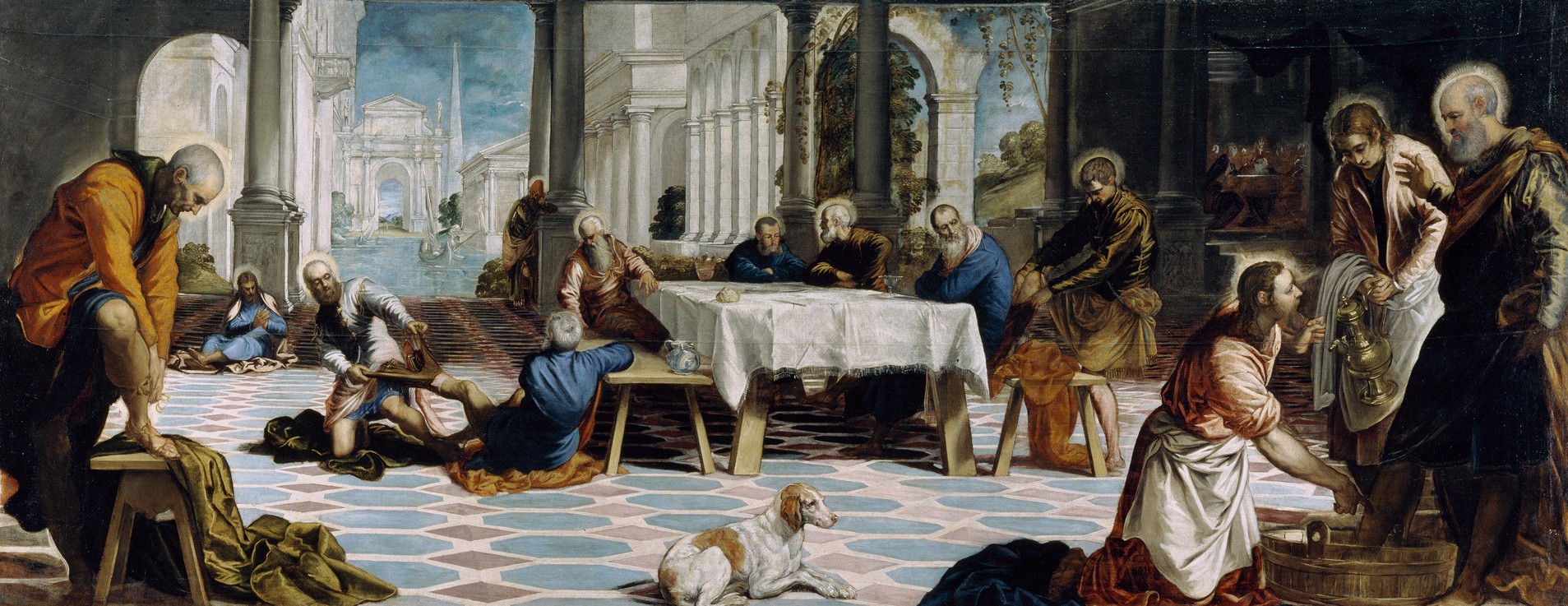
“La Lavanda dei Piedi” è un dipinto a olio su tela realizzato tra il 1548 e il 1549 da Jacopo Tintoretto. Considerata una delle opere più raffinate dell’artista, il dipinto racconta un momento del Vangelo secondo Giovanni: Gesù lava i piedi ai suoi apostoli durante l’Ultima Cena.
Attualmente esposta al Museo del Prado di Madrid, questa tela ha attraversato secoli e continenti, testimoniando l’influenza e il prestigio di Tintoretto.
Storia e Provenienza della Lavanda dei Piedi
Il dipinto venne commissionato nel 1547 dalla Scuola del Santissimo Sacramento della chiesa di San Marcuola a Venezia, insieme a un’Ultima Cena realizzata dallo stesso Tintoretto. Dopo circa settant’anni, l’opera fu acquistata da Ferdinando Gonzaga, VI duca di Mantova, per essere collocata nel Palazzo Ducale di Mantova.
Nel 1627 la Lavanda dei Piedi entrò nella collezione di Carlo I d’Inghilterra, celebre mecenate. Dopo la rivoluzione inglese, l’opera passò nelle mani di Alonso de Cárdenas, ambasciatore spagnolo, e successivamente arrivò a Filippo IV di Spagna, fino a essere trasferita al Museo del Prado nel 1939.
La Scena Evangelica: Un Momento di Profonda Spiritualità
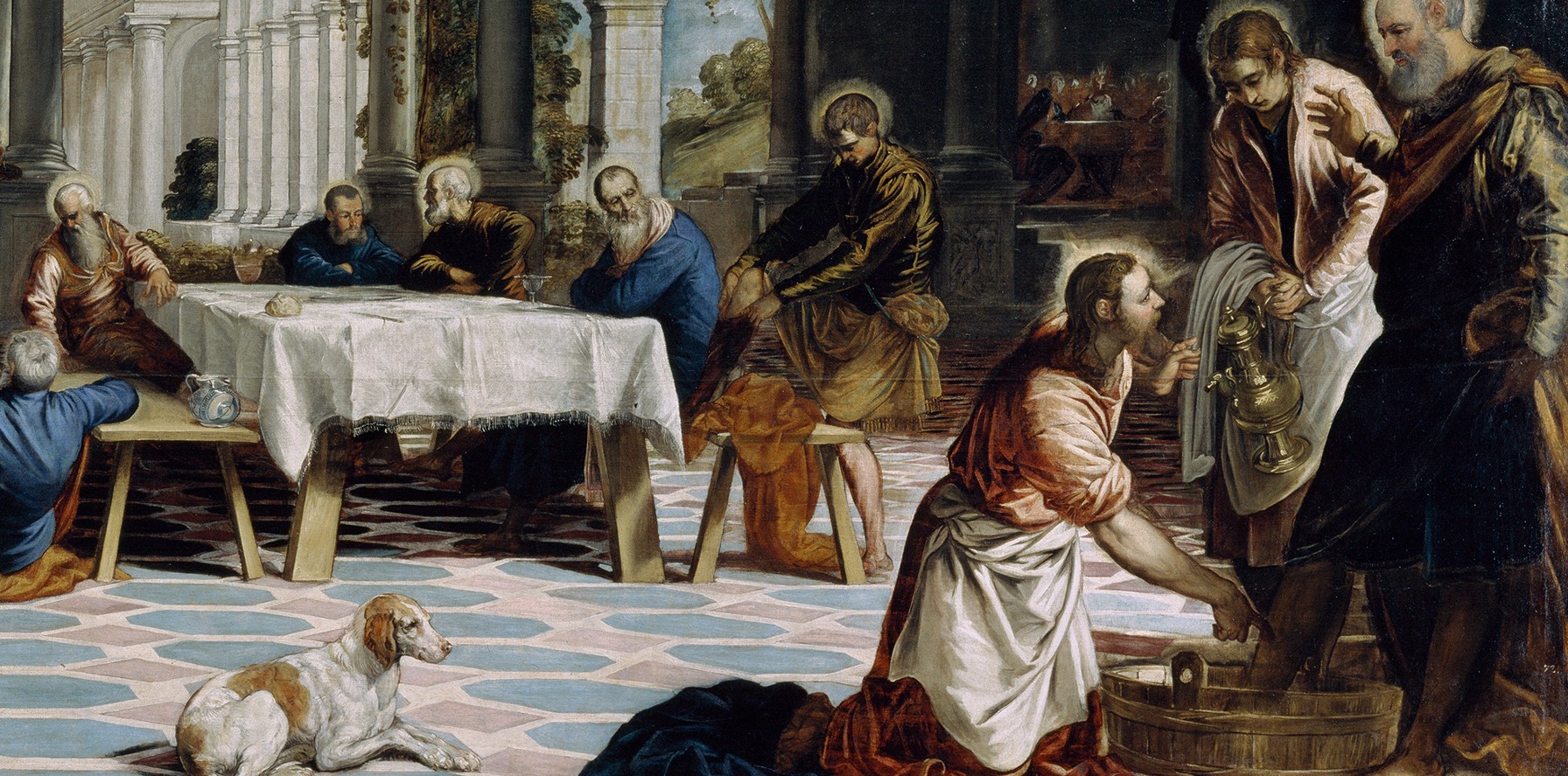
Il dipinto ritrae Gesù mentre lava i piedi agli apostoli, un gesto di umiltà e amore che precede l’Ultima Cena.
Tintoretto cattura il momento in cui Pietro inizialmente rifiuta, per poi accettare di farsi lavare non solo i piedi, ma anche mani e testa. In un angolo, si intravede un miracolo di San Marco, ispirato alla Legenda Aurea di Jacopo da Varazze.
Dettagli Iconografici: Simbolismo e Architettura
La presenza del cane potrebbe simboleggiare la fedeltà degli apostoli, mentre il tavolo prefigura l’Ultima Cena.
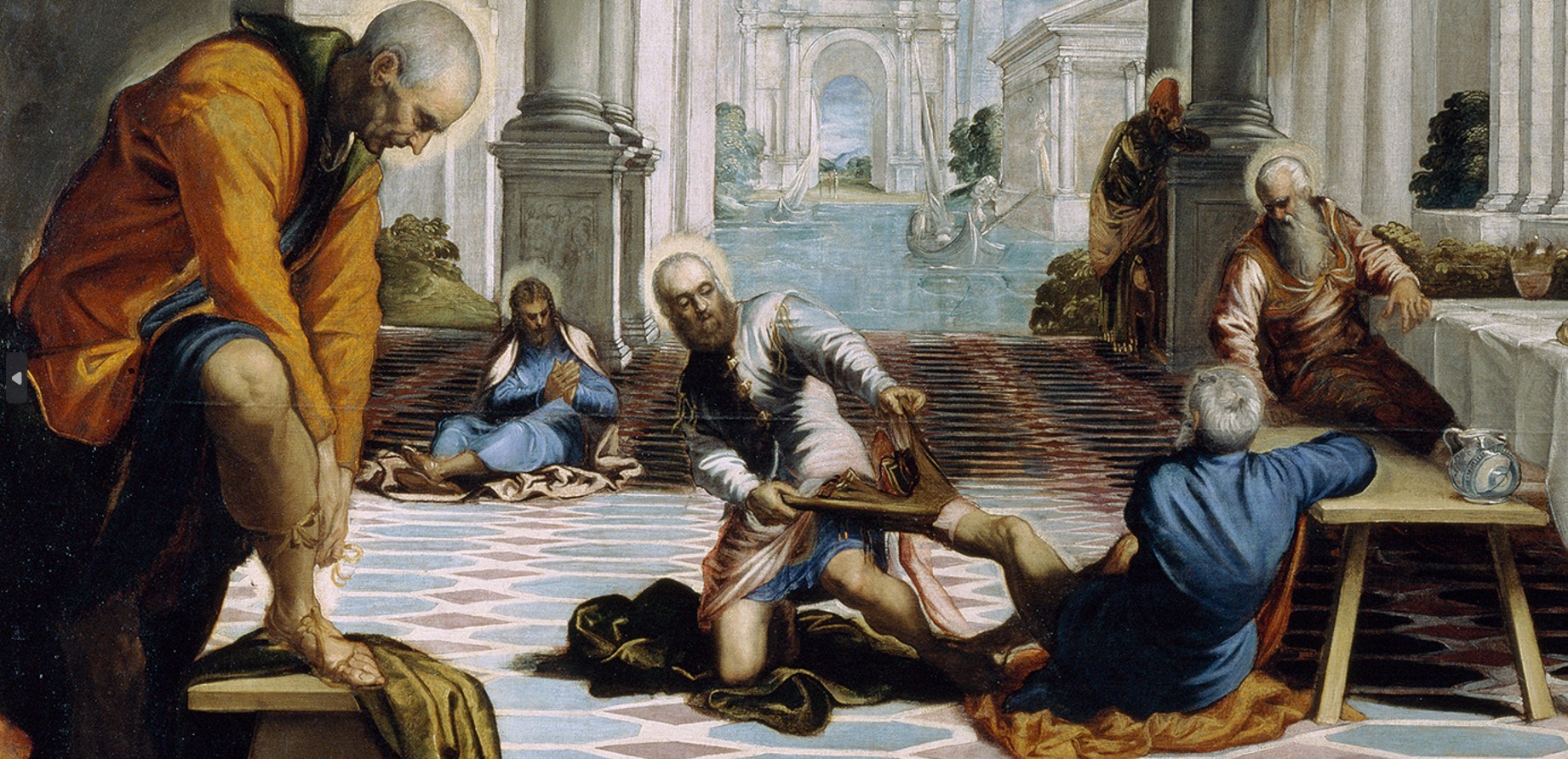
Tintoretto inserisce edifici ispirati a Sebastiano Serlio e una piccola imbarcazione nei canali, creando una scenografia quasi irreale con toni freddi di blu e bianco.
Composizione e Prospettiva: l’inganno dello Sguardo
Jacopo Tintoretto progettò la tela pensando alla collocazione nella chiesa di San Marcuola. Da un punto di vista frontale, le figure sembrano sparse casualmente, ma osservando il dipinto da destra, si percepisce un’armonia perfetta.
La posizione decentrata di Gesù e il tavolo inclinato creano un effetto prospettico che guida lo sguardo dello spettatore.
Per il momento il sempre vostro Michelangelo Buonarroti vi saluta dandovi appuntamento ai prossimi post e sui social.
Tintoretto’s Washing of the Feet: The Venetian Masterpiece at the Prado
“The Washing of the Feet” is an oil on canvas painting created between 1548 and 1549 by Jacopo Tintoretto. Considered one of the artist’s finest works, the painting depicts a moment from the Gospel of John: Jesus washing the feet of his apostles during the Last Supper. Currently exhibited at the Prado Museum in Madrid, this canvas has spanned centuries and continents, testifying to Tintoretto’s influence and prestige.
History and Provenance of the Washing of the Feet
The painting was commissioned in 1547 by the Scuola del Santissimo Sacramento of the church of San Marcuola in Venice, along with a Last Supper by Tintoretto himself. After approximately seventy years, the work was purchased by Ferdinando Gonzaga, 6th Duke of Mantua, for placement in the Ducal Palace in Mantua.
In 1627, the Washing of the Feet entered the collection of Charles I of England, a renowned art patron. After the English Revolution, the work passed into the hands of Alonso de Cárdenas, the Spanish ambassador, and subsequently to Philip IV of Spain, until it was transferred to the Prado Museum in 1939.
The Gospel Scene: A Moment of Deep Spirituality
The painting depicts Jesus washing the feet of the apostles, a gesture of humility and love preceding the Last Supper.
Tintoretto captures the moment when Peter initially refuses, but then agrees to have not only his feet, but also his hands and head washed. In one corner, a miracle of Saint Mark can be glimpsed, inspired by the Golden Legend of Jacobus de Voragine.
Iconographic Details: Symbolism and Architecture
The presence of the dog may symbolize the apostles’ faithfulness, while the table prefigures the Last Supper.
Tintoretto inserts buildings inspired by Sebastiano Serlio and a small boat in the canals, creating an almost unreal setting with cool blue and white tones.
Composition and Perspective: The Deception of the Gaze
Jacopo Tintoretto designed the canvas with its location in the church of San Marcuola in mind. From a frontal perspective, the figures appear randomly scattered, but when viewed from the right, a perfect harmony is perceived.
Jesus’ off-center position and the tilted table create a perspective effect that guides the viewer’s gaze.
For now, Michelangelo Buonarroti bids you farewell, and we’ll see you in future posts and on social media.

Sostienici – Support Us
Se questo blog ti piace e ti appassiona, puoi aiutarci a farlo crescere sempre più sostenendoci in modo concreto condividendo i post, seguendo le pagine social e con un contributo che ci aiuta ad andare avanti con il nostro lavoro di divulgazione. . ENGLISH: If you like and are passionate about this blog, you can help us make it grow more and more by supporting us in a concrete way by sharing posts, following social pages and with a contribution that helps us to move forward with our dissemination work.
10,00 €
Condividi:


Questo sono io





sostienici

Sostienici – Support Us
Se questo blog ti piace e ti appassiona, puoi aiutarci a farlo crescere sempre più sostenendoci in modo concreto condividendo i post, seguendo le pagine social e con un contributo che ci aiuta ad andare avanti con il nostro lavoro di divulgazione. . ENGLISH: If you like and are passionate about this blog, you can help us make it grow more and more by supporting us in a concrete way by sharing posts, following social pages and with a contribution that helps us to move forward with our dissemination work.
€10,00


