

Tra dolore e salvezza: il Serpente di Bronzo nella Cappella Sistina
Per anni ho lavorato con il collo piegato all’indietro, sospeso tra ponteggi e colori, per dare corpo e anima alla volta della Cappella Sistina.
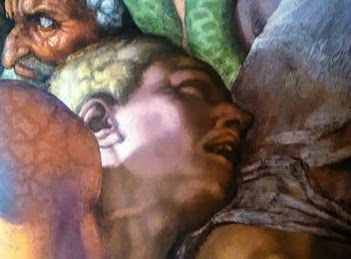
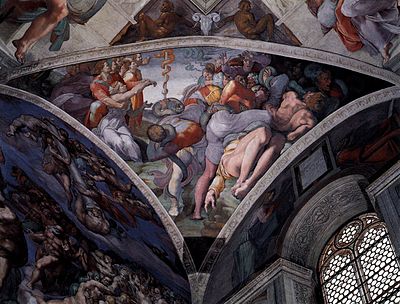
In quel vasto cielo affrescato raffigurai scene tratte dalla Libro della Genesi, profeti, ignudi e storie della salvezza del popolo d’Israele. Ma in uno dei pennacchi, a sinistra dell’altare, decisi di narrare una vicenda diversa, potente e drammatica: Il Serpente di Bronzo.
Fu uno degli ultimi brani di pittura a cui misi mano prima di concludere definitivamente la decorazione della volta. E forse proprio per questo, in quella scena riversai una tensione emotiva ancora più intensa.
La storia del popolo d’Israele punito e salvato
La vicenda trae origine da un episodio narrato nell’Antico Testamento. Il popolo d’Israele, durante il cammino nel deserto guidato da Mosè, dubitò dell’Altissimo e mormorò contro il suo stesso condottiero.
La punizione fu terribile: Dio inviò serpenti velenosi che colpirono il popolo, portando morte e disperazione tra gli accampamenti.
Ma quando Mosè si pentì e pregò per la salvezza del suo popolo, ricevette un ordine divino: forgiare un serpente di bronzo e innalzarlo su un’asta.
Chiunque fosse stato morso, guardando il serpente, sarebbe stato salvato.
Il tumulto dei corpi che volli dipingere
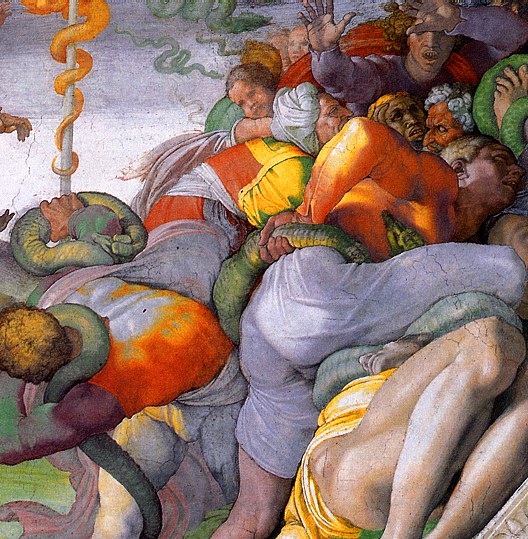
Nel pennacchio lo spazio era limitato, ma io volevo che l’osservatore percepisse il caos e la paura.
Per questo immaginai una massa di corpi intrecciati: uomini e donne contorti dal dolore, assaliti dai serpenti, mentre altri cercano disperatamente lo sguardo del serpente di bronzo per salvarsi.
Usai contrasti cromatici forti e costruzioni anatomiche estreme.
Mi impegnai al massimo per creare scorci prospettici arditi, torsioni e movimenti che trasformassero i volti in vere e proprie maschere di sofferenza.
Guardando la scena si sentono le persone gridare.
L’eco del Laocoonte
Quando dipingevo quella lotta disperata tra uomini e serpenti, avevo negli occhi un’immagine che anni prima mi aveva profondamente colpito.
Era il gruppo scultoreo del Laocoonte e i suoi figli, scoperto a Roma nel 1506, al cui rinvenimento ebbi modo di assistere personalmente.
Il pathos di quella scultura, i muscoli tesi e il dolore che attraversa i corpi, riecheggia anche nel mio pennacchio. Volevo che la pittura avesse la stessa forza drammatica della scultura.
Un’immagine che annuncia il sacrificio di Cristo
Il Serpente di Bronzo non è soltanto una scena dell’Antico Testamento. Per la tradizione cristiana è anche una prefigurazione della crocifissione di Cristo. Nel Vangelo secondo Giovanni si legge infatti:
“Come Mosè innalzò il serpente nel deserto, così bisogna che sia innalzato il Figlio dell’uomo”.
Guardando quell’immagine nella volta della Cappella Sistina, lo spettatore è quindi invitato a leggere un significato più profondo: la salvezza che nasce dalla sofferenza.

Un disegno riemerso dopo secoli
Curiosamente, il mio lavoro continua ancora oggi a rivelare nuovi indizi.
Nel febbraio 2023 è stato attribuito a me uno studio in gesso rosso raffigurante un uomo nudo visto di schiena, con il busto e una gamba in forte tensione.
Lo studioso Paul Joannides, grande conoscitore della mia opera, ha ricondotto questo disegno preparatorio proprio a una delle figure del Serpente di Bronzo nella volta della Cappella Sistina.
Segno che, anche dopo cinque secoli, quei corpi dipinti continuano a raccontare qualcosa di nuovo.
Dove guardare nella Cappella Sistina
Se entrerete nella Cappella Sistina e solleverete lo sguardo verso la volta, cercate il pennacchio alla sinistra dell’altare.
Lì troverete questa scena tumultuosa e drammatica: uomini che lottano con serpenti, corpi contratti dal dolore e, al centro della speranza, il serpente di bronzo innalzato.
È uno dei momenti più intensi dell’intera volta.
E forse, tra quei corpi tesi e quei volti stravolti, potrete ancora intravedere il mio stesso sforzo: trasformare il dolore umano in eternità dipinta.
Per il momento il sempre vostro Michelangelo Buonarroti vi saluta dandovi appuntamento ai prossimi post e sui social.

Between Pain and Salvation: The Brazen Serpent in the Sistine Chapel
For years, I worked with my neck bent over, suspended between scaffolding and paint, to give body and soul to the Sistine Chapel ceiling.
In that vast frescoed sky, I depicted scenes from the Book of Genesis, prophets, nudes, and stories of the salvation of the people of Israel. But in one of the pendentives, to the left of the altar, I decided to narrate a different, powerful, and dramatic story: The Brazen Serpent.
It was one of the last pieces of painting I worked on before finally completing the decoration of the ceiling. And perhaps for this very reason, I poured even more intense emotional tension into that scene.
The story of the people of Israel punished and saved
The story originates from an episode recounted in the Old Testament. The people of Israel, during their journey through the desert led by Moses, doubted the Almighty and murmured against their own leader.
The punishment was terrible: God sent poisonous snakes that struck the people, bringing death and despair to the camps.
But when Moses repented and prayed for the salvation of his people, he received a divine order: to forge a bronze serpent and raise it on a pole.
Whoever was bitten, by looking at the serpent, would be saved.
The tumult of bodies I wanted to paint
The space in the pendentives was limited, but I wanted the viewer to sense the chaos and fear.
That’s why I imagined a mass of intertwined bodies: men and women contorted in pain, attacked by snakes, while others desperately seek the gaze of the bronze serpent to save themselves.
I used strong color contrasts and extreme anatomical constructions.
I worked hard to create bold perspectives, twists, and movements that transformed the faces into veritable masks of suffering.
Watching the scene, you can hear the people screaming.
The Echo of the Laocoon
When I painted that desperate struggle between men and serpents, I had in my mind an image that had deeply moved me years before.
It was the sculptural group of Laocoon and His Sons, discovered in Rome in 1506, whose rediscovery I witnessed firsthand.
The pathos of that sculpture, the tense muscles and the pain coursing through the bodies, also echoes in my plume. I wanted the painting to have the same dramatic force as the sculpture.
An Image That Foretells the Sacrifice of Christ
The Brazen Serpent is not just a scene from the Old Testament. In Christian tradition, it is also a prefiguration of Christ’s crucifixion. In the Gospel of John, we read:
“As Moses lifted up the serpent in the wilderness, so must the Son of Man be lifted up.”
Looking at that image in the Sistine Chapel ceiling, the viewer is therefore invited to read a deeper meaning: the salvation born of suffering.
A drawing resurfaced after centuries
Curiously, my work continues to reveal new clues even today.
In February 2023, a red chalk study depicting a naked man seen from behind, with his torso and one leg tense, was attributed to me.
The scholar Paul Joannides, a great expert on my work, traced this preparatory drawing to one of the figures of the Brazen Serpent in the Sistine Chapel vault.
A sign that, even after five centuries, those painted bodies continue to tell something new.
Where to look in the Sistine Chapel
If you enter the Sistine Chapel and look up at the vault, look for the pendentive to the left of the altar.
There you will find this tumultuous and dramatic scene: men wrestling with serpents, bodies contorted by pain, and, at the center of hope, the raised brazen serpent.
It is one of the most intense moments in the entire vault.
And perhaps, among those tense bodies and distorted faces, you can still glimpse my own struggle: to transform human pain into painted eternity.
For now, yours truly, Michelangelo Buonarroti bids you farewell, and we’ll see you in future posts and on social media.

Sostienici – Support Us
Se questo blog ti piace e ti appassiona, puoi aiutarci a farlo crescere sempre più sostenendoci in modo concreto condividendo i post, seguendo le pagine social e con un contributo che ci aiuta ad andare avanti con il nostro lavoro di divulgazione. . ENGLISH: If you like and are passionate about this blog, you can help us make it grow more and more by supporting us in a concrete way by sharing posts, following social pages and with a contribution that helps us to move forward with our dissemination work.
10,00 €
Condividi:


Questo sono io





sostienici

Sostienici – Support Us
Se questo blog ti piace e ti appassiona, puoi aiutarci a farlo crescere sempre più sostenendoci in modo concreto condividendo i post, seguendo le pagine social e con un contributo che ci aiuta ad andare avanti con il nostro lavoro di divulgazione. . ENGLISH: If you like and are passionate about this blog, you can help us make it grow more and more by supporting us in a concrete way by sharing posts, following social pages and with a contribution that helps us to move forward with our dissemination work.
€10,00


