

La Bellezza come Specchio di Dio
Dio è il primo degli artisti
Molti mi conobbero come scultore, altri come pittore, altri ancora come architetto. Ma pochi seppero che ogni colpo di scalpello, ogni figura liberata dal marmo, nasceva da un pensiero più alto: la certezza che la bellezza non è invenzione dell’uomo, bensì rivelazione di Dio.
Io ho sempre creduto che il Creatore, nel fare il mondo, non si limitò a ordinarne le parti, ma volle esprimere Sé stesso nella forma più eccelsa. E come l’artista sceglie il punto più nobile del marmo per trarne la figura perfetta, così Dio, dopo aver fatto il tutto, scelse dal tutto la parte più bella.
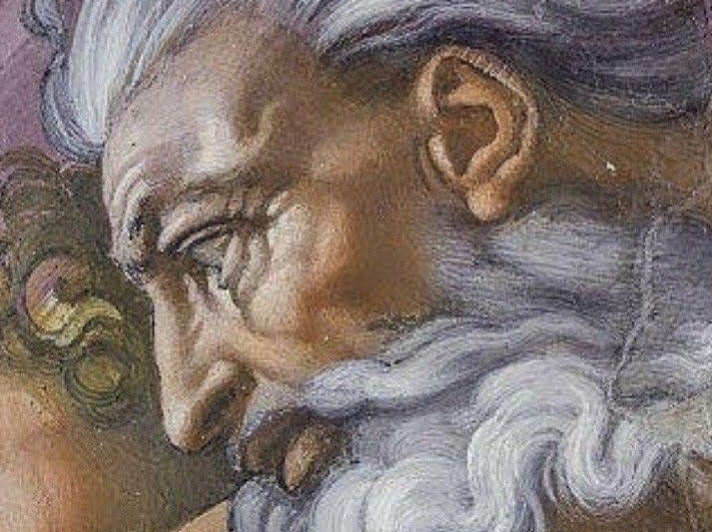
Dio come Artefice supremo
Non vi è differenza, se ben si guarda, tra il gesto dell’artista e quello del Creatore. L’uno è ombra dell’altro.
Dio fece ogni cosa: le stelle, la terra, la carne e lo spirito. Ma in una creatura volle raccogliere un riflesso più puro della sua luce. In essa la bellezza non è ornamento, ma linguaggio. È il segno visibile dell’invisibile.
Quando nei miei versi scrissi di “colui che ’l tutto fe’”, non intendo soltanto l’origine delle cose, ma la volontà divina di manifestarsi attraverso la forma. La bellezza dell’uomo diventa così uno specchio nel quale Dio stesso si contempla e si lascia intravedere.
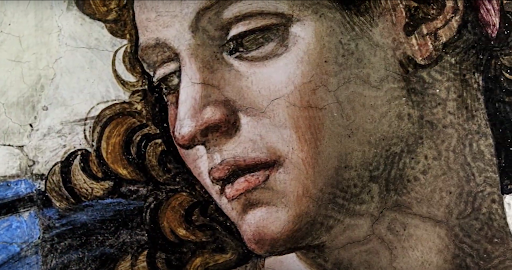
La Bellezza come rivelazione
Vi è chi guarda un volto armonioso o un corpo perfetto e si ferma alla carne. Io, invece, vi scorgo un pensiero eterno.
La bellezza è un varco. È una finestra aperta sul cielo.
Se Dio ha scelto una parte del creato per mostrare “le suo cose eccelse”, è perché attraverso quella perfezione sensibile l’anima può intuire ciò che non si vede. L’arte non inventa: scopre. Non crea dal nulla: libera ciò che già Dio vi ha nascosto.
In scultura si toglie il superfluo. Così fa Dio con noi: elimina le ombre perché emerga la Sua luce.
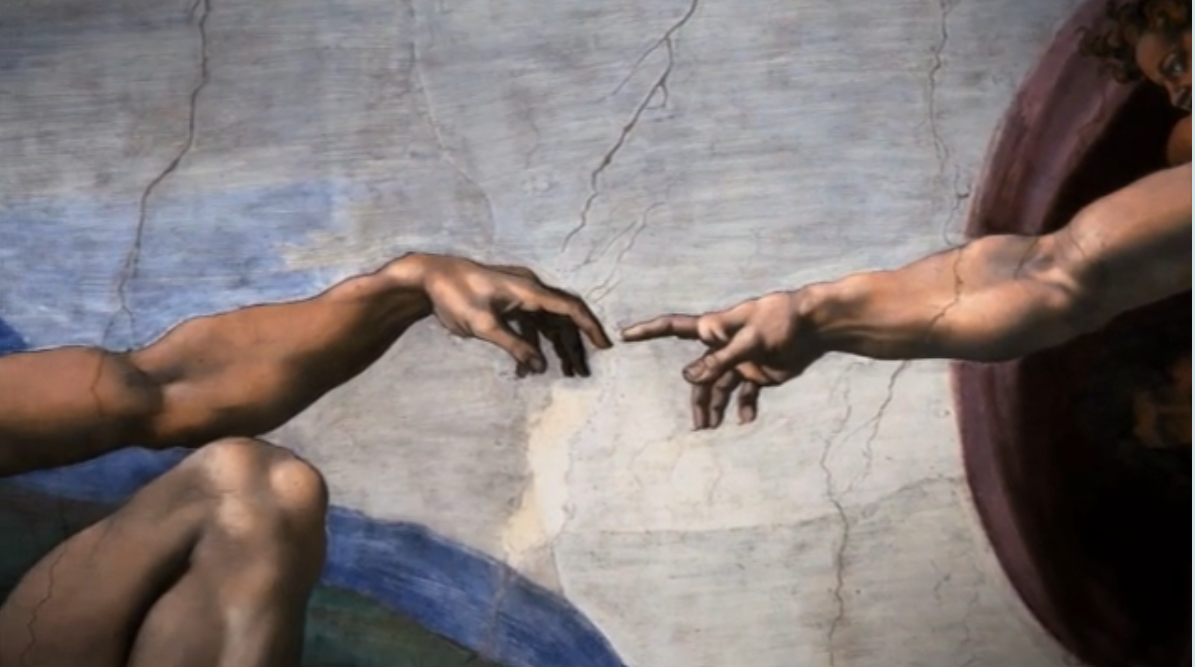
Il senso dei miei versi
Questa quartina nacque accanto ad altri madrigali, ma porta in sé il medesimo pensiero che sempre mi accompagnò: Dio come artista che si esprime attraverso la bellezza degli uomini.
Ecco i versi:
Colui che ’l tutto fe’, fece ogni parte
e poi del tutto la più bella scelse,
per mostrar quivi le suo cose eccelse,
com’ha fatto or colla sua divin’arte.
In essi vi è il mio credo: il mondo intero è opera, ma la bellezza è firma. E quando Dio plasma una creatura di rara perfezione, Egli non fa che ripetere l’atto originario della creazione — scegliendo il meglio del tutto per rivelare Sé stesso.
Così io, povero artefice terreno, non ho fatto altro che inseguire quell’esempio supremo: cercare nel marmo, nel colore e nei versi, il riflesso della Bellezza eterna.
Per il momento il sempre vostro Michelangelo Buonarroti vi saluta dandovi appuntamento ai prossimi post e sui social.
Beauty as a Mirror of God
God is the first of artists
Many knew me as a sculptor, others as a painter, still others as an architect. But few knew that every stroke of the chisel, every figure freed from the marble, was born from a higher thought: the certainty that beauty is not the invention of man, but rather the revelation of God.
I have always believed that the Creator, in making the world, did not simply arrange its parts, but wanted to express Himself in the most sublime form. And just as the artist chooses the noblest point of the marble to create the perfect figure, so God, after creating the whole, chose from the whole the most beautiful part.
God as Supreme Artisan
There is no difference, if you look carefully, between the gesture of the artist and that of the Creator. One is the shadow of the other.
God made everything: the stars, the earth, flesh, and spirit. But in a creature He wanted to gather a purer reflection of His light. In it, beauty is not ornament, but language. It is the visible sign of the invisible.
When I wrote in my verses of “he who made all things,” I meant not only the origin of things, but the divine will to manifest itself through form. The beauty of man thus becomes a mirror in which God himself contemplates himself and allows himself to be glimpsed.
Beauty as Revelation
There are those who look at a harmonious face or a perfect body and stop at the flesh. I, however, see an eternal thought.
Beauty is a gateway. It is a window open to heaven.
If God has chosen a part of creation to display “His sublime things,” it is because through that perceptible perfection the soul can intuit what is unseen. Art does not invent: it discovers. It does not create from nothing: it liberates what God has already hidden.
In sculpture, the superfluous is removed. So God does with us: He eliminates shadows so that His light may emerge.
The meaning of my verses
This quatrain was born alongside other madrigals, but it carries within it the same thought that has always accompanied me: God as an artist who expresses himself through the beauty of men.
Here are the verses:
He who made everything, made every part,
and then chose the most beautiful of all,
to display there his sublime works,
as he has now done with his divine art.
In them lies my credo: the entire world is a work, but beauty is a signature. And when God shapes a creature of rare perfection, He merely repeats the original act of creation—choosing the best of everything to reveal Himself.
So I, a poor earthly craftsman, have done nothing but pursue that supreme example: seeking in marble, in color, and in verse, the reflection of eternal Beauty.
For now, yours truly, Michelangelo Buonarroti bids you farewell and invites you to see him in future posts and on social media.

Sostienici – Support Us
Se questo blog ti piace e ti appassiona, puoi aiutarci a farlo crescere sempre più sostenendoci in modo concreto condividendo i post, seguendo le pagine social e con un contributo che ci aiuta ad andare avanti con il nostro lavoro di divulgazione. . ENGLISH: If you like and are passionate about this blog, you can help us make it grow more and more by supporting us in a concrete way by sharing posts, following social pages and with a contribution that helps us to move forward with our dissemination work.
10,00 €
Condividi:


Questo sono io





sostienici

Sostienici – Support Us
Se questo blog ti piace e ti appassiona, puoi aiutarci a farlo crescere sempre più sostenendoci in modo concreto condividendo i post, seguendo le pagine social e con un contributo che ci aiuta ad andare avanti con il nostro lavoro di divulgazione. . ENGLISH: If you like and are passionate about this blog, you can help us make it grow more and more by supporting us in a concrete way by sharing posts, following social pages and with a contribution that helps us to move forward with our dissemination work.
€10,00


