

Barzaghi, nato il 10 febbraio 1839: l’artista che raccontò il Risorgimento in marmo
Il 10 febbraio 1839 nasce a Milano Francesco Barzaghi, uno degli scultori più importanti dell’Italia postunitaria.
Le sue opere, ancora oggi visibili tra piazze, teatri e musei, raccontano la storia del Risorgimento e dei grandi protagonisti della cultura italiana, contribuendo a definire l’immagine monumentale della Milano di fine Ottocento.

Barzaghi si forma negli studi degli scultori Giuseppe Tantardini e Alessandro Puttinati, per poi iscriversi all’Accademia di Brera, dove segue i corsi di Giovanni Battista Cacciatori. In quegli anni stringe un rapporto di amicizia e confronto con Vincenzo Vela, con cui condivide un linguaggio artistico vicino al Realismo.
Fin dagli esordi, la sua scultura si distingue per la cura dei dettagli e per l’attenzione all’espressione dei soggetti, caratteristiche che diventeranno il segno distintivo della sua produzione.
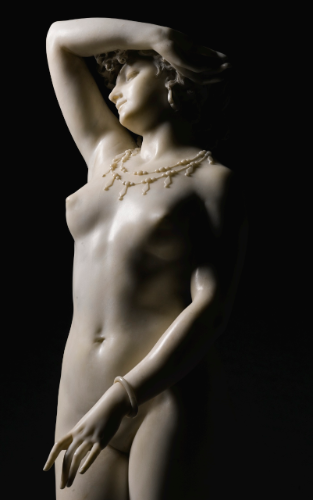
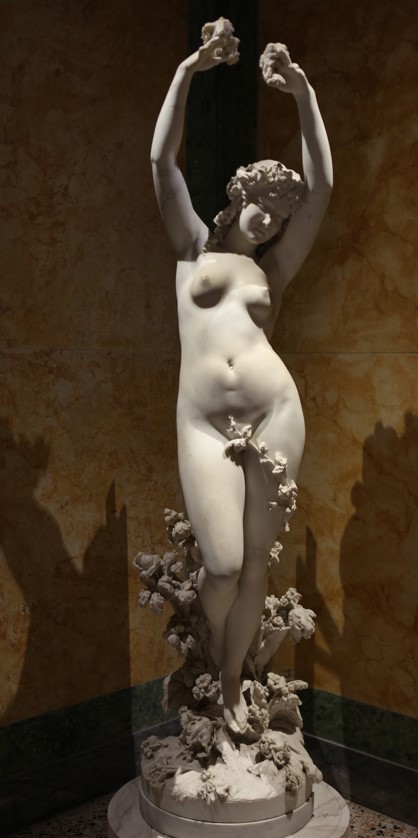
Le opere giovanili: Frine e la Dea dei fiori
Tra le opere giovanili più apprezzate spicca “Frine”, realizzata nel 1867 e presentata nello stesso anno a Parigi. La scultura, oggi conservata alla Galleria d’Arte Moderna di Milano, unisce eleganza classica e sensibilità moderna. Nella stessa galleria si trova anche la “Dea dei fiori”, eseguita dopo il 1878: una figura delicata e armoniosa che testimonia la sua abilità nel rendere la grazia del corpo umano.
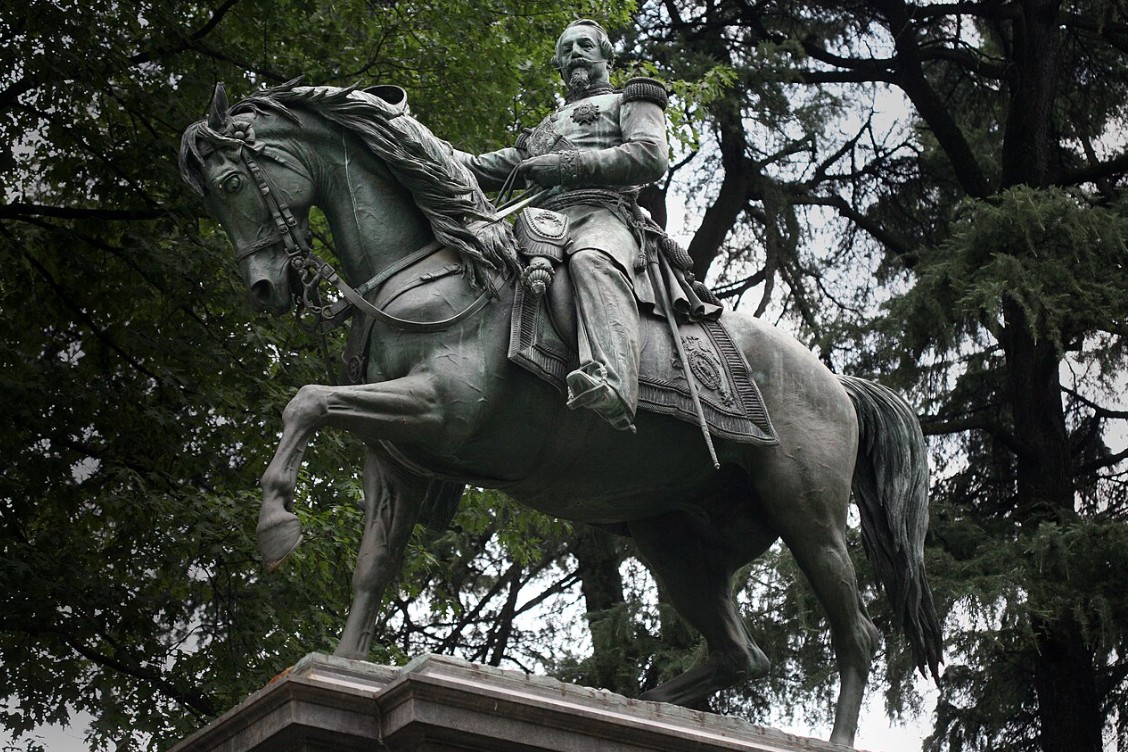
Il capolavoro di Barzaghi: la scultura equestre di Napoleone III
L’opera più famosa di Barzaghi è la scultura equestre di Napoleone III, oggi collocata nel Parco Sempione di Milano e considerata il suo capolavoro. Il monumento celebra l’imperatore francese che sostenne il processo di unificazione italiana e colpisce per la monumentalità e per la resa realistica del cavallo e del condottiero, diventando uno dei simboli della scultura ottocentesca milanese.
Le sculture sacre per il Duomo di Milano e quello di Bergamo
Accanto ai monumenti civili, Barzaghi lavora anche per importanti cantieri religiosi. Per il Duomo di Milano realizza le statue dei santi Ilario, Venceslao e Adelaide, mentre per il Duomo di Bergamo scolpisce i Santi Bartolomeo e Tommaso nel 1870. Queste opere mostrano la sua versatilità e la capacità di adattare il proprio stile a contesti diversi, dal monumento celebrativo alla scultura sacra.
I monumenti del Risorgimento tra Milano, Venezia e il resto d’Italia
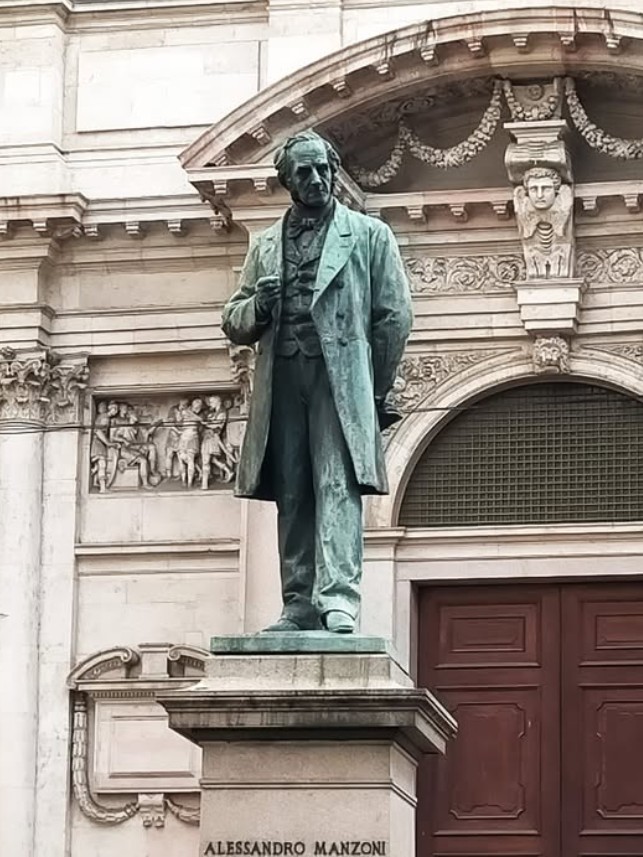
La sua fama cresce soprattutto grazie ai numerosi monumenti pubblici dedicati ai protagonisti della storia e della cultura nazionale. A Milano realizza il monumento ad Alessandro Manzoni in piazza San Fedele, inaugurato nel 1883, la statua di Giuseppe Verdi per l’atrio del Teatro alla Scala, il monumento a Luciano Manara ai giardini pubblici di Porta Venezia e quello a Francesco Hayez in piazza Brera nel 1890. Nel 1874 scolpisce anche il monumento al conte Pompeo Litta Biumi nel palazzo dell’Accademia di Brera.
La sua attività monumentale si estende in diverse città italiane. Realizza statue di Vittorio Emanuele II a Bergamo, Lodi e Genova e monumenti a Giuseppe Garibaldi a Crema e Soresina. Per Venezia esegue il monumento a Niccolò Tommaseo, inaugurato nel 1882, confermando la sua fama su scala nazionale.
L’insegnamento all’Accademia di Brera e gli ultimi anni
Nel 1880 Barzaghi viene nominato docente di scultura all’Accademia di Brera, incarico che mantiene fino al 1892, anno della sua morte. Il suo insegnamento contribuisce a formare una nuova generazione di artisti, mentre le sue opere continuano ancora oggi a raccontare l’Italia del Risorgimento e la Milano della grande stagione monumentale ottocentesca.

Per il momento il sempre vostro Michelangelo Buonarroti vi saluta dandovi appuntamento ai prossimi post e sui social.
Barzaghi, born February 10, 1839: the artist who depicted the Risorgimento in marble
Francesco Barzaghi, one of the most important sculptors of post-unification Italy, was born on February 10, 1839, in Milan. His works, still visible today in piazzas, theaters, and museums, tell the story of the Risorgimento and the great protagonists of Italian culture, helping to define the monumental image of late-nineteenth-century Milan.
Barzaghi trained in the studios of sculptors Giuseppe Tantardini and Alessandro Puttinati, before enrolling at the Brera Academy, where he studied under Giovanni Battista Cacciatori. During those years, he formed a close friendship and exchange with Vincenzo Vela, with whom he shared an artistic language close to Realism. From the outset, his sculpture was distinguished by its attention to detail and the subjects’ expressions, characteristics that would become the hallmark of his work.
Early Works: Phryne and the Goddess of Flowers
Among his most appreciated early works is “Phryne,” created in 1867 and presented in Paris that same year. The sculpture, now housed at the Galleria d’Arte Moderna in Milan, combines classical elegance with modern sensibility. Also in the same gallery is “The Goddess of Flowers,” created after 1878: a delicate and harmonious figure that demonstrates his skill in capturing the grace of the human body.
Barzaghi’s Masterpiece: the Equestrian Statue of Napoleon III
Barzaghi’s most famous work is the equestrian statue of Napoleon III, now located in Milan’s Parco Sempione and considered his masterpiece. The monument celebrates the French emperor who supported the process of Italian unification and is striking for its monumentality and the realistic rendering of the horse and the leader, becoming one of the symbols of 19th-century Milanese sculpture.
Sacred Sculptures for Milan and Bergamo Cathedrals
In addition to his secular monuments, Barzaghi also worked on important religious projects. For Milan Cathedral, he created the statues of Saints Hilary, Wenceslas, and Adelaide, while for Bergamo Cathedral, he sculpted Saints Bartholomew and Thomas in 1870. These works demonstrate his versatility and ability to adapt his style to diverse contexts, from celebratory monuments to sacred sculptures.
Monuments of the Risorgimento in Milan, Venice, and the Rest of Italy
His fame grew primarily thanks to the numerous public monuments dedicated to key figures in Italy’s history and culture. In Milan, he created the monument to Alessandro Manzoni in Piazza San Fedele, inaugurated in 1883, the statue of Giuseppe Verdi for the foyer of the Teatro alla Scala, the monument to Luciano Manara in the public gardens of Porta Venezia, and the monument to Francesco Hayez in Piazza Brera in 1890. In 1874, he also sculpted the monument to Count Pompeo Litta Biumi in the building of the Brera Academy.
His monumental activity extended to several Italian cities. He created statues of Vittorio Emanuele II in Bergamo, Lodi, and Genoa, and monuments to Giuseppe Garibaldi in Crema and Soresina. For Venice, he created the monument to Niccolò Tommaseo, inaugurated in 1882, confirming his national fame.
Teaching at the Brera Academy and his final years
In 1880, Barzaghi was appointed professor of sculpture at the Brera Academy, a position he held until 1892, the year of his death. His teachings helped shape a new generation of artists, while his works continue to tell the story of the Italy of the Risorgimento and the Milan of the great monumental era of the 19th century.
For now, yours truly, Michelangelo Buonarroti bids you farewell and looks forward to seeing you in future posts and on social media.

Sostienici – Support Us
Se questo blog ti piace e ti appassiona, puoi aiutarci a farlo crescere sempre più sostenendoci in modo concreto condividendo i post, seguendo le pagine social e con un contributo che ci aiuta ad andare avanti con il nostro lavoro di divulgazione. . ENGLISH: If you like and are passionate about this blog, you can help us make it grow more and more by supporting us in a concrete way by sharing posts, following social pages and with a contribution that helps us to move forward with our dissemination work.
10,00 €
Articoli
Condividi:


Questo sono io





sostienici

Sostienici – Support Us
Se questo blog ti piace e ti appassiona, puoi aiutarci a farlo crescere sempre più sostenendoci in modo concreto condividendo i post, seguendo le pagine social e con un contributo che ci aiuta ad andare avanti con il nostro lavoro di divulgazione. . ENGLISH: If you like and are passionate about this blog, you can help us make it grow more and more by supporting us in a concrete way by sharing posts, following social pages and with a contribution that helps us to move forward with our dissemination work.
€10,00


