

San Francesco tra le braccia dell’angelo: l’opera mistica di Orazio Gentileschi al Prado
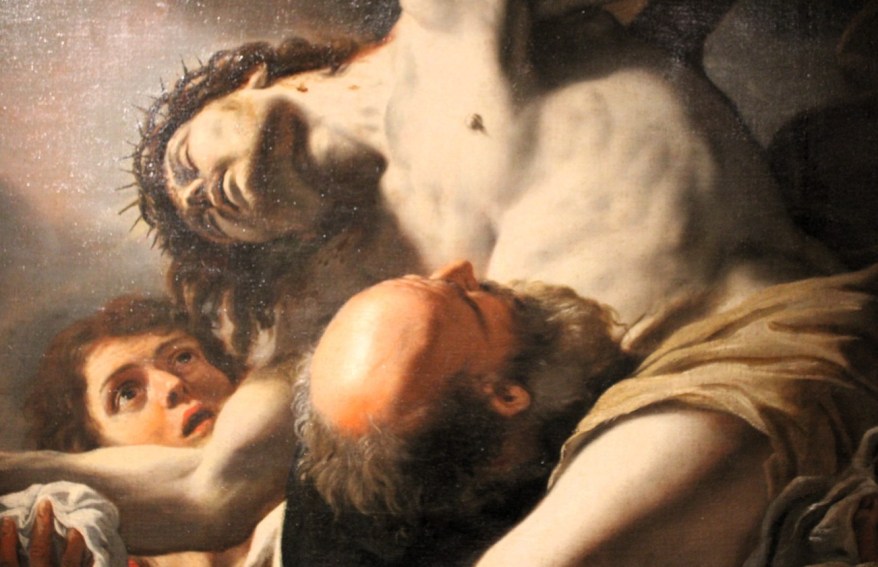
Nel silenzio di una notte sospesa tra cielo e terra, un angelo sostiene il corpo fragile di San Francesco d’Assisi. Il volto del santo è abbandonato, gli occhi chiusi, le mani rilassate come in un’estasi profonda.
Non è una scena di dolore, ma di dolcezza e redenzione. È questo il cuore emotivo di San Francesco sorretto da un angelo, dipinto da Orazio Gentileschi tra il 1605 e il 1607 e oggi conservato al Museo Nacional del Prado di Madrid.
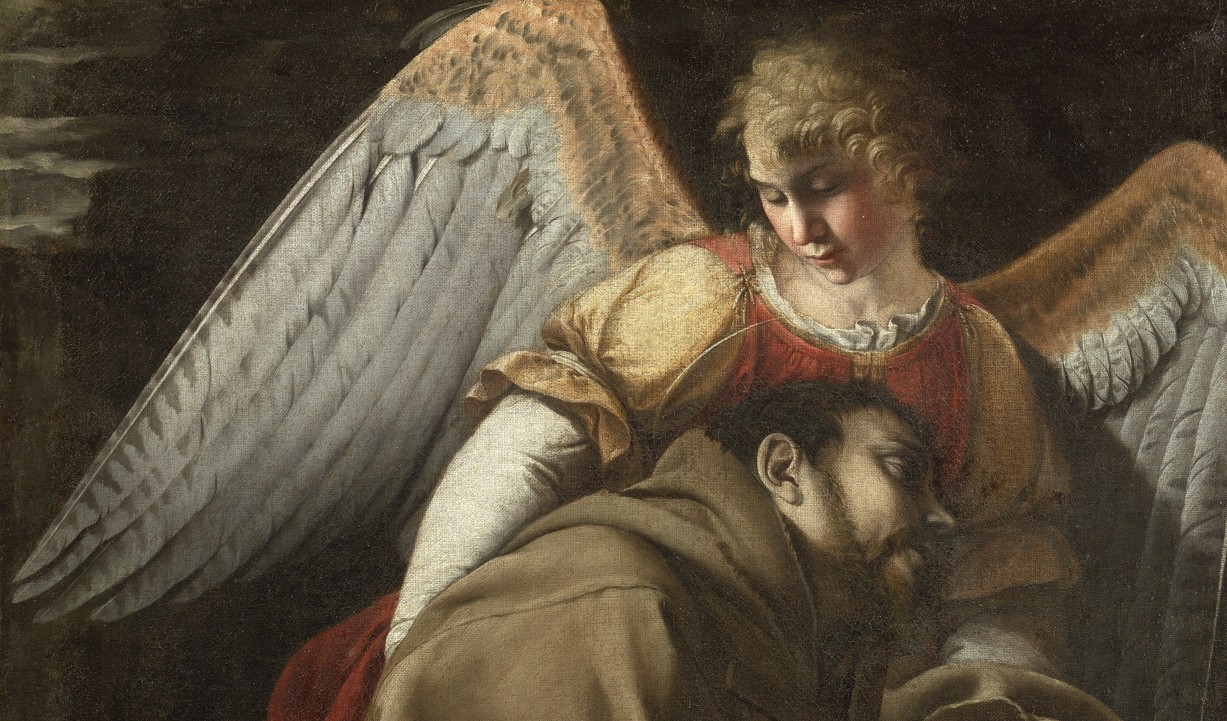
Un’opera intensa e silenziosa, capace ancora oggi di commuovere lo spettatore con la sua spiritualità luminosa e la sua raffinata eleganza pittorica.
Un momento di svolta nella carriera di Orazio Gentileschi
Orazio Gentileschi, nato a Pisa nel 1563, è uno dei principali interpreti del naturalismo caravaggesco. All’inizio del Seicento, durante la sua permanenza a Roma, entra in contatto diretto con la rivoluzione pittorica di Caravaggio e ne assorbe la lezione luministica e compositiva. Tuttavia, invece di imitarne la drammaticità, Gentileschi sviluppa un linguaggio personale, più lirico e raffinato.
San Francesco sorretto da un angelo appartiene a questa fase di transizione, in cui l’artista fonde il realismo caravaggesco con una sensibilità più elegante e spirituale. La luce non è violenta né teatrale, ma morbida e avvolgente, e contribuisce a creare un’atmosfera sospesa, quasi musicale. Il dipinto rappresenta uno dei momenti più alti della sua produzione romana, prima dei grandi viaggi nelle corti europee.
La scena tra estasi e protezione
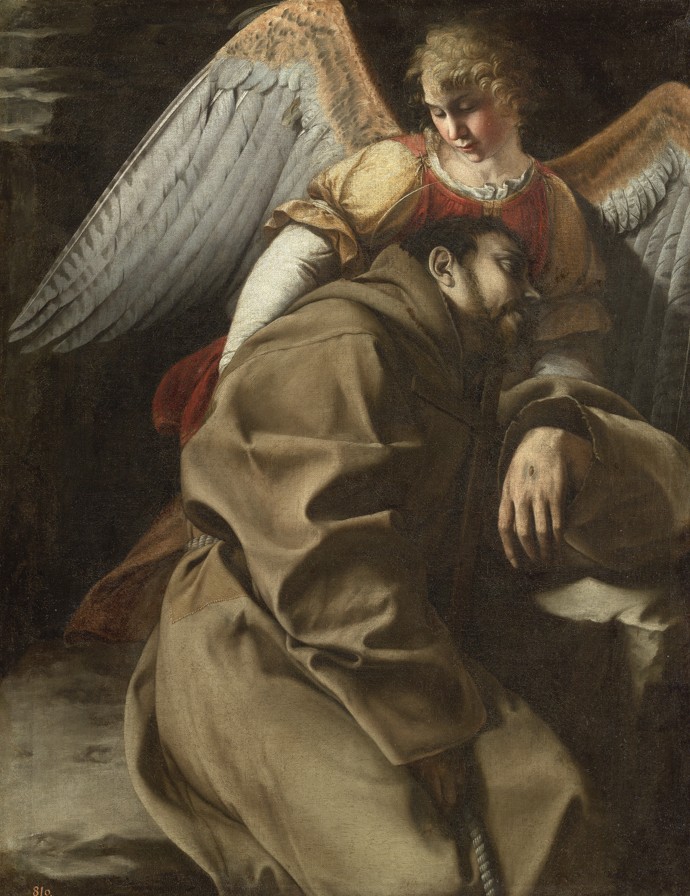
L’opera raffigura San Francesco d’Assisi nel momento successivo alla ricezione delle stimmate. Il santo appare esausto e rapito dall’esperienza mistica, sostenuto da un angelo dalle sembianze giovanili. Il corpo di Francesco si abbandona con totale fiducia, mentre l’angelo lo regge con un gesto dolce e protettivo.
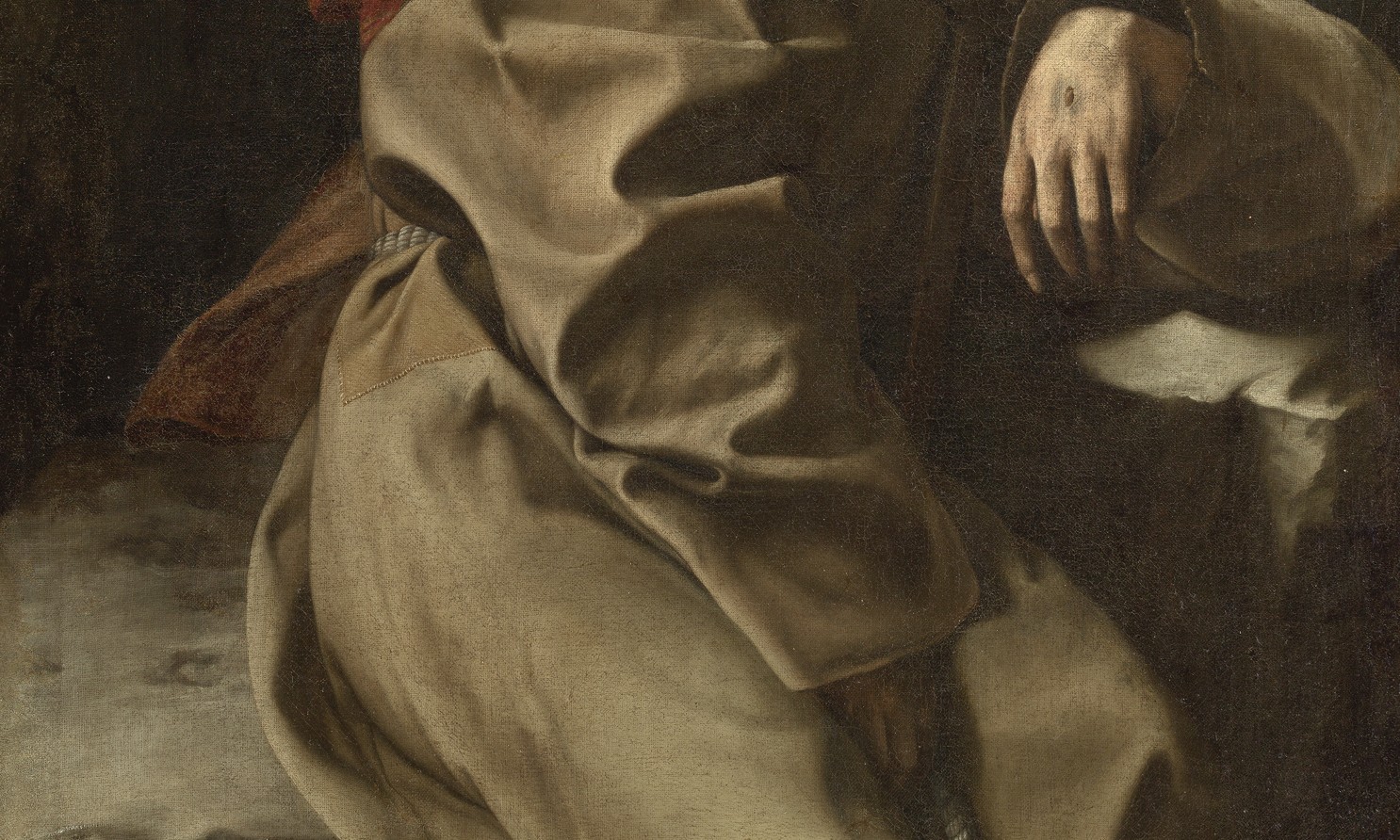
Il fondo scuro isola le due figure e concentra l’attenzione sul dialogo silenzioso tra umano e divino. La luce, proveniente lateralmente, illumina i volti e le pieghe dei tessuti con grande raffinatezza. Il saio ruvido del santo, dai toni terrosi, contrasta con la veste setosa e luminosa dell’angelo, creando una contrapposizione simbolica tra la dimensione terrena e quella celeste.
Un naturalismo elegante tra Caravaggio e poesia
Se Caravaggio mostrava santi e peccatori con una crudezza quasi teatrale, Gentileschi preferiva una visione più armoniosa e idealizzata. In questo dipinto i volti sono credibili ma nobilitati, i gesti sono misurati e solenni, e la luce non ferisce ma consola.
Il risultato è una pittura che unisce realismo e grazia, capace di rendere la scena accessibile e allo stesso tempo profondamente spirituale. Questa qualità poetica è una delle caratteristiche distintive dell’arte di Gentileschi, che nel corso della sua carriera sarà apprezzato nelle principali corti europee.
La commissione dell’opera e il contesto romano
La realizzazione di San Francesco sorretto da un angelo si colloca negli anni in cui Gentileschi lavorava a Roma, intorno al 1605-1607, in un clima artistico dominato dall’influenza di Caravaggio e dalla richiesta di immagini devozionali intense e immediate. L’opera fu probabilmente eseguita per un committente privato legato all’ambiente ecclesiastico o a una cerchia aristocratica romana sensibile alla spiritualità francescana, molto diffusa nella capitale pontificia all’inizio del Seicento.
Anche se non esiste una documentazione certa sulla commissione, la qualità della tela e il soggetto di forte devozione suggeriscono una destinazione prestigiosa, forse per una cappella privata o per una raccolta nobiliare. In questo contesto romano, Gentileschi affinò il suo stile elegante e luminoso, che lo porterà poi a lavorare a Genova, a Parigi e infine a Londra, dove morirà nel 1639.
Dal Seicento romano al Museo del Prado
Dopo la sua realizzazione, il dipinto entrò nelle collezioni aristocratiche europee e giunse infine in Spagna, dove oggi è conservato al Museo del Prado di Madrid.
La presenza di questo dipinto al Prado conferma il successo dell’artista oltre i confini italiani e la diffusione del naturalismo caravaggesco nelle corti europee del Seicento.
Per il momento il sempre vostro Michelangelo Buonarroti vi saluta dandovi appuntamento ai prossimi post e sui social.
Saint Francis in the Arms of an Angel: Orazio Gentileschi’s Mystical Work at the Prado
In the silence of a night suspended between heaven and earth, an angel supports the frail body of Saint Francis of Assisi. The saint’s face is abandoned, his eyes closed, his hands relaxed as if in profound ecstasy.
It is not a scene of pain, but of sweetness and redemption. This is the emotional heart of Saint Francis Supported by an Angel, painted by Orazio Gentileschi between 1605 and 1607 and now housed at the Museo Nacional del Prado in Madrid.
An intense and silent work, it still moves the viewer with its luminous spirituality and refined pictorial elegance.
A turning point in Orazio Gentileschi’s career
Orazio Gentileschi, born in Pisa in 1563, is one of the leading exponents of Caravaggio’s naturalism. At the beginning of the 17th century, during his stay in Rome, he came into direct contact with Caravaggio’s pictorial revolution and absorbed his lessons in lighting and composition. However, rather than imitating his dramatic style, Gentileschi developed a more lyrical and refined personal language.
Saint Francis Supported by an Angel belongs to this transitional phase, in which the artist blended Caravaggio’s realism with a more elegant and spiritual sensibility. The light is neither harsh nor theatrical, but soft and enveloping, creating a suspended, almost musical atmosphere. The painting represents one of the high points of his Roman production, before his great travels to the European courts.
The Scene Between Ecstasy and Protection
The work depicts Saint Francis of Assisi in the moment after receiving the stigmata. The saint appears exhausted and enraptured by the mystical experience, supported by an angel with youthful features. Francis’s body surrenders with total trust, while the angel holds him with a gentle and protective gesture.
The dark background isolates the two figures and focuses attention on the silent dialogue between the human and the divine. The light, coming from the side, illuminates the faces and the folds of the fabrics with great refinement. The saint’s rough habit, with its earthy tones, contrasts with the angel’s silky, luminous robe, creating a symbolic juxtaposition between the earthly and celestial dimensions.
An Elegant Naturalism Between Caravaggio and Poetry
While Caravaggio depicted saints and sinners with an almost theatrical crudeness, Gentileschi preferred a more harmonious and idealized vision. In this painting, the faces are believable yet ennobled, the gestures are measured and solemn, and the light consoles rather than wounds.
The result is a painting that combines realism and grace, making the scene accessible yet profoundly spiritual. This poetic quality is one of the distinctive characteristics of Gentileschi’s art, and throughout his career, he was appreciated in the major European courts.
The Commissioning of the Work and the Roman Context
The creation of Saint Francis Supported by an Angel dates back to the years Gentileschi was working in Rome, around 1605-1607, in an artistic climate dominated by the influence of Caravaggio and the demand for intense and immediate devotional images. The work was likely executed for a private client with ecclesiastical ties or for a Roman aristocratic circle sensitive to Franciscan spirituality, widespread in the papal capital at the beginning of the 17th century.
Although no reliable documentation exists regarding the commission, the quality of the canvas and the highly devout subject matter suggest a prestigious destination, perhaps for a private chapel or a noble collection. In this Roman context, Gentileschi refined his elegant and luminous style, which would later lead him to work in Genoa, Paris, and finally London, where he died in 1639.
From 17th-Century Rome to the Prado Museum
After its completion, the painting entered European aristocratic collections and finally reached Spain, where it is now housed at the Prado Museum in Madrid.
The presence of this painting at the Prado confirms the artist’s success beyond Italy’s borders and the spread of Caravaggio’s naturalism in 17th-century European courts.
For now, yours truly, Michelangelo Buonarroti bids you farewell and invites you to join him in future posts and on social media.

Sostienici – Support Us
Se questo blog ti piace e ti appassiona, puoi aiutarci a farlo crescere sempre più sostenendoci in modo concreto condividendo i post, seguendo le pagine social e con un contributo che ci aiuta ad andare avanti con il nostro lavoro di divulgazione. . ENGLISH: If you like and are passionate about this blog, you can help us make it grow more and more by supporting us in a concrete way by sharing posts, following social pages and with a contribution that helps us to move forward with our dissemination work.
10,00 €

Condividi:


Questo sono io





sostienici

Sostienici – Support Us
Se questo blog ti piace e ti appassiona, puoi aiutarci a farlo crescere sempre più sostenendoci in modo concreto condividendo i post, seguendo le pagine social e con un contributo che ci aiuta ad andare avanti con il nostro lavoro di divulgazione. . ENGLISH: If you like and are passionate about this blog, you can help us make it grow more and more by supporting us in a concrete way by sharing posts, following social pages and with a contribution that helps us to move forward with our dissemination work.
€10,00


